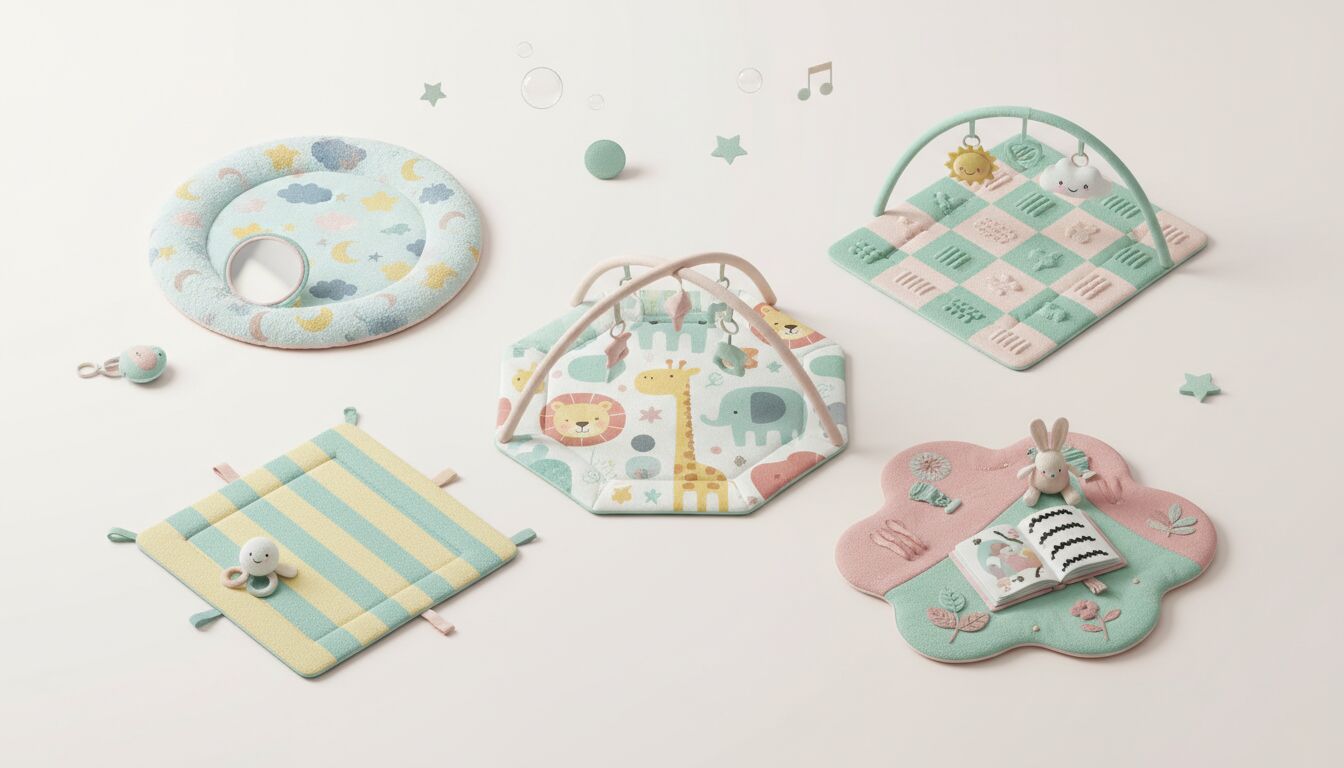
Top 5 of the best baby play mats in 2026: complete guide
In the first months, daily life often plays out on the floor, between a feeding, a diaper change, and a fascinated look. The playmat then becomes a small stage where the baby learns without “knowing it”, thanks to the colors, textures, sounds, and repeated gestures. However, as the selection grows denser, choosing a truly suitable model quickly resembles a puzzle: arches or not, music or sobriety, large size or foldable format, and above all safety and quality requirements. In a daycare, one also quickly sees the difference between a mat attractive in photos and a mat pleasant daily, especially when it has to survive spit-ups, minor accidents, and regular washes.
This guide is based on field observations and on what many families say: a good play space must support development without overstimulation, support the body without confining it, and make parents’ lives easier without turning the living room into a toy store. To keep a concrete thread, we will also follow Manon, a young mother of a curious baby, who tested several setups according to times of the day. Through five main references and an additional selection, the goal is simple: to help you choose a mat that supports play and respects your family rhythm, while remaining consistent on price, maintenance, and space at home.
In Brief |
|---|
The right playmat supports the development of the baby through colors, textures, and gradual play activities, without overload. Safety comes through standards, absence of small risky parts, and real stability on the floor, especially when the baby starts to pivot. The choice also depends on the parents’ life: maintenance, storage, and portability influence daily use. Tiny Love, Fisher-Price, Sophie la Girafe, Kinderkraft and SUPERBE BEBE cover varied needs, from a soft cocoon to a modular playroom. Well-chosen accessories extend the play: light rattles, high-contrast cards, unbreakable mirror, or a small removable arch. |
The best baby playmats in 2026: expert selection from a mother
A useful ranking is not limited to design or reputation. First, it is necessary to observe how the baby moves, what calms them, what activates them, and how play is built over weeks. Then, observe the parents: do they need a mat that dries quickly, a model easy to fold, or a stable format for a through-living room. Finally, a good purchase must remain consistent with the price, because play also feeds on simplicity.
Model | Family profile | Key strength | Point of caution |
|---|---|---|---|
Tiny Love Dynamic Gymini | Parents who want to vary positions | Modularity of arches and toys | Storage bulkiness |
Sophie la Girafe 2 in 1 | Families who like progressive play | Two uses, same base | Fewer activities |
Fisher-Price Sensimals | Babies attracted by sounds and contrast | Engaging hanging toys | Check settings and batteries |
SUPERBE BEBE | Heavy household use | Soft cocoon, careful finishes | Measure size before purchase |
Kinderkraft SMARTPLAY | Mobile parents and small spaces | Portability and storage | Thickness to compare |
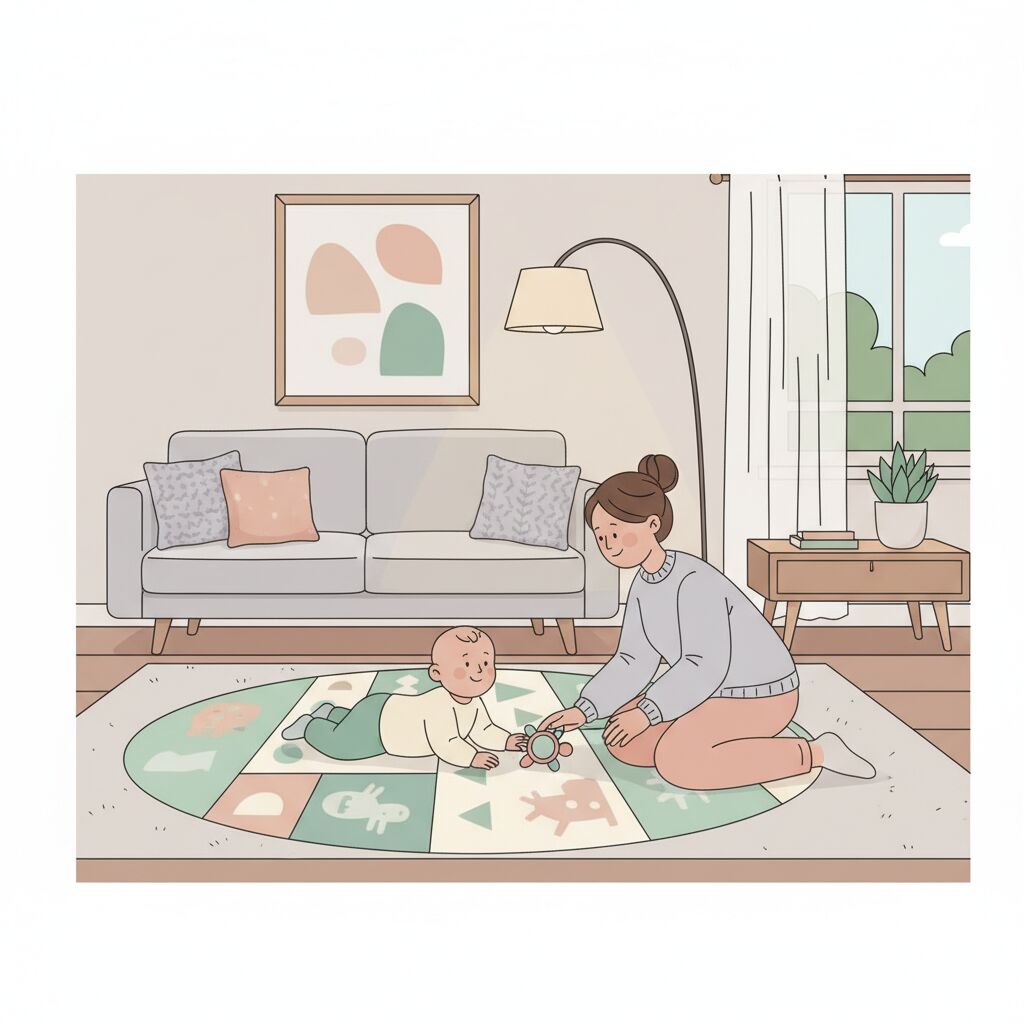
Tiny Love Dynamic Gymini: features, advantages, and disadvantages
The Dynamic Gymini from Tiny Love targets families wanting a truly modular play area. The arches move, which helps change the baby’s angle of attention and encourage visual tracking. So, one day, Manon placed a toy higher to prevent her baby from getting frustrated, then lowered it when he gained coordination. This progression supports development without rushing the pace.
The strong point is the variety of textures and materials, stimulating exploration of hands and feet. However, the mat takes up space once assembled, and storage must be planned. Regarding price, it’s often above basic models, but the feeling of quality is evident in stitching and overall durability. One detail changes everything: when play becomes daily, robustness avoids unpleasant surprises.
Ease of use and modularity of the Dynamic Gymini
Assembly remains simple, which is important when handling a baby who demands attention. The arches adjust, and toys can be moved, so play adapts to the current posture. For example, during tummy time, placing a mirror in front supports development and encourages head lifts. Then, lying on the back, a closer hanging toy helps catch attention.
This modularity also serves safety, as one can move an element away if the baby gets upset and pulls too hard. In daycare, this adjustment prevents many cries and also helps manage calm times. The design remains rather soft, with colors that attract the eye without being aggressive. Ultimately, this kind of adjustment makes a difference when wanting long but always respectful play.
Maintenance and cleaning of the Tiny Love mat
When a baby explores, they drool, spit up, and rub hands everywhere. Therefore, maintenance is not a detail. The mat cleans well on the surface, and some parts can go in the machine depending on versions, simplifying daily play. Manon made a habit of quickly vacuuming before washing, as small fluff sometimes gets stuck in the seams.
To preserve quality, it’s better to remove toys and check fastenings before washing. Then, air drying preserves softness, so comfort stays stable over weeks. Finally, if stained, treating quickly prevents rings, especially on light areas. This regular care also protects safety, as a clean mat limits irritations and makes play calmer.
Sophie la Girafe 2 in 1: a versatile and playful playmat
The 2 in 1 mat by Sophie la Girafe is aimed at families who like simple yet evolving items. The idea is to offer a play space that changes function without repurchasing everything. Thus, one can switch from a mat with play elements to a freer configuration, useful when the baby starts to roll and needs space. This continuity supports development and also reassures, as the environment remains familiar.
Colors are often soft and warm, with patterns that attract the eye. The textures vary but in a more minimalist way than other models. Sometimes this is an advantage because play happens without constant noise, so the baby can concentrate. Conversely, families seeking many integrated activities may want to add accessories. The important thing is to stay consistent: an overly loaded space tires quickly.
Practical features for parents with Sophie la Girafe
Daily, the strength of the 2 in 1 plays out in living room management. The configuration changes quickly, following the baby’s rhythm without transforming the house. Also, the mat often folds easier than very tall structures, which helps when receiving guests. This “set up, play, put away” logic makes play more regular as it becomes less constraining.
For safety, elements generally remain simple, with fewer complex parts to check. However, fastenings and seams must be monitored, especially if the baby nibbles everything. Lastly, regarding price, this type of product often sits in an intermediate zone: more finished than a basic mat but less “technical” than a highly equipped model. This compromise pleases many parents, as play does not depend solely on a gadget.
Strengths and limitations of the Sophie la Girafe 2 in 1 mat
Its strength lies in balance: a pleasant space, soft aesthetics, and an evolving logic. The colors stay harmonious, so the mat integrates well without dominating the room. The textures invite touch and encourage calm exploration, supporting emotional development. One also gets a good feeling of quality regarding finish, especially if the mat is used daily.
Limiting factors include a shorter offer of integrated activities if the baby demands a lot of novelty. So, it’s better to add light accessories like a grasping ring, a soft ball, or contrast cards. This strategy avoids overloading and maintains rich play. The final idea remains simple: a mat must provide a framework, not replace presence.
Fisher-Price Sensimals: stimulation and safety combined
The Sensimals from Fisher-Price focuses on attractive hanging toys, sometimes with sounds or small effects. The interest is immediate: the baby identifies a target, reaches out, touches, and repeats. This repetitive cycle nourishes development and establishes very concrete play markers. In a playroom, one also sees some infants calm down when the activity is predictable, even if it remains fun.
Safety here depends on two things: the solidity of the fastenings and the stability of the structure. It must be checked regularly, especially if the baby starts pulling harder. Colors are often vivid, which catches attention, and textures are designed to vary sensations. However, a highly stimulating mat may become too intense if left running continuously. So, alternating with calmer moments supports balanced play.
Advantages of Sensimals hanging toys for baby
Hanging toys invite the baby to coordinate sight and movement, strengthening motor control development. When the hand finally touches the object, the reward is immediate, so play occurs by motivation. Gradually, the infant adjusts force, preparing for finer movements. Even without mentioning it, a useful base for future motor skills is already built.
Diverse textures play a key role: smooth fabric, crinkled areas, small reliefs. Thanks to this contrast, the baby explores with the palm, then fingers. In parallel, bold colors help spot the object, especially early on when vision is still developing. This ensemble creates effective play, provided stimuli are dosed and pauses are allowed.
Maintenance criteria for the Fisher-Price mat
Fisher-Price mats are often designed for real life, thus for frequent cleaning. First, modules are removed, then it is checked if the textile part can go in the machine. When possible, this is a real relief, as a baby does not plan small accidents. If the model includes electronics, boxes must be isolated and moisture avoided.
To preserve quality and safety, seams should be checked after several washes. Then, a complete drying prevents odors, making play more pleasant. Manon also adopted a routine: a damp wipe on hanging toys every two days, then a more complete wash on weekends. This regularity keeps a clean space and prevents dust accumulation.
Presentation of SUPERBE BEBE: comfort and innovations
SUPERBE BEBE stands out by its “cocoon” oriented approach, with marked comfort sensation. When the baby spends much time on the floor, thickness and softness change the experience, notably during quiet moments. Serenity is gained too, as the mat becomes a landmark: you lay it down, and play begins. This stability positively affects development, since the infant anticipates playtime.
Attraction is also in the details: finishes, well-placed zones of textures, and sometimes removable elements. Colors often remain modern, and the design aims for easy integration into a contemporary interior. However, this type of mat requires size checking, as a large format can be wonderful but overwhelming. Play works better when space is available, not when it becomes an obstacle.
Modularity and evolvability of the SUPERBE BEBE mat
Modularity often plays through repositionable elements and multi-age use. At first, the baby mainly enjoys colors and textures, then turns to graspable objects. When beginning to pivot, a generous format allows freer play, with toys placed at a distance to encourage effort. This progression supports development without forcing.
To extend interest, some parents add simple accessories: a mini positioning cushion, unbreakable mirror, or sensory ring. These additions are more effective when introduced progressively. Thus, the baby finds a known landmark but discovers a new challenge. This evolutivity logic often transforms a mat into a real play space, day after day.
Maintenance and stain resistance
A heavily used mat must be easy to live with; otherwise, it ends up in the closet. SUPERBE BEBE often highlights fabrics resistant to small stains, which helps in real life. Yet, sanitary safety demands regular care, so instructions must be checked: removable cover or not, machine wash or spot cleaning. When a mat is washable, play becomes more relaxed since usage is not hesitated.
In practice, a mix of “vacuum + damp cloth” goes a long way. Then, occasional thorough washing, especially if the baby rests their cheek on the floor during calm times. To preserve quality, avoiding harsh products keeps fibers intact. Result: touch remains soft, and comfort does not flatten quickly. This simple maintenance also protects the play experience, as a clean mat naturally invites play.
Kinderkraft SMARTPLAY: modern and practical playmat
Kinderkraft’s SMARTPLAY targets families who move around or don’t have a dedicated room. The idea is to keep a complete play space but easy to set up and store. For Manon, this model was practical at grandparents’: take it out, play, then fold it. In such situations, portability makes a real difference, as a baby needs landmarks even outside the home.
The mat generally features arches and some toys, with current colors. The design remains readable, avoiding visual overload. Regarding safety, stability on the floor and fastening quality are mainly checked. The price is often competitive, appealing to young parents, provided thickness and fabric density are compared. Play gains pleasure when the baby doesn’t feel a too hard floor.
Technical features and design of the SMARTPLAY
Kinderkraft’s SMARTPLAY stands out with a design oriented towards daily use. Arches assemble quickly, toys detach easily, so play adapts to age. Colors and patterns guide gaze, and some textures add tactile dimension. This combination supports development without requiring an arsenal of gadgets.
The design often favors simple shapes and a modern palette. This also matters to parents, as a mat visible permanently should stay pleasant. However, padding density must be evaluated, especially if the baby spends time there. A mat too thin can limit comfort, notably during side breaks. A good balance between style and use makes play sustainable.
Use and advantages for mobile parents
When traveling, one looks for an object “that follows.” Here, ease of folding and low bulk simplify outings, enabling play everywhere. Additionally, the mat sometimes serves as a landmark for short naps, even if sleep stays in a dedicated space. For a sensitive baby, finding the same colors and textures helps relax.
Safety while moving also depends on the floor: cold tiles, slippery parquet, thick carpet. Thus, placing an anti-slip base under the mat improves stability. One can also bring one or two light accessories, like a rattle and a small fabric book, to vary play without overloading the bag. This practical sense turns a simple product into a truly usable solution.
Additional selection: other playmats to consider
Beyond the top, some models deserve a place depending on your context. Very minimalist mats please families wanting a tidy play corner, then adding toys on demand. Other options focus on music or lights, helping a very demanding baby. In all cases, the interest is not to accumulate but to choose an environment consistent with development.
You can also look towards VTech, which sometimes offers more “educational” approaches with sounds and guided interactions. These models suit especially when parents want to structure mini play sequences: a song, a hand game, then calming down. Yet, even then, the central element remains presence and adjustment to the baby. A good mat must support, not replace.
Analysis of alternative models and their specifics
Some round mats, without arches, offer great freedom, so they better accompany rolling and turning. This shape encourages more “spontaneous” development, as the baby chooses the direction. Conversely, visual play must come from objects placed around, so parents participate more. For many, this is a strength, as interaction becomes natural.
Other models turn into mini playpens with soft edges. This option reassures about safety, especially when cooking nearby, but never replaces active supervision. Regarding quality, seams and fastening resistance are mainly observed. Finally, a “themed” mat may attract by its colors and characters but must remain readable to avoid fatigue. Useful play is play we repeat joyfully.
Accessory recommendations for each mat
Accessories complement the mat when chosen with care. For a very equipped model, a simple teething ring and a mirror suffice, since the baby already has much to explore. Conversely, on a more minimalist mat, a soft ball and a small fabric book add textures and diversify play. The idea is to introduce one object at a time to respect the development rhythm.
For musical mats, limiting noisy toys keeps a good balance. For travel models, preferring flat and light accessories improves daily life. Finally, for safety, choosing objects without small parts and easy to clean avoids much stress. This small sorting, done once, simplifies every play moment.
Complete guide to choosing the best baby playmat
Essential safety criteria for a baby playmat
Safety is not marketing argument but a basic condition. A baby explores with their mouth, pulls on hanging things, and sometimes turns without warning. Therefore, the mat must be stable, the seams solid, and the elements correctly fixed. Then, the environment must be considered: a mat placed near furniture with sharp edges increases risks, even if the mat is excellent.
To guide Manon, a simple marker sufficed: anything detachable must be considered suspicious. She checked fastenings after each wash, then observed how her baby pulled. This vigilance turns play into a serene moment. And when the mind is calm, play becomes richer, as the adult can be available.
European standards and non-toxic materials
A good mat displays clear information on standards and materials. In Europe, toy and textile requirements provide a useful framework and reinforce safety. It is also necessary to check mentions on substances: a baby rubs skin on fabric and often puts fingers in the mouth. Thus, non-toxic materials are not a luxury but a minimum.
Besides, the quality of a textile can also be recognized by the smell at opening. A strong chemical odor should warn, as it harms play and well-being. Airing for several hours helps, but a healthy product should not require a week of ventilation. This simple point protects development and breathing comfort of the baby.
Prevention of risks related to small parts
The main danger comes from small parts, especially when decorative. A baby beginning to grasp can tear off an element seeming solid. Therefore, prefer integrated toys, sewn or attached by sturdy systems. Moreover, rings and rattles must be large enough to avoid any ingestion risk, a key safety pillar.
Anticipation is also necessary: at four months, an object is mainly looked at, while at seven months it is tested vigorously. This rapid change modifies safety requirements in a few weeks. In practice, a weekly check of attachments protects play and reduces worries. A reliable environment leaves the baby freedom to explore.
Comfort and support adapted for baby’s development
Comfort is not superficial, as it determines the length of playtime. If the baby feels a hard floor, they get upset and play shortens. Conversely, a mat too soft can hinder support, so balance must be targeted. This balance supports development, allowing repeated movements without pain.
Practically, observing posture offers simple clues. If the baby arches much on the back or avoids tummy time, support may be unsuitable. Manon changed mats when she saw her baby accepted tummy time better on a more stable surface. This small adjustment improved play and motor progress.
Optimal mat thickness and softness
A good thickness protects against floor temperature variations, improving comfort. However, thickness alone is not enough: density matters. A mat that flattens too quickly loses quality and becomes less pleasant for the baby. Testing by hand or reading intensive use feedback helps choose.
Softness must remain compatible with grip. If the fabric slips, play becomes frustrating, as the baby cannot get support. Conversely, a slightly textured surface favors stability. Finally, soft colors can soothe, while strong contrasts better serve early months. A good mat combines these parameters to support development.
Specialized support for baby’s first positions
At first, the baby alternates mainly between back and sides. Then, tummy time becomes essential for supporting development. A mat with a small positioning cushion or the possibility to add one helps make this moment more pleasant. Still, caution is needed: the goal is to encourage, not immobilize, so safety also passes through freedom of movement.
When the baby starts grasping, moving a light toy close helps success. This success fuels play and make them want to try again. Gradually, the object is moved slightly farther to stimulate effort. This gentle progression supports motor skills and consolidates achievements without stress.
Ease of maintenance: tips for a always clean mat
A mat difficult to wash is often used less, so play becomes irregular. However, regularity is a driving force in development. In child care structures, easy surfaces are favored since time is scarce. At home, it’s the same: a baby can get dirty three times a day. Therefore, maintenance ease is a real selection criterion, not a bonus.
Allergies and dust must also be considered. A mat retaining hair or crumbs becomes unpleasant and can irritate the skin. Thus, simple maintenance improves overall comfort and makes play moments more pleasant. Cleanliness here supports safety as much as peace of mind.
Machine washing and stain resistance
A mat partially or fully washable in a machine is an ally. Before buying, check allowed temperature and spin type to avoid surprises. When fabric resists stains, time is saved, making play more spontaneous. Also, correct washing protects fiber quality, so the mat keeps its look.
For a baby starting diversification, stains change nature. A removable cover then becomes valuable, allowing fast cycle. Then, full drying limits moisture, better ensuring sanitary safety. This regular care prolongs lifespan and keeps an inviting space.
Tips for fast and effective cleaning
Between washes, a quick routine often suffices. First, shake or vacuum, then wipe with a damp cloth on areas used by the baby. Then, mild soap, well rinsed, avoids irritating residues. This method protects skin and makes play more comfortable. Also, flat drying prevents deformations, maintaining quality.
If odors occur, airing and sprinkling a bit of baking soda then vacuuming gives good results. However, strong perfumes are avoided, since a baby is sensitive. Finally, cleaning hanging toys reduces saliva buildup. This detail strengthens safety and improves the general sense of clean play.
Diversity of sensory and motor activities offered
A good mat creates a play path: look, touch, listen, then repeat with more intent. The goal is not to multiply gadgets but to offer activities evolving with development. Some babies are content with a mirror and a rattle, while others explore multiple zones. This diversity must remain clear, or attention scatters.
For choosing, observing balance between visual, tactile, and auditory helps a lot. Colors serve to attract, textures to anchor, and sounds to reward. Yet, the best driver remains the adult who names, imitates, and encourages. That’s where interaction gives meaning to play.
Visual, auditory and tactile stimulations
Contrasting colors help the baby fixate then follow an object. Then, more complex patterns take over as vision progresses. Tactile-wise, textures are a treasure: velvet, cotton, reliefs, crinkled areas. They encourage curiosity and nourish sensory development.
Auditory-wise, a light noise or a discreet bell often suffices to enrich play. In reverse, permanent music can tire. So, an “off” mode is useful, protecting the emotional safety of the baby. A good mat lets one choose the intensity of experience.
Games encouraging eye-hand coordination
Hanging toys are very effective for linking sight and gesture. The baby observes, anticipates, then attempts a grasp. This effort supports development and prepares later manipulations. When the grasp succeeds, play strengthens with the joy of success. This dynamic is often more important than the toy itself.
Further, placing an object slightly to the side encourages rolling. This movement contributes to motor skills then motivates reaching further. At this point, a form of planning appears: the baby looks, hesitates, and tries. This small daily scenario is a home development laboratory.
Versatility and adaptability: an evolving playmat
An evolving mat accompanies several stages, improving profitability and real use. At first, it mainly serves looking and touching, then becomes a play space to grasp and pivot. Then, it can host sitting games, then finer manipulations. This continuity supports development because it avoids changing everything too often.
Versatility also depends on the home. In a small space, a quickly stored mat is used more often. In a large living room, a large stable surface offers freedom. The key is choosing a model that follows the family, not just one moment. When the object adapts, play repeats naturally.
Adjustable arches and removable toys
Adjustable arches allow height and angle adaptation, following visual and motor development. At first, close toys facilitate success. Then, moving them away encourages initiative. In all cases, check safety of fastening systems, as a curious baby pulls relentlessly.
Removable toys have another advantage: they can be used elsewhere, for example in a stroller or car seat. This extends play outside the mat without multiplying purchases. However, be careful not to lose parts, as this hurts usage quality. A good mat remains a coherent kit.
Multi-age and multi-function use
A mat can be used from the first weeks, then accompany sitting games nearing the end of the first year. Later, it sometimes becomes a reading zone or calm corner. This continuity gives affective value and reassures the baby. Moreover, an identified space favors play because the child associates that place with discovery.
For multi-function use, size and textile quality matter. A mat that pills quickly loses appeal and sometimes irritates skin. Conversely, a solid fabric invites longer stays. This durability also serves safety, as intact surfaces prevent detaching small threads.
Impact of the baby playmat on overall development
Sensory stimulation to awaken all senses
The mat’s role goes beyond just “playing”. It creates a space organizing play around landmarks: a zone to touch, to look, to listen. For a baby, this organization simplifies exploration and supports development. The more pleasant the exploration, the more repetition, thus the more effectiveness.
In real life, rapid progress is seen when the environment is stable. A baby who finds the same colors and textures anticipates then dares. This confidence form is strongly linked to play. Then the adult can vary objects to revitalize interest while keeping the framework.
Development of sight and color recognition
Early on, the baby mainly notices contrasts. Thus, black and white areas then bright colors ease fixation. Gradually, gaze becomes more steady and tracking a toy sharpens. This progress contributes to overall development as seeing better also helps moving better.
Then, color recognition sharpens with repetition. A well-designed mat offers few dominant shades rather than a permanent rainbow. This relative sobriety avoids fatigue while maintaining effective play. A legible environment supports attention, and attention supports learning.
Encouragement to touch and texture discovery
Touch is a very early language. Varied textures let the baby compare: soft, rough, crinkled, bouncy. This comparison builds sensory landmarks useful for cognitive development. Also, the baby learns that their gestures have effects, strengthening play by curiosity.
The experience can be enriched by naming what is felt. Saying “it’s so soft” or “this makes noise” links sensation and language. This small habit nourishes play without extra material. Over time, the baby seeks certain textures voluntarily, showing more intentional exploration.
Auditory play through sounds and integrated music
Sounds attract attention then help structure an action. A baby shakes a toy, hears the noise, then repeats. This mechanism reinforces causal understanding and makes play fun. Yet, dosage is needed because too much music tires quickly.
A good sound system offers several volumes and a clear stop. Thus, the parent chooses the moment, and the baby keeps a calm space to refocus. This management supports emotional safety and protects attention. Auditory play is more useful when occasional and linked to action.
Motor development and coordination in infants
The mat serves as a testing ground for rolling, pushing, pulling, and sitting up. Each repeated gesture builds motor development. Also, a stable space lets the baby dare because they don’t slip at each attempt. This physical confidence also nurtures play as the child becomes actor of their discoveries.
Observing several babies shows one fact: when the floor is pleasant, they stay longer exploring. This accumulated time is precious. It supports motor skills and prepares next stages. The mat doesn’t teach how to walk but offers a setting for body building.
Muscle strengthening and fine motor skills
Tummy time strengthens upper body, preparing support. Then, grasping a toy, passing it hand-to-hand, then releasing works fine motor skills. These small gestures structure neurological development. A successful baby gets motivated and repeats, and play comes through repetition.
Toys sized appropriately facilitate success. An object too big discourages, too small poses safety issues. So a middle ground and solid fastenings are required. This subtle setting greatly improves play experience and makes play smoother.
Encouragement to first movements
When the baby begins to turn then crawl, the mat becomes a mini parcours. Placing a toy close encourages effort, while remaining accessible. This challenge feeds motor development and autonomy. Varying location naturally guides play without having to “make do”.
A quite large mat helps by offering a safe space to experiment. However, surroundings must also be secured, as the child eventually leaves the area. At that point, the whole room’s safety becomes the next subject. A mat is a starting point, not a barrier.
Safe space for exploration and playtime
A good mat creates a bubble. The baby finds landmarks there, exploring with less fear. This stability supports affective development and cognitive play. For parents, it’s also a place known as “where the play happens”, helping organize the day.
However, the bubble must not be an illusion. Safety depends on the mat but also on the room, animals, and supervision. Practically, better to prepare a clear corner and stick to it. This consistency makes play easier to ritualize and more frequent.
Protection against falls and controlled environment
The mat cushions small tipping, especially when the baby learns to turn over. This protection improves safety and reduces crying, so play lasts longer. However, if the mat slips, the effect reverses. Therefore, an anti-slip underside or a stable model is essential.
The edges must also be monitored: a rolling baby can bump into nearby furniture. So edges are moved away and a clear zone kept. This environment control makes play freer, because there’s less saying “watch out” and more enjoyment.
Interaction and socialization with parents
The mat encourages interaction because it puts parent and baby at the same level. By sitting on the floor, the gaze, laughter, and small surprises are shared. This proximity supports socio-emotional development and gives meaning to games. A simple exchange of faces becomes a powerful play moment.
One may also invite a sibling or another adult while keeping a safety frame. The baby observes, listens, then tries to imitate. This observation is already play, even without a toy. In the end, a mat succeeds when it sparks exchanges, not just gestures.
Different types of baby playmats in 2026 and their uses
Mats with arches and hanging toys: classic and playful
The arch format remains a big classic because it makes play very accessible. The baby doesn’t need to move to act: they look then touch. This model suits early months well when coordination builds. Then it continues to be useful if toys are removable because one can transform the space as development progresses.
For parents, this format is also reassuring: one quickly sees what the baby does. Still, safety of arches must be watched, especially stability. A well-designed model withstands pulling and keeps its shape. Play is then smooth, with no constant readjustments.
Advantages for sensory stimulation
Hanging toys often combine colors and textures, enriching sensory play. A small rustling element attracts the ear, then the hand follows. This link supports attention development. Moreover, varying toy positions changes challenge without changing the mat.
For a calm baby, choose simple and contrasted objects. For an active baby, offer a toy rewarding action (e.g., small sound). This adjustment makes play more respectful. A good mat is one that adapts to the child, not vice versa.
Best options for safety
For safety, arches must be stable and toys large enough. Fastenings must resist pulling, as the baby tests everything. Avoid overly long cords that could cause risks. Additionally, an anti-slip mat reduces unexpected movements.
Supervision remains essential, even with a great product. A baby can get an arm stuck in poorly adjusted setups. Therefore, regular adjustments protect play and prevent scares. A safe environment gives freedom, fostering development.
Musical and light-up models: enhanced sensory play
Musical and light-up models seek to attract attention, especially if the baby is easily distracted. They can support play by creating a clear signal: “when I move, something happens.” This causality is a development base. Yet, effect must be moderate or the child may wait for animation instead of exploring.
In practice, these mats are useful for short sequences. One starts a game, then switches to a calmer activity. This alternation respects the baby’s pace. It’s also a way to preserve emotional safety, as overly stimulating environments may irritate or tire.
Impact of sounds and lights on baby’s attention
Sounds attract and lights guide gaze. Thus, play becomes easier at first. This helps some babies enter activities, notably late in the day. Then, these signals can be rewards, supporting perseverance development.
Yet, attention also builds in calm. Soft lights and adjustable sounds are useful. A mat allowing duration choice protects safety and makes play smarter. The goal is not to hypnotize but to accompany.
Selection criteria to avoid sensory overload
To avoid overload, controls must be simple: low volume, immediate stop, and varied modes. Also, colors should not all flicker, as the baby needs stable visual landmarks. A too changing environment tires quickly and can hinder sustained attention development.
Finally, prefer mats where animation links to the baby’s action. This way, the child understands cause-effect and play keeps meaning. This logic strengthens autonomy, a growth pillar. A good product does not replace exploration, it triggers it.
Themed, modular and evolving mats: personalized choices
Themed mats please because they tell a story. A jungle, sea or space universe gives a setting, and play becomes narrative. For a baby, it’s not about “understanding” the theme but finding visual and tactile landmarks. Colors and textures then form a discovery map.
Modular models add a practical dimension: remove, add, transform. This evolution follows development since needs change fast. An adaptable mat avoids multiplying purchases and helps manage price over time.
Adaptation to age and interests
At two months, the baby mainly likes looking. At six months, touching and pulling. At nine months, sometimes moving towards what attracts. So, an evolving mat must allow simple changes: moving a toy, adding a textures zone, or freeing more space. This adaptation supports development without imposing a rigid structure.
Interests also vary by child. Some babies like mirrors, others prefer chewable objects. Thus, choosing a mat compatible with universal accessories personalizes play. This personalization reduces frustration, as the child finds “their” game more easily.
Prolonged use through modularity
Modularity extends use beyond first months. A mat becoming a free play area accompanies rolling, then sitting games. Then serves for cubes, balls, or books. This continuity strengthens development, as the baby needn’t adapt to a new environment weekly.
For parents, it also simplifies organization. One keeps a central object and only evolves accessories. This system is often more economical long term, even if initial price is higher. In the end, lasting play builds by small evolutions, not big changes.
Foldable and portable mats: for nomadic parents
Families on the move look for light, compact mats quick to install. Here, portability becomes a major criterion. A baby then benefits from a stable landmark even at friends’ or on vacations. This anchoring supports development by maintaining a play routine despite changes.
Practically, these mats are often thinner. So, insulation on the floor must be checked, especially on tiles. A simple addition like a folded blanket underneath improves comfort without complicating life. The key is to avoid practicality reducing safety or usage quality.
Ease of transport and compact storage
An easy-to-fold mat encourages daily play, as installation isn’t postponed. A velcro or strap system helps keep shape and avoids unfolding in the trunk. For a baby, this regularity is precious, as it feeds development through repetition.
Storage at home must also be considered. A mat fitting behind a door or under a bed frees space. This organization improves daily life and makes play more spontaneous. When gear is simple, it’s used more.
Tips for choosing a practical model
For practicality, check weight, material, and drying ease. Quick dry fabric reduces constraints, especially when the baby drools a lot. You should also verify if the mat is easily washable, as mobility increases dirt. This constraint is real, so better anticipate.
Then, choose less stain-prone colors, even if style matters. Finally, prefer removable toys to limit breakage in transport, protecting quality. A truly practical model is one taken out without thinking, thus creating more play over days.
Educational and sensory mats: developing intelligence from the start
So-called “educational” mats often promise much. The real benefit comes from simple, repeated activities adapted to the baby. A mirror, shapes, colors, and textures suffice to nurture cognitive development. Play does not depend on a program but on an environment inviting exploration.
That said, some mats add interesting elements: numbers, letters, animals, or sound sequences. For parents, these landmarks may help speak, name, and tell stories. This shared speech enriches play by linking gesture to language. The mat then becomes a play support, not a teacher.
Integrated educational games and playful learning
Playful learning starts with simple links. For example, touching an area produces a sound, so the baby understands cause. Then, the adult names “the lion” or “the sun”, and the child associates action to word. This bridge supports language development and strengthens social play.
To remain useful, the educational element must be secondary. If the mat talks too much, the child listens instead of acting. So, choose a model with adjustable modes to protect balance. Effective play leaves center stage to active exploration.
Examples of mats favoring cognition
Mats with visual sorting zones, like repetitive patterns and distinct colors, help the baby categorize. Mirrors foster self-discovery, nurturing social development. Textures hidden beneath fabric flaps encourage curiosity, so play occurs by controlled surprise.
Fisher-Price models also play on this logic, with toys reacting to gestures. This can help if the baby needs immediate feedback. However, keep in mind the best driver remains human interaction, as it adapts the game to the moment.
Quality and safety tests: how to ensure a reliable mat
Material controls and non-toxicity
Serious tests start with the material. A baby spends face-time close to fabric, so non-toxicity is a direct safety issue. Manufacturers must check dyes, plastics, and glues. For parents, reading available information and avoiding too opaque products is a simple first step.
In-store, touching and smelling also give clues. A pleasant textile, without strong odor, suggests better quality. Then, fabric’s hold after rubbing is revealing. If fibers come off easily, play may become irritating to the baby’s skin.
Certification procedures and international standards
Certification procedures frame risks, notably on chemicals. This framework reinforces safety and reassures about production consistency. Some brands align with international tests, which can signal rigor. For parents, important to check presence of clear info and favor transparent supply chains.
Certification doesn’t replace cautious use. A baby can create unexpected situations even on compliant products. So play remains accompanied moments. This “good product + good practice” alliance is true peace of mind formula.
Tests on removable components and toys
Removable parts are tested for resistance to pulling and twisting. This is crucial since a baby often pulls then chews. Safety depends on fastening system but also element size. A toy too small raises risk even if pretty.
A good habit is checking ring, seam, and velcro status regularly. This vigilance prolongs quality and prevents accidents. It also keeps play focused on pleasure rather than fear. A quick check can save the day.
Durability and mat resistance evaluation
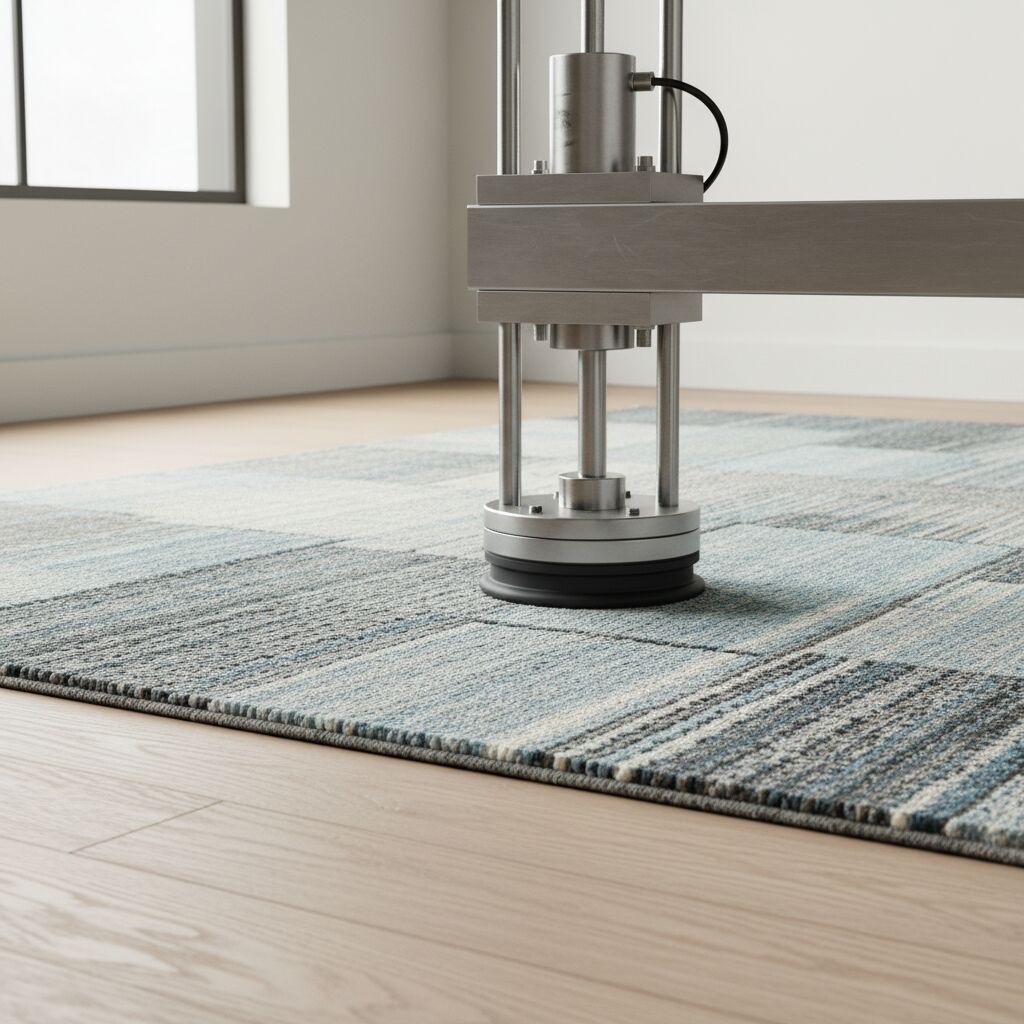
Durability is often underestimated, yet it influences daily use. A mat deforming reduces comfort and can create annoying folds. Also, rapid wear gives impression of lower quality, discouraging play. It’s useful to look at density, seams, and user feedback after several months.
In collective settings, mats face intense demands. These observations are valuable for families. If a mat holds up under intensive use, it will at your home. Durability also supports safety because fraying material can irritate skin or cause small threads.
Wear tests and resilience to washes
Repeated washes are a great revealer. A mat keeping colors and seams after multiple cycles shows real quality. Conversely, fast fading reduces visual appeal, so play loses an important support. A baby is sensitive to contrasts, especially early months.
To preserve lifespan, follow washing instructions and avoid too high temperatures. Washing toys separately limits wear. This routine makes play more stable, as gear remains pleasant. Time is saved too, as replacements are less frequent.
Comfort analysis after prolonged use
After a few months, a mat may flatten. This is noticeable when the baby shows more frequent discomfort or parents’ knees feel the floor. A good quality model keeps enough density and stays pleasant. This maintenance supports development, allowing longer play times.
Thermal sensation must also be checked. A too thin mat lets cold through, reducing comfort and shortening play. In this case, adding an insulating base is a simple solution. The essential is to keep regularity, as development advances through repeated experiences.
Compliance with European standards and baby safety
Compliance is a foundation but must be readable. Parents must identify info easily without searching. This transparency strengthens safety and confidence. For a baby, this translates to a safer environment and freer play.
Big brands like Fisher-Price often highlight their controls and this can be reassuring. However, keep a critical eye and check info coherence. A reliable product gives details, not just slogans. This demand protects the baby’s development and avoids regrettable purchases.
Explanation of current labels and certifications
Labels indicate tests were done, especially on substances and resistance. They don’t guarantee perfect use but increase safety level. For a baby, this framework matters as exposures add up. Thus, favoring clearly certified products is a wise choice.
For parents, the challenge is also to understand limits. A label doesn’t say if the mat fits your living room or is easy to wash. So, cross this info with real use. This approach makes play smoother, as gear better fits life.
Importance of product traceability
Traceability helps know where materials come from and how product is made. This transparency strengthens safety and trust. In case of recall, it allows quick reaction. When talking about a baby, reactivity counts.
A brand communicating clearly on supply chains often shows attention to quality. This is not everything but is a signal. Also, good traceability facilitates after-sales service. And when daily life is busy, quick responses make play more relaxed.
Must-have baby playmat brands in 2026
Positioning and specialization of market leaders
The mat market is marked by some very visible players. Some focus on modularity, others on sound play, others on brand universe. The key is to link this positioning to your baby and your home. A product can be excellent but unsuitable for your daily life. Yet, a mat that stays in a closet does not feed play.
Leaders often stand out by consistent quality and more systematic safety checks. However, a reputed brand doesn’t exempt from observing details: fastenings, washes, stability. This concrete view avoids disappointments. The baby’s development deserves this small selection effort.
Tiny Love, Fisher-Price and Sophie la Girafe: values and innovations
Tiny Love counts on modularity and progressive play scenarios. This logic helps accompany development without changing equipment. Fisher-Price often favors toy reactivity, with sound and visual feedback motivating the baby. As for Sophie la Girafe, the approach is softer and symbolic, often appreciated for its familiar universe and warm colors.
Each brand offers a different play style. So, a family sensitive to noise might choose a more sober option, while a very energetic baby may like a more interactive mat. Useful innovation is not that which impresses but that which serves daily life. A good choice is measured over time, not upon unboxing.
Kinderkraft and SUPERBE BEBE: novelties and features
Kinderkraft often positions on price/use ratio, with attention to practicality. It’s a frequent choice for small spaces, with products designed for storage. SUPERBE BEBE emphasizes comfort and contemporary aesthetics, with a design blending into the home. These two approaches suit depending on what you expect from daily play.
In all cases, priority remains safety and ease of maintenance. A charming feature is worthless if it complicates life. So, checking fastenings, stability, and color retention after washing is a good filter. This pragmatism protects baby development and parents’ mental load.
Reputation among parents and feedback
Parents’ feedback is useful when describing real use: setup time, cleaning, and durability. A baby grows quickly, so a mat must keep up. Reviews mentioning safety, durability, and stability are often most relevant. Conversely, feedback based only on design or first impression is less valuable.
Manon compared multiple testimonials before buying. She mainly kept precise stories: “arches hold,” “the mat goes well in the machine,” “colors don’t shift.” Such details reveal true quality. And when quality meets expectations, play becomes a moment one repeats joyfully.
Experienced moms’ reviews and surveys
Experienced moms often describe concrete scenes: a baby getting frustrated if a toy falls, or a mat folding poorly with one hand busy. These details are worth gold for anticipation. Furthermore, surveys highlight a recurring point: safety and maintenance come first, before gadgets. This hierarchy makes sense, as good play demands a reliable framework.
It’s also interesting that use varies by child. Some babies love arches, others prefer free space. So, feedback should be read as context, not truth. This perspective helps choose aligned with your reality, supporting development and serenity.
Warranty, after-sales service and advice
A good warranty signals reliability and protects investment. When a mat costs a certain price, knowing parts can be replaced is reassuring. Also, responsive after-sales lowers stress, making play simpler. For a baby, continuity counts, so avoiding a long break is helpful.
Usage advice provided by brands is important too. A clear guide helps maintain safety and choose right settings by age. This is particularly true for modular models. When the parent feels supported, offering regular play moments becomes easier, nourishing development.
Practical advice to maximize baby playmat usage
Safe installation and adapted play space
Installing a mat is more than just placing it. Passages, furniture, and light must be considered. A baby benefits more from play when not dazzled or disturbed by comings and goings. Thus, choosing a quiet living room corner with a reassuring view on the adult improves play duration. Safety then is easier to manage.
It’s also useful to anticipate development. When the baby starts rolling, space must widen. Leaving a meter free around avoids many scares. This preparation supports development and enables freer play. One creates a framework then lets the child act.
Ideal placement in the home
Ideal placement is often close to daily life but away from danger zones. So a corner of the living room lets parents talk to the baby while tidying. This proximity favors interaction and makes play more spontaneous. Avoiding the kitchen during cooking reduces risks and improves safety.
Natural light is an asset, revealing colors better. However, direct sun must be avoided as it heats and dazzles. Soft lighting favors stable play and protects visual comfort. This simple detail changes the play atmosphere.
Active supervision and risk management
Active supervision does not mean constant intervention. It means observing, adjusting the environment, and staying available. A baby can get stuck in a poorly positioned arch or put something in their mouth. Thus, safety requires real presence even when the child plays alone. This calm presence encourages autonomy.
To manage risks, remove unsuitable objects near the mat. Also check toy fastenings, especially after wash. Finally, adapt duration: a tired baby puts themself more at risk. This fine management makes play gentler and respects development.
Recommended stimulating activities for baby
A mat is just a support, and play is nourished by simple small ideas. By varying activities, the baby’s needs are respected: sometimes move, sometimes look, sometimes cuddle. Richness comes from alternating, not accumulation. Also, short repeated routines strongly support development.
Manon established three sequences: five minutes of looking and touching, then tummy time, then a break in arms. This structure made play smoother. The baby anticipates and relaxes. And when relaxed, they learn better.
Sensory and motor games adapted to age
Before three months, favor contrasting colors and a mirror, very effective. Then, add textures to explore with hands to enrich play. Around four to six months, offer a light rattle to encourage grasping and motor development. When the baby pivots, placing a toy a bit farther stimulates effort.
For motor aspects, a few minutes of tummy time daily are precious. This time supports motor skills and prepares next stages. The important thing is to stay gradual, as a baby can get discouraged quickly. Well dosed play makes play joyful, not laborious.
Encouraging parent-child interaction during play
Interaction gives meaning to what the baby does. Naming actions, imitating a sound, or waiting for a response creates dialogue. This dialogue supports language and attention development. It also reassures, as the child feels the adult is there.
A simple technique is to follow the baby’s interest. If they look at a colors area, comment on it. If they touch a texture, value this gesture. This respectful posture makes play more natural. And when play is natural, it lasts.
Maintenance tips for an always impeccable mat
An impeccable mat is not a “perfect” mat but one maintained with regularity. This regularity protects safety and health as the baby is in direct contact. Also, a clean space makes one want to propose more play. This avoids the vicious cycle of “it’s dirty, I’ll do it later.”
To simplify, better to plan a short routine than aim for a rare big clean. So the mat stays pleasant and development benefits from a constant environment. Maintenance becomes a care gesture, not a chore. And this care atmosphere is felt in shared play.
Easy techniques for regular cleaning
A quick vacuuming removes dust and crumbs. Then, a damp cloth on the most used areas usually suffices. If the baby drools a lot, cleaning toys every two days avoids buildup. This routine protects safety and maintains usage quality.
For stains, quick action is rule. Blot then gently clean avoids spreading. Finally, complete drying prevents odors. This regular care makes play more pleasant as the space stays welcoming.
Optimized storage and practical transport
Properly stored, a mat lasts longer. Folding without twisting arches, storing toys together, and avoiding humidity protect quality. For a baby, finding complete gear avoids frustration. Also, clear storage makes play more spontaneous as setup takes two minutes.
For transport, a dedicated cover or bag avoids dirt. This detail protects sanitary safety and simplifies life. When gear travels easily, more play occasions multiply. And these occasions feed development daily.
Alternatives to traditional playmats: complement or replace
Play solutions adapted to small spaces
When space lacks, a classic mat can seem impossible to fit. Yet, play can happen with compact solutions. A baby doesn’t need a playroom but a safe space and suitable objects. So, a small foldable mat, complemented by some accessories, can suffice to support development.
The real issue is safety: avoid slippery surfaces and fragile objects around. In a studio, even a small dedicated corner creates a landmark. This landmark makes play more regular. And regularity, again, feeds development.
Floor games and compact activity tables
Floor games like sensory cushions offer varied textures and grips. They can complement a small mat, especially if the baby likes to touch and chew. Compact activity tables suit better when child sits. They extend play by offering manipulations, provided safety and stability are watched.
Balanced use alternating floor and table is relevant. Floor better supports overall development since it lets the whole body move. Table adds manipulation dimension. This alternation avoids monotony and enriches play.
Inflatable mats and sensory cushions
Inflatable mats can be useful for occasional use, notably when traveling. They offer a surface attracting attention, sometimes with water or moving elements. However, safety requires strict supervision and leak control. For a baby, interest is mainly visual, so it’s a short play activity.
Sensory cushions bring textures and reliefs. They support tactile development but don’t replace a stable rolling space. As a complement, they are valuable because they add a new dimension without bulk. A small object can sometimes create lots of play.
Options to vary baby’s playtime
Variety doesn’t mean multiplying purchases but offering different experiences over the day. A baby can play on the floor, then in arms, then by a window. Each context feeds development differently. The mat is a base but not the sole tool.
For Manon, alternating was key. She kept the mat as base then added short sequences elsewhere. The child does not get bored and stays available. This pace also protects safety, as fatigue increases clumsiness.
Independent educational toys and motor parcours
An independent well-chosen toy enriches play without changing mats. A fabric cube with textures, a grasping ring, or a light ball suffice. For motor development, a mini parcours with two cushions and a soft tunnel can encourage movement. Still, edges must be secured and presence maintained.
The motor parcours must not be too big a challenge. The idea is to offer a small difficulty, then adjust. This progress supports motor skills and boosts trust. When the baby succeeds, play becomes a source of joy and momentum.
Group activities and early socialization
Group activities like baby-reading sessions or parent-child workshops offer another kind of play. The baby watches other children, hears other voices, and discovers new rhythms. This experience supports social development even if the child does not play directly with others.
In such contexts, bringing a small mat or blanket reassures. Familiar colors and smell create a landmark, improving emotional safety. The child dares to explore more easily. This trust powerfully drives play.
Frequently asked questions about the best baby playmat
At what age to use a playmat and recommended duration
A mat can be offered early, as soon as the baby is awake and available a few minutes. The important thing is adapting duration and respecting signals. A child turning away, crying, or arching shows they’ve had enough. So, play stays positive and supports development.
Over time, sessions lengthen. Yet, several short sequences are better than one long session. This schedule protects safety and limits fatigue. And when the baby is rested, play becomes richer.
Signs to start and progress with use
A ready baby looks, moves gently, and seems curious. At first, a few minutes suffice, then increase. To progress, change one detail: a moved toy, a new texture, or an added mirror. This slight variation boosts play without disturbing landmarks.
When the child begins pivoting, space widening becomes essential. This step marks a development leap. Then, check safety around the mat, as the baby quickly exits the zone. Anticipation avoids accidents.
Safe daily usage duration
There’s no unique duration; it depends on the baby. However, several short sessions scattered through the day suit well. Windows of 5 to 15 minutes can be targeted, then adjusted. This approach respects development and maintains play in pleasure.
Pause times in arms or calm help integrate sensations. Also, they reduce overstimulation risk, protecting emotional safety. Well dosed play always leaves room for rest.
How to clean effectively and extend lifespan
Cleaning depends on material and electronic elements. The goal is twofold: preserve quality and guarantee sanitary safety. A baby explores with the mouth, so toys must be clean. A maintained mat keeps its colors and textures, maintaining interest in play.
To extend lifespan, avoid unnecessary exposures like direct sun or humidity. Proper storage and washing per instructions make a real difference. This simple discipline makes play more stable over time and avoids too frequent replacements.
Washing tips by material
Standard fabric calls for gentle wash and moderate spin to limit wear. For plastic parts, wiping with a cloth often suffices. If the mat includes an electronic zone, removal is imperative. Respecting instructions protects safety and avoids damaging the product, so quality stays high.
After washing, checking seams and fastenings is a good habit. A baby pulling toys strains these areas. This quick check avoids surprises during play. A solid mat is also a maintained mat.
Prevention of bad odors and allergens
To avoid odors, drying completely and airing regularly are necessary. Damp fabrics retain odors and promote allergens. A baby is sensitive to this. Thus, airing routines protect respiratory safety and make play more pleasant.
Vacuuming also limits dust buildup. This is useful if the family has pets. Finally, avoiding scented sprays reduces irritations. A neutral environment is often the best ally of development and well-being.
Differences between playmats and other childcare equipment
The mat is a floor support, encouraging free development. Other gear, like baby seats or bouncers, have their use but limit movement more. For play, floor remains a key space as it allows rolling, pushing, and turning. A baby needs this freedom provided safety is ensured.
Practically, alternating is a good idea. Use the mat to explore then another support to rest. This alternation respects rhythm and prevents fatigue. Equipment do not replace each other but complement for play.
Comparison with activity tables and motor parcours
Activity tables suit better once the baby sits. They promote manipulations and curiosity but don’t replace floor play. Motor parcours focus more on global movement and become relevant when the child moves. Safety demands stronger supervision here as fall risks rise.
The playmat remains a base by offering a stable and soft framework. Variations are then added according to age. This progression follows development and limits unnecessary purchases. A good parcours is built over time, not within a week.
Choice by baby’s development stages
Early on, choosing a mat with good colors and some textures suffices. Then, when the baby grasps, hanging or placed toys become interesting. Approaching mobility, a large stable surface takes over. Each stage needs adjustment, making play vivid.
The best choice follows your daily life. If you move a lot, favor portability and simple storage. If often at home, a larger, thicker mat enhances comfort. Such consistency supports baby development and family serenity.
Ethics and editorial independence in playmat choice
Objective analysis and absence of sponsorship
Most useful recommendations also explain limits. A mat can be excellent in fabric quality but less practical to store. Another can be attractive by price but thinner, thus less comfortable daily. Saying such nuances respects parents and protects baby development by avoiding disappointing purchases.
Independent analysis relies on visible criteria: safety, stability, maintenance, and adaptation to play. It also includes usage feedback and real situations like small dwellings or travel. This objectivity provides a more reliable guide. And when choice is clear, play becomes joy rather than doubt.
Importance of transparency in recommendations
Transparency means explaining why a model is recommended and for whom. A calm baby does not have the same needs as a very active one. Likewise, a single parent does not have the same constraints as a highly available couple. Clarifying profiles avoids mistakes. This clarity is a form of mental safety: it reduces “doing wrong” anxiety.
Also, explaining criteria like mat density or fastening sturdiness helps compare beyond advertising. This approach values real quality. It supports development as a good choice increases frequency of play moments.
Reliable sources and recent data to guide parents
Reliable sources combine standards, usage feedback, and field observation. Standards protect safety, feedback tells daily life, and the field shows what truly works with a baby. Crossing these three axes gives a stronger guide. It also avoids trends that don’t always serve play.
In 2026, parents face quick comparisons and very marketing videos. Yet, essentials lie in details: stitching, stability, maintenance. Returning to concrete criteria protects budget, time, and energy. And this energy is felt by the baby during play.
Parental expert perspective for accessible content
Useful content must stay easy to read as parents lack time. Yet it must be precise or it won’t help. Balance is explaining with everyday scenes: a toy falling, a slipping mat, a stubborn stain. Such scenes determine real use. And real use is what feeds development and play.
Field perspective also reminds that every baby is unique. Some love bright colors, others prefer softer universe. Some seek textures, others are fascinated by sounds. So offering landmarks rather than injunctions respects families. This accompanying spirit makes play calmer.
Valuing field experience and human observations
In the field, simple but important things are observed. Too slippery a mat makes a baby irritable as efforts fail. An overloaded mat can agitate them as they don’t know where to look. Conversely, a clear space with two or three well-chosen elements creates deep play. These observations guide better than vague promises.
Importance of ritual is also seen. When the mat is always at the same spot, the baby anticipates and relaxes. This relaxation favors development and curiosity. A good product is also one fitting into a realistic routine.
Tones and advice suited to young parents and professionals
For young parents, the goal is simplification: a safe mat, easy to clean, and pleasant. For professionals, the challenge is resistance and collective safety management. In both cases, the priority remains the child: a baby needs accessible play, not a perfect stage. Thus, better a good mat used daily than a spectacular model used once a week.
Finally, reminding that the adult is the first play driver is essential. The best toys remain secondary to attentive presence. Talking, observing, and adjusting support development without excess effort. This simplicity makes daily life gentler.
{“@context”:”https://schema.org”,”@type”:”FAQPage”,”mainEntity”:[{“@type”:”Question”,”name”:”Quel tapis d’u00e9veil choisir si mon bu00e9bu00e9 se lasse vite ?”,”acceptedAnswer”:{“@type”:”Answer”,”text”:”Privilu00e9giez un tapis d’u00e9veil avec jouets amovibles, afin de faire tourner les activitu00e9s sans changer tout lu2019environnement. Ensuite, introduisez un seul nouvel objet u00e0 la fois, car trop de nouveautu00e9s ru00e9duisent lu2019attention du bu00e9bu00e9 et fatiguent lu2019u00e9veil. Enfin, jouez sur les textures et les couleurs en du00e9plau00e7ant simplement un miroir ou un hochet pour relancer le du00e9veloppement.”}},{“@type”:”Question”,”name”:”Comment vu00e9rifier rapidement la su00e9curitu00e9 du2019un tapis du2019u00e9veil u00e0 la maison ?”,”acceptedAnswer”:{“@type”:”Answer”,”text”:”Contru00f4lez chaque semaine les attaches des jouets, lu2019u00e9tat des coutures et la stabilitu00e9 au sol, car un bu00e9bu00e9 tire de plus en plus fort avec le temps. Puis, vu00e9rifiez quu2019aucune petite piu00e8ce ne peut se du00e9tacher et que les u00e9lu00e9ments restent assez gros. Enfin, gardez un espace du00e9gagu00e9 autour du tapis pour limiter les chocs, ce qui amu00e9liore la su00e9curitu00e9 pendant lu2019u00e9veil.”}},{“@type”:”Question”,”name”:”Un modu00e8le musical Fisher-Price est-il adaptu00e9 u00e0 tous les bu00e9bu00e9s ?”,”acceptedAnswer”:{“@type”:”Answer”,”text”:”Les tapis Fisher-Price peuvent u00eatre tru00e8s motivants pour lu2019u00e9veil, surtout si le bu00e9bu00e9 aime les retours sonores. Toutefois, choisissez un modu00e8le avec volume ru00e9glable et arru00eat facile, afin du2019u00e9viter la surcharge sensorielle. Alternez aussi des su00e9quences calmes et des su00e9quences musicales, car cette alternance soutient mieux le du00e9veloppement de lu2019attention.”}},{“@type”:”Question”,”name”:”Quels accessoires simples prolongent le plus lu2019usage du2019un tapis du2019u00e9veil ?”,”acceptedAnswer”:{“@type”:”Answer”,”text”:”Les accessoires les plus efficaces sont souvent les plus simples : un miroir incassable, un hochet lu00e9ger, une balle souple et un petit livre en tissu. Ils ajoutent des textures et des couleurs, tout en restant faciles u00e0 nettoyer et su00fbrs pour bu00e9bu00e9. Introduisez-les progressivement pour garder un u00e9veil vivant et adaptu00e9 au du00e9veloppement.”}},{“@type”:”Question”,”name”:”Kinderkraft SMARTPLAY ou Sophie la Girafe 2 en 1 : lequel choisir pour un petit appartement ?”,”acceptedAnswer”:{“@type”:”Answer”,”text”:”Dans un petit espace, Kinderkraft SMARTPLAY est souvent plus pratique si vous cherchez un montage rapide et un rangement simple, car la portabilitu00e9 aide u00e0 garder le salon fonctionnel. Sophie la Girafe 2 en 1 convient bien si vous voulez un tapis du2019u00e9veil u00e9volutif et plus minimaliste, qui su2019intu00e8gre facilement gru00e2ce u00e0 ses couleurs douces. Dans les deux cas, vu00e9rifiez la su00e9curitu00e9 des attaches et choisissez selon votre routine quotidienne, car cu2019est elle qui garantit un u00e9veil ru00e9gulier pour bu00e9bu00e9.”}}]}Which playmat should I choose if my baby gets bored quickly?
Prefer a playmat with removable toys to rotate activities without changing the entire environment. Then, introduce only one new object at a time, as too many novelties reduce the baby’s attention and tire their play. Finally, play with textures and colors by simply moving a mirror or a rattle to rekindle development.
How to quickly check the safety of a playmat at home?
Check weekly the toy fastenings, the condition of seams, and stability on the floor, as a baby pulls increasingly hard over time. Then, verify that no small parts can detach and that the elements remain large enough. Finally, keep a clear space around the mat to limit impacts, which improves safety during play.
Is a Fisher-Price musical model suitable for all babies?
Fisher-Price mats can be very motivating for play, especially if the baby likes sound feedback. However, choose a model with adjustable volume and easy stop to avoid sensory overload. Also alternate calm sequences and musical sequences, as this alternation better supports attention development.
Which simple accessories best extend the use of a playmat?
The most effective accessories are often the simplest: an unbreakable mirror, a light rattle, a soft ball, and a small fabric book. They add textures and colors while remaining easy to clean and safe for the baby. Introduce them gradually to maintain lively play adapted to development.
Kinderkraft SMARTPLAY or Sophie la Girafe 2 in 1: which to choose for a small apartment?
In a small space, Kinderkraft SMARTPLAY is often more practical if you seek quick setup and simple storage, as portability helps keep the living room functional. Sophie la Girafe 2 in 1 suits well if you want an evolving and more minimalist playmat, which integrates easily thanks to its soft colors. In both cases, check the safety of fastenings and choose according to your daily routine, as it ensures regular play for the baby.