peaceful cartoons perfect for toddlers
In Brief
- For peaceful cartoons, formats of 7 to 12 minutes help maintain toddlers’ attention without piling up stimuli.
- Calm series like T’choupi (France.tv), Pocoyo (YouTube), or Ernest and Celestine (France.tv) focus on softness, soothing colors, and everyday stories.
- Simple landmarks (clear images, little noise, linear plot) help young children understand emotions and follow a children’s tale without fatigue.
- Framing screen time with the “4 Ps” method structures the day: no screens in the morning, during meals, in bedrooms, or before bedtime.
- A good animation choice is also spotted by staging: sober sets, slow pace, moderate music, reassuring characters.
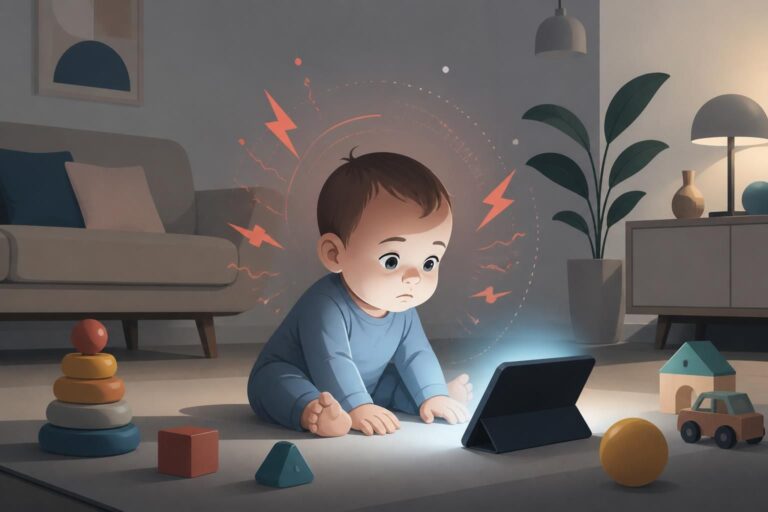
In 2026, the offer of cartoons for toddlers has never been so wide, and that’s precisely the problem: amid very fast, very noisy, very “look-at-me” programs, finding calm and truly soothing series requires a minimum of method. Parents quickly spot signs of overstimulation: an excited child after the episode, difficulty disengaging, or concentration in “flashing” mode. Conversely, some short and peaceful formats create a useful bubble: a simple story, caring characters, and a pace that leaves time to understand what is happening on screen.
The choice is not just a matter of taste. For toddlers, visual readability, sound level, duration, and story simplicity matter as much as the theme. The idea is not to ban animation but to select educational and colorful content, capable of accompanying routines (coming back from daycare, quiet time before the bath) without turning the living room into a launch pad. Hence, a selection of gentle series and a set of concrete criteria, with easy examples to apply daily.
Concrete criteria for choosing peaceful cartoons suitable for toddlers
A peaceful cartoon is rarely recognized by its pitch. Many programs present themselves as “cute” and “for little ones,” then string together rapid shots, blaring music, and adventures changing every ten seconds. To sort effectively, four practical criteria help decide in less than three minutes, including the credits.
First, the pace of the images. A calm animation uses longer shots, lets a character walk, hesitate, look around. This breathing space is useful for toddlers, who need time to process what they see. Next, the sound level. Quiet dialogues, music present but not intrusive, and moderate sound effects limit auditory fatigue, especially at the end of the day.
Third point: the simplicity of the story. Everyday stories (getting ready, playing, arguing then reconciling) are easily understood and offer a perfect ground to talk about emotions. Fourth criterion: reassuring characters. A caring hero, non-threatening adults, minor and repairable conflicts, all this helps the child stay in an emotional safety zone.
The “minute method”: verify in 60 seconds if the program is really calm
A quick check avoids many negotiations at the end of the day. The episode is started, the sound is set to a standard level, and three things are observed for one minute: the frequency of shot changes, the amount of sound effects, and the clarity of the scene. If the screen looks like a string of lights in a blinking contest, the child is likely to follow instinctively rather than with understanding.
A peaceful program shows readable scenes: a simple set, one character in the center, one action at a time. This type of staging is particularly suited for toddlers, as it reduces cognitive load. The scene becomes a language support: “He’s tidying up,” “She’s waiting,” “He is sad.” A short adult sentence can then complement the episode without struggling against the screen.
Framing screen time: the 4 P rule in practice
Content matters, but the frame matters too. The 4 P method acts as a simple safeguard: no screens in the morning, no screens during meals, no screens in bedrooms, no screens before going to bed. This frame transforms the screen into a situated activity, not constant background noise.
Practically, soothing cartoons find a stable place: after weekend naps, or late in the afternoon, never when the child needs energy to go to school or a real transition time before sleep. This organization avoids the “one more episode” effect when the brain is already slowing down.
- Images at a slow pace and readable scenes
- Few screams, loud music, or aggressive sound effects
- Simple stories, often inspired by everyday life
- Reassuring characters, short and repairable conflicts
- Short episodes (often around 10 minutes) to avoid automatic chaining
Choosing calm cartoons is not a “whim of a cautious parent,” it’s a mood setting that is immediately visible on the child’s ability to calm down after the episode.
Selection of peaceful cartoons: T’choupi, Pocoyo, Ernest and Celestine (where to watch them and why they work)
When the goal is gentle animation, three titles often come up in parental recommendations, for a simple reason: they respect the children’s tempo. The interest is not just “not to excite,” but to offer a modern children’s tale, where daily life becomes a real-size adventure: saying hello, lending a toy, taming separation, managing frustration.
T’choupi: everyday life in short episodes, designed for 3-5 year olds
The adventures of T’choupi first exist as books, then were adapted into an animated series. The episodes last about ten minutes, a format that fits well with toddlers’ attention span. The situations are familiar: school, sharing, bedtime, emotions, small frustrations. The hero is not a superhero: he is a child who learns, which facilitates identification without exaggeration.
The tone is tender, the colors remain warm without being aggressive, and the story follows a clear line. This type of writing helps the child anticipate: problem, attempt, solution, calmness. Where to watch T’choupi: France TV.
Pocoyo: visual minimalism and voice-over, a real rest for the eyes
Originally Spanish, Pocoyo follows a little boy dressed in blue, surrounded by animal friends like Pato the duck, Loula the dog, and Elly the elephant. Its particularity: very simple staging, often on a white background, with few elements on screen and a voice-over guiding the viewer. This minimalism reduces visual fatigue and helps the child focus on the main action.
The format lends itself well to “accompanied” viewing: the adult can comment on what the child sees without having to speak louder than the music. The result is often more soothing than a very busy program. Where to watch Pocoyo: YouTube.
Ernest and Celestine: soft colors, slow pace, understandable emotions
Ernest and Celestine tells the story of Ernest, a somewhat grumpy but very tender bear, and Celestine, a little orphan mouse he took in. The charm comes from contrast: one grumbles, the other marvels, and the whole remains caring. The colors are soft, the pace is slow, and the universe leaves space for silences.
For toddlers, this slowness is a concrete advantage: emotion can be read on a face, hesitation understood, a conflict resolved without a sound explosion. Where to watch Ernest and Celestine: France TV.
This selection has one thing in common: it favors understanding and gentleness, making the experience more stable and less “sticky” at the end of the episode.
Short formats and calm animation: durations, pace, and measurable landmarks to avoid overstimulation
Overstimulation does not fall from the sky: it is created with a combination of speed, noise, and constant changes. Some cartoons multiply very short shots, ultra-bright colors, and editing that leaves no “empty” second. For an adult, it is sometimes just tiring. For a toddler, it can complicate story comprehension and emotion analysis, because everything happens too fast to be sorted out.
Short formats, on the contrary, encourage more controlled consumption. A duration of 7 to 12 minutes is better managed than a 25-minute episode, especially when the child has already had a full day. The parent can clearly announce: “one episode,” then move on without triggering an endless negotiation.
Comparison table: concrete landmarks to spot soothing cartoons
| Series | Typical episode duration | Visual style | Perceived pace | Platform cited |
|---|---|---|---|---|
| T’choupi | About 10 minutes | Colorful, everyday settings | Calm, linear narration | France TV |
| Pocoyo | Short (varies depending on compilation/episode) | White background, minimalistic elements | Calm, guided by voice-over | YouTube |
| Ernest and Celestine | Varies depending on episodes/clips | Soft colors, illustrated ambiance | Slow, emotionally readable | France TV |
| Benchmark “peaceful format” | 7 to 12 minutes | Long shots, few flickers | Few sound effects, moderate music | Applicable everywhere |
What the child learns when the episode slows down
A calm cartoon leaves room for language. The toddler can name what he sees, repeat an action, anticipate what’s next. This repetition is not a lack of imagination: it’s training. On simple stories, the child better spots cause and effect: “he took,” “she’s angry,” “he gives back,” “they reconcile.”
In a more settled children’s tale, emotions are also less “caricatured” by sound. Sadness does not need a dramatic violin at full volume to exist, and joy does not boil down to shouting. This nuance makes the episode more soothing to watch together, especially when the goal is to calm down before dinner.
Measurable landmarks (duration, sound level, visual density) prevent choosing “by feeling” and make routines more predictable.
Serene screen rituals: daily organization, adult support and off-screen alternatives
A peaceful series does part of the work, but the atmosphere around the screen does the rest. A stable ritual turns watching into a pause moment, not an accelerator. The first lever is timing. A calm cartoon is more effective when placed at a time when the child needs to settle, for example after physical activity or late afternoon, rather than right after waking up.
The second lever is support. Without commenting on the entire episode, a few simple sentences suffice: naming an emotion, reminding a social rule, or linking the scene to a lived situation (“like when you had to wait your turn on the slide”). This light guidance makes the program more educational because it turns the story into vocabulary and landmarks.
Concrete adjustments: sound, light, and clear “stop”
Volume is a detail that changes the mood of the room. Moderate sound reduces excitement, and the adult does not need to raise their voice to speak afterward. Light also matters: a totally dark room makes the screen more hypnotic. Keeping a lamp on helps maintain a living room atmosphere, not a midnight cinema.
The “stop” must be announced simply. One episode, then a transition activity: tidying up toys with a soft song, going for a glass of water, choosing a book. The child better understands the end when it leads to something concrete rather than a “it’s over” shouted from the doorframe.
Soothing alternatives that extend the “calm cartoon” effect
When an episode ends on a pleasant emotion, a short activity can prolong the calm. Simple coloring takes back the colorful side without the montage’s agitation. A five-minute storytelling keeps the narrative continuity. A small imitation game (“do like the character who tidies up”) also helps transition from screen to reality without a brutal break.
This strategy is particularly useful when the child tends to ask for “one more episode”: the transition activity offers an “after” that is not a punishment but a logical follow-up.
A stable framework and short transitions turn soothing cartoons into a real routine tool, without letting the screen control the family mood.
What do we say about it?
For toddlers, the most reliable selection remains the one that favors a slow pace, simple plots and moderate sound environment, even if the program seems “less spectacular.” T’choupi, Pocoyo and Ernest and Celestine tick these boxes, with short episodes and staging that favors understanding emotions. The weak point is automatic chaining: without clear rules, even a gentle animation can end in an endless session. The recommendation is clear: only one episode at a fixed time, and an immediate off-screen transition.
At what age should peaceful cartoons be offered?
Landmarks vary depending on the child, but calm and very simple programs are generally easier to offer starting at age 3, especially when episodes last around 10 minutes. Before that, adult supervision remains essential: moderate sound, a well-lit room, and a clear stop after an episode limit excitement.
How to recognize a cartoon that is too stimulating, even if it’s “for children”?
A program that is too stimulating can be recognized by very frequent shot changes, omnipresent and loud music, and an accumulation of simultaneous actions on screen. The child may seem “stuck” then agitated at the end. Conversely, a calm animation leaves pauses, readable scenes, and composed dialogues.
Do educational cartoons necessarily have to teach numbers or colors?
No. Educational content can also work on social and emotional skills: waiting, sharing, apologizing, naming sadness or anger. Everyday stories, typical of peaceful series, often provide better language supports than a disguised lesson, especially for toddlers.
What to do if the child asks for “one more episode” after a soothing cartoon?
The most effective solution is to plan an immediate and short transition: drinking a glass of water, choosing a book, doing a little coloring, or tidying up two toys. Announcing “one episode” from the start also helps. The 4 P method reinforces the framework by avoiding screen time at bedtime, where demands often increase.