“A birthday in silence and without colors”: why this mom is shaken by this gift request
In Brief
- On April 12, 2026, a video posted on TikTok by creator @sha27xo recounts receiving a very specific gift request for a child’s birthday.
- The instructions: a gift without colors, without noise, without plastic, and if possible, zero waste, with a homemade card rather than a purchased one.
- The post accumulates over 2.3 million views and more than 16,000 comments, signaling a massive debate around the social norms of children’s parties.
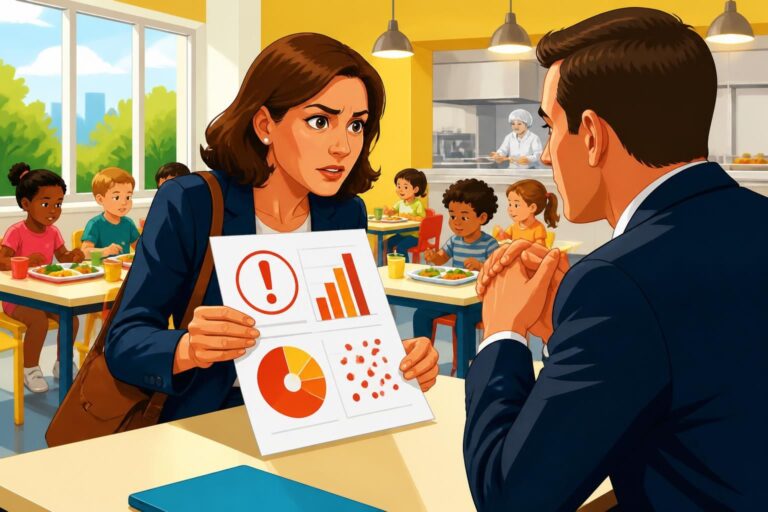
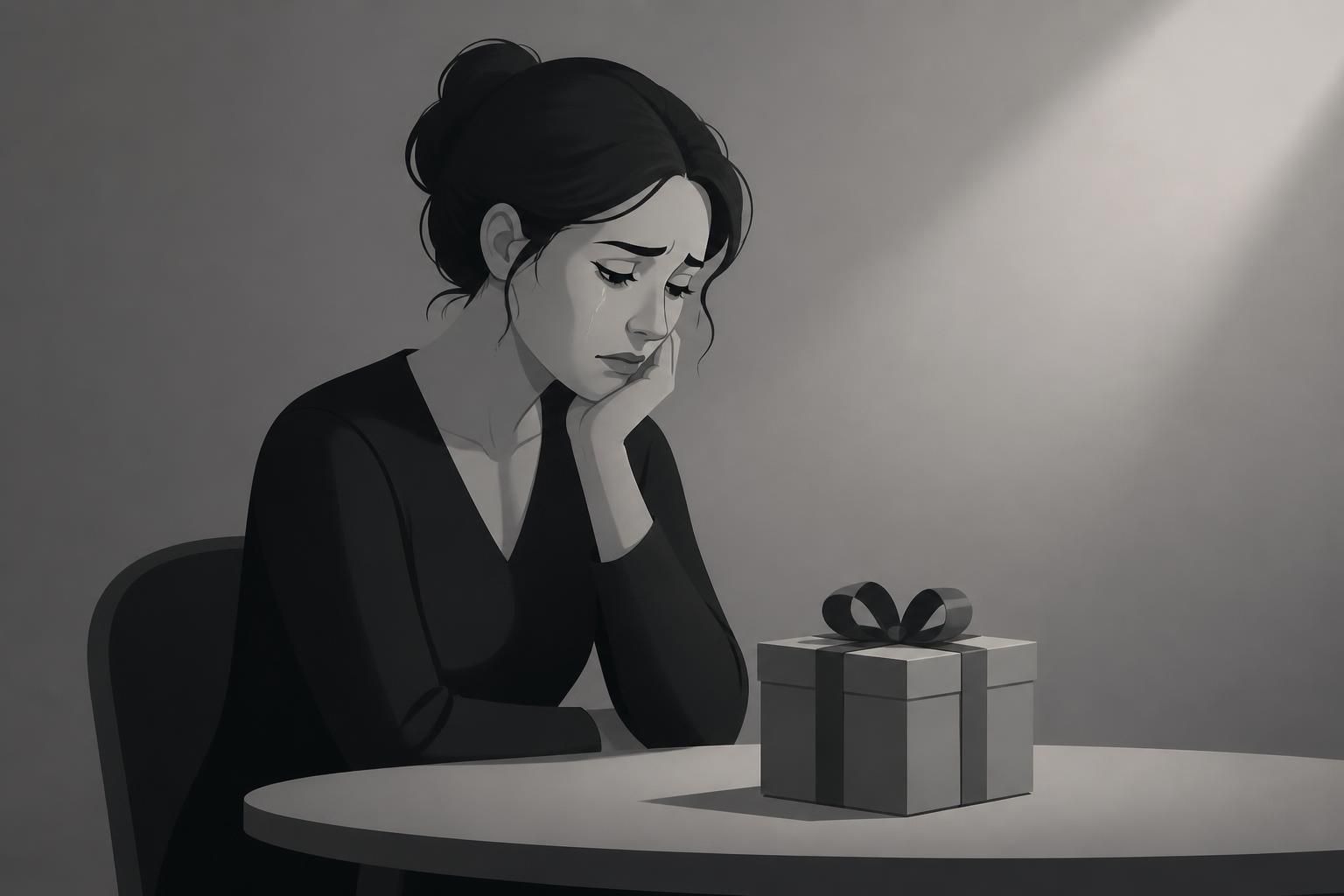
- The mother says she was shaken by the surprise of these late constraints, especially at the thought of making her child uncomfortable in front of others.
- Beyond the anecdote, the episode highlights a frequent tension between ecology, social pressure, and the meaning of a family commemoration.
Everything starts with a common scenario: a birthday invitation slipped into a schoolbag, a date circled on the calendar, a mother who confirms attendance because, in the great lottery of children’s social life, saying “yes” is often easier than explaining why “no.” Then comes the message, three days before the party: the gift request is not a simple size idea or a theme preference, but a very precise list of prohibitions. No sound toys. No plastic. No color. If possible, zero waste, so natural materials and no disposable packaging. Even the card must be homemade, because buying a card would also be one waste too many.
The surprise is not only about the rules, but the timing of them. The mother says she first searched, then hesitated to send her daughter, fearing a misstep. The story, shared on TikTok, triggered an avalanche of reactions, between humor (the famous “potato” as a gift) and more serious suggestions (wooden toys, Montessori-type objects). Behind the jokes, emotion surfaces: the birthday, meant to be a joyful commemoration, becomes for some an exercise in conformity, almost a quality control of the invited parent.
Gift request “without colors” and “without noise”: what upset this mother
The heart of the story lies in the gap between expectation and reality. In many families, the gift request sums up to an age, a current passion, sometimes a list to avoid duplicates of the same fire truck. Here, the message received by the mother changes the nature of the exercise: it’s no longer “choose something that will please,” it’s “avoid anything that could displease.” This reversal places immediate pressure, especially when the deadline is near. The mother, according to her account, does not say she is against ecology. She says she is unsettled by the rigidity and the risk of making a mistake.
The term “shaken” then takes a concrete meaning: it’s not a tragedy, but a very parental cocktail, made up of anticipation, fear of being judged, and a simple wish for the child to have a good time. The silence mentioned in the title fits well with this feeling: the “silence” is not that of a quiet party, it’s the silence following an unusual instruction, when the adult rereads the message and realizes that the gift itself will become a topic. And, among parents, a topic can quickly become a label.
Another weighty detail: the ban on plastic and packaging. In real life, many toys are sold in blister packs, and even “natural” objects come with ties, tags, protections. The instruction “zero waste” then becomes hard to interpret without a manual. Is kraft paper acceptable? Ribbon? A forgotten price tag? The emotion also comes from the vagueness: the stricter the rule, the bigger the margin for error seems.
The moment the rule affects the child, not just the parent
The expressed fear is very pragmatic: arriving with a non-compliant gift and putting the daughter in an uncomfortable situation. At a birthday party, children compare, comment, open gifts in the same place, at the same time. If a rule is known by all, the “off-frame” gift becomes visible. The parent is not the only one carrying the mistake: the child embodies it, and the social experience can turn into embarrassment.
This point explains why the episode goes beyond a simple clash of tastes. The meaning of the birthday is not just to “receive,” but to mark membership in the group: being invited, being expected, being in the right rhythm. When a gift request becomes a test, the commemoration loses its lightness. The laughter in the video (“in the 1990s, it was simpler”) works because it describes a real change: the event is now organized like a mini-project, with constraints and a specifications sheet.
In the comments, absurd proposals have a social function: they serve to relieve tension. Saying “a block of wood” or “a potato” points out the blind spot of the instruction: a gift can be compliant and yet have no playful interest. More serious answers acknowledge a reality: yes, alternatives can be sought, but it takes time, access to certain shops, and sometimes a higher budget. The discussion quickly becomes an implicit comparison of means and codes.
“Zero waste” birthday: ecology, social codes, and frequent misunderstandings
The idea of a more sober birthday is not new. Some families already request second-hand gifts, books rather than toys, or experiences instead of objects. The novelty in the told episode lies in the accumulation of constraints: no colors, no noise, no plastic, no packaging, with a non-purchased card. Each rule, taken alone, can be understood. Added together, they form a system where the guest feels like playing a game whose rules are not well known.
The debate also has a material side. A “no plastic” object is possible: wooden toys, textiles, books, drawing materials. But “no colors” reduces the palette, literally. Many items for children use color as an educational cue. As for “no noise,” it eliminates some electronic games, instruments, toys with sound mechanisms. The gift becomes a niche product, which in practice refers to store availability and price.
This type of instruction can also generate unintended competition. Parents who have time to shop around, find handmade or very clean second-hand items, may seem to “play the game better.” Those who work late, have several children, or lack access to suitable shops risk the “minimum viable” solution: a homemade card and a small neutral object. The discomfort rarely comes from ecology itself; it comes from the gap between intention and reception, especially when the gift request arrives late.
“No colors”: between educational aesthetics and social constraint
“No colors” can correspond to educational choices: preferring natural materials, limiting visual stimulation, harmonizing the play space. But a birthday party is a collective event, not a private living room. When home aesthetics becomes the rule for guests, it changes the implicit social contract: the guest no longer brings a free gesture of affection, they contribute to a guiding line. This shift explains many commentators’ surprise.
The “silence” does not concern only sound toys. It also touches the atmosphere. “Calm” birthdays exist, with craft workshops, readings, constructions. They can work very well. The problem appears when the instruction comes as an injunction, without explanation. Saying “we prefer to avoid noisy toys because the child is sensitive to sound” does not have the same effect as “no noise” without context. The emotion of invited parents often comes from this lack of explanatory framework.
| Type of gift | Level of compliance “no plastic” | Level of compliance “no colors” | Noise risk (0 to 3) | Recommended wrapping |
|---|---|---|---|---|
| Board or paperback book | Medium (often protective film) | Medium (frequent colorful covers) | 0 | Kraft paper + string |
| Unpainted wooden toy | High | High | 1 | Reusable fabric bag |
| Homemade modeling clay (simple recipe) | High | Variable (possible shades) | 0 | Glass jar |
| Board game | Low to medium (often plastic film) | Low (very colorful design) | 0 | No additional packaging |
In this kind of situation, the most effective approach is often operational clarity: offer 3 validated options. A short reference list (a specific book, a specific creative kit, a voucher for an outing) relieves mental load. Conversely, a series of prohibitions without concrete examples pushes guests to interpret and therefore to make mistakes.
Why TikTok is on fire: humor, parental pressure, and comment dynamics
The virality of the story first lies in its structure: an ordinary situation transformed by an unexpected message. TikTok loves domestic “plot twists,” especially when played on a screenshot. According to @sha27xo’s account, the video exceeded 2.3 million views and generated more than 16,000 comments. This mass creates a public scene: everyone projects their own experience of a child’s birthday, their codes, their limits, their values.
Humorous comments often dominate the first layers of visibility. Proposing a “potato” or a “piece of wood” is not just a joke: it is a way to challenge the idea that a gift must be optimized according to a specifications sheet. It is also a signal sent to other parents: “You’re not alone in finding this excessive.” Laughter becomes a pressure valve. The platform rewards this type of punchlines because they get liked quickly.
The serious responses, on the other hand, provide concrete solutions: Montessori-inspired toys, discreet sensory objects, manual activities. The problem, noted by several users, remains color: many educational toys are painted or use bright colors. The thread then becomes a discussion on what “no colors” means. Beige only? Natural wood? Pastel shades? Again, the vagueness raises the pressure.
The invisible pressure: being “the good parent” at a birthday party
The debate goes beyond the object. It touches on parental performance: organizing “better,” consuming “better,” educating “better.” A very strict gift request can be perceived as an implicit message: those who don’t adhere are less responsible. This reading is not necessarily the intention of the organizing parents, but it circulates quickly online, where every detail becomes symbolic.
The timing of the message, three days before the party, also fuels annoyance. In real life, many families manage gifts between errands, after work, sometimes the day before. Adding late constraints feels like a penalty. The “silence” plays again here: silence from the parent who reads and doesn’t know how to respond without creating conflict, silence from the organization that didn’t anticipate the impact on guests.
The platform finally highlights a classic divide: some see the rules as progress (less waste, less overconsumption), others see them as social control. Both camps can defend coherent positions, but the exchange becomes tense when the initial emotion — a surprised and shaken mother — is interpreted as an attack on ecology. The story, however, is mainly about timing and mental load.
Gift ideas “without plastic” and low noise, without turning the birthday into an exam
When a gift request imposes silence, sobriety, and absence of plastic, options exist, but they require a method. The most important point is securing visible compliance: avoiding sound (no batteries, no buttons), avoiding plasticized packaging, aiming for simple materials. On the question of “no colors,” you often have to interpret: in practice, a natural wood or unbleached fabric object fares better than a multicolored item. The goal is not to enter a logic of obedience, but to limit the risk of embarrassment for the invited child.
A homemade card can also be a good lever, because it carries a clear intention. It can compensate for a very simple gift by adding a message. In a commemoration like a birthday, the meaning is often in the attention, not in the volume. The trap is to make the card a “consolation prize” saying “Sorry, we didn’t understand.” The right approach is to make it coherent: thick paper, drawing, little note, possibly a cleanly reused envelope if the household is comfortable with that.
Practical list: realistic options that respect “silence” and sobriety
- A small unpainted wooden puzzle, with a fabric bag for transport, to avoid disposable packaging.
- A book chosen for its theme (animals, friendship, nature) and delivered without additional plastic film, with a homemade bookmark.
- A minimalist drawing kit: graphite pencils, kraft-covered notebook, eraser, all in a fabric pouch.
- Salt dough or homemade modeling clay in a glass jar, with a handwritten recipe sheet.
- A voucher for a “no object” shared activity (park outing, cooking workshop), written on a homemade card, if the organizing parents accept the idea.
- A cotton comforter in a neutral shade, checking the absence of visible plastic parts (embroidered eyes rather than plastic).
The budget varies greatly depending on cities and shops, but cost is not necessarily the main obstacle. Availability is the constraint. An unpainted wooden toy is easier to find in certain specialized chains than a large general store. Anticipation then becomes a key factor: if the instructions arrive late, the probability of a “perfect” gift decreases, and frustration rises.
A concrete point can calm the situation: ask for clarification by message, neutrally. A simple phrase like “Is a book okay even if it has a colorful cover?” avoids turning the birthday into a guessing game. It also allows the organizing parents to realize that “no colors” is not a standard category in stores.
What do we say about it?
A very restrictive gift request can be consistent on an ecological level, but becomes counterproductive when it arrives late and without concrete examples. The episode told on TikTok shows that surprise and fear of making a mistake are enough to shake a mother, even when the initial intention is not aggressive. To avoid social pressure, organizers should propose 3 validated ideas rather than a list of prohibitions. For guests, the best option remains a simple, quiet object, with a carefully made homemade card, to protect the child from embarrassment on the party day.
How to offer a “zero waste” gift for a child’s birthday without mistakes?
The safest is to aim for a simple material (unpainted wood, fabric, paper), avoid batteries and sound mechanisms, and reduce the packaging to reusable materials (fabric bag, glass jar). A homemade card can complement the attention. If in doubt, a short question to the organizing parents avoids misinterpretation.
What to do if the “no colors” or “no plastic” instructions arrive too late?
When the gift request comes just days before the birthday, the priority is to limit the social risk for the invited child. A sober and quiet gift, even modest, accompanied by a clean and legible homemade card, often works. A message to the organizers to validate an option (book, wooden puzzle) can also be reassuring.
Is a Montessori toy necessarily compatible with a “no colors” request?
No. Many Montessori-inspired toys use bright colors for learning (sorting, counting, visual cues). However, some objects exist in natural unpainted wood. The ideal is to check for paint, tinted varnish, and plastic elements (ties, packaging windows, pieces).
How to prevent the birthday from becoming a source of stress for invited parents?
Organizing parents can give concrete examples, announce preferences as soon as the invitation, and accept a simple alternative (homemade card, book). Guests can favor a quiet and neutral option and ask for quick validation if a rule is unclear. This reduces pressure and protects children’s experience.