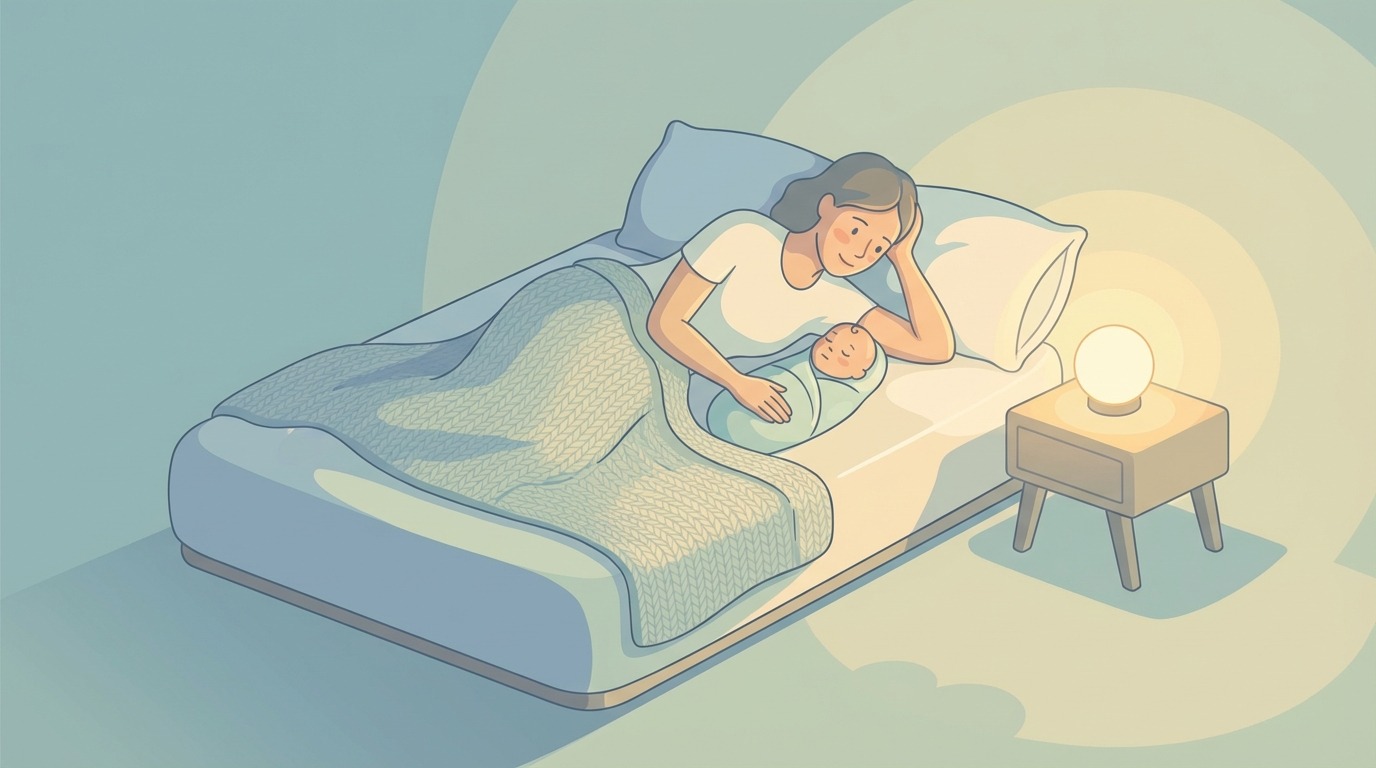
Cododo: what you need to know about bed-sharing with baby?
Co-sleeping, or shared sleep, is becoming more and more common in households. Between reassuring closeness and safety requirements, the practice raises legitimate questions. Parents seek comfort for disrupted nights while protecting their child from known sleep risks. Early childhood specialists remind that sleeping in the same room until 5 or 6 months can help, provided clear rules are followed. In 2026, the variety of devices and access to information facilitate informed choices, but reliable benchmarks remain essential to decide calmly.
Shared sleep is not limited to simply welcoming a newborn into the parental bed. It covers various setups, from a secure attached cradle to a highly supervised shared bed. Benefits exist, especially regarding nighttime breastfeeding and adult responsiveness, but they balance with unavoidable precautions. This article offers a precise overview: definitions, proven advantages, risks to know, safety rules, and concrete benchmarks to choose an appropriate device. Everyday examples, practical lists, and useful resources allow progress step by step, without dogma, for calmer and safer nights.
| In Brief ✨ |
|---|
| Co-sleeping = sleeping with baby in the same room or via a attached cradle 🛏️ |
| Up to 5-6 months recommended by many professionals, with strict rules 🔐 |
| Never on couch, soft bed, pillows, duvets; baby on the back 🌙 |
| Promotes breastfeeding and parental recovery if space is secure 🤱 |
| Safest option : attached co-sleeping bed, firm mattress, no gaps 🧸 |
| Prepare the transition to baby’s bed with a progressive plan 📆 |
Co-sleeping: definition, safe practices and cultural references
The term co-sleeping refers to sharing the night with a newborn, either in the same bed or in the same room. The most common arrangement in France remains the attached cradle, also called co-sleeping bed, which attaches to the parental bed. This proximity soothes awakenings and allows for quick responses to nighttime needs. On the other hand, sharing the same mattress requires strict precautions because the adult moves during sleep.
Two configurations dominate. The attached co-sleeping places the baby in a secure cradle, open on the parents’ side, at mattress height. The full co-sleeping places the baby directly in the family bed, which demands a strict protocol: firm mattress, minimalist sheets, no pillows near the face, no space where the little one could get stuck. In both cases, the ideal temperature is between 18 and 20 °C.
Common practices and 2024-2026 recommendations
Many professionals advise keeping the infant in the parents’ room until 5 or 6 months. This approach reduces nighttime awakenings and increases parental alertness. The guidelines align on safety: sleep on the back, firm surface, no soft accessories, and never on a couch. Furthermore, the adult avoids any bed sharing if under the influence of alcohol, sleeping pills, or extreme fatigue. These factors increase risks due to involuntary movements.
A notable cultural fact, the practice remains discreet in Western Europe, while it is historic in Asia or Latin America. This disparity reflects different family habits and living spaces. In France, the range of co-sleeping beds expanded in 2025 and 2026, with better-ventilated models and more intuitive fasteners. Families thus have safer alternatives for daily life.
Concrete examples and field benchmarks
In Léa’s family, a co-sleeping bed adjusted to parental mattress height changed the nights. Baby sucks without the mother fully getting up, then quickly falls back asleep. The adult bedding remains clear because the sheet is folded under the mother’s hips to avoid any cover on the little one. Thus, proximity combines with risk prevention. Another scenario : Samir and Inès opted for the shared room without an attached bed. Their baby sleeps in a standalone cradle 50 cm from the bed, allowing constant visual monitoring.
Accessories remain simple and targeted : soft cotton pajamas like Petit Bateau, a fitted sheet bought at Vertbaudet or Natalys, and a sleep sack adapted to the season. Evening care sometimes uses a moisturizing cream Mustela for the ritual. Feeding is managed with a cushion and, if needed, Avent or Dodie equipment for expressing milk. Keeping essentials limits clutter and reduces unnecessary heat sources.
In short, defining the setup right after maternity secures actions. This initial framing avoids improvising at 3 a.m., when fatigue challenges vigilance.
This video resource helps visualize the installation and identify safety points before the first night.
Before exploring the concrete benefits of shared sleep, it is useful to understand how proximity influences breastfeeding and nighttime recovery.
Benefits of shared sleep for baby and parents: proximity, breastfeeding and recovery
Co-sleeping supports the newborn’s self-regulation. The adult’s breathing, micro-movements, and light cycles add useful sensory references. Baby calms faster and falls back asleep more easily after feeding. This proximity creates a reassuring continuity between life in utero and the family environment.
Regarding breastfeeding, literature observes easier access and more frequent feeds, often shorter, which are less tiring. Mothers do not have to get up for every awakening. Contact promotes the release of oxytocin, a key hormone for milk ejection and bonding. Over time, production better adjusts to nighttime needs.
Psychic support and lighter mental load
The night can concentrate parental anxieties. Keeping baby within sight reduces anxious hypervigilance. Cries are heard earlier, thus easier to soothe. This early response avoids stress escalation, beneficial for adult and child. The other parent also finds their place, through a whispered word, a hand placed at the right moment, a prepared bottle if breastfeeding is mixed.
Short, constant rituals reinforce this calming. A warm bath at the end of the day, gentle gestures with a neutral oil like Mustela, a simple lullaby, then the sleep sack. Repetition reassures the child and clarifies landmarks. Calm routines reduce awakenings linked to overstimulation.
Examples of concrete daily gains
In Hugo and Maéva’s household, switching to a co-sleeping bed eliminated nighttime walks between rooms. Feedings aligned with more regular cycles. Daytime naps stabilized because nights caused less sleep debt. Mornings flow better, freeing time for a walk with the Baby Stroller and, for the adult, a proper shower without rushing.
In another family, mixed feeding relies on Avent bottles in the evening, allowing the non-breastfeeding parent to take over. Physiological nipples Dodie limit aerophagia. Each small success at night improves morale, as a smoother night often signals a steadier day. Siblings benefit indirectly, with fewer morning tensions.
Stay vigilant without giving up benefits
Benefits must not overshadow safety. Well-thought co-sleeping combines proximity and material discipline : firm mattress, tight fitted sheet, no pillows near baby’s face. This rigor allows calm proximity. It makes awakenings less stressful and maintains breastfeeding on a manageable rhythm.
To find essential equipment at a good price, selections dedicated to future parents list indispensable items useful for shared sleep. See for example these good deals for preparing arrival, making sure to choose breathable textiles and sleep sacks adapted to the season’s TOG.
Overall, shared sleep can reinforce attachment without increasing the load, provided basic gestures are respected and logistics adjusted to the home.
To enjoy benefits without exposing to avoidable dangers, a central point is mandatory : bedding safety and prevention of sudden infant death syndrome.
Risks, SIDS and safety rules for safe co-sleeping
The main safety issue concerns sudden infant death syndrome, often cited during sleep. Shared room improves parental vigilance, but poorly organized shared bed can create mechanical risks. The aim is therefore to eliminate anything that could obstruct breathing or cause overheating.
Thick sheets, pillows and duvets increase dangers near a newborn. The most protective solution remains the sleep sack, which keeps warm without covering the face. Moreover, baby sleeps exclusively on the back, from birth and for every nap. A firm bed, free of objects, reduces hazards.
Golden rules to apply daily
- 🛌 Firm and flat surface, no pillows or bulky plush toys ; favor a sleep sack.
- 🌡️ Room between 18 and 20 °C, no piles of blankets or night cap.
- 🚫 Never couch, armchair, baby rocker or adult bed if baby sleeps alone ; avoid any gaps.
- 🍷 No bed sharing under influence of alcohol, drugs, sleeping pills, or extreme exhaustion.
- 🧭 Baby always on the back, uncovered head, clear face.
- 🧺 Minimal adult bedding if shared bed ; prefer an attached cradle fixed to the bed.
To better understand the infant’s neurological vulnerability and involved mechanisms, a helpful explanation is here : sudden death and infant brain. This resource reminds why simple rules save lives when applied every night.
Identify signals and structure checks
In practice, safety also relies on reflexes. Checking the absence of gaps between the cradle and parental bed prevents trapping. Controlling mattress thickness and fitted sheet adjustment removes folds where a nose could lodge. Monitoring baby’s neck temperature signals possible overheating. These short actions are part of the bedtime routine.
Sophisticated accessories, like electrified cradles or vibrators of Fisher-Price type, do not replace basic prevention. The heart of the matter remains bedding ergonomics, dorsal position, and minimal bedding. Technology does not compensate for improper installation.
For further insight, a clear video can facilitate adoption of safe gestures, notably for bedtime preparation and control of sensitive points around the co-sleeping bed.
These concrete, memorized, and repeated benchmarks turn the night into a controlled and calming environment.
Secure installation then calls for reflection on equipment. How to choose a reliable attached cradle, suitable textiles, and a practical organization for every night ?
Choosing a co-sleeping device: safety criteria, options and useful equipment
A good co-sleeping bed is identified by its stability, its attachment system to the parental bed, and precise height adjustments. Recent models offer breathable mesh walls and a secure lowerable side. The ideal remains no gaps, thanks to solid straps and a frame adjustable by the millimeter.
The mattress must be firm, not sagging, and perfectly fitted. Breathable fabrics limit heat. A washable cover simplifies maintenance. Wheels with brakes add real value, especially when rearranging the room for nighttime breastfeeding or naps.
Essential criteria before purchase
- 🔒 Robust fastenings and zero gaps with the parental bed.
- 🌬️ Mesh walls for ventilation and visual monitoring.
- 📏 Fine height and inclined plane adjustment in case of reflux, validated by manufacturer.
- 🧽 Removable and washable textiles, quick maintenance.
- 🧩 Compatibility with fitted sheets ; no superfluous accessories.
Family brands and stores help compose a sober kit. A co-sleeping cradle like Calidoo by Bébé Confort illustrates inclinable options and safety straps. Breathable pajamas Petit Bateau or a sleep sack at Vertbaudet fit well within a minimalist approach. For care, the Mustela line remains a reference for gentleness. For nighttime feeding, Avent or Dodie solutions facilitate mixed feeding without disrupting the night.
Additionally, some households provide a rolling cradle in the living room for naps, and a handy Baby Stroller for morning outings. The important thing remains overall coherence : proximity at night, lithe bedding, and repeated gestures. To remember everything, a recap of needed items is precious : see this list of essential equipment, to adapt according to season and available space.
Textiles, keepsake books and room organization
Sleep sacks with adapted TOG, breathable mattress protectors, and tight fitted sheets form the base. Combed cotton bodysuits prevent overheating under the sleep sack. A The Birth Book placed on the shelf allows noting longer first sleeps, reinforcing the acknowledgment of small progress. At Natalys, the selection often offers sober sets and beds compliant with safety expectations.
Finally, a word on gadgets : soft nightlights and ambient thermometers help, but do not replace vigilance. Bedside ergonomics, clear space for the person getting up, and smooth circulation around the cradle matter more. Attention to details creates a calmer night for all.
Well-chosen equipment, supporting a clear routine, forms the foundation of reliable and calming co-sleeping.
What remains is to define simple family rules, then gently prepare the nighttime separation when baby is ready.
Organizing co-sleeping daily life and preparing the transition to baby’s room
Co-sleeping succeeds when framed in a shared structure. Each adult knows their role at night : who responds to the first awakening, who manages the next feeding, who checks the bedding. This light planning smooths the night and reduces frustrations. Naming these tasks before nightfall prevents misunderstandings.
The evening routine is drawn around stable landmarks : short bath, putting on a sleep sack, breastfeeding or bottle, brief cuddle, then awake but calm bedtime. This simple sequence fosters autonomous falling asleep. The goal is not forced independence but maintaining an inner security even when the adult steps away briefly.
Preparing the gradual transition
When it’s time to move to baby’s bed in their room, proceeding step by step helps greatly. Start by having the first nap there. Next, offer the beginning of the night in this room, then complete the night in the attached cradle if necessary. The rhythm naturally stretches over days. The child discovers a new space without abrupt disruption.
Verbal presence remains key. Very short, repeated phrases reassure : “You sleep, I’ll be back.” A discreet nightlight marks the place. Textiles keep the home’s scent. The same gestures as before are respected, sending a clear message : only the location changes, not the quality of care.
Living as a couple and with siblings during co-sleeping
Conjugal life requires dedicated moments. Planning one evening per week, even short, supports the bond. Skin-to-skin time for the other parent also nurtures attachment. Older siblings benefit from involvement : bringing the sleep sack, dimming the light, choosing the lullaby. Their engagement turns co-sleeping into a family project, not an exclusive tête-à-tête.
Unexpected events happen. Teething or a cold disrupt the routine. To stay on track, restoring the frame after the episode prevents schedule drift. Bulky objects never come into the bed, even “just for one night.” Consistency builds trust.
Small tools and useful resources
- 🧭 A family weekly planner to distribute nights and note improvements.
- 📚 Practical resources for equipping without excess, such as these smart-family good deals.
- 🧸 A “night” box near the bed : spare sleep sack, muslin, clean bottle, diaper.
- 🎧 A soft playlist in the background, 20-minute timer to avoid sound dependence.
In the end, co-sleeping becomes a living framework, made of consistency and adjustments. This alliance offers an affective safety net and more stable nights for the whole family.
To complete these benchmarks, the following FAQ gathers the most frequent questions from parents about shared sleep.
Up to what age should baby stay in the parents’ room ?
Many professionals recommend sharing the room until 5 or 6 months, then assessing the child’s maturity : faster falling asleep, spaced awakenings, ability to soothe with a ritual. The transition can stretch over a few weeks, starting with the nap in their own room.
Is shared bed recommended from birth ?
Shared bed requires a very strict safety protocol and is not suitable for all situations. The most protective option remains the attached co-sleeping cradle, fixed to the parental bed, with firm mattress and no gaps. The parental bed must remain minimalist and without pillows near baby.
How to reconcile breastfeeding and restorative sleep ?
Set up an optimized space : attached cradle at mattress height, nursing cushion, low nightlight, water within reach. Short and frequent night feedings can be less tiring and often align better with baby’s clock.
What equipment is really useful for co-sleeping ?
A stable and well-fixed co-sleeping bed, a firm mattress, fitted sheets, 2 sleep sacks adapted to TOG, some breathable pajamas, a soft nightlight and an ambient thermometer. The rest is optional ; safety comes first from bedding sobriety.
Should electronic accessories and bed bumpers be avoided ?
Yes : no padded bed bumpers, pillows or duvets for the infant. Electronic devices do not replace basic measures : back position, firm mattress, room at 18-20 °C, minimal bedding and regular supervision.