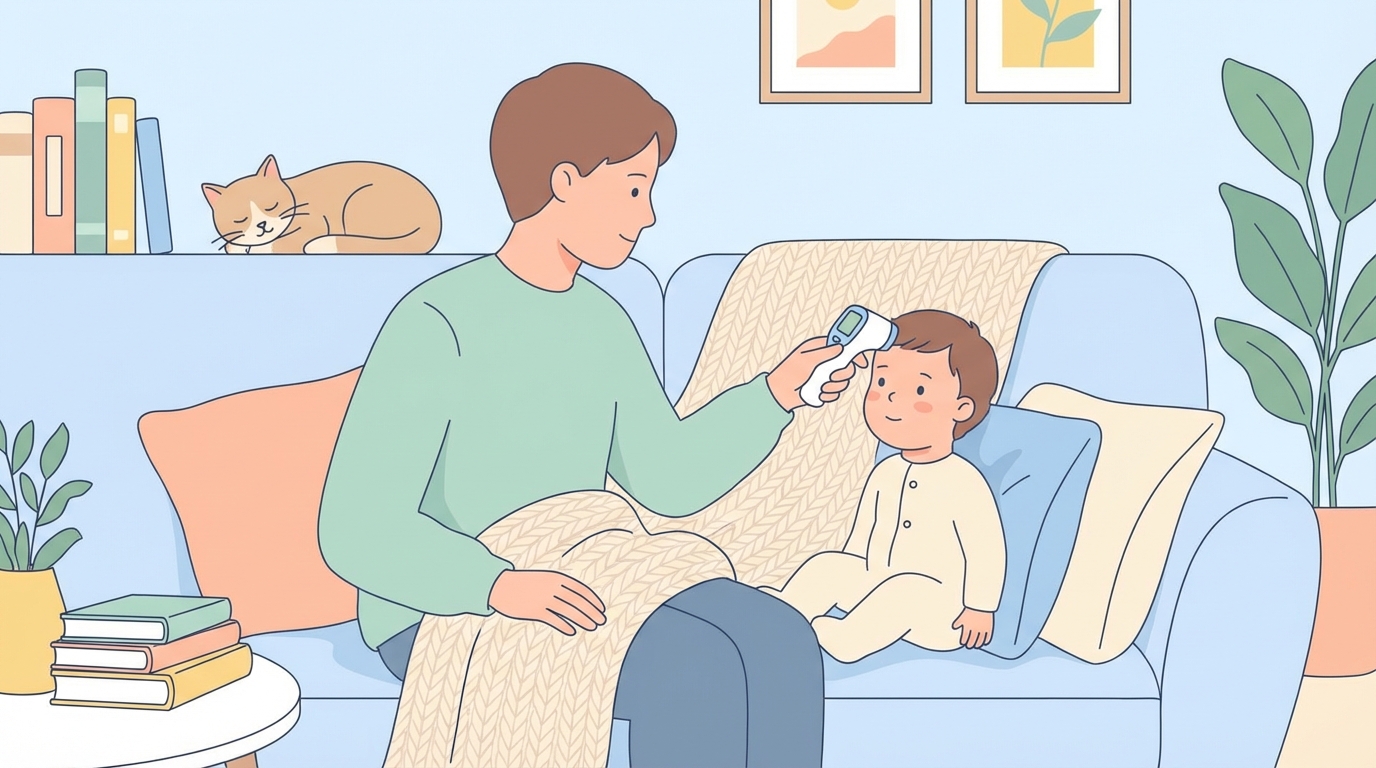
Fever Child: Fever in children: when to worry and use the thermometer.
Winter epidemics, broken nights, and a thermometer flashing red… A child’s fever quickly raises alarm at home. However, the rising body temperature initially signals a useful response from the immune system. The real challenge, therefore, is to distinguish reassuring situations from worrisome signs. Thus, a febrile infant under 3 months is an emergency, whereas a playful toddler at 39.5 °C can wait for attentive fever monitoring. In the context of bronchiolitis and seasonal flu, reliable reference points, concrete actions, and clear thresholds are necessary.
This guide offers a simple method derived from field pediatrics. First, understand what hyperthermia is, how to properly measure temperature, and when to decide to act. Then, adjust child care to actual comfort, without chasing the “number.” Finally, detect fever symptoms that require a quick consultation. To remain effective, the advice is based on validated practices and everyday examples. The goal is clear: reduce anxiety, increase accuracy, and protect children’s health with informed decisions. ✨
| Short on time? Here’s the essentials ⏱️ |
|---|
| Under 3 months + 38 °C = emergency 🍼 |
| Clinical tolerance takes precedence over the number (drinks, plays, reacts) ✅ |
| Paracetamol according to weight if discomfort, no cold baths 🚫🛁 |
| Frequent hydration; room 18–20 °C; light clothing 💧 |
| Consult if fever > 5 days, rapid breathing, spots, drowsiness ⚠️ |
| Rectal thermometer for little ones, ear/forehead with caution 🌡️ |
Fever in children and body temperature: understand, measure, decide
Fever is not a disease. It is a regulated response, triggered by the brain to slow the multiplication of infectious agents. Thus, the increase in body temperature optimizes immunity and hinders viruses. This strategy remains beneficial as long as the child tolerates it well.
In real life, everything begins with a reliable measurement. A poorly positioned thermometer quickly misleads parents. Therefore, choose the appropriate tool and follow the technique. A consistent result feeds accurate decisions and avoids unnecessary back-and-forths.
Thermometer and good measurement practices
For infants under 3 months, the reference remains digital rectal measurement. It offers the best accuracy at this age. For older children, an ear model may be suitable but requires proper sensor positioning.
The forehead thermometer is attractive for its ease. However, its value varies depending on the environment and movements. It is therefore used for quick checks, not for making urgent decisions. It is better to confirm with a more reliable measurement if behavior raises concern.
How to proceed at home? First, check the instructions. Then, take two measurements spaced apart if the result is surprising. Finally, compare the number with the general state: thirst, alertness, breathing, skin color. Accuracy does not replace clinical observation; it complements it.
Where to set the threshold? Fever is defined from 38 °C. Above 38.5 °C, discomfort is assessed and relief may be given. However, the notion of poorly tolerated hyperthermia applies if the child remains lethargic, breathes quickly, refuses to drink, or shows mottling.
Let’s illustrate with “Lina,” 18 months old. She rises to 39.4 °C but laughs, drinks, and asks for her blocks. The thermometer confirms the fever, but her tone reassures. An antipyretic can improve comfort, without medical urgency. Conversely, “Noé,” 7 weeks old, shows 38.1 °C with chills and distress. Here, immediate consultation is needed.
To facilitate monitoring, a tracking app can help. For example, a shared journal improves coordination among adults. On this topic, tools listed in baby monitoring apps make fever surveillance smoother.
Ultimately, measure well, observe better, and decide correctly: this is the solid foundation before exploring worrying signs.
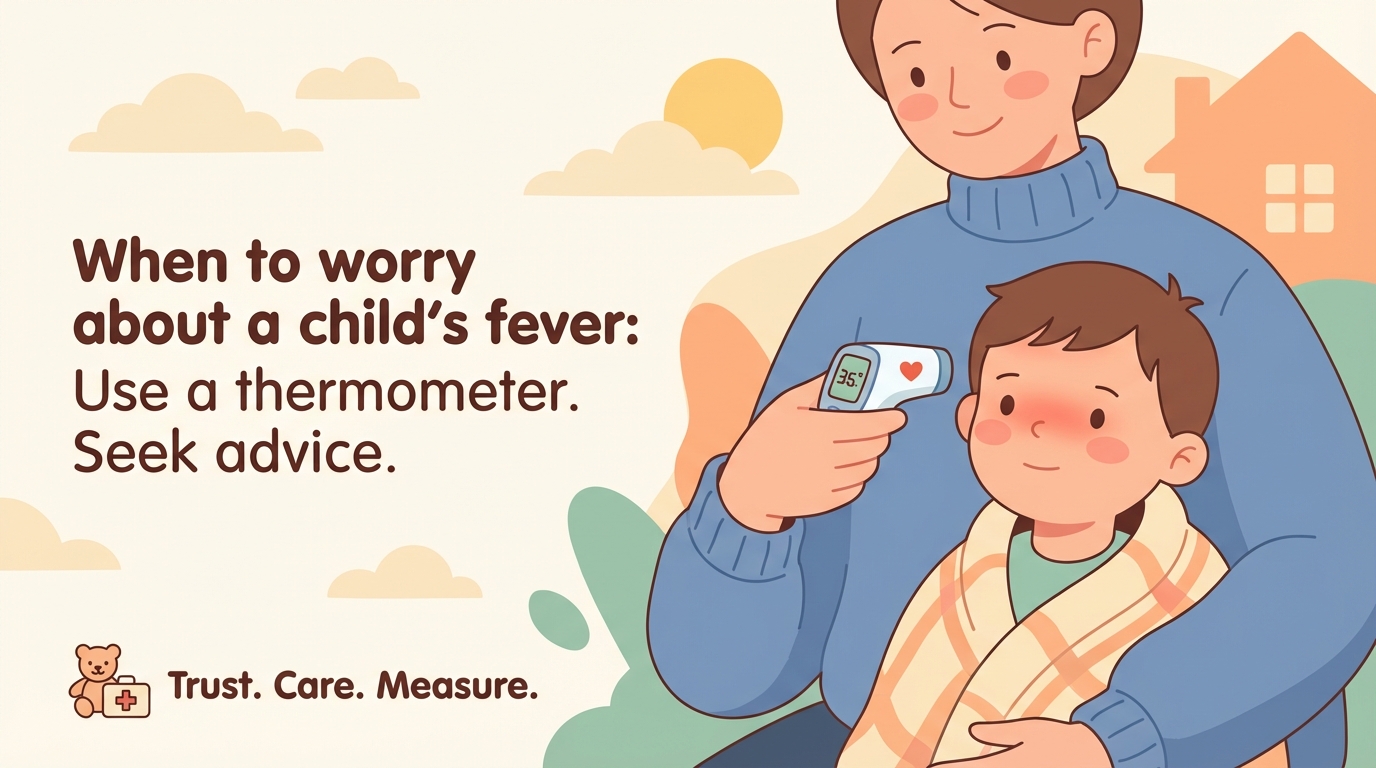
When to worry: alert thresholds and worrying signs in pediatrics
Pediatric teams reason with three hierarchical criteria. First age, then duration, then tolerance. This simple grid guides consistent decisions, even during epidemics.
Age: under 3 months + 38 °C = immediate medical evaluation. At this age, an infection can be discreet and progress rapidly. One should not wait for other fever symptoms to appear before acting.
Duration: fever beyond 5 days in a child or beyond 24–48 hours in an infant requires consultation. Thus, persistence points to a cause to document. An ear infection, urinary infection, or pneumonia can reveal themselves late.
Tolerance: behavior takes precedence over the number. A little player, hydrated, pink, reassures. Conversely, certain red flags require rapid care. This logic avoids judgment errors based solely on body temperature.
Warning signs never to ignore
- ⚠️ Cold extremities, mottling, bluish lips
- 😴 Unusual drowsiness, difficulty waking
- 🥵 Refusal to drink, signs of dehydration (dry mouth, little urine)
- 😮💨 Rapid breathing, chest retractions, respiratory moaning
- 🟣 Unusual skin rash, persistent spots
- 🤯 Febrile convulsions or neck stiffness
These signs indicate potentially serious situations. Therefore, call emergency services or go to the emergency room without delay. Better an reassuring check than a delay.
Furthermore, certain contexts increase vigilance. After a tropical trip, fever may reveal a particular infection. After a chemotherapy period, alert thresholds are lowered further. In these cases, contact the reference team.
The living environment also plays a role. In young children’s care settings, viruses spread faster. Thus, fever surveillance must be organized, with a clear return home protocol if the condition worsens.
Another point concerns care organization. Between nanny and agency, isolation and alert rules sometimes differ. It is advisable to establish a simple framework in advance: who measures, when to warn, what actions to take according to worrying signs.
Finally, teleconsultation can speed up the initial sorting. A professional can validate clinical observation and direct to an in-person consultation if necessary. This smooth step reassures families and saves time.
The golden rule is remembered in one sentence: the number counts, but the child counts more.
Understanding the thresholds is always accompanied by concrete actions at home. The next chapter details these useful steps.
Managing fever at home: child care, hydration, medication, and mistakes to avoid
The goal is not to “break” the fever at all costs. The goal is to restore comfort and prevent dehydration. This nuance changes everything daily.
Hydrating often remains the priority. In infants, milk remains the best option. To refine the beverage offer, this dossier on water and baby thirst helps recognize real needs, especially if the fever is accompanied by sweating or vomiting.
In a small breastfed baby, a temporary transition may be needed in case of maternal exhaustion. In these moments, pragmatic reference points on the breast to bottle transition help maintain good hydration. The essential is to offer frequently, in small quantities.
Regarding clothing, lighten without undressing. The room remains between 18 and 20 °C. Air out without direct drafts. Absolutely avoid cold baths or alcohol rubs, which cause thermal shock and do not improve tolerance.
Paracetamol relieves discomfort and associated pain. Dose according to weight and respect the interval between doses. Ibuprofen may be considered from 6 months but only after medical advice, as it can worsen some infections.
Rest is as important as medication. Thus, provide a quiet corner, gentle activities, and limited screen time. Longer naps are not a problem if the child wakes well and drinks regularly.
Dos and don’ts, in brief
- ✅ 💧 Offer drinks very often, in small amounts
- ✅ 🌡️ Check temperature with a reliable thermometer
- ✅ 😌 Seek comfort: light clothing, tempered room
- ✅ 📝 Note the times of doses and evolution of symptoms
- 🚫 🛁 No cold baths or alcohol on the skin
- 🚫 💊 No reckless self-medication or overdose
- 🚫 ❄️ No excess blankets that raise heat
And outside? Depending on the season, adapt without excess. To limit colds and viruses, these tips for protecting children from cold and illnesses provide a good framework. Better to prevent superinfections than multiply exhausting outings.
In organized families, a backup care plan lightens mental load. Home childcare sometimes avoids transport and respects the sick person’s rhythm. Thus, hydration, medication intake, and fever monitoring gain regularity.
In summary, the home becomes an effective care place with simple, repeated, and coordinated gestures.
Now it remains to understand where the fever comes from to better anticipate what follows. This is the subject of the next section.
Common infections and associated fever symptoms: from cold to meningitis
The majority of fevers in children come from benign viruses. Rhinopharyngitis, flu, bronchiolitis and gastroenteritis dominate the winter. Their common point remains a rapid onset with variable general condition. Ear pain sometimes signals a secondary ear infection.
In rhinopharyngitis, a blocked nose, mild cough, and moderate fatigue are observed. Fever peaks on the second day then goes down. Sustained hydration and nasal washing suffice in most cases.
Flu is distinguished by chills, aches, and marked fatigue. Thus, fever can exceed 39 °C. Strict rest is required, as complications occur in the most fragile. It is advisable to monitor breathing and hydration.
For ear infection, ear pain predominates, sometimes with fever and night awakenings. Medical advice is necessary if pain persists, if discharge occurs, or if the child remains lethargic. Appropriate treatment quickly relieves.
Urinary infections manifest with fever, strong urine odor, crying when urinating, or irritability. Consult for a urine test. Early care prevents kidney complications.
Gastroenteritis combines vomiting, diarrhea, and fever. The main risk is dehydration. Therefore, an oral rehydration solution is offered, doses are fractioned, and consultation if vomiting persists.
Bronchitis and pneumonia cause cough, rapid breathing, and fatigue. Presence of chest retractions, respiratory distress, or cyanosis requires urgent consultation. Here, body temperature alone is not sufficient to judge severity.
Furthermore, certain eruptive diseases are spotted on the skin. Chickenpox, roseola, scarlet fever, or measles combine fever and characteristic rashes. In chickenpox, fever monitoring is accompanied by vigilance on hydration and itching.
The care setting influences transmission risk. In a daycare or maternal assistant’s home, prevention is organized. Practical information on childcare modes helps set rules: hand washing, temporary isolation in case of high fever, return after 24 hours without worsening.
For active parents, a flexible structure or hybrid solution can reduce interruptions. This nanny vs. agency comparison clearly highlights advantages according to situations. The essential remains to ensure continuity of child care when fever persists.
Finally, logging the timeline of fever symptoms facilitates diagnosis. A shared app or a paper diary details peaks, medications taken, and fluid intake. This rigor saves precious consultation time.
Clinical key: identifying the probable cause guides action and secures the care pathway.
Prevent and anticipate: vaccination, hygiene, organization, and “fever” kit
The best crisis is the one avoided. Vaccination protects against several infections causing high fever. Adhering to the vaccination schedule protects the child and their surroundings. Thus, family epidemics decrease.
Daily hygiene limits virus circulation. Handwashing, airing rooms, and cleaning surfaces often suffice. At peak times, avoid close contact with sick people.
Family organization makes the difference at the first peak. A ready “fever” kit avoids panic. It includes: reliable thermometer, suitable paracetamol, rehydration solution, compresses, saline solution. A weight-dose memo limits errors.
Then, prepare an alert plan. Who watches, who calls, who drives to the doctor? During the week, continuity of care is planned. Home care often allows more attentive monitoring and respected naps.
Quality sleep supports immunity. Therefore, maintain a stable rhythm. Limit group activities during the acute phase, without isolating the child from the world more than necessary. Balance is paramount.
A word for future parents. Anticipating health logistics starts during pregnancy. Reference points on amniotic fluid loss or on thermometer choice prepare a serene return home. This health culture then benefits the entire sibling group.
In the heart of winter, dressing just right avoids sudden temperature shocks. Combine breathable layers and suitable coat, without overheating. Don’t forget the hat for the little one who sweats after the nap.
Finally, keep practical tools at hand. Monitoring booklets and dedicated apps centralize data. Scheduled alerts remind of temperature checks and medication times. This discipline improves fever monitoring without excessive mental load.
Standard conclusion: prevention and anticipation turn fever into a controlled episode.
{“@context”:”https://schema.org”,”@type”:”FAQPage”,”mainEntity”:[{“@type”:”Question”,”name”:”u00c0 partir de quel chiffre parle-t-on de fiu00e8vre chez lu2019enfant ?”,”acceptedAnswer”:{“@type”:”Answer”,”text”:”La fiu00e8vre du00e9bute u00e0 38 u00b0C. Au-delu00e0 de 38,5 u00b0C, on soulage si lu2019enfant est inconfortable. Le comportement compte plus que le chiffre isolu00e9.”}},{“@type”:”Question”,”name”:”Quel thermomu00e8tre choisir pour un bu00e9bu00e9 de moins de 3 mois ?”,”acceptedAnswer”:{“@type”:”Answer”,”text”:”Un thermomu00e8tre numu00e9rique rectal reste la ru00e9fu00e9rence. Sa pru00e9cision guide les du00e9cisions rapides chez le nourrisson.”}},{“@type”:”Question”,”name”:”Quand consulter en urgence ?”,”acceptedAnswer”:{“@type”:”Answer”,”text”:”Moins de 3 mois + 38 u00b0C, respiration rapide, somnolence inhabituelle, refus de boire, marbrures, convulsions, u00e9ruption inquiu00e9tante. Dans ces cas, on consulte sans attendre.”}},{“@type”:”Question”,”name”:”Quels mu00e9dicaments utiliser u00e0 la maison ?”,”acceptedAnswer”:{“@type”:”Answer”,”text”:”Le paracu00e9tamol selon le poids en premiu00e8re intention. Lu2019ibuprofu00e8ne, seulement apru00e8s avis mu00e9dical u00e0 partir de 6 mois. Pas du2019aspirine chez lu2019enfant.”}},{“@type”:”Question”,”name”:”Comment pru00e9venir les u00e9pisodes de fiu00e8vre ?”,”acceptedAnswer”:{“@type”:”Answer”,”text”:”Vaccination u00e0 jour, hygiu00e8ne des mains, au00e9ration, organisation de garde souple et trousse u2018fiu00e8vreu2019 pru00eate. Un suivi ru00e9gulier limite les risques de complications.”}}]}At what number is fever considered in children?
Fever starts at 38 °C. Above 38.5 °C, relief is given if the child is uncomfortable. Behavior matters more than the isolated number.
Which thermometer to choose for a baby under 3 months?
A digital rectal thermometer remains the reference. Its precision guides quick decisions in the infant.
When to consult urgently?
Under 3 months + 38 °C, rapid breathing, unusual drowsiness, refusal to drink, mottling, convulsions, worrying rash. In these cases, consult without delay.
What medications to use at home?
Paracetamol by weight as first line. Ibuprofen only after medical advice starting from 6 months. No aspirin in children.
How to prevent fever episodes?
Up-to-date vaccination, hand hygiene, airing, flexible care organization, and ready “fever” kit. Regular monitoring reduces the risk of complications.
“Don’t fight a number: listen to the child, measure right, act quickly when necessary.”