Grocery Guessing Game: Guessing game at the grocery store for children aged 3 to 5.
| Short on time? Here’s the essentials 🚀 |
|---|
| Goal: turn the grocery store into a fun learning ground thanks to a guessing game tailored for children aged 3 to 5 years 🛒 |
| Benefits: cognitive development, enrichment of food vocabulary, autonomy, parent-child interaction 🧠💬 |
| Principle: pose a simple riddle, observe the aisles, validate the answer together (colors, shapes, letters, quantities) 🔍 |
| Duration: 10 to 20 minutes per store visit, by mini-missions ⏱️ |
| Materials: puzzle cards, stickers, timer, reusable bag, scorebook 👜✨ |
| Variations: observation game, color hunt, “Who am I?”, very short charades 🎯 |
| Tip: set clear rules, choose quiet times, celebrate each success 🌟 |
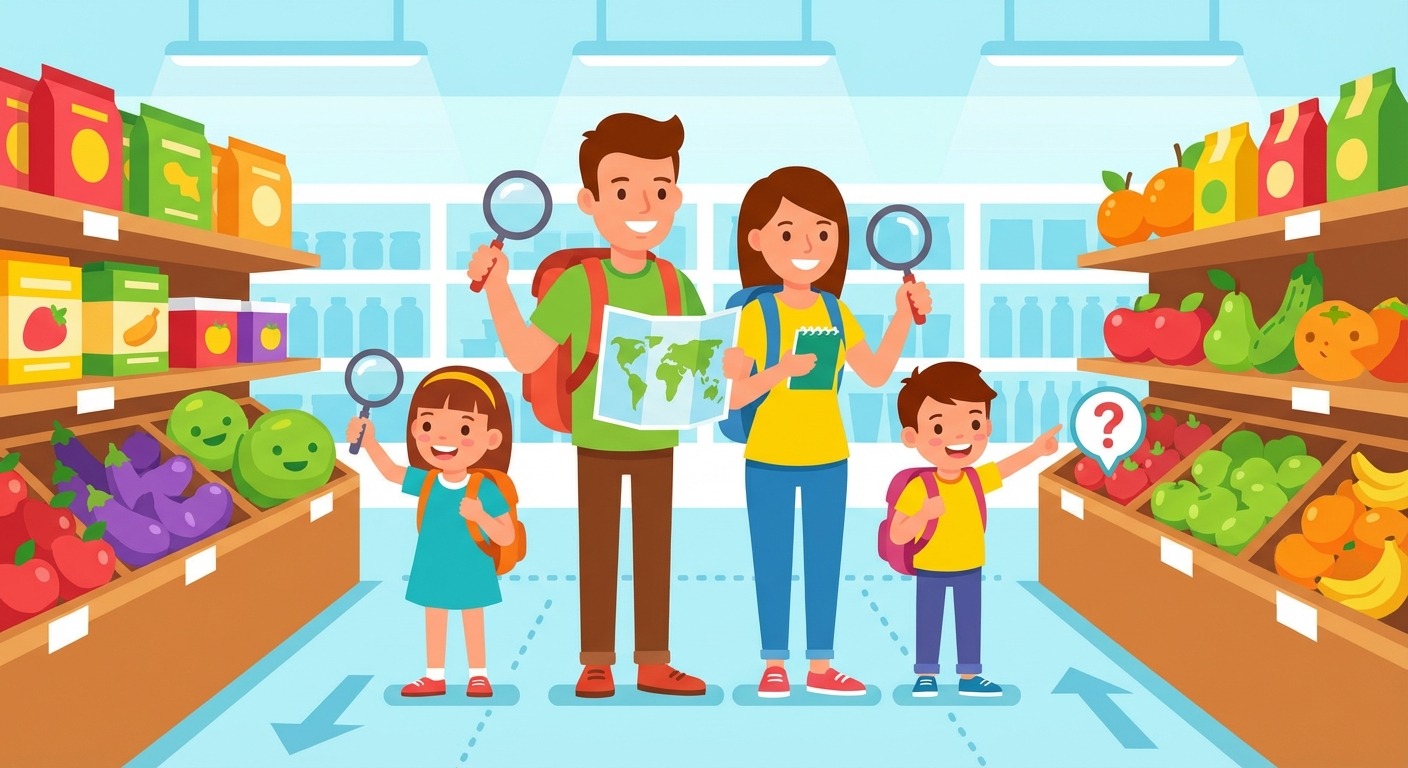
Turning the shopping line into an educational adventure is possible and even delightful. The guessing game at the grocery store stimulates the eye, ear, and tongue, while channeling energy. Thanks to short missions and progressive clues, children aged 3 to 5 years learn without realizing it. The shelves turn into a treasure map, labels into clues, and each product feeds the food vocabulary.
Beyond fun, the challenge is significant. Attention is strengthened, logic trained, and confidence developed. Furthermore, the store’s auditory and visual environment promotes interaction and listening. With simple preparation, this educational game integrates into the routine. Above all, it turns an everyday task into a shared, creative, and rewarding moment.
Grocery Store Guessing Game: pedagogical principles and benefits for 3 to 5-year-olds
At this age, the mind loves to guess and compare. The guessing game taps into this curiosity and structure. It combines words, images, and concrete actions, which strengthens memory. Moreover, short instructions reassure and guide.
The benefits become visible quickly. The child listens, spots clues, then decides. This quick loop supports cognitive development. It improves inhibition and mental flexibility.
Skills worked on, one by one
Each riddle mobilizes several skills. For example, “I am red, round, and hiding in the lettuce” leads to inference. Then, checking in the aisle reinforces mental representation.
- 🧠 Sustained attention: follow the clue to the correct aisle.
- 🗣️ Food vocabulary: name fruits, vegetables, cereals, dairy products.
- 🎯 Executive functions: plan the search, stop at the right product.
- 👀 Observation game: discriminate colors, sizes, pictograms.
- 🤝 Interaction: listen, rephrase, negotiate a hypothesis.
The game also helps with spatial orientation. The child learns “up,” “middle,” “to the left of the yogurt.” This repositions the body in space, which is key in kindergarten.
Simple indicators to adjust difficulty
The progression must remain gentle. Start with riddles with only one clue. Then combine two characteristics. Finally, integrate a small time constraint, keeping the fun.
| Progression of clues 🧩 | Example riddle 🗣️ |
|---|---|
| 1 clue (color) ✅ | “I am green and crunchy, who am I?” → cucumber 🥒 |
| 2 clues (color + shape) ✅✅ | “I am yellow and curved, you peel me.” → banana 🍌 |
| 3 clues (texture + place + use) ⭐ | “I am fresh, in the fridge, I wash.” → sponge 🧽 |
The time frame matters. Ten minutes is enough to maintain enthusiasm. Also, short breaks prevent sensory fatigue.
- ⏱️ 2 to 3 riddles per aisle.
- 🌟 Positive reinforcement after each success.
- 🧸 Security blanket allowed, if reassurance is needed.
Ultimately, the challenge is not performance. It’s the joy of having found the answer. This emotion consolidates learning.
Preparing the grocery store outing: materials, rules, and variations for a calm educational game
Light preparation ensures a smooth moment. A small bag with cards, pencils, and stickers is enough. A timer encourages dynamics without pressure.
Clear rules reassure. Walk near the cart. Observe first, then touch with consent. These guideposts soothe transitions.
Practical kit for the facilitator
- 📝 Laminated puzzle cards (colors, letters, shapes).
- ⏳ 30-second timer to boost engagement.
- 🎟️ Reward stickers to mark finds.
- 👜 Reusable bag dedicated to the game, easy to open.
- 📒 “New words” notebook for food vocabulary.
Variations keep curiosity alive. For example, logo hunts, round prices, or initial letters of names. Malo, 4 years old, loves finding “M” on “Honey.” Inès, 5, prefers spotting the numbers 1 and 2 to count.
| Variation 🎲 | Educational goal 🎯 | Example 🍎 |
|---|---|---|
| Color hunt 🌈 | Visual discrimination | “Find something red to snack on” → apple |
| Magic initials 🔤 | Sound-letter connection | “A product starting with B” → butter |
| Weight and size ⚖️ | Simple comparisons | “Which package is the lightest?” |
It’s useful to choose quiet times. Saturdays at noon complicate the game. Weekday mornings encourage interaction and listening.
- 🚦 Visual reminder of rules on a “traffic light” card.
- 👂 Short instructions, repeated with gestures.
- 🧃 Water break after two aisles, if needed.
For trips, preparing the child eases the experience. Ideas for a family road trip offer organizational tips transferable to small outings. Anticipating desires and transitions also helps avoid frustrations.
If the sibling group is soon to grow, involving everyone strengthens bonds. One can be inspired by guides like pregnancy announcement to dad or announcing pregnancy to partner to ritualize key family moments. A small ritual before the grocery store visit can take the same symbolic form.
Finally, planning a “plan B” relieves stress. A quick riddle at the cart activates if an aisle is crowded. Fun remains at the heart of the setup.
50 guessing and observation game ideas at the grocery store (3-5 years)
Riddles should be concrete and vivid. Start with a simple clue. Then refine if needed. This gradual increase reassures and motivates.
Here are adapted phrasings, inspired by classics but contextualized for the store. They work on sounds, colors, and functions. They also support semantic memory.
- 🍌 “I am yellow and I smile when you peel me, who am I?”
- 🥕 “I am orange and crunchy, found near the salads.”
- 🥛 “I sleep cold, I’m white and soften chocolate.”
- 🥚 “I break, I flow, I make pancakes.”
- 🍞 “I come out hot, I make toast.”
- 🧀 “I have holes like a mouse but not always here.”
- 🍓 “I am red with small dots, sometimes in yogurt.”
- 🐿️ “I nibble hazelnuts and have a bushy tail… guess my friend from the dried fruit aisle!” → squirrel
- 🧥 “You wear me at night, I have two arms and two legs but no feet.” → pajamas
- 🦩 “I have long legs at the pond, but I’m not a duck.” → goose or flamingo, depending on added clue
For toddlers, “Who am I?” riddles about everyday objects work well. The child points, then confirms with the adult. A short timer adds rhythm.
| Clue 👂 | Answer ✅ | Teaching tips ✨ |
|---|---|---|
| “I say ‘cuckoo’ on the hour.” | Cuckoo clock 🕰️ | Show numbers 1-2-3 |
| “I am the biggest bird but I can’t fly.” | Ostrich 🐦 | Compare to turkey |
| “I have two branches without leaves.” | Glasses 👓 | Mimic putting on glasses |
| “I cluck on the farm.” | Hen 🐔 | Link to eggs in aisle |
| “I am red, smooth, and I like lettuce.” | Tomato 🍅 | Name round, smooth |
Mini charades also work. “My first is the sound of a cat, my whole covers the head.” → hat. The image can be displayed on a card to help.
- 🧩 3 series of 5 riddles, then a break.
- 🌟 One sticker per answer, 5 stickers = choice of fruit.
- 🎶 Optional transition rhyme between aisles.
To vary remotely, video content inspires families. This research can help prepare a lively session.
Finally, car rides benefit from being playful. Resources on traveling with children provide useful layout tips before and after the store. Energy is managed throughout the trip, not just in the main aisle.
Adapting the game to each child: differentiation, inclusion, and pace “at 5 years”
At 3 years, the instruction must be unique and tangible. At 4, combine two clues. At 5, the child manages a small sequence and explains their choice. This increase in complexity respects each one’s rhythm.
Accessibility is key. Favor large pictograms, clear gestures, and repetitions. Allophone or shy children benefit from visual models and verbal echoes.
Positive inclusion strategies
- 🫶 Duo “researcher–spokesperson” to value speech and action.
- 🖼️ Photo cards for new food vocabulary words.
- 🔁 Systematic reformulation by adult then child.
- 🎯 Choice between two riddles to maintain a sense of control.
- 🧩 Graduated clues, no final fail (adjust until success).
Some profiles need movement. Offer short “motor missions”: touch a pictogram, show a green label, return to the cart.
| Profile 👧🧒 | Adaptation 🛠️ | Example instruction 🎙️ |
|---|---|---|
| 3 years beginner | 1 clue + image | “Look for red like this” (shows card) 🍎 |
| 4 years curious | 2 clues + choice | “Round and orange: carrot or apricot?” 🥕🍑 |
| 5 years independent | Mini-sequence in 3 steps | “Read the letter, find the aisle, show two options.” 🔤 |
Self-assessment builds confidence. Ask: “What helped you? The color or the letter?” This way, the child becomes aware of their strategies.
- 🗺️ Short course, aisle by aisle.
- ⛳ Achievable goals, limited time.
- 🏁 End ritual: choose a fruit to name together.
Two minutes of video inspiration can also support the adult. Examples of instructions and helpful gestures are found there.
For families with a younger child, ideas for board games for 2-year-olds help prepare the mind for simple rules. The transfer to the grocery store is natural, as the mechanics are similar.
Extending at home and on the go: recipes, albums, mini treasure hunts, and family rituals
The magic continues outside the store. A “rainbow” salad turns finds into a sensory exploration. Name, touch, smell, and taste together.
Albums and rhymes extend the observation game. Repetition of words fixes the food vocabulary. You can create a “word wall” in the kitchen.
Concrete ideas, easy to start
- 🌈 Color recipe: green-cucumber, red-tomato, yellow-corn.
- 🖍️ Homemade cards: product photo + word in uppercase.
- 🎲 Ultra-short charades in the evening (“Meow + skin = hat”).
- 🧺 Mini hunt: “I hide the banana, you follow three clues.”
- 🚗 Letter guessing on signs seen on the road.
| Activity 🏡 | Targeted skill 🧠 | Practical tip 💡 |
|---|---|---|
| Rainbow salad | Sorting and categorization | Name 3 textures per meal |
| “Who am I?” cards | Expressive language | Maximum 2 clues at 3 years |
| Logo hunt | Visual spotting | 5 minutes is enough |
Trips become transitional spaces. Sing the favorite riddle in the car. To improve comfort, advice like preparing a family road trip offers ideas for storage and playful breaks. There are also useful tips for traveling with children in serenity.
When the family prepares to welcome a baby, these rituals help the eldest feel involved. Resources such as sharing the news with paternal grandparents or announcing the pregnancy to maternal grandparents inspire symbolic moments. You can create a “guessing basket” to gently reveal the news.
- 📦 Family guessing box every Sunday.
- 📚 Photo album of the “week’s finds.”
- 🏷️ Homemade labels: drawing + word, stuck on jars.
Continuity creates progress. The more children handle words and clues, the more their autonomy grows. The kitchen and living room become natural extensions of the store.
{“@context”:”https://schema.org”,”@type”:”FAQPage”,”mainEntity”:[{“@type”:”Question”,”name”:”How many riddles to propose during an outing?”,”acceptedAnswer”:{“@type”:”Answer”,”text”:”Between 6 and 10 riddles are enough. Alternate colors, letters, and shapes. Add a break after two aisles to keep momentum.”}},{“@type”:”Question”,”name”:”How to avoid frustration if the child doesn’t find the answer?”,”acceptedAnswer”:{“@type”:”Answer”,”text”:”Give a new more concrete clue, then offer two visual choices. Success must always remain accessible.”}},{“@type”:”Question”,”name”:”What notions to cover at 5 years?”,”acceptedAnswer”:{“@type”:”Answer”,”text”:”Initial letters, simple/bigger comparisons, and sequences of 2 to 3 steps. Keep instructions short and positive.”}},{“@type”:”Question”,”name”:”Is specific material needed?”,”acceptedAnswer”:{“@type”:”Answer”,”text”:”No, a small kit suffices: puzzle cards, some stickers, a timer. The store’s products and labels are your best supports.”}},{“@type”:”Question”,”name”:”How to link the activity to meals?”,”acceptedAnswer”:{“@type”:”Answer”,”text”:”Invite the child to choose an ingredient found through the riddle. Then name the color, texture, and smell together during preparation.”}}]}How many riddles to propose during an outing?
Between 6 and 10 riddles are enough. Alternate colors, letters, and shapes. Add a break after two aisles to keep momentum.
How to avoid frustration if the child doesn’t find the answer?
Give a new more concrete clue, then offer two visual choices. Success must always remain accessible.
What notions to cover at 5 years?
Initial letters, simple/bigger comparisons, and sequences of 2 to 3 steps. Keep instructions short and positive.
Is specific material needed?
No, a small kit suffices: puzzle cards, some stickers, a timer. The store’s products and labels are your best supports.
How to link the activity to meals?
Invite the child to choose an ingredient found through the riddle. Then name the color, texture, and smell together during preparation.
“At the grocery store, one clue at a time, one smile at a time: curiosity opens all doors.”