
Infant Preparations: Chronicle: all you need to know about infant preparations.
Between official recommendations and daily reality, infant formulas occupy a central place in the feeding of young children. Exclusive breastfeeding up to 6 months remains recommended, but life is not always linear. When breastfeeding is not possible or not desired, the infant milk carefully chosen ensures a complete, safe, and evolving infant nutrition. Yet, faced with the abundance of baby formulas and claims, doubt quickly arises. How to sort out the essentials from the marketing? What are the real differences between stage 1, stage 2, and growth formulas? What options are available in case of regurgitation, sensitive transit, or suspected allergy?
This article offers a clear and well-argued reference to support families in the choice of infant formulas. Each section explores key points: regulations, composition, practical uses, baby food safety, and the transition to complementary feeding. Concrete examples and decision tables make the information actionable. Practical lists, numerical benchmarks, and infant feeding advice help move from doubt to confidence. Objective: equip parents for informed choices, without guilt, with safe actions and robust nutritional logic.
| Short on time? Here’s the essentials ⏱️ |
|---|
| 1. Exclusive breastfeeding up to 6 months is recommended, but infant formulas fully cover baby’s nutritional needs when properly used. 🍼 |
| 2. Three categories: stage 1 (0–6 months), stage 2 (with diversification), growth (1–3 years). 🎯 |
| 3. Adjusted proteins, lipids with omega-3/6, iron and vitamin D: check the composition before the marketing. 🔎 |
| 4. Preparation: boiled water 2–5 min, no microwave, cold storage max 24 h. 🧊 |
| 5. In case of reflux, colic, or suspected allergy, adjust the formula with a professional. 🚑 |
Infant formulas: categories, standards and guidelines to start well
The European and French regulatory framework sets a strict base that ensures baby feeding. Formulas must alone cover needs until the introduction of other foods. This requirement protects infants from critical deficiencies, notably in iron, lipids, and vitamins.
The market today aligns three main families: stage 1 for 0–6 months, stage 2 from diversification between 4 and 6 months, and growth milk up to 3 years. This gradation follows digestive, renal, and brain maturation, and anticipates variations in appetite and energy expenditure.
Infant milk categories and practical uses
Stage 1 formulas resemble human milk by adapting proteins, lipids, and lactose. Stage 2 formulas strengthen iron, crucial when the baby’s reserves deplete. Growth milks complement a diversified diet, maintaining a high nutritional density.
With more than 299 products, a simple method helps: age, digestive tolerance, medical context, and availability. This grid avoids purchases under stress and limits untimely switches, often a source of digestive disorder.
- 🧭 Prioritize age and tolerance before attractive labels.
- 🧪 In case of doubt, keep a formula for at least 7–10 days to assess the effect.
- 📦 Avoid alternating multiple brands without clinical reason.
- 🧴 For equipment, consult this guide to bottles and accessories useful daily.
| Type 🍼 | Age 🎚️ | Objective 🎯 | Nutrition focus 🍽️ |
|---|---|---|---|
| Stage 1 | 0–6 months | Substitute breastfeeding if needed | Adjusted proteins, lactose, omega-3/6 🧠 |
| Stage 2 | 4–12 months | Support diversification | High iron, vitamins D/E, energy ⚙️ |
| Growth | 1–3 years | Complete the plate | Iron, D, ALA/DHA, iodine, calcium 🦴 |
To visualize key actions and avoid common pitfalls, a step-by-step video is very helpful.
A final reference: do not use non-infant cow’s milk before 12 months. The risk of iron deficiency and renal overload is real. The following details the ideal composition and the markers that really matter.
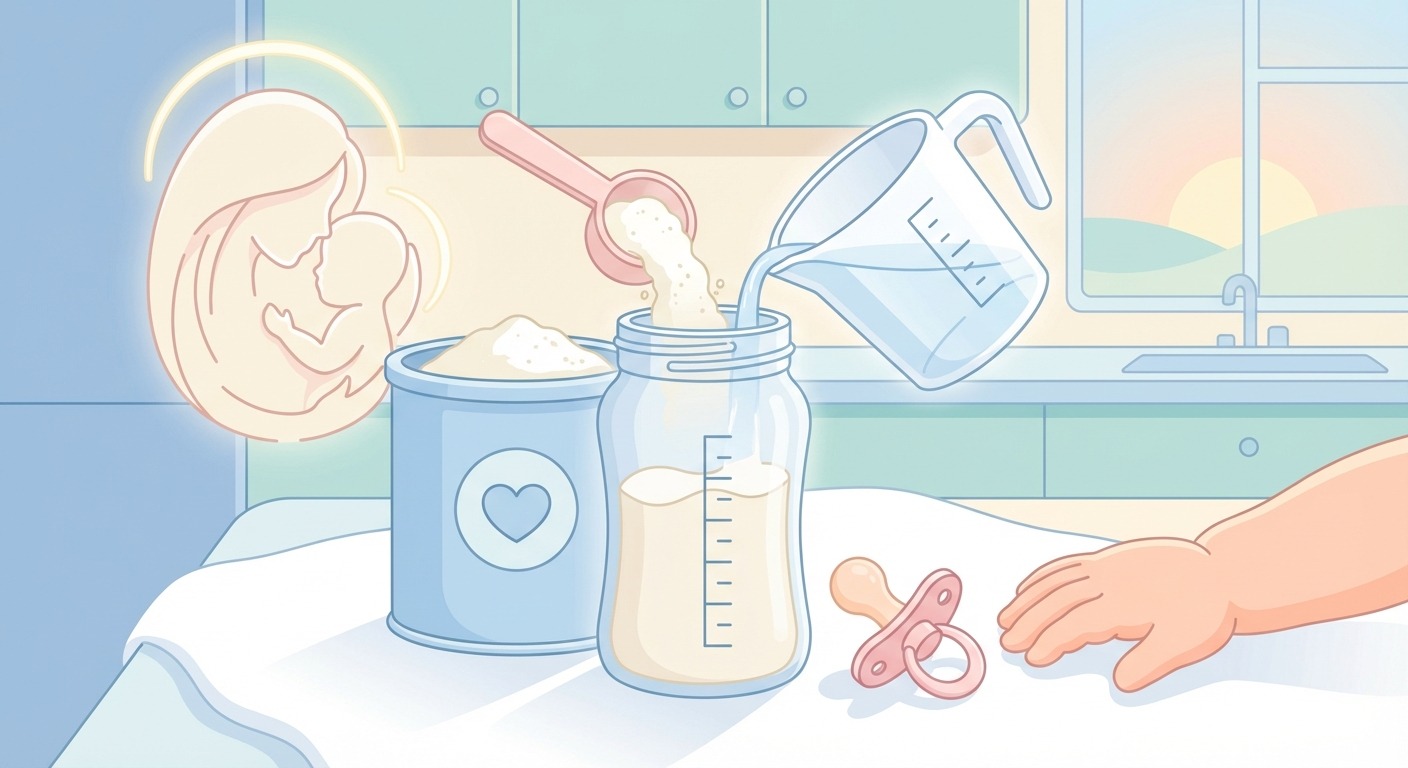
Composition of infant milk: nutritional analysis and supporting evidence
A good formula relies on a protein-carbohydrate-lipid balance, enriched with vitamins and minerals. This harmony supports growth, brain, and immunity while respecting digestive maturation.
Proteins are adapted for easier digestion. Stage 1 targets a low level, to resemble breast milk and limit excess risk. Data have shown that too high protein intake may promote a higher BMI at school age.
Carbohydrates, lipids, and micronutrients: what to look for on the label
Lactose often dominates on the carbohydrate side. It supports satiety and promotes a balanced flora. Some brands add dextrin-maltose; the goal remains tolerance.
For lipids, the presence of essential fatty acids omega-6 (LA) and omega-3 (ALA) is central. DHA is relevant for eyes and brain. Some formulas include structured palmitic acid to optimize fat and calcium absorption.
- 🧠 Look for DHA/ARA for neurodevelopment.
- 🦴 Check vitamin D and calcium for bone health.
- 🩸 Ensure sufficient iron, especially from stage 2 onward.
- 🦠 Pro-/prebiotics: useful in case of sensitive transit.
| Nutrient 🌟 | Key role 🧩 | Practical reference ✅ |
|---|---|---|
| Proteins | Growth and satiety | Low in stage 1, progressive afterwards 💡 |
| Lactose | Energy and flora | Priority on digestive tolerance 🌿 |
| Omega-3/6 | Retina and brain | DHA present? + strong point 🧠 |
| Iron | Erythropoiesis | Particularly high in stage 2 🔍 |
| Vitamin D | Bone and immunity | Often supplemented in drops ☀️ |
In case of lactose intolerance or cow’s milk protein allergy, options exist. European regulations require a precise denomination for formulas not based on cow or goat proteins to avoid confusion.
Practicality also matters for equipment. A reasoned choice of bottles improves the experience: see these tips to choose a bottle and limit aerophagia.
Before addressing special situations, a simple message stands out: the right composition is the one the baby tolerates day by day, without discomfort. The rest is case-by-case adjustment.
Choose your formula: baby profiles, digestive tolerance, and informed decisions
Faced with diversity, an analysis framework helps. Lina’s example, 2 months old, illustrates the approach. Her parents hesitate between three brands. She regurgitates but gains weight well. Is an anti-regurgitation formula needed? The answer depends on frequency, discomfort, and growth curves.
Simple reflux is often managed by gestures: fractionation, appropriate nipple flow, pause-burp. Thickened formulas have their place if regurgitations remain bothersome. Conversely, colics may respond to particular fiber mixes or lactic ferments.
Common situations and action levers
Cases of cow’s milk protein allergy require medical management and extensive hydrolysates. A milk change must remain reasoned and accompanied when symptoms persist.
To clearly sort, using a decision table speeds up the process and reduces trial-error, often experienced as exhausting.
- 🕒 Test a formula for at least 7–10 days, unless contraindicated.
- 🍼 Check the nipple flow rate before changing milk.
- 📈 Monitor weight and comfort rather than only regurgitations.
- 🔄 Limit multiple changes in the same week.
- 🧴 Also see daily preparation tips to standardize gestures.
| Situation 🤔 | Formula option 🧪 | Field tip 🧰 |
|---|---|---|
| Regurgitations | Thickened formula (AR) | Reduce volume + increase frequency 🍽️ |
| Colics/transit | Pre-/probiotics, fiber profile | Check nipple and air intake 🎈 |
| Suspected CMPA | Extensive hydrolysate (medical advice) | Symptom diary + professional follow-up 📓 |
| Variable appetite | Standard balanced formula | Respect hunger, no insistence 🍶 |
A video demonstration can help distinguish benign signs from real alarms. This visual benchmark reassures and structures choices.
When tolerance settles and weight gain remains steady, not changing the formula is often the best decision. The next step concerns preparation, storage, and serving, pillars of safety.
Prepare, store, and serve: flawless food safety rituals
Observing simple gestures avoids most incidents. The powder is not sterile; boiling water for 2–5 minutes secures the preparation. Letting the temperature drop slightly before mixing protects nutrients.
The microwave remains prohibited: hot spots are invisible and can burn the mouth. A bottle warmer or hot tap water ensures gentle and even heating. Shake well, then test on the wrist.
Step-by-step method and storage guidelines
Ready-to-feed preparations simplify outings. Concentrates and powders require scrupulous adherence to proportions. Incorrect dilution exposes to hydric and electrolyte imbalances.
In the refrigerator, the preparation keeps for a maximum of 24 hours. At room temperature, one hour is enough before discarding. After feeding, leftovers must be thrown away as saliva has colonized the bottle.
- 🔥 Boil water 2–5 minutes then let cool.
- 📏 Respect the level measure without pressing down.
- 🧊 Refrigerate immediately if not consumed.
- 🚫 No microwaves; prefer bottle warmer.
- 🪥 Check the nipple flow rate: one drop/second.
- 🦷 Avoid sweetened bottles at bedtime to prevent cavities.
- 🛠️ For equipment, consult this practical Avent bottle selection.
| Action ✅/❌ | Why 🧠 | Reference ⏳ |
|---|---|---|
| Boil water ✅ | Reduce microbial risk | 2–5 min 🔔 |
| Microwave ❌ | Hot spots, burns | Never 🔥 |
| Refrigerate ✅ | Limit proliferation | ≤ 24 h 🧊 |
| Throw after feeding ✅ | Saliva contamination | Immediately 🗑️ |
To gain peace of mind, standardizing gestures and organizing a “bottle-feeding station” with everything at hand helps a lot. Adapted equipment simplifies each step and maintains safety.
One last essential point: feeding is not just a technique. It is a bonding moment. A semi-upright position, a focused gaze, and a respected rhythm make all the difference. The next section explores the transition to diversification.
Complementary feeding and transitions: going from stage 1 to stage 2, then growth milk
Diversification often starts between 4 and 6 months, depending on the baby’s maturity and the professional’s advice. Transitioning to stage 2 formula then occurs, as its iron content better meets growing needs.
Growth milk takes over around 12 months to complete the plate without overwhelming the stomach. Nutritional density remains strategic, as appetite fluctuates greatly during early childhood.
Plan the transition without rush
Gradual alternation over a few days is often enough. Observing tolerance, stools, and appetite guides adjustment. Isolated refusals do not mean a bad formula, but sometimes a new taste.
Solid foods are introduced one at a time. Textures increase in complexity according to swallowing abilities. The goal: awaken without replacing essential bottles too early.
- 🥄 Introduce one food at a time, 2–3 days of observation.
- 🧡 Switch to stage 2 once diversification is confirmed.
- 🧠 Maintain 500–750 ml/day around 6–9 months, depending on appetite.
- 🍼 At 12 months, progressively switch to growth milk.
- 🧰 See practical tools for everyday life and meal logistics.
| Age ⏱️ | Formula 🍼 | Nutrition focus 🍽️ | Watch point 👀 |
|---|---|---|---|
| 0–4/6 months | Stage 1 | Full coverage of needs | No solid foods 🚫 |
| 4–12 months | Stage 2 | Iron, D, energy | Progressive textures 🧩 |
| 12–36 months | Growth | Nutritional density | Avoid cow’s milk alone 🐄 |
A frequently forgotten detail: let the baby decide the quantity. Forcing to finish a bottle creates a confusing relationship to hunger. Rhythms balance better when the baby’s signals guide the feeding hand.
To go further on equipment and improve feeding experiences, consulting these resources dedicated to bottles can save time and peace of mind.
“Feeding is more than volume in a bottle: it’s a repeated promise of safety, health, and gentleness.”
{“@context”:”https://schema.org”,”@type”:”FAQPage”,”mainEntity”:[{“@type”:”Question”,”name”:”When to switch from stage 1 to stage 2?”,”acceptedAnswer”:{“@type”:”Answer”,”text”:”As soon as diversification is effective, generally between 4 and 6 months, stage 2 takes over. Its iron content better meets growing needs.”}},{“@type”:”Question”,”name”:”Should bottles be heated?”,”acceptedAnswer”:{“@type”:”Answer”,”text”:”Not mandatory. If you heat, avoid the microwave. Prefer a bottle warmer or a water bath, then test the temperature on the wrist.”}},{“@type”:”Question”,”name”:”What to do in case of regurgitations?”,”acceptedAnswer”:{“@type”:”Answer”,”text”:”First, adjust nipple flow and fractionate meals. If discomfort persists, a thickened formula may help. Consult in case of pain, weight faltering, or doubts.”}},{“@type”:”Question”,”name”:”Can multiple brands be alternated?”,”acceptedAnswer”:{“@type”:”Answer”,”text”:”Better to limit changes. Test a formula 7–10 days to assess tolerance, unless otherwise medically advised.”}},{“@type”:”Question”,”name”:”Why avoid cow’s milk before 12 months?”,”acceptedAnswer”:{“@type”:”Answer”,”text”:”It does not provide the adapted profile: too much protein, not enough iron. Infant formulas are designed to cover infants’ needs.”}}]}When to switch from stage 1 to stage 2?
As soon as diversification is effective, generally between 4 and 6 months, stage 2 takes over. Its iron content better meets growing needs.
Should bottles be heated?
Not mandatory. If you heat, avoid the microwave. Prefer a bottle warmer or a water bath, then test the temperature on the wrist.
What to do in case of regurgitations?
First, adjust nipple flow and fractionate meals. If discomfort persists, a thickened formula may help. Consult in case of pain, weight faltering, or doubts.
Can multiple brands be alternated?
Better to limit changes. Test a formula 7–10 days to assess tolerance, unless otherwise medically advised.
Why avoid cow’s milk before 12 months?
It does not provide the adapted profile: too much protein, not enough iron. Infant formulas are designed to cover infants’ needs.