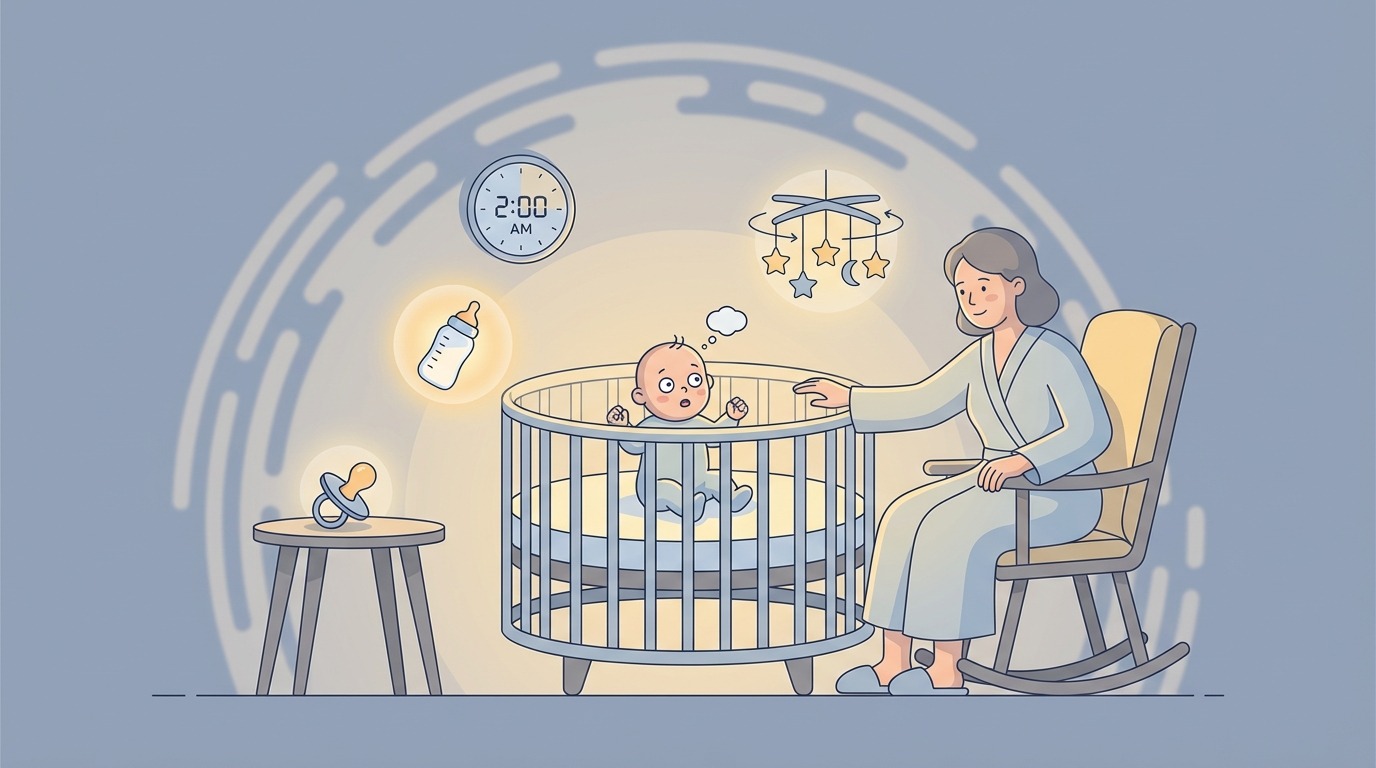
Why baby no longer sleeps through the night: causes and solutions
| In Brief |
|---|
| 🌙 Night wakings are often linked to regressions, hunger, teething, or a still fragile day/night rhythm. |
| 🛏️ A peaceful sleep environment (18°C, darkness, suitable sleeping bag) promotes more stable nights. |
| 🧸 Regular and calm rituals (bath, story, cuddle) secure bedtime and support autonomous falling asleep. |
| 🩺 In case of doubt (eczema, ear infections, pain), a medical check-up is necessary to remove invisible obstacles to sleep. |
| 📱 Simple tools (routine, tracking, light) help structure the days and reduce awakenings. |
When a baby who used to sleep well suddenly starts waking up again, doubt sets in quickly. However, this phase often reveals a normal stage of development, or an environmental detail to fine-tune. Toddlers’ sleep evolves in cycles, and every learning leap can disrupt the night. For example, a child very focused on walking or language may become more restless at bedtime. Other times, the cause is simpler: nighttime hunger or an emerging tooth.
To clarify these moments, it is useful to observe signs of tiredness, adjust the routine, and secure the environment. Clear markers between day and night help stabilize the internal clock. Gentle and concrete solutions exist to reassure the baby without overstimulating them. The goal remains the same for the whole family: regain peaceful nights, with patience, consistency, and attentive listening to needs.
Why baby no longer sleeps through the night: common causes and sleep regressions
Night wakings often arise during sleep regressions. Around 4 months, sleep architecture changes and cycles differentiate. Many infants then begin to wake between cycles. Around 8 to 10 months, separation anxiety appears; the child checks for the adult’s presence in the middle of the night. Around 12 and then 18 months, motor milestones and language stimulate internal awakening, and the brain struggles to “switch off.”
Development does not explain everything. Hunger remains a classic cause, especially if daytime calories are insufficient or naps have been too short. Tooth pain also creates a peak in waking. Physical discomfort can go unnoticed: silent ear infections sometimes disturb rest without noticeable fever.
Skin problems often wake little sleepers. Itchy skin prevents soothing, especially at night when body temperature varies. Practical tips exist to relieve this; several families report improvement after reviewing the care routine, as seen in these eczema remedies. Gentle products like Mustela sometimes help, complementing pediatric advice.
The family environment also influences falling asleep. Returning to daycare, traveling, or a change of caregiver disrupt markers. Certain periods call for more reassurance and more pronounced rituals. Elise and Karim’s story, parents of Anaé, illustrates this well: upon entering childcare, Anaé began waking every two hours. By stabilizing naps and lengthening the bedtime routine, wakings decreased within ten days.
Concrete markers to decode the period
To untangle the causes, it is helpful to keep track of naps, meals, and wakings. Baby tracking apps can help identify precise patterns. Frequent mismatch? A wake window that is too long or too short may be the cause. By adjusting schedules, sleep often consolidates within a few nights.
Emotional security plays a key role. A comforter, a reassuring sleeping bag, and repetitive gestures soothe. Popular brands like Petit Bateau or Vertbaudet offer soft pajamas and seasonally appropriate sleeping bags. Wakings decrease when the ritual becomes predictable, simple, and kind.
When the cause remains unclear, it is better to check for absence of fever or pain. In case of an acute episode (for example a high temperature), some children experience impressive events, as described in this testimony about a febrile seizure. Listening to physical signals protects sleep and overall health.
At the end of this exploration of triggers, one idea emerges: by identifying a small concrete cause, the circle of wakings breaks faster.
Baby’s circadian rhythms: helping to distinguish day from night
Circadian rhythms build gradually. During the day, natural light and appropriate activities strengthen alertness. At night, darkness, calm, and few interactions send a clear rest signal. Combining these markers with consistent schedules stabilizes the internal clock.
A simple strategy works well: keep normal brightness for daytime naps and maintain household noises. Then, in the evening, dim the lights, reduce stimulation, and speak softly. Night wakings become shorter when the atmosphere remains nocturnal: no screens, no games, and dim lighting.
Wake windows and signs of tiredness
Observing wake windows prevents overexertion. A too-tired baby becomes restless, cries more, and struggles to cycle sleep. Conversely, too early a bedtime can shorten the night. Signs of tiredness are revealing: yawning, wandering gaze, eye rubbing, disordered movements.
| Age 👶 | Wake window ⏱️ | Signs to watch for 👀 |
|---|---|---|
| 0-3 months | 45-90 min | Yawning, glazed look, startles |
| 4-6 months | 1h30-2h | Eye rubbing, fussiness |
| 7-12 months | 2-3h | Restlessness, gripping |
| 13-18 months | 3-4h | Hyperactivity, crying |
For Lina and Malik’s family, parents of Maël, adjusting wake windows changed everything. By moving bedtime 20 minutes earlier and shortening the last nap, Maël started completing two night cycles. This kind of micro-adjustment often produces a quick effect.
Ordered days support the rhythm. A daily walk outdoors exposes the baby to light; the internal clock is thereby strengthened. Naps remain better anchored, and evening falling asleep becomes smoother.
Room, safety and comfort: creating a cozy space conducive to sleep
A neat physical environment facilitates soothing. The ideal temperature is around 18°C, with regular ventilation and breathable textiles. A sleeping bag suited to the season’s TOG replaces loose blankets. Superfluous accessories should be avoided for safety.
Safety comes first: no cushions or traditional crib bumpers. Several organizations remind us of their uselessness and risks; this detailed reminder on banned crib bumpers helps make informed choices. The bed remains clear, with a firm mattress and a well-stretched fitted sheet.
Overall layout also matters. Many families optimize storage and ergonomics by drawing inspiration from ideas like these for organizing the baby’s room. A functional, calming, well-thought-out room reduces bedtime stress.
Textiles and clothing contribute to comfort. Soft pajamas from Petit Bateau or Vertbaudet allow skin to breathe. A soft Fisher-Price mobile can mark the end of the routine without becoming a stimulant. For evening care, a Mustela massage oil helps some babies release tension.
Accessories and brands, with moderation
Accessories gain effectiveness when kept simple. A humidifier can relieve a dry room. A very soft nightlight is enough for nighttime care. For outings, a comfortable Baby Stroller or a Bébé Confort car seat support naps on the go, without replacing the crib routine.
To prepare essentials, this practical guide on must-have equipment simplifies choices. Brands like Natalys help complete the set, with seasonal sleeping bags and fitted sheets adapted.
A coherent, safe, and soft environment turns bedtime into an awaited moment rather than a feared one.
Evening rituals and gentle methods: promoting autonomous falling asleep
A predictable ritual reassures the child. The brain associates repeated signals with the arrival of sleep; soothing becomes easier. The watchwords: simplicity, consistency, and gentleness.
A sequence that reassures
- 🛁 Warm bath of 5-10 minutes, then gentle drying.
- 🧴 Brief massage with Mustela oil to release tension.
- 🍼 Calm feeding: breast or Avent or Dodie bottle, without distraction.
- 📖 Small story or nursery rhyme, just before the cuddle.
- 😴 Awake but calm bedtime, with comforter.
This structure helps the child fall asleep without relying on long rocking. Naël’s parents, 6 months old, reduced stimulation after the bath and put Naël to bed awake but serene. After a week, he learned to fall back asleep between cycles.
Graduated reassurance methods
Progressive approaches suit sensitive temperaments well. Moving from close presence to distant presence, in small steps, reassures without overstimulating. Sometimes, a hand placed briefly is enough. In other cases, a short phrase softly repeated becomes a reliable cue.
At night, discreet care avoids day/night confusion: soft light, slow gestures, few words. A quick diaper change, a burp, then sleep. Tracking markers facilitates adjustment; many families appreciate these tracking tools to visualize progress.
For outings, a nap in a Baby Stroller helps out without becoming habitual. An album like The Birth Book allows noting small evening victories; these records motivate during periods of doubt.
When the ritual has few steps and remains consistent, bedtime becomes peaceful again, and night naturally solidifies.
When to consult and how to hold on during difficult periods
Certain signals call for medical advice: repeated fever, inconsolable crying, vomiting, breathing difficulties, or rashes. Ear pain or discharge suggest sometimes invisible ear infections. Persistent nighttime itching reminds us of the importance of treating the skin, as seen with eczema solutions.
Rare episodes impress families, like a febrile seizure. These situations require quick evaluation. Once health is checked, routine adjustments resume more calmly. The goal remains to ensure comfort, safety, and consistency.
At other times, the trigger is developmental. Around 16 months, the mind bubbles; some children experience a more restless phase, as described in these 16-month evolutions. In these periods, an earlier bedtime, a longer ritual, and calm accompaniment often suffice.
During the day, going out and seeing the light soothes the internal clock. A stroll, some quiet playtime, then a late afternoon that slows the pace prepare for night. Simple sensory markers, a tidy room, and stable schedules help significantly.
For equipment, reasoned sorting helps; this guide of baby essentials avoids unnecessary spending. A safe bed, a suitable sleeping bag, a reliable Avent or Dodie bottle, and breathable pajamas suffice. The rest builds with real needs.
Finally, taking care of adults protects the child. Support, shared bedtime at first, some parental naps on weekends: it all counts. When the focus turns to progress, even small, confidence returns, and the night follows.
How long does a sleep regression last?
Most regressions last 2 to 6 weeks. A stable routine, adjusted naps, and a calm environment often reduce their duration.
Should a baby who wakes at night be fed?
Depending on age and growth curve. Before 6 months, nighttime hunger remains frequent. After 6-8 months, rebalancing daytime intake may help, with pediatric advice.
What temperature for the baby’s room?
Around 18°C, with breathable textiles and a sleeping bag adapted to the TOG. Avoid loose blankets and superfluous accessories.
How to avoid overstimulation during night wakings?
Keep the light very soft, speak little, make slow gestures, and limit interactions to the bare minimum (diaper change, burp, brief cuddle).
When to seek medical advice?
In case of repeated fever, inconsolable crying, suspected pain (ear, teeth), significant itching, reflux, or any concerning behavioral change.