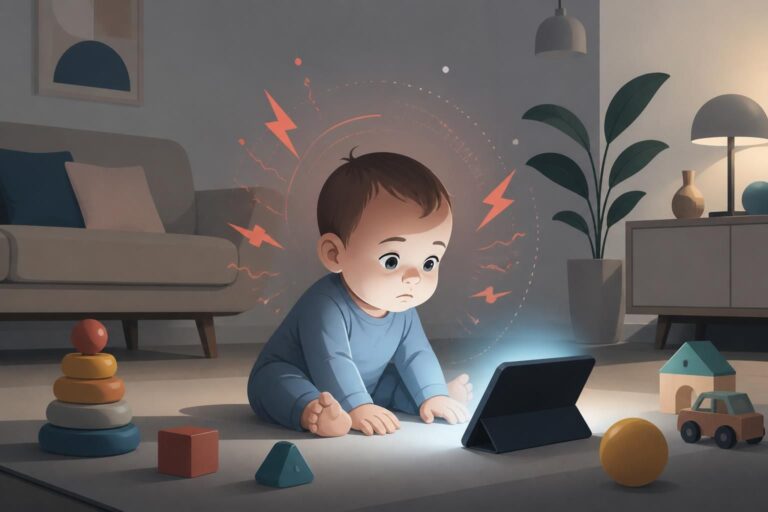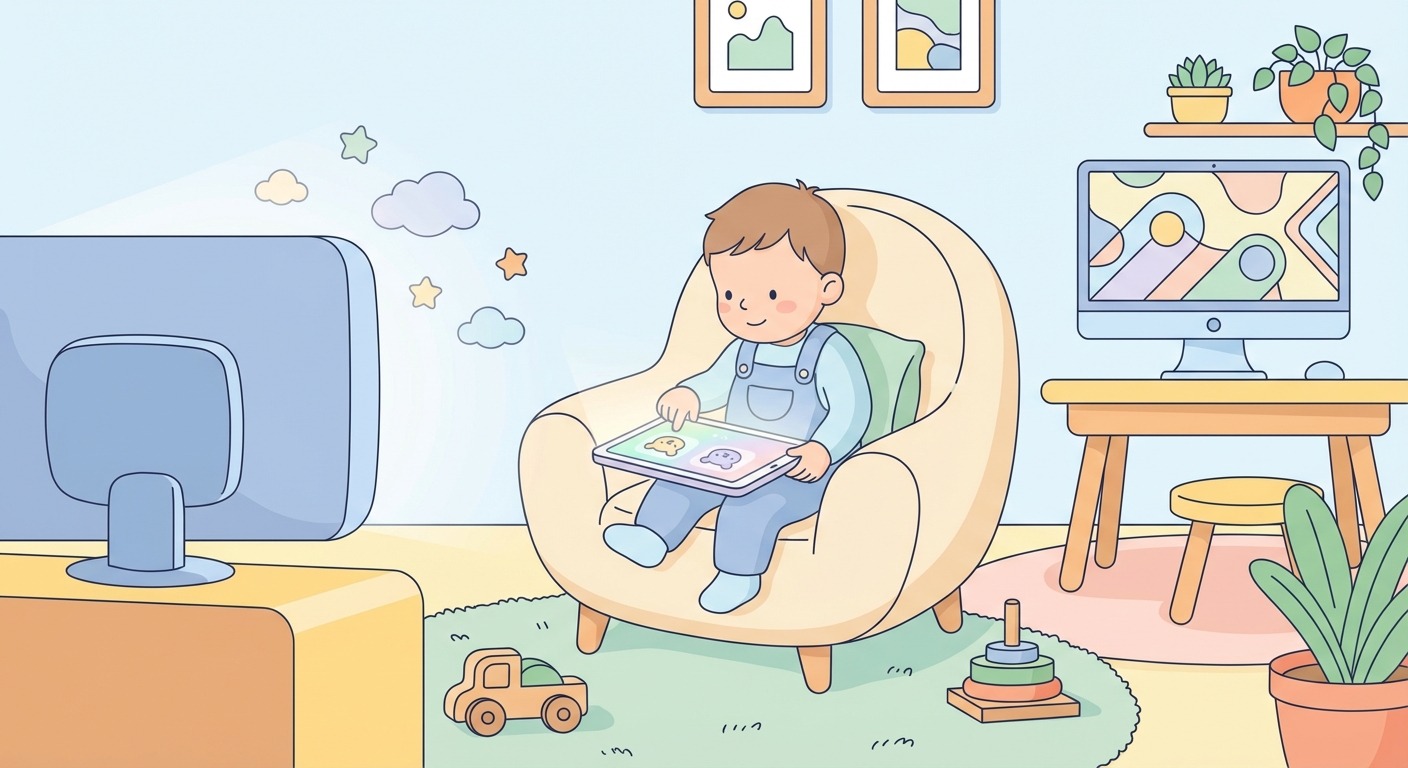
Young Children Screens: Television, computer, tablet: managing screens for 1-3 year olds.
| Short on time? Here’s the essentials 💡 |
|---|
| Before 2 years old ➜ no screen (except family video calls) 👶 |
| From 2 to 3 years ➜ quality content, less than 1 hour per day, always accompanied 👨👩👧 |
| No screens 1 hour before bedtime to protect sleep 😴 |
| Avoid TV as background noise ➜ it disrupts interactions 🗣️ |
| Prioritize free play, movement and shared reading 📚 |
| Set simple and consistent rules, without unnecessary punishment ✅ |
| At daycare ➜ screens prohibited before 3 years (2025 reference) 🏫 |
| Replace soothing screen time with calming routines 🌿 |
Screens now accompany every moment of daily life, including young children between 1 and 3 years old. However, child development needs simple gestures: playing, moving, talking, touching, and sleeping. Yet, the more screen time increases, the less these pillars find their place. Because managing screens is not just about saying no, this article offers clear guidelines, easy routines, and concrete examples to harmonize TV, computer, and tablet use with the real needs of toddlers.
In the same family, usage differs. Age guidelines must therefore remain clear and manageable. Meanwhile, the benefits of measured screen use exist, provided the child is actively accompanied. It involves a daily pedagogy: anticipating transitions, guiding content choice, ritualizing breaks, and preserving sleep. Parents often report that a consistent framework soothes tantrums and restores room for free play. The following lines gather research-validated markers and practical tools to navigate the digital world with enthusiasm… without losing the essentials.
Markers for 1-3 years old for calm screen management at home and in groups
For 1-3 year-olds, brain needs are considerable. Screen use must therefore remain very limited to leave room for sensory and social experiences. Before 2 years, exposure to TV, computer, and tablet is discouraged. Video calls with extended family remain allowed, since the exchange is interactive. Then, between 2 and 3 years, screen time should stay short, accompanied, and of quality. Age markers serve as a daily compass, without excessive rigidity.
Care environments play a major role. In France, early childhood care has formalized the ban on screens for under 3s in groups. This orientation protects motor curiosity, language, and attention. At home, a similar framework inspires healthy habits: no screens during meals, no screen before bedtime, and zero background TV. These choices preserve dialogue, motor skills, and sleep quality.
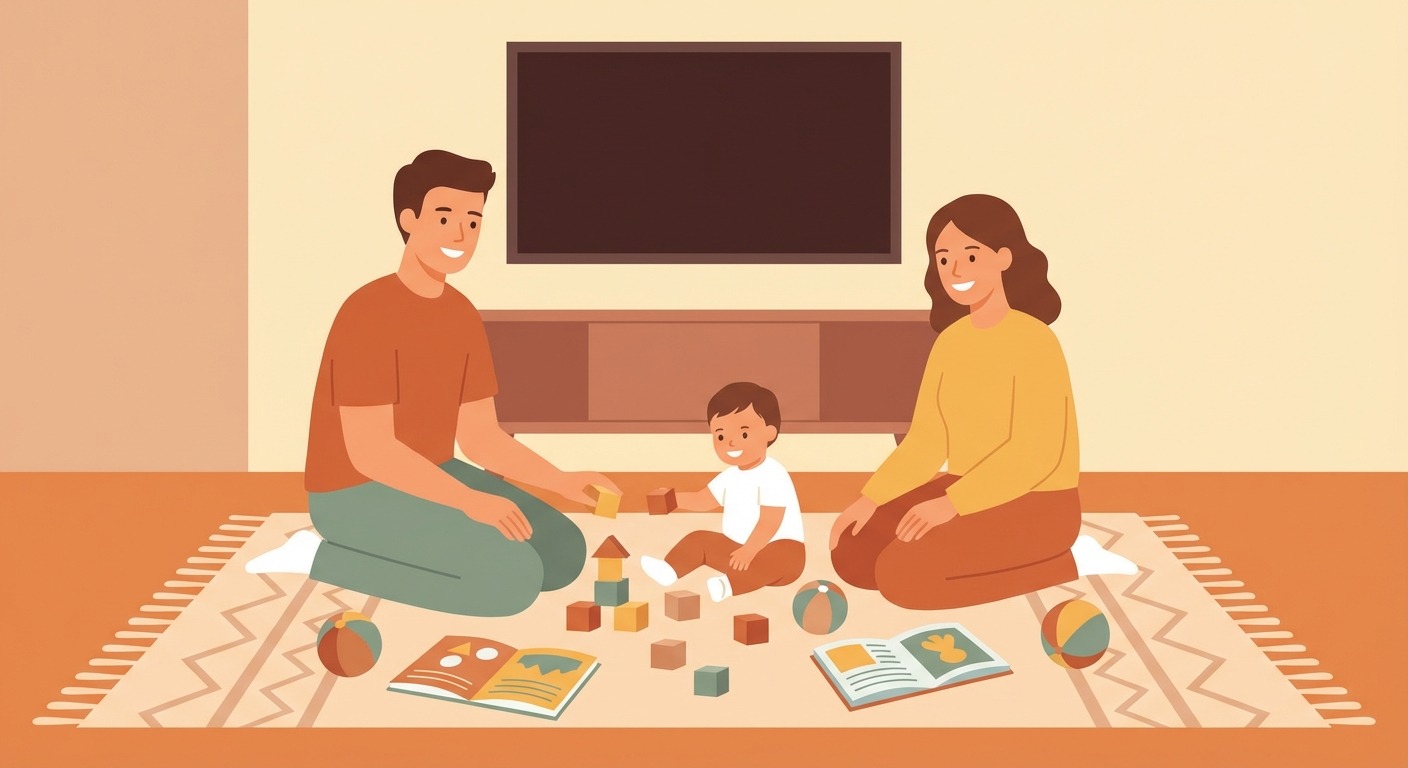
The family featured in this article, Nora and Yassine, parents of Mila (2 years old), picked three levers. First, prepare ready-to-use alternatives. Then, announce the screen stop with a visual countdown. Finally, stay beside the child during screen time to turn the experience into a shared moment. This trio avoids endless negotiations and stabilizes the child’s mood.
Simple and positive rules
Rules are framed positively to be memorized. It’s better to say “We watch after snack and for 10 minutes” than “Not now.” Concrete markers hold up better over time. Parents can also rely on gentle parenting to avoid reflexive punishment. For more, useful leads can be found in alternatives to punishment.
- 🕐 Limit to short sequences (5 to 15 minutes).
- 📵 Avoid TV as background noise.
- 🗓️ Place the screen in a routine with a clear end.
- 🧸 Provide a known transition activity for the child.
- 👀 Choose slow content, without overstimulation.
- 🤝 Accompany the child and comment on what is happening.
| Age 🧒 | Key marker ✅ | Parental action 🛟 |
|---|---|---|
| 1-2 years | No screen (except video call) | Offer books, blocks, soft music |
| 2-3 years | Short co-viewed sequences | Planned scheduling + visual timer |
| All ages | No screens 1 hour before bedtime | Consistent bedtime ritual, soft lighting |
When travel is necessary, screens are not the only option. Practical organizational ideas exist, such as on smart accessories for parents. A consistent framework is built with everyday solutions, not abstract injunctions.
Sleep, attention, language: understanding the impact of screens on 1-3 year-olds
Child development depends on a robust tripod: restorative sleep, rich interactions, and physical activity. However, excessive screen use weakens this tripod. In the evening, blue light and overstimulation delay falling asleep. During the day, TV as background sound reduces the quality of verbal exchanges. Over time, this affects language, attention, and emotional regulation.
Recent studies confirm that late screen use increases night awakenings, especially between 1 and 3 years. Additionally, fast-paced content can worsen irritability. Conversely, shared reading and symbolic play enrich vocabulary. The young brain learns primarily through the body, voice, and repetition.
Protecting sleep, the cornerstone
A calming ritual proves decisive. A stable routine with a lukewarm bath, story, and soft light prepares for sleep. To secure this moment, it’s useful to rely on practical recommendations such as those offered here: useful sleep advice. The rule “no screen 1 hour before bedtime” remains non-negotiable at this age.
- 🌙 Turn off all screens after dinner.
- 📖 Replace with a short, repeated story.
- 🧘 Introduce gentle breathing or a cuddle.
- 🔕 Turn off notifications on parental devices.
Language and attention: what dynamic?
Face-to-face exchanges nourish language. Young children learn a word better when an adult enacts it, rather than just watching it pass on the screen. Similarly, free play periods strengthen sustained attention. The screen should remain an ancillary tool, not the center of the day.
| Situation ⚠️ | Potential impact 🧭 | Countermeasure 💪 |
|---|---|---|
| Screen before bed | Late falling asleep, awakenings | Stable routine + 1 hour without screen |
| Background TV | Reduced interactions, poor language | TV off, two-player games, reading |
| Fast content | Irritability, volatile attention | Slow programs, co-viewing |
Because the evidence is strong, it’s better to organize the home for success. Toys within reach, visible books, and soft music spontaneously reduce the call of screens. Once evening starts, the temptation decreases if devices disappear from the room.
Outings add an extra asset. A short walk, even late in the day, helps discharge accumulated energy. Sleep quality improves, and mood stabilizes. The screen then becomes a framed bonus, not a permanent crutch.
Screen-free ideas for every moment of the day: move, create, explore
For screen management to work, desirable alternatives are needed. Young children naturally turn away from screens when a simple, interactive activity awaits them. Options abound: sensory play, motor skills, music, shared reading, cooking together. The secret lies in ready, accessible, and safe materials.
Physical activities support awakening and prevent sedentarity. Even at 2 years old, 180 minutes of movement spread out during the day remain desirable. To find concrete and varied ideas, family sports inspiration is precious: see for example easy family activities to start. Simply running, jumping, or crawling structures posture and balance.
A typical day with Mila, 2 years old
In the morning, Mila spends five minutes transferring pasta into bowls. After the nap, she kneads homemade modeling dough. Before dinner, she helps wash vegetables. Each activity lasts little, but the sequence creates a pleasant dynamic. Screens become incidental, as the joy of action takes precedence.
- 🎨 Creative: sticker crafts, clean painting in zipper pouch.
- 🏗️ Construction: blocks, stacked boxes, tunnels.
- 🎵 Music: homemade maracas, singing games.
- 🌳 Outside: color hunt, bubbles, obstacle course.
- 🍎 Cooking: washing, mixing, pouring with help.
Materials can remain simple and economical. Suggestions of kits and everyday accessories can help busy parents: consult these useful accessory ideas. For rainy afternoons, a reservoir of manual activities works wonders: see these easy creative activities at home.
| Moment ⏰ | Activity 🎯 | Materials 🧰 | Why 👍 |
|---|---|---|---|
| Wake-up | Transfer water/semolina | Bowls, spoons, tablecloth | Concentration, fine motor skills |
| Late morning | Motor skills course | Cushions, adhesive tape | Energy expenditure, balance |
| Post-nap | Modeling dough | Flour, salt, water | Creativity, vocabulary |
| Before dinner | Shared reading | 2 visible books | Language, emotional bond |
On the go, screen-free games also improvise well. Picture books, finger puppets, and nursery rhymes usually suffice. For longer trips, organizational ideas can be found on road trip resources for families. A sensory kit in the bag avoids defaulting to the screen.
The alternative becomes natural if tidying helps the child choose. Open bins and visual displays encourage autonomy. When each moment has a clear option, negotiations decrease. This is how the screen gradually loses its status as a magic solution.
Set clear rules without shouting: framework, transitions, and gentle discipline
A predictable framework reassures young children. Rules are defined in advance, displayed simply, and applied consistently. It’s strategic to separate calm authority from punishment. Gentle firmness is enough, especially if alternatives are accessible. Transitions are the key to avoided conflicts.
Starting with simple prohibitions helps a lot. For example, no screens at the table and no screen before bedtime. Then set duration and place: two 10-minute sessions in the living room, never in the bedroom. Visual reminders (hourglass, illustrated timer) support session end. To think about progressive autonomy, one can rely on age-appropriate markers: see these autonomy markers.
Preventing “tech tantrums”
Tantrums at screen shutdown mostly reflect lack of transition. Announce the end three minutes before, then at one minute. Then offer a planned transition activity. If emotion overflows, accompany without yielding on the stop. Consistency reassures more than a shaky compromise.
- ⏳ Clear and visual countdown.
- 🔄 Always identical stop ritual.
- 🧩 Transition activity placed nearby before the end.
- 🤗 Name the emotion, stay present, stay firm.
| Rule 🧭 | Concrete example 🧪 | Why it works 🧠 |
|---|---|---|
| No screen before bed | Story + cuddle + night light | Slows stimulation, prepares sleep |
| Fixed duration | Two short episodes max | Predictability, accepted end |
| Screen in living room | Never in bedroom | Healthy associations, better sleep |
Some parents wonder about limits to set at 2 years. Concrete feedback can help, such as in this case of limits at 2 and a half years. The issue is not perfection, but coherence. The rule gains legitimacy when anchored in an explicit goal: protect attention, language, and sleep.
Finally, parental coherence is built without punishment for punishment’s sake. The objective is educational: learning frustration and delay. If needed, organization is reviewed to offer more free activity. Effective non-punitive discipline strategies are detailed here: educate without punishing. The framework works if it remains stable, explicit, and reproducible.
When the screen is used: content choice, co-viewing, and ergonomics
Sometimes TV or tablet is occasionally used between 2 and 3 years. The aim is not zero pleasure, but intelligent screen use. Co-viewing turns the screen into a conversation. The adult comments, asks questions, and links content to everyday life. The child understands, anchors, and regulates better.
Content choice matters as much as duration. Prefer slow, gentle, ad-free programs. Interactive apps may stimulate, if they remain suitable for 2-3 year olds and without in-app purchases. At this age, short episodes are better than full-length films. The logic remains: little, well chosen, accompanied.
Set up and sit properly
Ergonomics protect the body. Keep the screen low, at a distance, with soft brightness. Volume remains low to avoid overstimulation. The child sits comfortably, and the gaze takes breaks. A small auxiliary lamp avoids strong contrast in the dim. Visual health appreciates these simple details.
- 🧘 Posture: stable chair, supported back.
- 🔆 Lighting: never in complete darkness.
- 🔒 Parental lock: disable automatic suggestions.
- 📚 Link to reality: reenact scenes with toys.
| Criterion 🎯 | Indicator 👀 | Example 🧩 | Asset ✅ |
|---|---|---|---|
| Slow pace | Long shots, pauses | Calm program for toddlers | Promotes understanding |
| Simple interactivity | Pointing, limited choices | Drawing app 2-3 years | Fine motor skills |
| No ads | No inducement | Public youth service | Less overstimulation |
Long trips create a strong temptation to turn on screens. However, adapted preparation changes the game: snacks, playlists, cloth books, observation games. Transport and road trip organizational ideas useful with young children can be found here: family travel tips. It’s still possible to keep the screen as a last resort, on a short, timed duration.
If unexpectedly exposed to inappropriate content, reassure, simply explain, and turn it off. Immediate accompaniment is better than dramatization. The child mainly retains the emotional security the adult offers at their side.
Warning signs, family realities and gradual adjustments
Each child reacts differently to screens. Some become irritable, others withdraw, some demand repeatedly. Warning signs exist and invite adjustment of practices. Observing daily behavior remains the best indicator: sleep, appetite, joy in play, spontaneous communication.
Watch especially for tantrums at screen stop, loss of interest in usual games, and difficulty concentrating more than a few seconds off screen. In these cases, reduce frequency, improve quality, and strengthen accompaniment. Often, three weeks of a stable framework suffice to ease tensions.
Reprogram without guilt
Adjusting is normal. Professional life, siblings, and health ups and downs shake the best intentions. Keep a realistic ambition: better 10 minutes well accompanied than 40 minutes passive. Parents also benefit from examining their own exposure. When the adult puts away their phone during shared times, the child interacts more.
- 🧭 Clear objective: sleep and language first.
- 🧱 Two prohibitions: meals and before bedtime.
- 🧪 One experiment: replace one screen with a game.
- 📒 Light monitoring: note 7 days, adjust.
| Sign 🚨 | What it says 🧠 | Parental response 🛠️ |
|---|---|---|
| Tantrums at stop | Missing transition | Countdown + transition activity |
| Disturbed sleep | Late stimulation | Screens off 1 hour before |
| Less free play | Set habit | Daily screen-free rituals |
To ease tensions around limits, concrete leads are presented in this resource on prohibitions by age. And when frustration rises, relying on non-punitive educational practices avoids sterile power struggles. Coherence, more than severity, guides 1-3 year olds towards autonomy.
Finally, the environment matters. Grandparents, babysitters, and daycare benefit from sharing the same direction. A common message reassures the child and makes the rule predictable. Families who succeed observe quickly smoother days and softer evenings.
“A well-chosen, well-accompanied screen, and rarely offered… is an ally for a calm daily life.”
{“@context”:”https://schema.org”,”@type”:”FAQPage”,”mainEntity”:[{“@type”:”Question”,”name”:”Combien de temps du2019u00e9cran pour un enfant de 2 ans ?”,”acceptedAnswer”:{“@type”:”Answer”,”text”:”Pas plus de courtes su00e9quences totalisant moins du2019une heure par jour, pas du2019u00e9cran 1 heure avant le coucher, et toujours en pru00e9sence du2019un adulte qui commente et rassure.”}},{“@type”:”Question”,”name”:”Que faire quand mon enfant fait une crise u00e0 lu2019extinction de la tablette ?”,”acceptedAnswer”:{“@type”:”Answer”,”text”:”Anticiper avec un compte u00e0 rebours visuel, annoncer la fin, proposer une activitu00e9 relais pru00eate, et rester calme et ferme. La constance ru00e9duit les crises en quelques jours.”}},{“@type”:”Question”,”name”:”Les livres sur tablette sont-ils adaptu00e9s entre 2 et 3 ans ?”,”acceptedAnswer”:{“@type”:”Answer”,”text”:”u00c0 cet u00e2ge, mieux vaut privilu00e9gier le livre papier u00e0 manipuler. Un livre numu00e9rique reste ponctuel et accompagnu00e9, sans remplacer la lecture partagu00e9e classique.”}},{“@type”:”Question”,”name”:”Faut-il bannir la tu00e9lu00e9vision en bruit de fond ?”,”acceptedAnswer”:{“@type”:”Answer”,”text”:”Oui. Elle ru00e9duit les interactions et parasite le langage. Mieux vaut allumer la TV uniquement pour un visionnage choisi et co-visionnu00e9, puis lu2019u00e9teindre.”}},{“@type”:”Question”,”name”:”Comment gu00e9rer les u00e9crans en voiture ?”,”acceptedAnswer”:{“@type”:”Answer”,”text”:”Pru00e9parer une trousse sensorielle, des chansons et des livres tissu. Garder lu2019u00e9cran en dernier recours, sur duru00e9e courte, avec contenu calme et volume bas.”}}]}How much screen time for a 2-year-old child?
No more than short sequences totaling less than one hour a day, no screen 1 hour before bedtime, and always with an adult present who comments and reassures.
What to do when my child has a tantrum at tablet shutdown?
Anticipate with a visual countdown, announce the end, offer a ready transition activity, and stay calm and firm. Consistency reduces tantrums in a few days.
Are books on tablets suitable between 2 and 3 years old?
At this age, it’s better to favor a paper book to handle. A digital book remains occasional and accompanied, without replacing classic shared reading.
Should TV as background noise be banned?
Yes. It reduces interactions and disrupts language. It’s better to turn on the TV only for chosen co-viewing, then turn it off.
How to manage screens in the car?
Prepare a sensory kit, songs, and cloth books. Keep the screen as a last resort, for a short duration, with calm content and low volume.