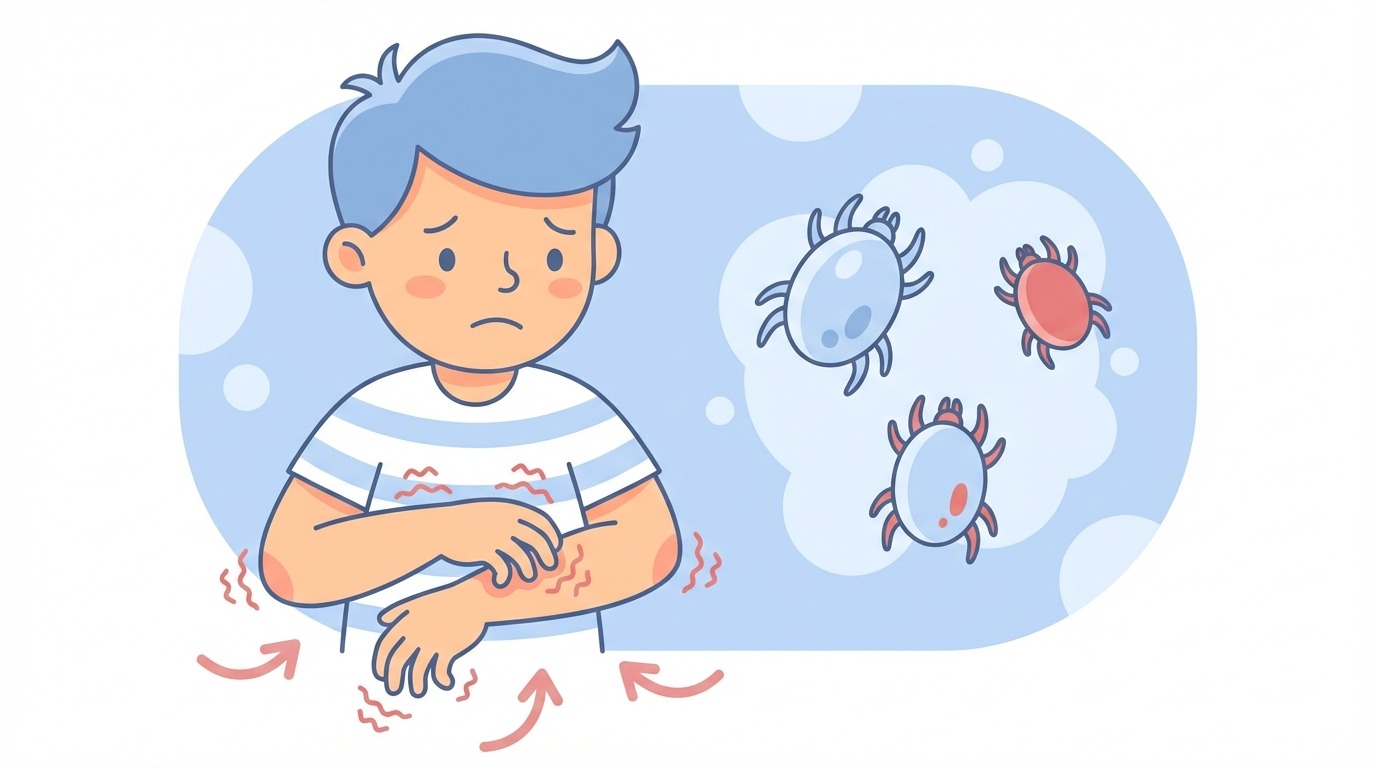
Scabies Sarcoptes: Itching and scabies in children: symptoms and treatment.
Itching that prevents sleep, small skin lesions, and parental worry: scabies regularly returns in daycares and schools, but it is quickly treated if you know what to watch for and how to act. The cause is a microscopic parasite, Sarcoptes scabiei, which burrows tunnels into the epidermis and triggers sometimes fierce pruritus, especially at night. With a clear strategy, an appropriate treatment, and some hygiene reflexes, the infection yields. Teachers, childcare assistants, and caregivers then play the same tune: detection, coordination, and reassurance.
In families, the objective remains twofold: to relieve the child quickly and break the chain of transmission. Symptoms are identified, the whole household is treated, laundry is cleaned at the right cycle, and typical areas are checked: wrists, interdigital spaces, navel, buttocks. Then, the return to the community is accompanied by calmly explaining the measures. This page offers a reasoned roadmap, enriched with concrete examples and practical tools, to turn an alert into a manageable parenthesis.
| Short on time? Here is the essentials ⏱️ |
|---|
| Marked nocturnal pruritus in the child = warning sign 🚨 |
| Treat the whole household the same day, even without symptoms 👨👩👧👦 |
| Permethrin as first-line; ivermectin if necessary 💊 |
| Laundry at 60 °C or quarantine 72 h in a sealed bag 🧺 |
| Itching can last 2–3 weeks after healing ✅ |
Sarcoptes Scabies in Children: Understanding the Parasite, Skin Infection, and Pruritus
How Sarcoptes scabiei Acts on the Skin
Scabies is caused by a parasite invisible to the naked eye, Sarcoptes scabiei. The female digs fine tunnels into the skin and lays eggs there. This presence triggers an immune reaction that causes itching. The lesions correspond to winding tunnels, sometimes difficult to see without good lighting.
In the child, these tunnels are often concentrated between the fingers, at the wrists, and around the navel. Small red papules are also observed. Scratching maintains irritation and can cause bacterial superinfections. This mechanism explains why the infection can spread quickly if nothing is done.
Why Itching Intensifies at Night
Pruritus often increases in the evening. On one hand, the heat of the sheets accentuates the sensation. On the other, attention focuses on the body at bedtime. Children then scratch more, which further weakens the skin. In classrooms, a “silent scratching” is sometimes noted during stories.
This nocturnal character guides diagnosis, as other dermatoses itch rather during the day. Disturbed sleep tires the whole household. Rapid relief of itching thus becomes a priority to preserve family balance.
Typical Areas and Atypical Forms in Young Children
The thin areas of the skin, such as interdigital spaces, remain the most affected. In infants, the scalp, soles of the feet, and palms can be affected. It can be confused with eczema or contact dermatitis. The key marker remains the association of nocturnal pruritus + tunnels + contagion context.
There is a severe form, called crusted scabies. It mainly occurs in immunocompromised individuals. Thick plaques are very contagious and require urgent management. This form remains rare in the pediatric population, but it must be known by educational teams.
Malo’s Story: A Guiding Thread to Analyze Signs
Malo, 5 years old, has been scratching his wrists for ten days. The itching wakes the family every night. Papules and some fine tunnels are visible. Two classmates were coughing… but the cough does not explain anything here. The most solid hypothesis concerns an infection by Sarcoptes scabiei.
Malo’s parents note sharing stuffed toys at nap time. The puzzle comes together: prolonged skin-to-skin contact, evening pruritus, tunnels. The diagnosis becomes probable, which conditions the rest: inform, treat, clean, reassure. Understanding these mechanisms prepares the ground for decisions.
Scabies Symptoms in Children: Visual Cues, Common Mistakes, and Soothing Actions
What We See, What the Child Feels
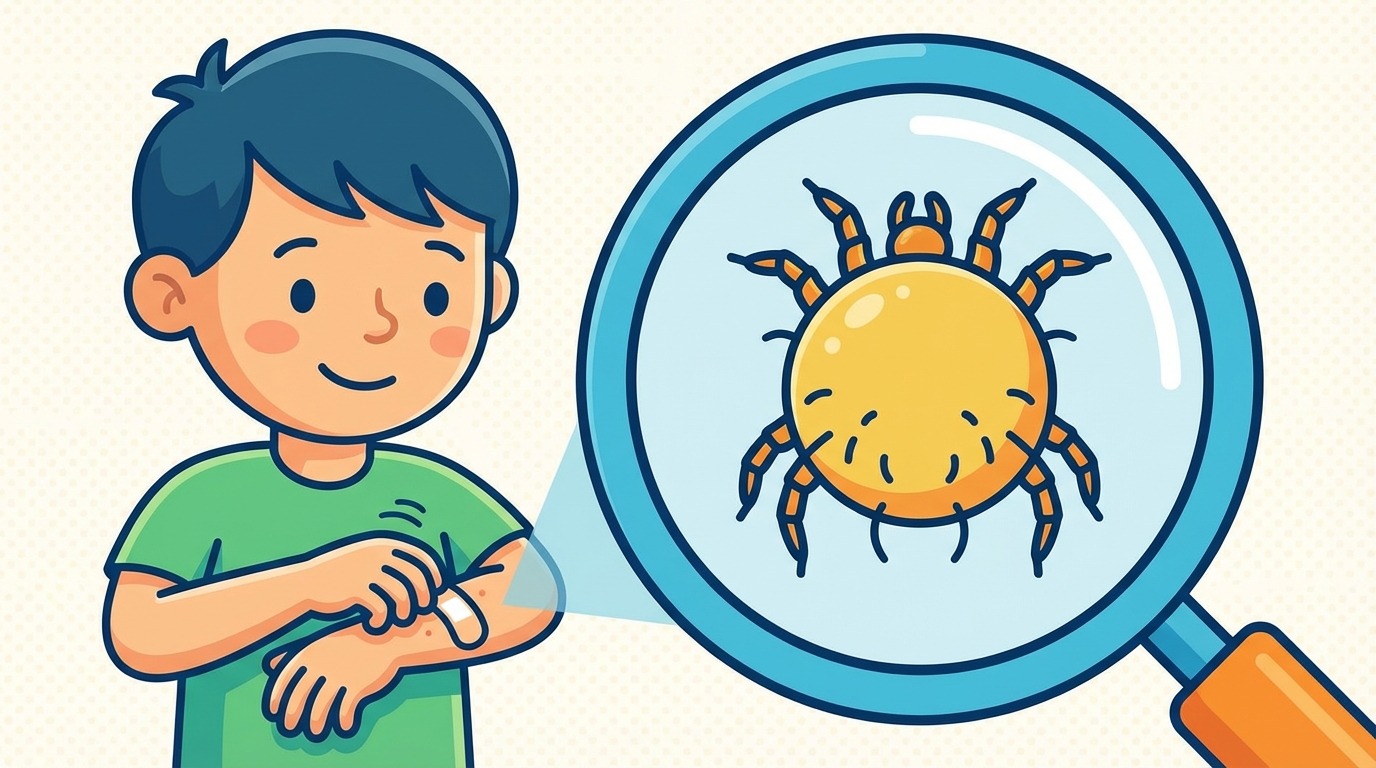
The picture combines nocturnal pruritus, grayish tunnels, and papules. The main areas are the fingers, wrists, armpits, waist, and buttocks. Lesions due to scratching add up, sometimes with streaks. The child reports a “fire under the skin” after a hot shower.
Beware of false leads. Chickenpox itches but produces vesicles in a “dew drop” that evolve quickly. Eczema improves with emollients and topical corticosteroids. In scabies, corticosteroids alone do not kill the parasite. It is therefore necessary to stay alert to the context and spread in the household.
Simple Visual Checklist for Parents
- 🔎 Fine, winding tunnels on wrists/interdigital spaces: yes/no
- 🌙 Itching stronger at night: yes/no
- 👨👩👧 Cases in close entourage or school: yes/no
- 🧴 Corticosteroids ineffective alone: yes/no
- 🧼 Episodes of shared laundry or bed: yes/no
If three answers are “yes,” the probability of scabies increases. Medical advice is necessary. This rapid approach avoids weeks of therapeutic wandering and protects the community.
Soothe Without Masking: Useful Gestures
Warm compresses calm the pruritus before bedtime. Short nails limit scratching lesions. Emollients restore the skin barrier. However, they do not replace scabicidal treatment. A combined approach reduces damage and promotes more peaceful sleep.
To occupy a little patient in positive “mini-isolation,” calm activities help. You can suggest battle games or distance games with relatives to maintain connection without close contact. These support mechanisms reduce the feeling of exclusion and support morale.
After watching, many parents retain a key point: treatment must be collective. This conviction avoids endless recontamination loops. The child’s sleep then restores in a few nights, even if residual itching sometimes persists.
Diagnosis and Confirmation: From First Doubt to Coordinated Action Plan
Consultation and Targeted Clinical Exam
The clinician first questions the timing of pruritus, close contacts, and case presence. He/she inspects thin zones: wrists, interdigital spaces, elbows, navel, buttocks. Searches for tunnels and papules. This step already strongly guides towards scabies if the context is compatible.
Then, dermoscopy can visualize the tunnel’s end. A skin scraping confirms the presence of eggs or mites. This confirmation is not always essential if the picture is typical. Nevertheless, it reassures educational teams in case of a school cluster.
Differentiating, Documenting, Informing
Differential diagnosis includes eczema, contact dermatitis, chickenpox, or insect bites. The lesion distribution, evolution, and response to care are compared. Also, an alert sheet and clear conduct are shared. A simple support facilitates everyone’s adherence.
Practical sheets can be prepared from downloadable resources for families. Childcare structures also plan backup caregivers. A babysitting guide helps briefing a nanny on hygiene measures and follow-up schedule.
Communicate Without Stigmatizing
A clear message avoids rumors: scabies is not related to lack of hygiene, it is a contagious parasitic infection. The tone must remain factual and reassuring. Parents appreciate a simple plan: treat, wash, control. Teachers gain serenity when they have an established protocol.
At work, parents may request some accommodations. To prepare for this, practical advice for communicating at the office provides useful keys, even if the subject differs. The challenge is to explain the situation without creating disproportionate alarm.
Finally, transparency about information frameworks reassures. A referral to legal notices of family resources shows the importance of reliable sources. This limits misunderstandings and supports the team spirit around the child.
Treatment of Scabies: Permethrin, Ivermectin, and Household Hygiene
Topical Treatments: Step-by-Step Protocol
5% permethrin remains the first-line treatment for common scabies. The cream is applied to the whole body, from neck to toes, emphasizing interdigital spaces. In babies, the scalp can be treated according to medical advice. It is left on overnight, then rinsed in the morning.
A second application on day 7 targets hatched eggs. Itching may persist after elimination of the parasite. Antihistamines or short-term local corticosteroids help relieve this. Emollients continue to restore the skin barrier and soothe the skin.
Oral Medication and Special Cases
Oral ivermectin is useful in case of failure, diffuse eruption, or crusted scabies. Dosage is weight-based. The doctor chooses between topical, oral, or combination. Fragile persons require close monitoring. This reasoned choice ensures rapid control of the infection.
In institutions, a “day J” is planned to treat everyone. Siblings, close prolonged contacts, and babysitters are included. This collective approach breaks the transmission chain. It also reduces mutual worries.
Environmental Hygiene: Simple, Effective
- 🧺 Wash sheets, towels, clothes worn at 60 °C
- 🧤 Isolate non-machine washable items in a sealed bag for 72 h
- 🧹 Vacuum mattresses, sofas, car seats; discard vacuum bag
- 🧸 Freeze sensitive stuffed toys for 24–48 h if necessary
- 📅 Repeat on day 7 during second application
For guiding a relative who is caring for the child, a concise support helps a lot. You can rely on a babysitting guide to structure the transmission of instructions. This avoids blind spots and smooths family coordination.
Watching a demonstration removes hesitation. Quantity, areas not to forget, and timing are checked. The result is better compliance and less recontamination. The child quickly feels a benefit when the protocol is well followed.
Preventing Contagion: School, Daycare, and Home Aligned
Isolate Without Excluding: The Right Balance
The rule is simple: limit close contacts until the end of the initial treatment. The child can often return to the community after permethrin application, according to medical advice and local protocol. Clear communication calms fears. Stigmatization never serves public health.
Nothing prevents maintaining contact in other ways. Distance games with relatives maintain sociability for a few days. Teachers can propose “no contact” activities in class. This pragmatism protects and educates at once.
Coordinate Adults Around the Child
The winning trio gathers parents, teachers, and health professionals. Each plays their role: monitoring, treatment, hygiene, information. A status check is planned on day 7. This meeting verifies disappearance of signs and organizes, if needed, a second wave of actions.
Shared checklists avoid omissions. Home sheets can be created from downloadable resources. A simplified version speaks to children with pictograms. Another targets adults responsible for laundry and cleaning.
Special Plans: Siblings, Nannies, After-School Care
Siblings multiply contacts. So everyone is treated together. Nannies apply measures explained on a written support inspired by the babysitting guide. After-school facilitators are informed of precautions for a few days.
At the office, a parent can request a temporary accommodation. Ideas for kind communication are found in advice for communicating at work. The key is to avoid panic and present a brief plan: “We treated, we wash, we control.”
Lessons from Malo’s Story
In Malo’s family, the “day J” was planned on a Saturday. Everyone applied the cream at the same time. Laundry ran through 60 °C cycles; stuffed animals were quarantined for 72 h. On day 7, a second application sealed the success.
The class received a factual message. No one was singled out. The itching decreased in a few days. Vigilance remains for two weeks, as pruritus may persist even though the parasite has disappeared.
“Stopping scabies means seeing, acting, uniting: simple gestures, a clear message, a united family.”
{“@context”:”https://schema.org”,”@type”:”FAQPage”,”mainEntity”:[{“@type”:”Question”,”name”:”How long does scabies remain contagious after the start of treatment?”,”acceptedAnswer”:{“@type”:”Answer”,”text”:”Contagiousness rapidly drops after correct application of permethrin or taking ivermectin. However, close contacts are limited until the end of the first phase, and the entire household is treated the same day to avoid recontamination loops.”}},{“@type”:”Question”,”name”:”Do persistent itching mean treatment failure?”,”acceptedAnswer”:{“@type”:”Answer”,”text”:”Not necessarily. Pruritus can last 2 to 3 weeks after parasite elimination due to residual inflammation. Emollients, antihistamines, or short-term topical corticosteroids are used, and the situation is reviewed on day 7 according to medical advice.”}},{“@type”:”Question”,”name”:”Should the whole house be washed with plenty of water?”,”acceptedAnswer”:{“@type”:”Answer”,”text”:”No. It is enough to target textiles and contact surfaces: wash at 60 °C, 72-hour quarantine in a bag for delicate laundry, vacuum mattresses and sofas, and dispose of the vacuum bag. This is simple and sufficient in most cases.”}},{“@type”:”Question”,”name”:”When should oral ivermectin be used in children?”,”acceptedAnswer”:{“@type”:”Answer”,”text”:”It is considered if permethrin fails, if scabies is extensive or in crusted scabies cases. The choice belongs to the doctor, who dosages according to weight and context, sometimes combined with topical treatment.”}},{“@type”:”Question”,”name”:”Can my child return to school quickly?”,”acceptedAnswer”:{“@type”:”Answer”,”text”:”Often yes, after the first permethrin application, if the local protocol allows it. The school must be informed, and close contacts limited during the first days. Coordination with concerned families remains essential.”}}]}How long does scabies remain contagious after the start of treatment?
Contagiousness rapidly drops after correct application of permethrin or taking ivermectin. However, close contacts are limited until the end of the first phase, and the entire household is treated the same day to avoid recontamination loops.
Do persistent itching mean treatment failure?
Not necessarily. Pruritus can last 2 to 3 weeks after parasite elimination due to residual inflammation. Emollients, antihistamines, or short-term topical corticosteroids are used, and the situation is reviewed on day 7 according to medical advice.
Should the whole house be washed with plenty of water?
No. It is enough to target textiles and contact surfaces: wash at 60 °C, 72-hour quarantine in a bag for delicate laundry, vacuum mattresses and sofas, and dispose of the vacuum bag. This is simple and sufficient in most cases.
When should oral ivermectin be used in children?
It is considered if permethrin fails, if scabies is extensive or in crusted scabies cases. The choice belongs to the doctor, who dosages according to weight and context, sometimes combined with topical treatment.
Can my child return to school quickly?
Often yes, after the first permethrin application, if the local protocol allows it. The school must be informed, and close contacts limited during the first days. Coordination with concerned families remains essential.