Whooping Cough Pregnancy: Why Get Vaccinated Against Whooping Cough During Pregnancy
Before birth, a simple sneeze can become a threat. Whooping cough, a respiratory infection mainly caused by Bordetella pertussis, spreads through droplets. However, during pregnancy, well-planned prevention changes everything. By relying on maternal vaccination, the future baby benefits from infant protection from the very first breath. Indeed, specific antibodies cross the placenta and drastically reduce the risks of whooping cough during the most fragile first weeks of life. The 2025 recommendations in France confirm this lever, in line with the High Authority of Health and European agencies.
This strategy is not theoretical. It is based on acellular vaccines with pertussis toxoid, combined with tetanus, diphtheria, and poliomyelitis, and having an excellent safety profile. Even better, maternal immunity also protects the family, as an immunized mother reduces the risk of becoming a carrier. So, how to organize, when to get vaccinated, and how to address misconceptions? Here is a concrete guide, enriched with examples, a simple action plan, and a vision centered on maternal and infant health. Because every day counts, and every decision for prevention builds a protective cocoon for the unborn child.
| Short on time? Here’s the essentials ⏱️ |
|---|
| Ideal window: between 20 and 36 weeks of amenorrhea (WA), with an optimum often between 27 and 36 WA 🤰 |
| Goal: transfer antibodies to the baby for infant protection from birth 🛡️ |
| Effectiveness: about 95% reduction in whooping cough-related deaths in newborns 📉 |
| Safety: acellular vaccines with pertussis toxoid, well tolerated, no live virus ✅ |
| Each pregnancy: booster recommended regardless of vaccination history 🔁 |
| Plan B: cocooning strategy if maternal vaccination was not performed 👨👩👧 |
Whooping cough and pregnancy: understanding the danger to act better
Whooping cough is not a simple lingering cold. It is an infection whose spasmodic cough can lead to apnea, respiratory distress, and complications in young children. Yet, the infant is not vaccinated before 2 months, and innate immunity remains immature. This vulnerability window requires a precise prevention strategy during pregnancy.
In real life, transmission occurs through ordinary gestures. A parent or close contact with a common cough can be the starting point. Droplets spread during close contact, often at home. Risk increases within siblings, family daycare centers, or lively visits after delivery. Therefore, it is better to anticipate before the baby’s arrival.
Why emphasize the neonatal period so much? Because the risks of whooping cough are highest before 6 months. French and international data remind us: most severe cases and deaths occur in the youngest. Pediatric intensive care units have documented this for years. The message is clear: early protection saves lives.
Many parents mistakenly think that strict hygiene is enough. Certainly, ventilation, hand washing, and respiratory etiquette help. However, these actions do not replace vaccination. The bacterium circulates silently, including among adults unaware they are contagious. Hence, immune anticipation becomes the best shield.
Maternal immunity acts as a protective blanket. Anti-pertussis toxin antibodies cross the placental barrier, accumulate in the fetus, and persist for several weeks postpartum. This passive transfer reduces symptom severity if the infant encounters the bacterium. It also lowers hospital admissions.
An example helps to envision this. In a household where the eldest returns from school with a dry cough, parents take precautions. Despite this, the three-week-old baby risks exposure. If the mother received the vaccine during pregnancy, the child benefits from immediate protection. Severe cases become much less likely.
Facing whooping cough means recognizing its extreme contagiousness. But it also means seeing that science offers a safe and proven solution. Ultimately, understanding these mechanisms motivates action at the right time.
Whooping cough vaccination during pregnancy: when, how, and for whom
The recommended period for vaccination is from 20 to 36 weeks of amenorrhea. Many scientific societies favor the window from 27 to 36 WA, as the transfer of antibodies intensifies in the third trimester. Thus, the baby receives an optimal dose of maternal immunity just before birth.
Why not vaccinate earlier? The placenta transfers immunoglobulins better and better as weeks go by. Vaccinating too early could reduce the peak of antibodies at the key moment. Conversely, vaccinating too late shortens the time for immune build-up. In practice, aiming for the third trimester maximizes infant protection.
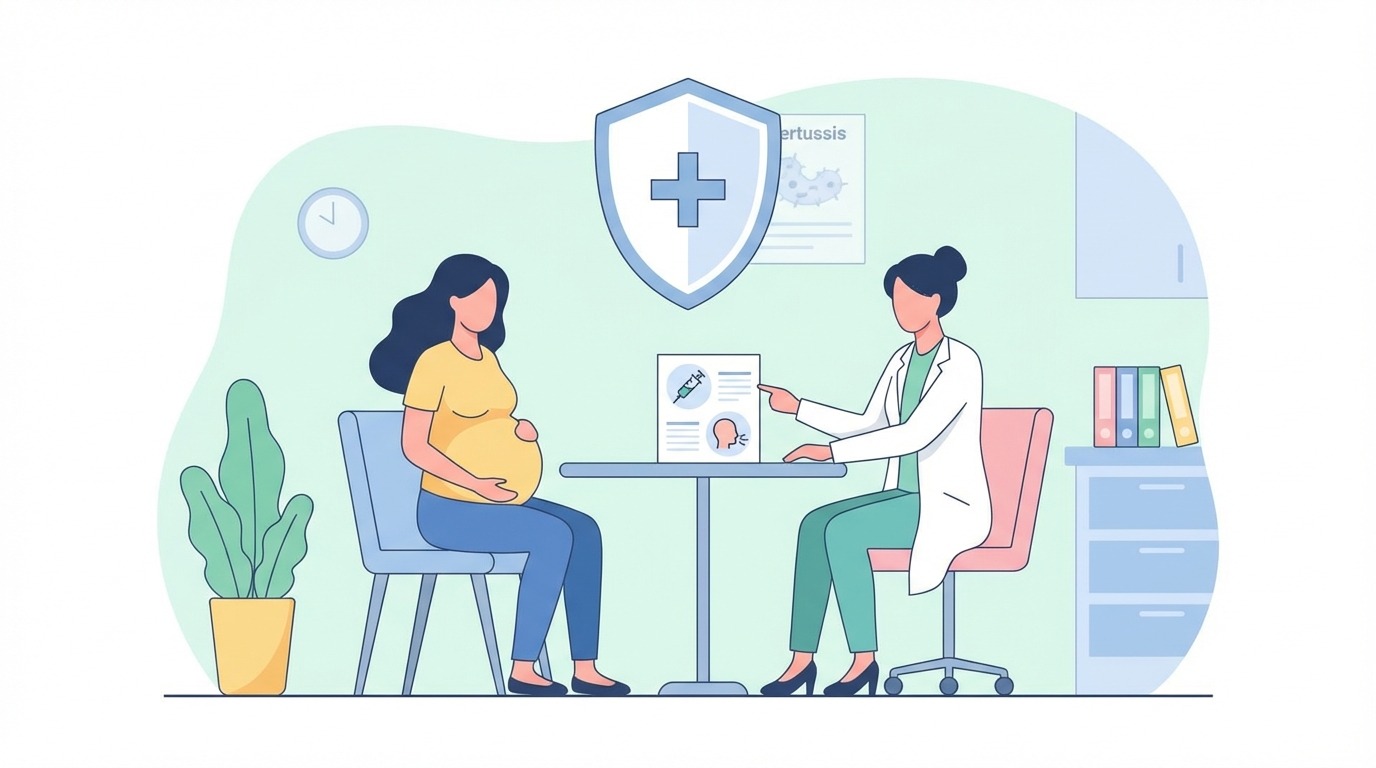
Which product to use? Vaccines available to pregnant women are acellular, combined, and contain pertussis toxoid. In France, Repevax and Boostrixtetra are references. They also include diphtheria, tetanus, and poliomyelitis. They do not contain a live agent, so they are suitable for maternal and fetal health.
Should it be done with each pregnancy? Yes. Antibodies decrease over time. Therefore, every pregnancy deserves a booster regardless of the date of the previous vaccine. This simple rule guarantees individualized and lasting prevention for each child.
And if vaccination was not done before delivery? A postpartum catch-up protects the mother for the following weeks. However, it will not transmit antibodies to the newborn. In this case, the cocooning strategy becomes essential, with vaccination of close contacts.
A practical case clarifies these choices. Léa, at 31 WA, attends the prenatal consultation. Her eldest goes to nursery school. The timing is favorable: she receives the vaccine now. Three weeks later, her antibody levels have risen, and any future encounter with the bacterium, if it occurs, will be much less risky for her baby.
Coordinating with other recommended vaccines
During pregnancy, other vaccines are recommended, especially against flu and Covid-19. They can be administered on the same day, but at different sites, or spaced apart. The goal remains the same: securing maternal and newborn health. The professional adjusts according to vaccination history.
Meanwhile, the infant schedule will begin at 2, 4, and 11 months. This sequence complements the maternal immunity transmitted in utero. Together, these steps build a continuum of protection. The coverage shifts from passive to an active response in the child.
Planning early avoids end-of-pregnancy forgetfulness. An appointment dedicated to the second trimester works well. Ultimately, organization matters as much as the product used.
Effectiveness and safety of pertussis toxoid vaccines during pregnancy
Clinical benefits are major. Population studies show about a 95% reduction in whooping cough deaths in infants when the mother is vaccinated during pregnancy. Hospitalizations drop by about half, and the risk of clinical cases is divided by four. These figures repeat across different countries and over more than a decade of data.
Why such effectiveness? The pertussis toxoid induces the production of antibodies targeted against the bacterial toxin. These immunoglobulins neutralize much of the virulence, limiting apnea and complications. Thus, even if exposed, the infant faces a weakened enemy.
Safety has been thoroughly studied. Acellular vaccines contain no live bacteria. They cannot cause the disease. Side effects are most often local: redness, pain at the injection site, sometimes mild fever and muscle aches. These symptoms disappear quickly with simple measures.
What about allergies? Severe reactions remain very rare. A known allergy to a vaccine component contraindicates the injection. The professional assesses medical history and may offer a specialist opinion if needed. In the absence of contraindication, vaccination can take place in clinics, maternity wards, or vaccination centers.
Concerns circulate on social media. Some fear an “overload” of antibodies. Yet, the immune system regulates the response. The concentrations transmitted to the baby naturally decline after a few weeks. There is no demonstrated effect of “immune overload” with these vaccines.
And the baby’s schedule? Data confirm that maternal vaccination does not inhibit the infant’s own response to their vaccines. In other words, maternal immunity does not cancel infant vaccination. It acts as a temporary safety net while the child’s immune autonomy develops.
Transparency and ongoing monitoring
Health authorities regularly publish pharmacovigilance reports. In 2025, the tolerance profile remains stable and reassuring. Healthcare workers report adverse events, analyzed by independent teams. This quality loop allows recommendations to be adjusted if necessary.
Moreover, hospital reality confirms the value of this policy. Services see fewer severe respiratory distress cases in the youngest when maternal vaccine coverage increases. It is an immediate translation of science into family life.
Ultimately, effectiveness and safety go hand in hand here. The benefit-risk ratio strongly favors vaccination.
Cocoon strategy and daily gestures: completing infant protection
Vaccination during pregnancy remains the cornerstone. However, some situations require an additional strategy called cocooning. It consists of vaccinating close contacts to reduce the probability of the baby’s exposure. Parents, siblings, grandparents, and home caregivers form the first circle to cover.
How to organize this cocoon? Start by identifying people who will live with the newborn during the first six weeks. Then plan their vaccination if their status is uncertain or outdated. This approach is useful when the mother could not get the vaccine in time or in high exposure households.
Daily gestures amplify prevention. Daily ventilation, hand washing at the entrance, and limiting visits during cough reduce transmission. Also, meetings ideally take place in well-ventilated spaces, at a reasonable distance, avoiding kisses if someone is sick.
A frequent question concerns breastfeeding. Breast milk mainly transmits IgA, useful for mucous membranes. It does not replace the specific transplacental maternal immunity against whooping cough. Nevertheless, breastfeeding supports the infant’s immune balance. Together, breastfeeding and maternal vaccination form a beneficial duo.
Anticipating the return home helps a lot. A simple checklist streamlines organization. It involves the family and reassures close contacts. Here is a concrete, easy-to-share action plan.
- 🗓️ Schedule the vaccine between 27 and 36 WA, then note a booster each pregnancy.
- 👨👩👧 Map the first circle (parents, siblings, grandparents) and check their vaccination status.
- 🏥 Request a vaccination certificate for close contacts from the professional if necessary.
- 🚪 Ventilate the baby’s room and living areas twice a day.
- 👐 Set up a “clean hands” point at the entrance (gel or soap) for visitors.
- 🤧 Postpone visits if cough or fever, even mild.
- 📱 Share a clear message with the family circle on prevention and warning symptoms.
This combination of actions creates successive barriers. Each barrier counts. Together, they significantly reduce the risk of newborn exposure.
Practical cases, misconceptions, and care pathway centered on maternal health
Concrete stories illuminate decisions. Take Ana and Samir, expectant parents of their first child. Ana enters her third trimester. She receives the vaccine during a prenatal visit. The couple informs the grandparents and schedules their booster. At birth, visits are done in small groups, in a ventilated living room. The baby sleeps peacefully, and the first weeks pass without worrying cough. This path is nothing exceptional: it results from simple planning.
Another situation: Clara gave birth earlier than expected. She did not have time to get vaccinated during pregnancy. The team implements cocooning. Close contacts receive a dose quickly. Clara is vaccinated postpartum. The pediatrician reminds the infant vaccination schedule at 2, 4, and 11 months to consolidate protection. Vigilance remains, but the plan is solid.
Several misconceptions persist. No, maternal vaccination does not prevent the baby from responding to their own vaccines. No, it does not increase the risk of premature birth. No, it does not “tire” the immune system. Real-life studies, published and monitored, converge on the same conclusion: clear benefits, good tolerance.
The care pathway matters as much as the facts. It starts in general medicine or with midwives, continues in maternity wards, and extends in maternal and child health services. Everyone can offer the dose at the indicated time. Prenatal appointments provide good opportunities to inform, reassure, and vaccinate. A short summary document, shared in the record, avoids forgetfulness.
And if needles are feared? Simple techniques help: deep breathing, distraction, comfortable positioning, and hydration. The injection lasts a few seconds. Then, monitor the injection site and favor rest if a mild fever occurs. In case of doubt, the professional responds quickly.
Choosing reliable sources and staying up to date
To inform oneself, it is better to use validated resources. Health authority sites, pages dedicated to whooping cough, and professional recommendations provide verified content. You can also request materials at maternity wards. The documents updated in 2025 incorporate the latest pharmacovigilance feedback.
To go further, an educational video often enlightens parents. It summarizes the why, when, and how, with simple illustrations and useful testimonials. Clear messages promote adherence.
A well-marked path invites confidence. And confidence fosters protective action, at the right time.
“The best protection for the infant begins before the first cry.”
{“@context”:”https://schema.org”,”@type”:”FAQPage”,”mainEntity”:[{“@type”:”Question”,”name”:”Is the whooping cough vaccine compatible with other vaccines during pregnancy?”,”acceptedAnswer”:{“@type”:”Answer”,”text”:”Yes. It can be administered the same day as the flu or Covid-19 vaccine, at different injection sites. The professional adapts according to history, to optimize prevention and maternal health.”}},{“@type”:”Question”,”name”:”What are the most common side effects after the injection?”,”acceptedAnswer”:{“@type”:”Answer”,”text”:”Most often, it is local pain, redness, sometimes mild fever and muscle aches. These signs disappear within 24 to 48 hours with hydration and paracetamol if needed.”}},{“@type”:”Question”,”name”:”Should the vaccination be repeated with each pregnancy even if a recent booster was done?”,”acceptedAnswer”:{“@type”:”Answer”,”text”:”Yes. Antibodies decrease over time. A booster during each pregnancy ensures optimal antibody transfer to the baby and infant protection from birth.”}},{“@type”:”Question”,”name”:”If maternal vaccination was missed, what to do to protect the baby?”,”acceptedAnswer”:{“@type”:”Answer”,”text”:”Set up cocooning quickly: vaccinate close contacts and apply strict hygiene measures. A postpartum catch-up will then protect the mother for the future.”}},{“@type”:”Question”,”name”:”What is the specific interest of pertussis toxoid in these combined vaccines?”,”acceptedAnswer”:{“@type”:”Answer”,”text”:”Pertussis toxoid stimulates a targeted response against the Bordetella pertussis toxin. It generates antibodies capable of attenuating disease severity in the exposed infant.”}}]}Is the whooping cough vaccine compatible with other vaccines during pregnancy?
Yes. It can be administered the same day as the flu or Covid-19 vaccine, at different injection sites. The professional adapts according to history, to optimize prevention and maternal health.
What are the most common side effects after the injection?
Most often, it is local pain, redness, sometimes mild fever and muscle aches. These signs disappear within 24 to 48 hours with hydration and paracetamol if needed.
Should the vaccination be repeated with each pregnancy even if a recent booster was done?
Yes. Antibodies decrease over time. A booster during each pregnancy ensures optimal antibody transfer to the baby and infant protection from birth.
If maternal vaccination was missed, what to do to protect the baby?
Set up cocooning quickly: vaccinate close contacts and apply strict hygiene measures. A postpartum catch-up will then protect the mother for the future.
What is the specific interest of pertussis toxoid in these combined vaccines?
Pertussis toxoid stimulates a targeted response against the Bordetella pertussis toxin. It generates antibodies capable of attenuating disease severity in the exposed infant.