
Toilet Training Daycare: Toilet training at the daycare (1-3 years).
| Short on time? Here’s the essentials ⚡ |
|---|
| Spot the readiness signs (2-hour dryness, curiosity about toilet, motor skills) before starting 🕵️♀️ |
| Align home and daycare using the same words, schedules and tools to boost success 🤝 |
| Create a secure and joyful ritual: invitation, choice of potty, short song, hand washing 🎶 |
| Avoid any pressure; favor concrete encouragements and active child participation 🌱 |
| Respect hygiene and safety: never leave a child unattended on the changing table 🧼 |
| Anticipate challenges (refusals, accidents, regressions) with simple, calm and consistent plans 🧩 |
Between 1 and 3 years, learning cleanliness in daycare becomes a decisive milestone in education. This period reveals the rise of autonomy and body awareness. When adults synchronize their actions, the child develops stable habits that ease the transition to toileting. A clear framework, reassuring words, and short rituals make all the difference. In a rhythmic daily routine, every potty session can become a lively scene of observation, bonding, and progress.
Success relies on three levers: assessing the right moment, creating a welcoming environment, and mobilizing seamless home-daycare cooperation. Cultural differences remind us that cleanliness is not a competition but a progression suited to toddlers. Educators, as true conductors, build a warm, secure routine demanding hygiene. In return, the child gains confidence, shows pride, and refines social skills within early childhood.
Readiness signs for potty training in daycare (1-3 years): markers, ages and false starts
Starting too early can freeze motivation; waiting unnecessarily can hinder autonomy. Markers are not limited to age. A ready toddler stays dry about two hours, senses and can signal their needs. They partially undress, climb a step stool, and show interest in toileting. These signs outweigh the birthday date.
In practice, observation by the daycare team complements that of families. A discreet daily success chart highlights the right pace: curiosity for the potty, clear body language, tolerance for novelty. This approach avoids aborted attempts that undermine confidence. It strengthens realistic habits useful in community settings.
Concrete developmental markers and cultural variations
Many children are ready between 24 and 36 months, but the window remains flexible. Standards, as noted by Kiddoo (2012), vary across cultures. The essential thing is to follow the toddler’s development, not adults’ calendars. When digestion regulates and daytime sleep structures, readiness increases.
Language skills also matter. Pointing to the potty, saying “pee” or “poo,” leading a parent to the toilet: these signals guide the start. A minimally verbal child can succeed just as well if adults interpret their gestures. Respecting the pace protects the attachment bond and avoids conflicts.
Fine observation in real situations
Over a week, noticing three regular potty visits at the same times helps planning. After snack or before nap, daycare can propose trying. The child participates: brings their potty, places the reducer seat, chooses favorite soap. This sense of control nurtures engagement.
Example: Louna, 28 months, sits on the potty after reading a short story. Without pressure, the team ritualizes three daily attempts. In ten days, coordination sets in. Praise focuses on effort (“You listened to your body”), not the result.
Rituals, hygiene and safety in group settings: from changing to toileting
Diaper changing and potty training form the same educational backbone. These are rare moments of individual attention in daycare: watching the child, naming actions, singing a rhyme. This time strengthens the bond and builds inner security, essential to daring the potty.
Safety is non-negotiable: never leave a child alone on a changing table. Preparing materials beforehand reduces risks and lowers collective stress. Hygiene is experienced as a serious, clear, and joyful game.
Simple and consistent ritual
A good ritual is short but frequent. Invitation, choice between potty and reducer, little song, drying, dressing, hand washing. Consistency gives markers and promotes learning by imitation. Motivational breakdowns are better managed when the environment stays stable.
Skin care matters. Irritated skin hinders attempts. Gentle, regular routines make the difference. A guide like these skin hygiene tips can help teams prevent discomfort and redness.
Material setup and “potty kit”
A child-height toilet corner stimulates autonomy: non-slip step stool, low hooks, laminated books. Visual signage (simple pictograms) supports understanding, especially for allophone or neurodivergent children. Nearby, a mobile box concentrates essentials.
- 🚽 Reducer + stable potty
- 🧻 Wipes, soft paper, waterproof bags
- 🧼 Fun foaming soap + towels
- 👖 Easy-to-lower clothes (elastic waistbands)
- 🧦 Complete spare outfits
- 📚 Waterproof booklets “special toilet”
To reinforce sensory and motor aspects, familiar objects are helpful. Emotional landmarks like a favorite toy, for example the famous Sophie la girafe, soothe transitions and encourage engagement in the ritual.
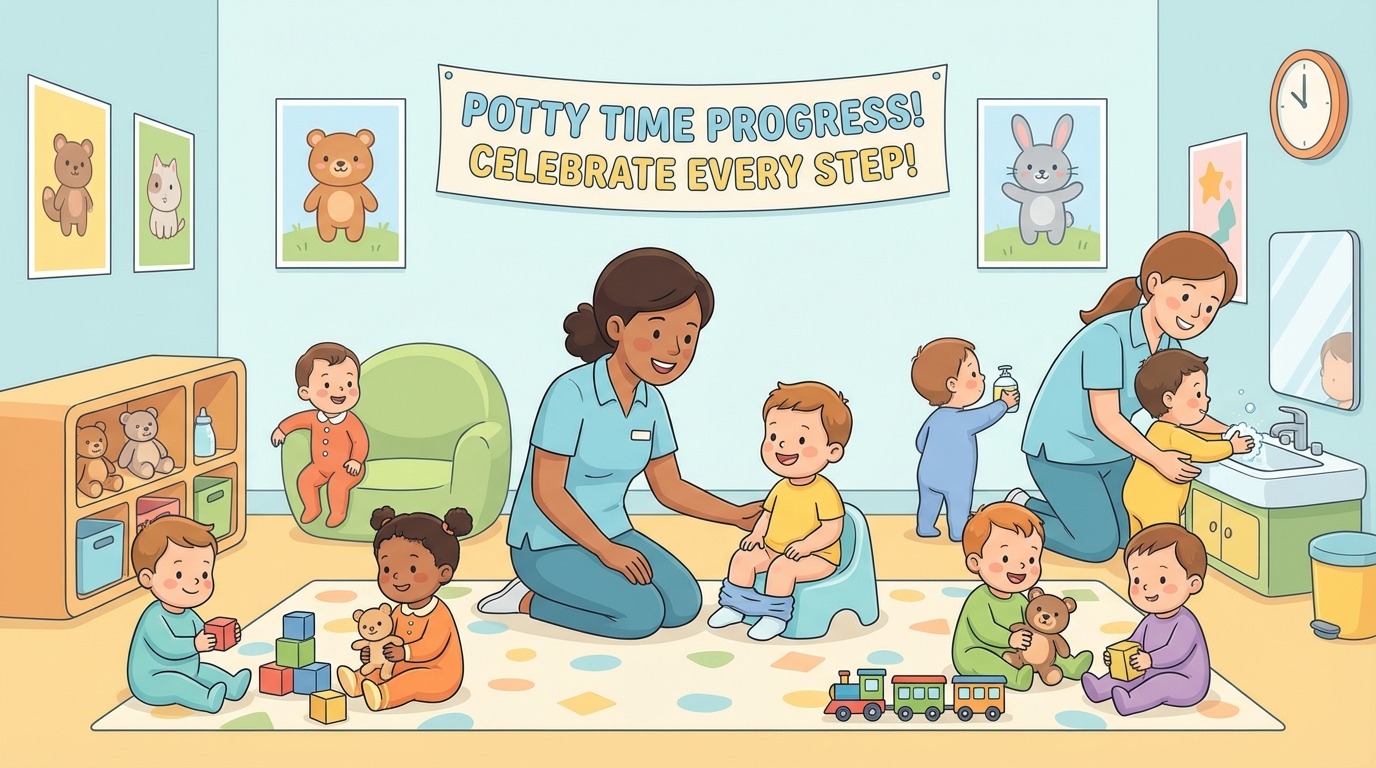
Home-daycare coherence: common language, tracking notebook and transitions
Adult alignment multiplies success. When parents and daycare staff use the same words and sequence, the child understands faster what is expected. A logbook, paper or digital, notes trial times, successes, incidents, hydration and observed signals. Transparency reduces misunderstandings and avoids misdiagnosis.
Change phases (moving, birth, transition to a new group) can cause regressions. A simple continuity plan protects momentum: maintain two daily trial slots, keep the anchor rhyme, and use the same soap. This coherence reassures.
Choosing words that support self-esteem
Formulations guide emotions. Saying “You listen to your body” values competence. Avoiding “You did it on purpose” prevents shame. To understand reactions between 1-3 years, insights like these markers on young children’s behavior help adjust tone and expectations during highly sensitive phases.
End-of-day feedback should be brief and factual. The child listens; they must not be publicly evaluated. Three points suffice: trial after meal, a successful pee, a post-nap change. Sobriety protects motivation.
Playful motivation and imitation games: strengthening autonomy without pressure
The driver of learning remains the pleasure of doing “like the grown-ups.” Imitation games establish lasting curiosity for toileting. Putting a teddy bear on a mini-potty, miming hand washing, telling a micro-story where the hero trusts their sensations: all this turns the challenge into an adventure.
Positive reinforcement targets effort, not performance. A sticker or a conspiratorial gesture values initiative. Material rewards stay light; the goal is inner autonomy, not a quest for gifts.
Sensory supports and fine motor skills
For some children, feeling water, soap, fabric is already a challenge. Sensory games outside of toileting gently desensitize. Simple activities like this creative project using eggshell chalk – see eggshell chalk – also develop pinching and coordination, useful for pulling down pants.
Play areas support bodily ease. Comfortable surfaces reduce fear of slipping and sharpen balance. Updated lists of the best equipment, like this 2026 guide on baby playmats, inspire effective choices in early childhood.
Micro-scenarios and short routines
Social scenarios show the sequence: “I listen to my belly, I choose potty or reducer, I wipe, I wash my hands.” Playing two minutes before the real session lowers pressure. Children with ASD particularly benefit from pictograms and visual sequences, as recommended in occupational therapy; specialized teams, like the Ergo Resources Group, offer concrete, adaptable tools.
Ultimately, play is not a bonus: it is the royal road to bodily mastery and pride in acting.
Common challenges in daycare: potty refusal, accidents, health and cultural differences
Refusal is not provocation, it’s information. The child says: “I need something else.” The adult then offers an acceptable option: read a book during change, try later, choose between potty and reducer. This leeway respects the child’s body and maintains the educational alliance.
Accidents mark the learning. They are handled calmly: clean together, calmly name the missed step, remind the next attempt. Easy-to-remove clothes and available spare clothes protect the school day.
Health and hygiene in collective settings
Health vigilance supports pedagogical continuity. Redness, diarrhea, or eye infections require adjustments. On common ailments, reminders like this note on conjunctivitis in children help decide on a group pause if needed. It’s better to suspend for two days than to combine toileting and discomfort.
Post-change care follows a clear protocol: adult/child hand washing, surface disinfection, secure waste disposal. The changing table remains a place of exclusive attention; leaving a child unattended, even for a second, constitutes a major risk.
Diversity of family practices
Some households favor early potty; others wait for language maturity. Daycare builds a common ground: shared language, consistent rituals, realistic goals. Differences narrow when the child, not adults’ calendar, is put at the center.
A useful maxim sums up the approach: “Neither rush nor prolonged pause: just the right pace.” This guideline reduces conflicts and regressions, and strengthens trust within the educational community.
“Cleanliness is not an exam: it’s a meeting between a ready body, allied adults and a reassuring ritual.”
What are the true signs of readiness between 1 and 3 years?
Dryness of about 2 hours, interest in toileting, ability to pull down pants, first words/gestures to signal, regularity of stools. Observation over a week in daycare sharpens the decision.
Should you choose the potty or the toilet reducer?
Both options are valid. The potty reassures by its stability and size; the reducer facilitates imitation of adults. Offer the choice to the child to strengthen their autonomy.
How to react to accidents in groups?
Stay calm, change immediately, verbalize the next attempt and value the effort. Prepare spare clothes and a clear hygiene protocol for the whole team.
What to do if the child systematically refuses?
Offer an alternative (book, other time, potty vs reducer). Reduce frequency, reinforce imitation play and check skin comfort. Resume later if necessary.
How to maintain home-daycare coherence?
Establish a tracking notebook, harmonize keywords, maintain two stable daily slots and inform each other reciprocally about successes and challenges.