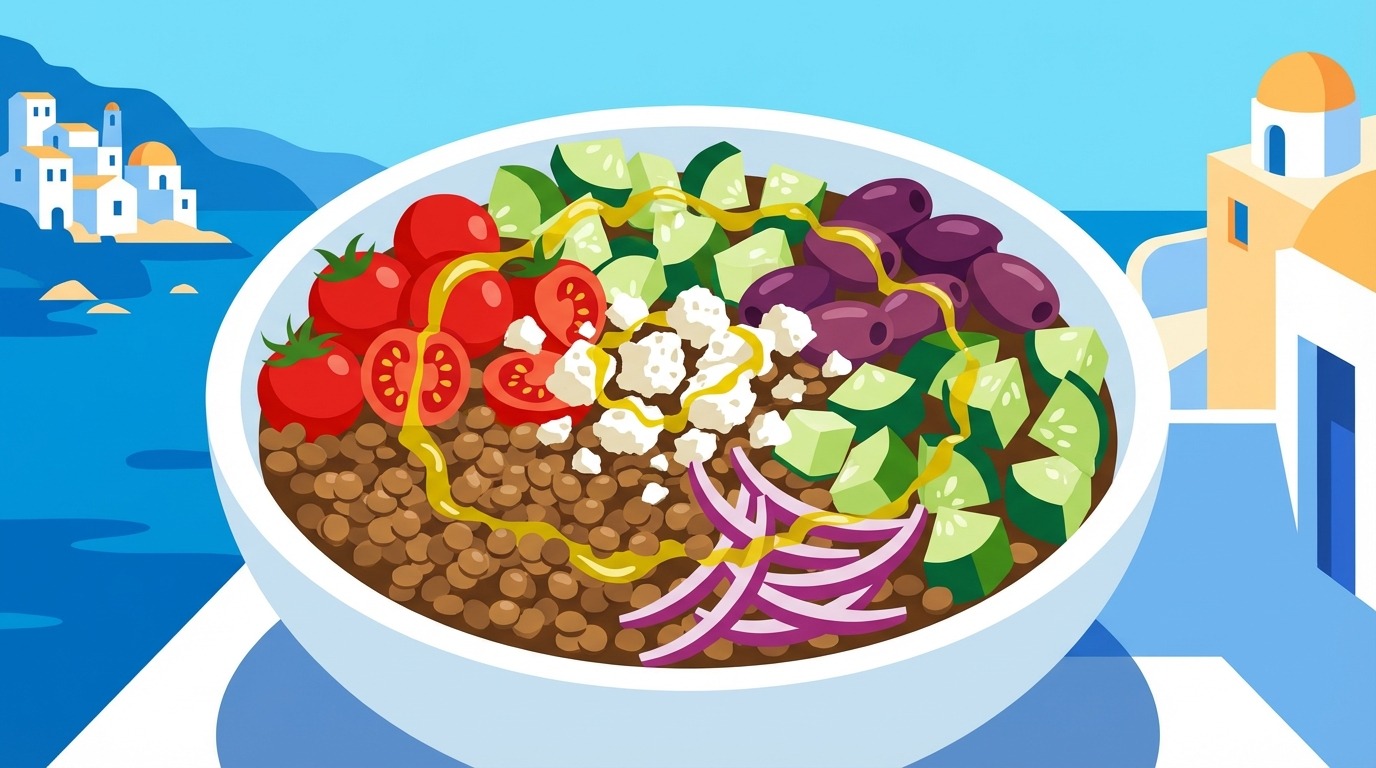
Greek Lentil Salad: PC Recipe: Greek lentil salad.
| Short on time? Here’s the essentials ⏱️ |
|---|
| Greek salad + lentils = quick plant proteins, perfect for a healthy starter 🥗 |
| Classic base: tomatoes, cucumber, olives, feta, extra virgin olive oil 🫒🍅🥒 |
| Quick cooking: green lentils 18–20 min, cooled then seasoned hot for more flavor 🔥 |
| Key seasoning: olive oil + lemon + oregano + red vinegar, salt at the last moment ✅ |
| Perfect texture: drain salted tomatoes, seed cucumber, crumble feta when serving 😋 |
| Batch-cooking: lasts 3–4 days in the fridge; keep feta and greens separate 🧊 |
| Ideal for lunchboxes, picnics and sharing platters; ultra adaptable salad recipe 🎒 |
When the craving for a bright plate arises, the Mediterranean salad tops the list. By adding lentils, it gains firmness, satiety, and aromatic depth. This duo, though obvious, transforms the traditional Greek salad into a complete dish, always fitting for a healthy starter. The legumes converse with sweet tomatoes, crunchy cucumber and silky olive oil, delivering a balanced, nourishing, and wildly practical composition when time flies.
This culinary proposal is not just an adjustment. It defends a simple idea: indulgence benefits from mingling with reason. Thus, a salad recipe designed for active life earns its stripes thanks to precise gestures, a rigorous selection of products, and an aromatic construction respecting the spirit of Greek cuisine. The goal is clear: to provide a reliable, adaptable, and exciting method, suitable for both rushed meals and convivial gatherings.
Greek lentil salad: nutritional basics and taste promise
Talking about Greek salad with lentils means defending the discreet power of legumes. They offer fiber, minerals, and especially an elegant dose of plant proteins. This density changes the game. It supports energy without heaviness, suitable for a paced lunch or a light yet structured dinner.
The foundation remains the iconic Mediterranean assembly. We find meaty tomatoes, fresh cucumber, kalamata olives, feta, red onion, and plenty of extra virgin olive oil. By adding lentils, the dish acquires a pearly, almost hazelnut texture. The seasoning also gains in capillarity, as these seeds soak up the vinaigrette and release it with every bite.
The value of this combination is also measured in lasting satiety. Thanks to fiber and protein, hunger recedes for several hours. Conversely, a salad too light forces undesirable snacking. Here, balance is established: freshness, creaminess, crunch, and roundness.
The tradition of Greek cuisine provides direction. It demands great flavor honesty and controlled simplicity. Good olive oil, dried oregano crumbled between the fingers, a lively lemon, red wine vinegar, measured salt. Nothing unnecessary. Everything speaks, everything serves.
In a fictional nursery called “Les Petites Cyclades,” the kitchen team introduced this enriched version for staff meals. The feedback was clear. On busy service days, the salad held up, without softening or losing its shine. The containers, prepared in the morning, remained appealing until the last service.
To convince the most skeptical, the sensory argument works better than any nutritional speech. The tomatoes release their sweet-acid juice. The cucumber snaps under the bite. The lentils offer a tender chew. The feta, crumbled at the last moment, binds and seasons. Nothing tires, everything wakes up.
- 🥗 Satiety asset: lentils = protein + fiber, energy that lasts.
- 🫒 Cardio asset: extra virgin olive oil = monounsaturated fats and polyphenols.
- 🍅 Freshness asset: ripe tomatoes + seeded cucumber = clean crunch.
- 🧂 Balance asset: late salt + controlled acid = preserved vegetables.
- 🧊 Practical asset: keeps cold, travels well, perfect for a healthy starter.
All in all, this dish defends a simple principle: cook little, assemble carefully, and rely on straightforward products. It’s the shortest path to lasting pleasure.
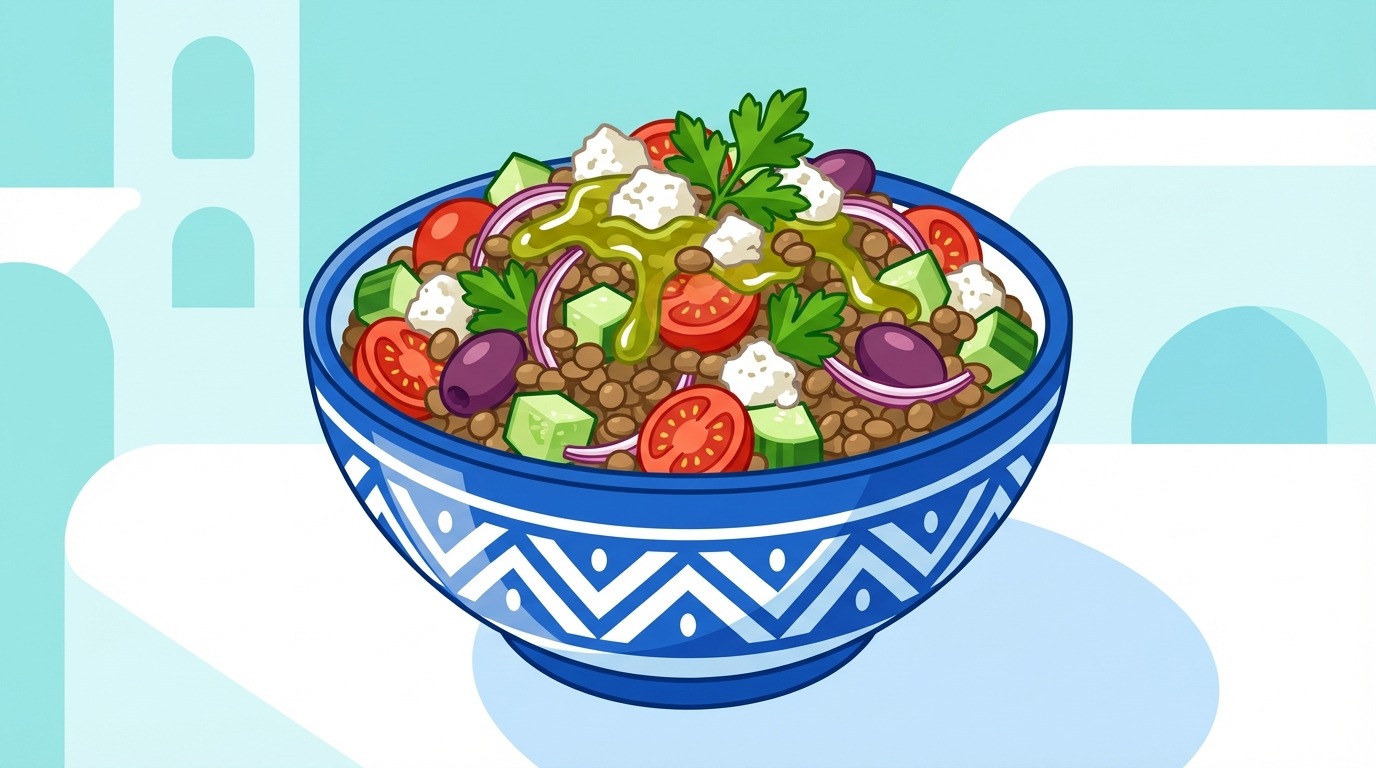
Detailed and reliable Greek lentil salad recipe (PC)
Precise ingredients and winning proportions
For 4 generous portions, aim for balance. Prepare 250 g of green lentils sorted and rinsed. Add 500 g of ripe tomatoes, 1 large cucumber (or 2 small ones), 120 g of red onion, 120 g of pitted kalamata olives and 180 g of feta.
For the seasoning, count on 5 tbsp of extra virgin olive oil, 2 tbsp of lemon juice, 1 tbsp red wine vinegar, 1.5 tsp dried oregano, 1 small grated garlic clove, salt and pepper. Plan a little mint or parsley for a green and lively finish.
Express preparation, gestures that change everything
Cook the lentils in a large volume of unsalted simmering water for 18 to 20 minutes. Drain as soon as they are tender but whole. Pour 1 spoonful of hot olive oil, then pepper. This gesture seals the aromas.
While cooking, cut the tomatoes into quarters. Salt lightly and let drain for 10 minutes in a colander. Seed the cucumber, then cut into thick half-moons. Thinly slice the red onion and rinse for 30 seconds to soften.
Mix the olive oil, lemon, vinegar, garlic and oregano. Taste and adjust. Combine warm lentils and drained vegetables. Season generously, then wait 5 minutes. Crumble the feta when serving, along with the herbs.
Why wait? Because the lentils absorb. They smooth the acidity and fix the herb perfume. This short pause guarantees a coherent bite, without excess juice at the bottom of the dish.
Tips, variations and useful fixes
Need a more iodized touch? Add rinsed capers. Want a lactose-free option? Replace feta with firm tofu marinated in lemon and olive oil. For a spicier version, add a hint of Aleppo pepper.
For dinner, complement with grilled pita bread or bulgur. For picnics, keep the feta separate. In a jar, place the vinaigrette first, then the lentils, then the tomatoes and cucumber; herbs and feta on top. Shake just before serving.
One last reflex makes the difference. Always salt at the end, especially if the feta comes afterwards. The result remains clear, precise, and terribly lively.
Mastered texture and freshness: tomatoes, cucumber and olive oil in action
Tomatoes: choose, salt, drain
Success starts at the market. Meaty and ripe tomatoes guarantee a gentle juice. Varieties like beef heart or olivette provide ideal firmness. A quick salting draws out excess water without tiring the flesh.
This draining prevents salad drowning. The seasoning sets better. Each cube remains juicy yet firm. This clarity preserves color and intensifies flavor.
Cucumber: stable crunch and controlled bitterness
The cucumber must snap. For this, remove seeds, a source of water and sometimes bitterness. Cut into slightly thick pieces to keep resilience once mixed with lentils.
Some choose to peel in stripes. This technique marries softness and firmness. A few minutes’ rest in the fridge further consolidates texture.
Olive oil: choose the right intensity and emulsify at the right moment
The gustatory backbone is the olive oil. A top-grade extra virgin brings fruitiness, bitterness and a final prickliness. Medium intensity fits better here, as it leaves space for the tomatoes and feta.
Should you emulsify? Yes, if the goal is to coat. A micro-emulsion of lemon, vinegar, and olive oil coats the lentils. The fat carries oregano and garlic aromas. The acid awakens and lightens.
In the culinary workshop “Agora du Midi,” a comparative test was conducted. Team A: seasoning thrown in randomly. Team B: vinaigrette whipped and vegetables drained. Unanimous verdict: better flavor clarity in version B, and superior texture after 3 hours in the fridge.
These gestures are not quirks. They create coherence. A well-bound bite is better than an accumulation of ingredients.
Batch-cooking and service: healthy starter, complete dish, and peaceful organization
Plan without losing freshness
Preparing in advance doesn’t doom flavor. On the contrary, lentils benefit from marinating a few hours. However, 保 keep feta, herbs, and the final olive oil separate to avoid collapse. One container per ingredient family, and you’re set.
For four days, cook 500 g of lentils. Season hot, then cool. Make two batches of seeded tomatoes and cucumber. Prepare a large bottle of vinaigrette. Assemble salads the day before service, no earlier.
Typical organization for an active week
- 📅 Monday: cook lentils, prepare vinaigrette, portion.
- 🥒 Tuesday: cut cucumber, salt and drain tomatoes.
- 🧀 Wednesday: crumble feta, chop herbs, assemble the first batch.
- 🧊 Thursday: refill containers, adjust salt, add a dash of olive oil.
- 🎒 Friday: jar version for outings, grilled pita on the side.
In the “Phare Bleue” team, which serves lunches to caregivers, this sequence reduced peak stress. Trays remain colorful, and feedback notes better consistency of taste. Efficiency no longer rhymes with blandness.
Adapt to guests and contexts
For a casual appetizer, reduce dice size and spear on a spoon. At school, offer a version without raw onion. At the office, provide separate herb sachets to keep the scent intact until serving.
Need something more filling? Add chickpeas. Want a green note? Include arugula or watercress just before eating. The salad recipe remains flexible, but the assembly logic stays unchanged.
The key word is four syllables: an-ti-ci-pa-tion. It sculpts perceived quality, from morning to night.
From Mediterranean salad to 2026: culture, sustainability and immediate pleasure
Heritage and thoughtful adaptation
The horiatiki, the Greek “peasant” salad, built its reputation on product integrity. The addition of legumes does not deny this heritage. It actualizes it. Lentils were already on the Aegean tables; gathering them here is common sense.
The Mediterranean salad is not a fixed formula. It tells of a climate, gestures, conviviality. In 2026, the appetite for fresh, filling, and quick dishes meets this proposal. The alignment is perfect.
Purchasing power, ecology, health
Lentils offer a very competitive cost per portion. They reduce the carbon footprint compared to animal proteins. On the plate, they provide iron, magnesium and fiber. The olive oil, rich in polyphenols, supports the cardio-metabolic axis.
The gustatory demonstration remains central. Without pleasure, no lasting habit. Yet this salad delivers, day after day, a strong signal: crunch, juiciness, measured salinity, clear acidity. Even after a night in the fridge, balance holds if gestures are respected.
Life scenes and sharing
A Sunday in the park, the box opens and colors burst. Children first pick the cucumber and tomatoes. Adults serve themselves a scoop of lentils drizzled with olive oil. Everyone finds pleasure without compromise.
At an afterwork, the same base becomes meze. Add olives, pita, grilled peppers. Conversation livens. The bowl empties faster than expected, sign of a right idea.
In the end, this adaptation argues for humble modernity. It highlights the product, simplifies, structures appetite. It wins on all fronts.
“Simple to prepare, brilliant to share: Greek lentil salad turns routine into a sunlit ritual.”
Peut-on préparer la salade la veille sans perdre le croquant ?
Oui. Assaisonnez les lentilles à chaud, gardez tomates et concombre égouttés séparément, ajoutez feta, herbes et un filet d’huile d’olive au dernier moment. Le croquant reste intact.
Quelles lentilles choisir pour une tenue parfaite ?
Des lentilles vertes ou blondes. Elles gardent mieux leur forme que les corail. Cuisez 18–20 minutes, puis stoppez net la cuisson par égouttage.
Comment alléger l’acidité si le citron est trop présent ?
Ajoutez une cuillère d’huile d’olive, une pincée de sucre ou un peu de tomates plus mûres. Le gras et le sucré naturel rééquilibrent la vinaigrette.
Par quoi remplacer la feta pour une version végétalienne ?
Un tofu ferme mariné au citron, à l’huile d’olive et à l’origan. Égouttez-le, puis émiettez juste avant le service pour imiter la texture fondante.