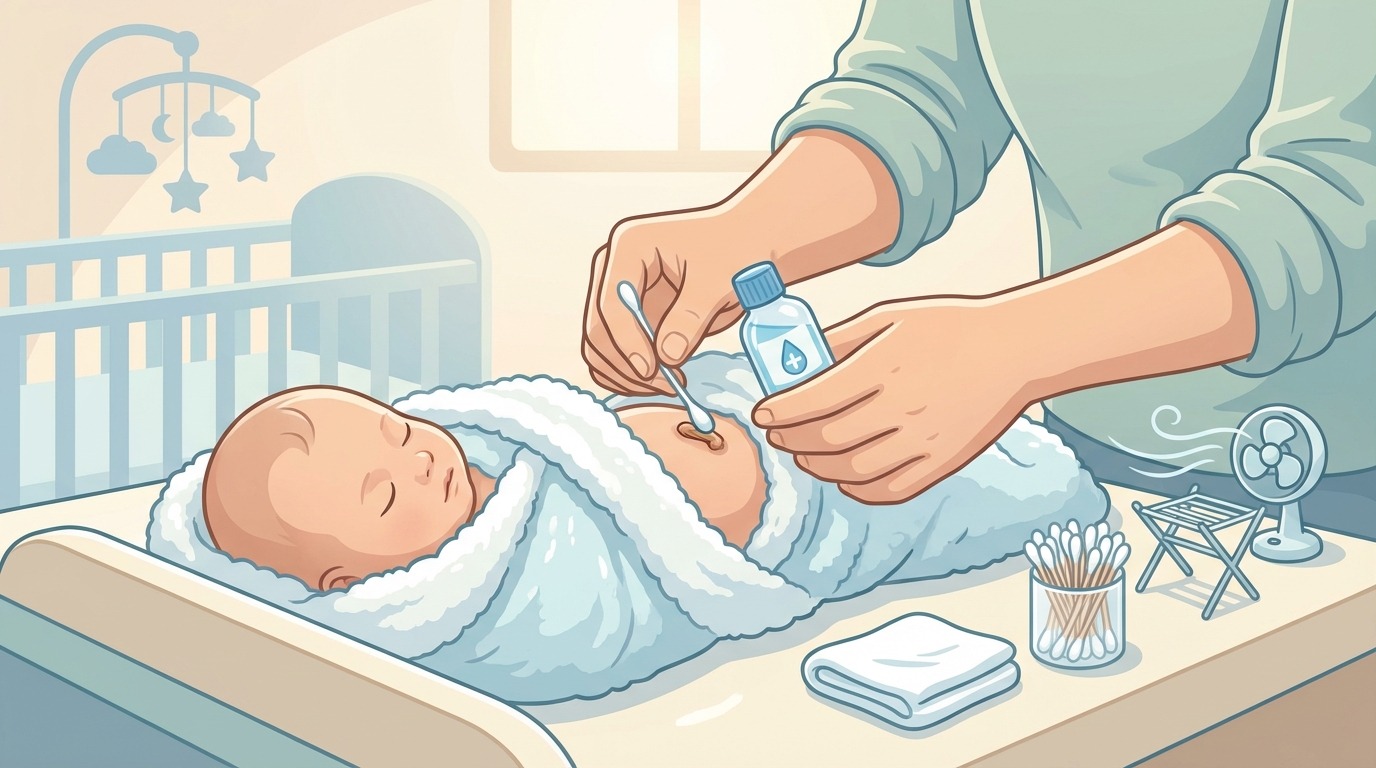
How to properly care for a baby’s umbilical cord: key tips and steps
| In Brief 📌 |
|---|
| Clean 2 to 3 times/day with sterile compresses, then dry meticulously 😊 |
| Prefer aqueous chlorhexidine solution or saline solution according to medical advice 🧴 |
| Keep the folded diaper under the navel and wear loose clothing 👶 |
| Watch for signs of infection: redness, odor, pus, fever 🚨 |
| Let it fall naturally (often between day 5 and 15), do not pull 🫶 |
| After falling off: continue gentle hygiene until complete healing 🌟 |
The umbilical cord, a vital link in utero, becomes after birth a small sensitive area that requires precise and regular gestures. Current recommendations emphasize simple hygiene, careful observation, and products well tolerated by the fragile skin of the newborn. In practice, a short but rigorous routine is enough to limit the risk of infection and promote quick detachment, often between the first and second week of life. This routine reassures parents and provides comfort to the baby.
Because every family experiences this moment differently, it is useful to have clear instructions, visual references, and concrete examples. This guide relies on validated maternity practices and practices adapted to daily life at home. It offers detailed steps, alerts to know, and tips to adapt care for baths, diaper changes, and outings. The goal is simple: to provide practical, reliable, and reassuring answers from the very first days.
Umbilical cord care: what to do (and not to do) to prevent infection
Understanding the umbilical area: an entry point to protect
At birth, the cord is clamped then cut; a stump remains which dries before falling off. This area corresponds to a wound in the process of healing. It can thus allow bacteria to pass if hygiene is insufficient. To stay on track, simple, regular, and gentle gestures are necessary, without excess products or harsh rubbing.
Before arrival, many wonder how this link was formed and protected the fetus. To better visualize the context, a reminder of the role of amniotic fluid and of the second-trimester ultrasound helps to understand why the umbilical area may ooze a few days after birth. This understanding makes care gestures more logical and calmer.
Key principles of hygiene and monitoring
The golden rule is to clean then dry. Cleaning removes secretions; drying reduces moisture, which promotes microbial proliferation. Then, the area should be left to breathe by avoiding prolonged contact with a diaper or tight clothing. Daily observation allows early detection of any worrying change: spreading redness, unpleasant odor, yellowish or greenish discharge, fever, pain on touch.
In daily practice, a stable routine facilitates healing. However, antiseptics should not be multiplied without reason. According to local practices, many caregivers recommend an aqueous chlorhexidine solution or saline solution. Others recommend aqueous eosin for drying, used selectively. The most important remains regularity, gentleness of gestures, and vigilance.
Common mistakes to avoid
Several well-meaning reflexes delay healing. Do not tear off a scab or pull on the stump, even if it hangs. Better avoid powders, greasy creams, and oils on the navel, unless medically advised. Cotton balls leave fibers; sterile compresses are preferable. Finally, the diaper is systematically folded under the navel to allow air circulation.
In summary, the winning trio remains cleanliness + drying + aeration. This triptych protects the baby and reassures parents, day after day.
Umbilical cord cleaning: detailed steps and recommended frequency
Useful materials and well-tolerated products
A simple tray is enough: sterile compresses, saline solution in single doses, or aqueous chlorhexidine solution on medical advice. According to family habits, common brands can equip the bathroom: compresses Dodie, convenient pump bottles like Mustela for the bath (outside the umbilical area), or cotton swabs with fine tips. For organization, a soft storage found at Vertbaudet or Natalys helps keep everything within reach.
Some parents prefer a gentle cleansing gel for the body and hair at bath time, avoiding the stump. The essential remains to use alcohol-free products on perilesional skin and favor measured gestures. In case of doubt, advice from a midwife or pediatrician directs to the most suitable option.
Step-by-step procedure for safe care
The following sequence is quick, comfortable, and repeatable two to three times a day until healing:
- 🧼 Hand washing with warm water and soap for 30 seconds.
- 🩹 Cleaning the base of the cord with a sterile compress soaked in saline or aqueous chlorhexidine.
- 🎯 Precise gestures: dab without rubbing; gently lift the base to reach folds.
- 🌬️ Thorough drying with a dry compress, until moisture disappears.
- 🍼 Aeration: fold the diaper under the navel; loose clothing and light cotton.
- 📝 Observation: note redness, odor, oozing; contact if in doubt.
The ideal frequency is around 2 to 3 daily care sessions, and after each bath. In case of diaper rash, check that stools have not soiled the area; if so, immediately resume the cleaning protocol.
Choosing without getting lost: practical references
To help, here is a summary table of common options and their usages, to be compared with the professional’s advice who follows the baby.
| Product/Material 🧰 | Recommended Use ✅ | Key Points ⭐ |
|---|---|---|
| Sterile compresses | Cleaning and drying | No fibers, softness, single use |
| Saline solution | Daily cleaning | Well tolerated, practical in single doses |
| Aqueous chlorhexidine | Targeted disinfection | Follow medical advice |
| Aqueous eosin | Local drying | Apply locally, sparingly |
| Gentle cleansing gel (e.g. Mustela) | Bath outside umbilicus | Alcohol-free, rinse and dry |
A short video demonstration can support learning daily gestures without stress.
To complement, a file on newborn care offers other useful references, especially on the skin, bath, and diaper change. The simpler and steadier the routine, the better the detachment conditions.
Bath, diaper change, and clothing: organizing the routine without irritating the navel
After the bath: priority to drying
The bath may wet the stump; this is not a problem if drying is thorough. Dab gently with a compress, including at the base. Then, let the air circulate for a few minutes before dressing the baby. A short bath, in water at 37 °C, is enough for overall hygiene and comfort.
Simple accessories improve comfort: a reliable bath thermometer, a soft cape, and a heated space. A reclining seat or stable support facilitates safety. Bath toys, such as Fisher-Price, can wait until the navel is well healed to avoid repeated splashes on the area.
At diaper change: limit rubbing
The diaper should not cover the umbilical area. Fold the top of the diaper outward to expose the navel. If stool overflows, clean immediately, then dry. Regular changing, especially at night if necessary, reduces local moisture and prevents irritation.
Regarding organization, a well-arranged changing table reduces stress. Storage from Vertbaudet or Natalys keeps compresses and saline within reach. Avent pouches and bottles remain for feeding, while care materials are kept separately on a clean tray; this separation avoids confusion and strengthens hygiene.
Dressing and outings: comfort and aeration
Breathable cotton bodysuits, like those from Petit Bateau, allow better air circulation. Prefer suitable sizes to avoid any pressure. For outings, a maneuverable and well-ventilated Baby Stroller, like Bébé Confort, allows spacing layers of clothing. In hot weather, slightly uncover the navel at home while keeping the rest of the body warm.
Trips are opportunities to apply the folded diaper rule. A well-thought-out changing bag contains compresses, saline, and spare changes. A memory book, like The Birth Book, can hold a note on the cord falling date, a tender detail that reassures and marks a milestone.
To visualize bath gestures safely for the umbilicus, targeted research is often very useful.
When every micro-gesture contributes to aeration and gentleness, healing progresses calmly and painlessly for the child.
Umbilical cord warning signs and actions to take
Normal or worrying? Recognizing the differences
A slight clear ooze or a faint trickle of blood may occur. These signs remain expected in the first days. However, you should worry if the discharge becomes thick, yellowish/greenish, if a bad odor appears, if the skin around becomes red and warm, or if a painful swelling develops. Fever, lethargy, or pain on touch require consultation.
The area may form thin crusts that dry and fall off by themselves. This process is normal. Thick and soft crusts, associated with inflamed skin, point to infection. In this case, consult quickly to avoid omphalitis, a serious but rare complication with adapted care.
Step-by-step conduct
In the presence of a suspicious sign, here is the procedure to follow before medical advice:
- 🚿 Clean and dry the area immediately and gently.
- 📸 Take a photo to monitor progress and facilitate communication with the caregiver.
- 📞 Contact a midwife or pediatrician promptly if pus, odor, spreading redness, or fever.
- ⛔ Do not cover with occlusive dressings or apply home remedies.
- 🧾 Note temperature, time of onset, care carried out.
Sometimes, after falling off, a small pink lump called an umbilical granuloma persists and oozes. It is usually treated simply in consultation. Quick evaluation helps choose the best option and reassure the family.
Keep these references in mind and react early; this gives the navel the best chance to heal well.
Cord falling, healing, and aftermath: steps, tips, and special cases
The usual timeline and what happens next
The fall most often occurs between the 5th and 15th day. The area sometimes remains slightly moist for a few days, then dries. During this phase, continue gentle care: cleaning if needed, drying, aerating. No pulling should be applied, even if the stump seems “ready”. The body knows when to release this last link.
After falling off, a clean and dry navel is sufficient. Maintain soft and airy clothing. The bath can become freer again, always followed by precise drying. On walks, the routine remains the same: folded diaper, calm observation, consistent gestures.
Granuloma, hernia, irritations: knowing how to react
The umbilical granuloma is common and benign. It appears as a pink tissue that oozes a little. Treatment, conducted by a professional, is quick. The umbilical hernia forms a small soft bump when crying or straining; it often regresses over time. Medical monitoring helps decide if surgical advice will be useful later.
In case of irritation caused by rubbing against clothing, favor soft bodysuits, like Petit Bateau, and avoid compressive belts. For outings, a comfortable Baby Stroller, such as a Bébé Confort model, limits unwanted pressure thanks to a stable and well-adjusted position.
Make it a ritual to reassure
Many parents create a dedicated kit: compresses Dodie, single doses of saline, soft storage Vertbaudet, Mustela cleansing gel for body bath. Fisher-Price toys distract attention during care. Noting the falling date in The Birth Book transforms this stage into a positive memory.
Remain consistent, observe without anxiety, and seek advice if in doubt: this is the combination that soothes and protects until complete and clean healing.
Can a newborn be bathed before the cord falls off?
Yes, a short bath is possible if drying is thorough afterward. Dab with a sterile compress, dry the base, and let the area breathe for a few minutes. The key remains: cleanliness, drying, aeration.
Which product should be used primarily for daily care?
Saline solution is very suitable. According to the caregiver’s advice, an aqueous chlorhexidine solution may be proposed. Aqueous eosin is used locally to dry. Always clean then dry, without rubbing.
When should you consult without delay?
In case of spreading redness, local heat, bad odor, purulent discharge, fever, or pain on touch. After quick care (cleaning and drying), contact a midwife or pediatrician.
What to do if the cord bleeds a little?
A slight ooze is common. Clean gently, dry carefully, then observe. If bleeding persists or worsens, seek medical advice.
Should the navel be covered with a dressing?
No, unless medically indicated. Leaving the navel exposed to air speeds up drying and healing. The diaper must be folded under the navel to avoid rubbing.