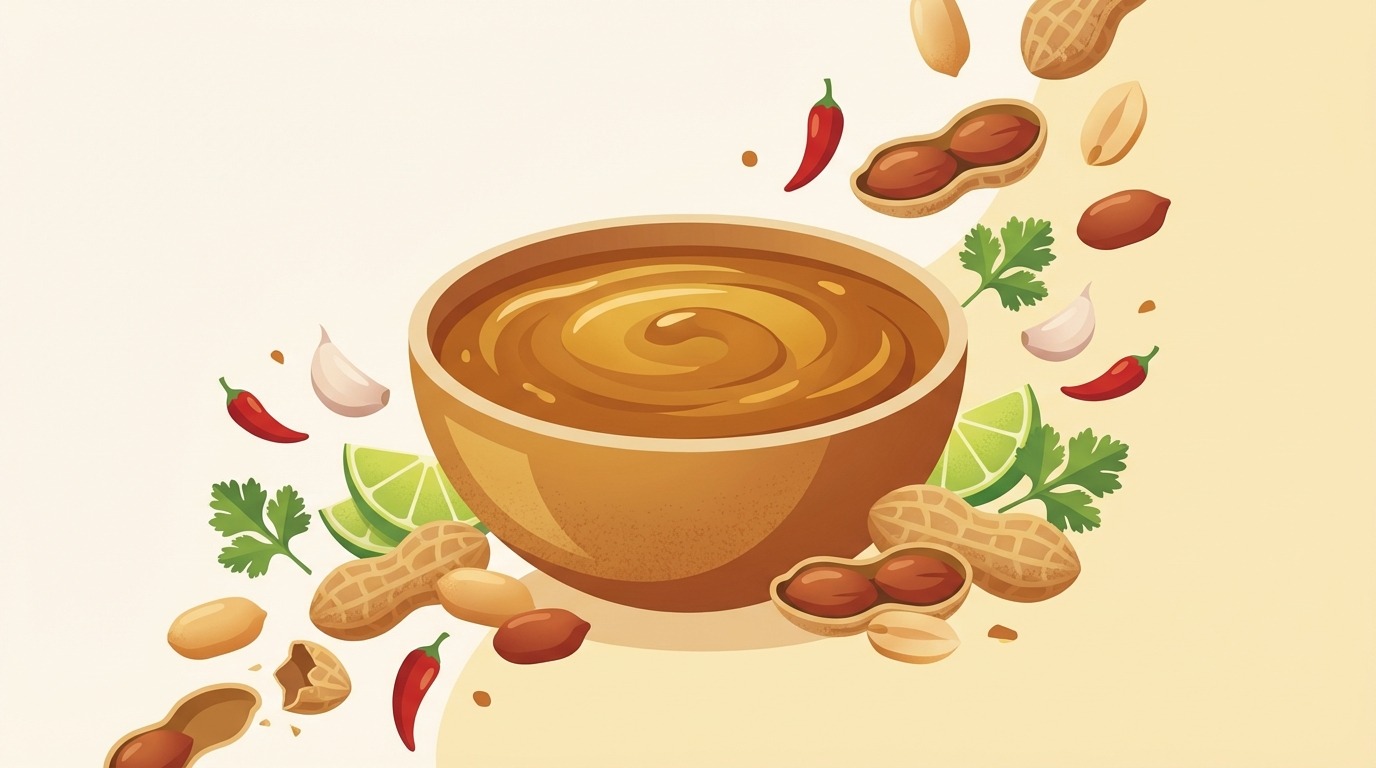
Peanut Sauce: Recipe: peanut sauce.
| Short on time? Here’s the essentials ⚡ |
|---|
| Peanut sauce marries African cuisine and Asian cuisine for a round flavor, sometimes a spicy sauce 🌶️ |
| Fail-proof base: 160 ml coconut milk, 125 ml peanut butter, hoisin, soy, sambal, starch 🥜 |
| 2 minutes of cooking is enough to coat sides, noodles, rice, grilled dishes ⏱️ |
| Keeps 1 week in the fridge; reheat gently and adjust with water or lime juice 🧊 |
| Versatile: marinade, dip, dressing; mild for kids, fiery for adults 👨👩👧👦 |
Peanut sauce marks a gourmet meeting between West African heritage and Southeast Asian techniques. It coats dishes, links textures, and brings a smooth, roasted, sometimes spicy flavor. At home, it transforms a simple bowl of noodles into a feast, just as it elevates a Sunday roast chicken. The appeal is clear: a base of simple ingredients, a quick cooking time, and an infinite palette of variations, from the mild version for the little ones to the spicy sauce for intensity lovers.
At the market, jars of peanut butter now stand alongside coconut milk, hoisin, and soy. This proximity makes sense. In African cuisine, Dakatine sauce, mafé, or peanut stews remain warm landmarks. In Asian cuisine, satay sauce, rolls, and crunchy salads constantly call for it. Between these worlds, a bridge was built: a simple, adaptable peanut sauce recipe, ready in minutes. The result pleases busy families, curious cooks, and tables seeking meaning as much as flavor.
Peanut Sauce: history, cultures, and uses that make the plate come alive
The genealogy of peanut sauce tells a story. The peanut conquered lands, ports, and kitchens thanks to its nutritional richness. In West African households, the sauce accompanies rice, foutou, yam, or grilled fish. It reassures, nourishes, and brings people together. Mafé is often cited, whose smooth roundness balances tomato and chili. Each cook adjusts the seasoning according to the season and mood.
Farther east, Asian cuisine adopted it with its own style. Satay sauce is served hot or warm, often over grilled skewers. It plays between peanut, tamarind, chili, and sometimes coconut milk. This base adds dimension to fine meats, but also to tofu and tempeh. Night markets bear witness: a spoonful of well-made sauce is enough to make a snack memorable.
This culinary dialogue inspires contemporary tables. In a neighborhood bistro, a kitchen team, for example, imagined Chinese dumplings drizzled with a peanut-lime reduction. The appeal was immediate, because the plate remained accessible while shaking up the codes. The trick? A coating texture, controlled saltiness, and a touch of acidity to awaken the palate.
Daily, the sauce becomes a chameleon side. It shines on roasted vegetables, stir-fried noodles, cabbage salads, or plain rice. It also serves as a dip for carrots, cucumbers, and asparagus. The peanut drizzle links simple elements and sometimes fixes a too-dry dish. Who has never saved leftover roast chicken thanks to a ladle of sauce?
Its reputation as a spicy sauce is not a fixed rule. Chili can be dosed. One can dare a drop of sambal oelek, a hint of gochujang, or stick to a mild version. The secret is to preserve the identity of the peanut, its toasted nose, and balance salty, sweet, and acidic. A squeeze of lime juice, a grating of ginger, or a drop of rice vinegar often suffice.
In current culinary conversations, eco-consciousness also emerges. Peanut sauce valorizes plant proteins at moderate cost. Paired with tofu or legumes, it composes a complete meal. Energy comes as much from peanut fat as from associated fibers. The dish is filling without complicating the technique.
Ultimately, this sauce accompanies ways of living. It abolishes the boundary between weekday meals and festive tables, and invites itself to all generations. That’s why it establishes itself in the repertoire: it tells stories and simplifies culinary life.
Taste landmarks and pairings
To stabilize aromas, several axes are open to the cook’s hand. One chooses a fatty base, sometimes coconut milk, which softens the profile. Then, salt is modulated with a light soy sauce, and complexity with a touch of hoisin. A warm spice like ginger energizes everything. Finally, acidity controls the finish.
As for pairings, the evidence lies in seasonal vegetables. Asparagus, sweet potatoes, broccoli, and cabbage gain dimension. Grilled dishes appreciate this smooth tenderness which protects juiciness. Noodles absorb the sauce and create harmonious bites. The palate follows, and the plate empties.
In sum, the intelligence of this sauce lies in its flexibility. It adapts to context, desire, and budget, without losing its soul.
Peanut sauce recipe with coconut milk: precise ingredients and quick cooking
The version below provides a reliable and adaptable base. It aims for simplicity without sacrificing flavor. You get a coating texture in a few strokes, ideal for a gourmet side.
Ingredients and substitutions
Gather these measured ingredients: 160 ml coconut milk, 125 ml smooth peanut butter, 30 ml hoisin sauce, 15 ml soy sauce, 5 ml sambal oelek, and 5 ml cornstarch. This base balances itself. Hoisin brings sweet roundness. Soy adjusts salt. Sambal contributes fire.
For a milder option, remove half the sambal. Then replace with a dash of honey or maple syrup. For a gluten-free version, choose tamari sauce and check the hoisin. Finally, a touch of lime juice will add a fresh lift without disrupting the balance.
Cooking and texture
Pour all elements into a small saucepan. Whisk off the heat to smooth. Bring to a simmer over medium heat. Then maintain about 2 minutes, stirring. The starch acts quickly and ensures safe cooking. If the sauce seems too thick, lengthen with a bit of hot water or coconut milk.
A coating consistency must cling to the spoon without sticking. The shine indicates a good emulsion. For a perfect velvety texture, briefly use an immersion blender. The gesture homogenizes the peanut and avoids micro-lumps.
Practical example: family dinner
Mina, a school canteen chef, prepares this base in the morning. She coats cooked chicken cubes, then serves with steamed carrots and fragrant rice. The children love the mildness. Adults enjoy an extra chili at the table. The same sauce, adjusted, delights everyone.
- 🥜 Texture tip: heat gently, then whisk; the sauce does not break.
- 🌶️ Heat control: start with 1/2 tsp of sambal, taste, adjust.
- 🍋 Final sparkle: 1 tsp lime juice awakens roasted notes.
- 🍜 Smart service: keep some noodle cooking water to loosen the sauce.
- 🧂 Just salt: taste with the planned side, not alone, for better dosing.
This simple and reproducible protocol guarantees a successful sauce even on a busy evening.
This video helps visualize the desired texture and thickening speed.
From mafé to satay: variations and nutritional adjustments around peanut sauce
The strength of a peanut sauce recipe lies in its branches. Each variation creates a universe. Yet, the thread remains consistent: a base of peanuts, a salty element, a controlled sweetness, a well-balanced acidity.
African profile: warmth and depth
In African cuisine, a spicier sauce is often preferred. Concentrated tomato strengthens the base. Bird’s eye chili gives a strong fire. Cooking sometimes stretches to marry meat and sauce. Serving over rice or foutou provides a comforting chew. This version is ideal when the table calls for a generous dish.
Sweet potato cubes can also be added. They soak up the sauce and bring a natural sweetness. The final texture remains creamy and noble. The palate moves from a hazelnut note to a slightly smoky finish if mild paprika is added.
Asian profile: freshness and contrasts
Asian cuisine favors liveliness. Acid is boosted with rice vinegar and lime. Ginger adds nerve. Fresh coriander crowns the plate. This signature shines on satay skewers, fresh rolls, or noodle salads. It seduces by perceived lightness without giving up generosity.
For a dip, it’s slightly thickened with more peanut. For a dressing, it’s loosened with hot water and sesame oil. The same base thus offers several uses. The budget remains constant, the effect multiplies options.
Lightenings and alternatives
On nutrition, a few levers reassure. Replace part of the peanut butter with Greek yogurt to lighten density. Light coconut cream reduces fat without losing the spirit. Those avoiding peanuts can try tahini or almond butter. The profile changes, but the sauce principle remains.
Regarding heat, control is done by quarter teaspoons. A micro-dose of sambal suffices to modulate. Mixing with honey tempers the heat. The goal remains flavor clarity. Nothing should mask the main dish’s identity.
As marinade, the sauce also works. Coat for 30 minutes pieces of tofu, pork, or chicken. Then remove excess before cooking to avoid burning. In the pan, caramelization enhances surfaces. In the oven, heat wraps and fixes aromas.
This visual guide shows how to play on acidity and fresh herbs without losing the backbone of the sauce.
Ultimately, variation is not deviation. It reflects context, desire, and season. Thus, the sauce remains faithful and lively.
Texture, cooking, and storage: the gestures that make the difference
The sauce’s hold matters as much as its aroma. Gentle cooking protects the emulsion. Too high a heat breaks the texture and separates fat. So, a simmer is favored, never a fierce boil. The whisk becomes an ally as it traps air and smooths continuously.
If the sauce breaks, don’t panic. Cut the heat. Add a spoonful of hot water or coconut milk, then whisk vigorously. An immersion blender rescues more marked separations. Patience and small controlled additions solve 90% of issues.
Thickening requires a choice: reduction or starch. Reduction concentrates aromas but may salt the whole. Starch acts quickly without altering balance. A gradual addition diluted cold avoids gelatinous pearls. The final gloss signals a well-cooked binder.
Resting also plays a role. Cooling, the sauce gains density. So anticipate the targeted consistency. For a dip, let it thicken a bit. For a coating, loosen before serving. A splash of hot water or lime juice restores the ideal flow.
Storage guidelines are clear. In the refrigerator, the sauce lasts about a week in a clean jar. Reheat gently without boiling. Stir to revive the emulsion. Freezing is possible in small portions. Slow thawing in cold keeps texture stable.
Food safety requires some habits. Reserve part of the raw sauce for service if used as marinade. Avoid cross-contamination between raw and cooked foods. Date containers and observe the smell. A healthy sauce smells like peanut, not rancid.
At serving time, heat management defines the style. Hot, the sauce caresses noodles and melts into rice. Warm respects the crunch of raw vegetables. Cold refreshes a cabbage or cucumber salad. Each temperature tells a different story.
This technical rigor does not detract from pleasure. It guarantees constant results, whatever daily pressures.
Sides, plating, and quick ideas to enhance peanut sauce
A large sauce becomes a conductor. It highlights textures and colors, from a bowl of noodles to bistronomic plates. Peanut sauce excels in this role. It brings binding and dimension in a few spoonfuls. One just needs to choose the right partners.
Regarding sides, sure bets abound. Fragrant rice welcomes the sauce like a sponge. Roasted vegetables develop a complex sugar that responds to peanut. Grilled skewers love its creaminess. Dumplings and gyozas gain a signature that changes everything.
For crunch, diversity plays. Crushed peanuts, sesame seeds, fried onions, or garlic chips bring surprises. Fresh herbs support the finish: coriander, Thai basil, mint. A lime zest or pickled radish adds an electric touch. The palate wanders without tiring.
On weekdays, efficiency rules. Cook a batch of noodles. Mix with a ladle of sauce, some cooking water, and sautéed vegetables. Finish with a sprinkle of herbs. Dinner is won in ten minutes. The next day, the lunchbox stays on course.
For a buffet, the sauce creates unity. Prepare three intensities: mild, medium, spicy sauce. Guests adjust according to their desire. Simple marking by bowl color suffices. Sociability feeds on these à la carte choices.
Finally, plating tells the intention. A brushstroke under skewers. A circle at the center of a noodle bowl. Drops around a vegetable tataki. These quick gestures sign a plate. The eye enjoys, the taste naturally follows.
In short, the sauce reveals whatever it touches. It makes the wise dish indulgent, and harmonizes the spirited. That’s its magic, simple and precise at once.
How to get a smooth sauce without lumps?
Whisk off the heat to dissolve the peanut butter, then heat over medium heat while stirring. If needed, blend briefly with an immersion blender. Loosen with a bit of hot water to adjust fluidity.
Does the sauce have to be necessarily spicy?
No. Dose the sambal by quarter teaspoons. For a mild version, replace half the chili with honey or maple syrup. The peanut flavor must remain primary.
Can the sauce be prepared in advance?
Yes. It keeps about a week in the refrigerator, in a clean jar. Reheat gently, then adjust with a bit of water or lime juice to regain texture.
What uses beyond hot dishes?
Serve it cold as a dip for crudités, as a dressing for cabbage or noodle salads, or as a coating sauce for dumplings and gyozas after cooking.
How to succeed in a peanut sauce marinade?
Coat for 30 minutes, remove excess before cooking to avoid burning, then cook in a pan or oven. Keep a bit of clean sauce for serving, without contact with raw food.
“A spoonful of peanut sauce changes everything: it connects the ingredients and brings people together.” ✨