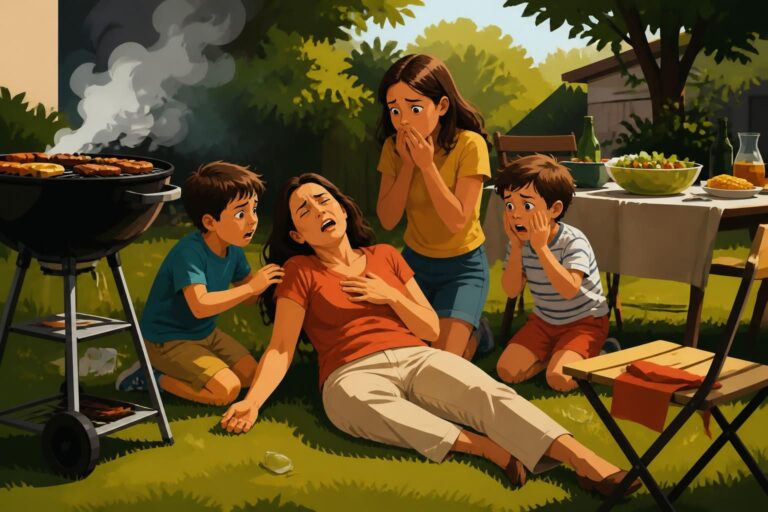
Thanks to the numbers sent by his deceased mother, he hits the 13 million euro jackpot in the Lotto
On June 6, 2026, a couple from Oise won 13 million euros in the Lotto by playing a combination passed down by a deceased mother, which, over the course of the draws, became an intimate landmark rather than mere chance. The scene, recounted afterward, has the feel of an ordinary evening suddenly turning upside down: television on, ticket within reach, and that series of numbers which ends up ticking all the boxes. The winning numbers, 13, 19, 24, 32, 43 and the Chance number 2, were not chosen randomly: they had been entrusted before the player’s mother’s death, with the persistent idea of continuing to try them “for her,” even when life moves forward in large strides.
La Française des Jeux made the story public with the winners’ consent on Wednesday, July 22, while preserving their anonymity and without specifying the point of sale. Between the acknowledged emotion, the very concrete caution to protect the receipt, and the family plans that immediately come into play, the story also tells something very everyday: a lottery game can trigger an emotional rollercoaster, and money, even if it falls from the sky, is first managed with a cold head. This journey, from the draw to the safe hidden under orphan socks, already reads like a small survival manual… jackpot edition.
In Brief
- On June 6, 2026, a couple from Oise wins 13 million euros in the Lotto with numbers from a deceased mother.
- The winning numbers are 13, 19, 24, 32, 43 and the Chance number 2.
- The “special Mother’s Day” jackpot started at 10 million euros on May 30 and rose to 13 million due to no winner.
- La Française des Jeux reveals the story on Wednesday, July 22, with the consent of the winners who remain anonymous.
- The couple checks the draw replay several times and hides the receipt in a safe concealed under orphan socks.
Winning numbers in the Lotto: how a special draw raised the jackpot to 13 million euros
Context matters as much as the ticket. This draw is part of a “special Mother’s Day” operation: an initial jackpot of 10 million euros was offered on May 30, without a winner. The absence of a winner led to a redraw and an increase in the amount, reaching 13 million euros during the session on June 6. In a lottery game, this “growing pot” mechanism is nothing unusual, but it changes the perception of risk: the same stake suddenly seems tiny compared to an amount displayed in large characters, which sparks the imagination.
On the evening of the draw, the results come in: 13, 19, 24, 32 and 43, with the Chance number 2. On paper, these are “just” winning numbers, like those drawn every week. In this story, they are mainly the end of a ritual, repeated and passed on. The player does not pick randomly; he reproduces a combination regularly ticked by his deceased mother. The angle is important: the inheritance here is not a material asset nor a bank account, but a series of numbers, a gesture, a habit kept because it connects.
La Française des Jeux revealed the details on Wednesday, July 22, with the winners’ consent, preserving their anonymity and without disclosing the location where the ticket was recorded. This choice is not accidental: confidentiality prevents ticket hunting and attempts to identify the couple once the amount is known. According to TF1 INFO (article published on July 22, 2026), the winner spoke about his closeness to his mother and the fact that she had entrusted him with this combination before leaving, interpreting the victory as a “sign.” In real life, emotion does not prevent administrative procedures, but it explains why some numbers come up again, draw after draw.
The most telling detail remains the simplicity of the scenario: a validated ticket, a draw watched on television, then a shift to a different scale of problems, much more comfortable but not necessarily simpler. When 13 million euros enter a home, decisions must be made, protection put in place, and often silence maintained. This very down-to-earth mechanism already prepares the ground for what comes next: how the couple confirmed the win and secured the receipt, even before dreaming of a pool and moving.
Deceased mother, emotional inheritance and luck in the game: when a combination becomes a landmark
In many families, transmission passes through objects, recipes or habits. Here, it takes the form of a repeated Lotto ticket, a kind of small domestic tradition. The player explains that his mother had given him her numbers before her death, and he chose to continue playing them. The “inheritance” dimension lies in this passing of the baton: a deceased mother leaves a mark measured not in square meters or silverware, but in gestures that continue after her.
The delicate point is the boundary between symbol and belief. Talking about luck in the game does not mean there is a secret strategy to force the draw. The probabilities remain the same for all tickets, whether the numbers come from a dream, a birthday, or a family transmission. However, the player’s psychology changes: repetition brings coherence, and coherence soothes. In a daily life often busy, especially when managing a household, the idea of “playing like mom” can work like a routine, just like a Sunday coffee or a weekly call to a loved one.
This type of story regularly appears in gaming news: “lucky” numbers, a family event, a memory. The mechanism is understandable: the brain likes to connect the dots, and a multi-million euro win pushes one to seek meaning, because pure chance is hard to tell around a table. The winner, himself, did not shy away from this emotional interpretation. He mentions his very close relationship with his mother and associates the win with something beyond mere luck. This feeling does not establish a general rule, but sheds light on the social use of lottery games: sometimes hopes are placed there, sometimes a tribute, sometimes a nod to those who are missing.
For a parental audience, the story also says something else: children observe how adults talk about the deceased and traditions. A transmission can be gentle, as long as it does not turn into pressure. In this particular case, the combination led to winning a huge sum, but the essential point to understand the narrative is the emotional logic: the numbers existed before the money. This nuance avoids reducing the deceased mother to a “lucky charm” and leaves room for the memory, without making it a marketing accessory.
The way the couple expresses emotion, while remaining cautious about their identity, shows a reality often forgotten: one can welcome good news and continue to protect their privacy. From there, the question is no longer to “believe” or “not believe” in luck, but to manage a rare event without getting into trouble, which first requires careful verification.
From replay to hidden ticket: concrete steps after winning the Lotto
The moment the numbers fall can be spectacular, but the immediate reaction described by the couple is mostly that of a brain refusing to believe it. The spouses watch the draw, see the balls match their ticket, then doubt. The winner says his wife couldn’t realize it, and they watched the sequence several times in replay, repeatedly checking the ticket. This seemingly ordinary step serves one purpose: moving from raw emotion to verifiable certainty.
When certainty arrives, another anxiety takes over: protecting the receipt. For a ticket validated at a point of sale, the ticket is the proof required to claim the prize. Without it, no jackpot, and 13 million euros that vanish as fast as they appeared. The couple therefore did what many parents would do with a fragile object in a lively house: find a hiding place that no one wants to open or even look at.
The chosen hiding place might make you smile, and that’s precisely what makes it credible. The receipt was placed in the bedroom, in a safe, itself concealed under a bag of orphan socks. In a family, socks without an official pair often form a stash that’s both mysterious and slightly depressing, which one postpones to the next day. The winner transformed this “messy corner” into a domestic security system. It’s neither Hollywood nor high-tech, but it’s logical: an effective hiding place is often one that no one feels like searching.
To clarify the points of vigilance, here is a summary table of practical steps mentioned or implied by this type of situation, with measurable measures rather than vague advice.
| Step | Concrete action | Typical timeframe | Main risk |
|---|---|---|---|
| Verify the draw | Compare the ticket with the winning numbers (13, 19, 24, 32, 43 + Chance 2) | Within an hour of the draw | Reading error, confusion between tickets |
| Re-verify | Watch the draw replay and check the ticket several times | The same evening | Stress, rushed decision |
| Secure the ticket | Put the receipt in a safe or locked place, away from traffic areas | Immediate | Loss, damage, theft |
| Claim the prize | Follow the FDJ process with the original proof | After securing | Media exposure, solicitations |
According to Le Courrier Picard (article relayed on July 22, 2026), FDJ did not disclose the location where the ticket was recorded, which reinforces the idea that security does not stop at the hiding place: anonymity is part of the protection. In a family daily life, this discretion also prevents having to explain to children why unknown adults suddenly become “very friendly” with parents they have never invited to a birthday party.
Plans after a jackpot: moving, pool and family decisions weighing 13 million euros
Once the victory is digested, real life returns, with decisions that seem simple on paper but much more complex in practice. The couple explains wanting to leave Oise to settle in a region they are attached to, in order to build a “haven of peace” there. The project includes a pool, designed as a family facility: welcoming loved ones, gathering, creating a meeting place. This detail says a lot: the jackpot is not just a bank account, it’s a reconfiguration of the house and habits, with the idea of making room for others.
The pool, in a family, is never just a pool. There’s maintenance, safety, weekend organization, and this transformation of the garden into a rallying point. For parents, it also means that invitations will multiply, sometimes sincere, sometimes opportunistic. The couple, speaking of a space for “the whole family,” emphasizes connection rather than show. This stance reduces friction: money attracts attention, while a hosting project provides a clear framework and limits fantasies.
The story also mentions the intention to donate part of the winnings to a charity. The donation, after a jackpot, can stem from several logics: gratitude, loyalty to family values, desire to help concretely. In this case, the story of the deceased mother gives special weight to this decision, because the initial transmission was already a gesture. Giving to charity also allows regaining control over the narrative: instead of enduring comments about luck in the game, the winners define a social use for their fortune.
To stay on course, some decisions are better made in an order that avoids impulsive purchases. The following list includes coherent actions for this type of situation, without turning the couple into fictional characters or slipping into a dream catalog.
- Set a period without public announcement, time to secure the ticket and move forward with FDJ.
- Establish a transition budget for the first months, separating current expenses and projects (house, pool, moving).
- Define an envelope dedicated to close ones, with simple rules to avoid permanent requests.
- Select one or two charitable causes, then formalize a thoughtful donation rather than a series of pressured transfers.
- Plan the move considering children’s schooling, family ties and regular journeys.
The presence of a partner in the story also plays a role: decisions are discussed, confronted, tempered by two. This does not eliminate disagreements, but it limits the risk of solitary overexcitement. When the amount reaches millions of euros, even a “reasonable” purchase becomes an event because it commits the family for several years. The couple seems to move forward with a household logic: a place, loved ones, a given share, and a new life geography.
At this stage, the story is no longer just about a lucky ticket. It becomes one of framed life change, with choices that structure what comes next and that, for the general public, show that winning is not just about cashing in.
What Do We Say About It?
The story has a simple strength: it shows how an emotional inheritance can be translated into a repeated gesture, until crossing paths with a jackpot. The couple’s caution, between replays and anonymity, seems stronger than euphoria because it protects the family from the first hours. The moving and pool project fits a welcoming logic, which limits the “showcase” effect often associated with sudden large fortunes. The decision to donate to a charity, if formalized, will give a clear trajectory to part of the millions without fueling a spiral of requests.
What were the winning numbers for this Lotto draw?
The winning numbers announced for this draw are 13, 19, 24, 32 and 43, accompanied by the Chance number 2. In this story, this combination corresponded to the numbers regularly played by the winner’s deceased mother, passed on before her death.
Why did the jackpot go from 10 to 13 million euros?
The initial jackpot of 10 million euros, offered during the special Mother’s Day Lotto on May 30, 2026, was not won. It was therefore put back into play and increased until reaching 13 million euros at the following draw on June 6.
Why did the winners watch the draw replay several times?
The couple explained they had trouble realizing the win live. Watching the draw replay and repeatedly checking the ticket makes it possible to verify there is no reading error and to move from an emotional reaction to factual confirmation before any procedure.
Why is protecting the ticket so important after winning?
For a ticket validated at a point of sale, the receipt is the essential proof for claiming the prize. Losing or damaging it can complicate the procedure. In this case, the winner said he had placed it in a safe, hidden under a bag of orphan socks.
What projects did the couple mention after winning?
The winners said they wanted to leave Oise to settle in a region to which they are attached and build housing planned as a family place, with a pool to welcome their loved ones. They also mentioned the idea of donating part of the winnings to a charity.