Tragedy at a barbecue: a mother succumbs under the horrified gaze of her children
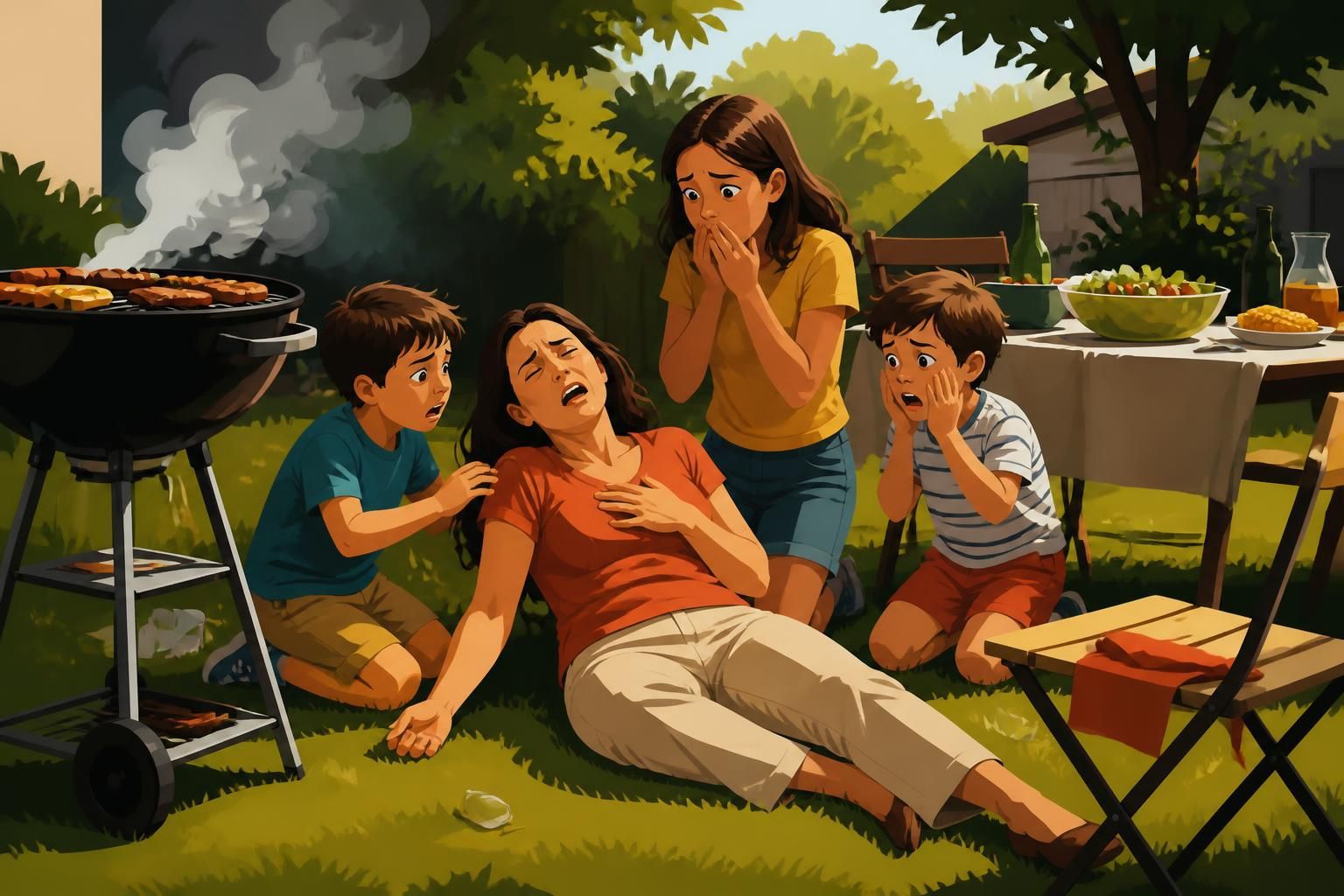
On June 7, 2026, the Australian media news.com.au reported on the tragedy that occurred in a family’s garden when a barbecue prepared for a simple activity — roasting marshmallows during the holidays — turned into a disaster. A 38-year-old mother, Charlotte Rose-Ann Hill, was seriously burned after her clothes caught fire, under the horrified gaze of her 11- and 7-year-old children. In a scene where emotion blends with survival instinct, the two children tried to help, one by attempting to smother the flames with a jacket, the other by shouting to alert their father. Transferred to a specialized center for severe burns, the victim initially showed signs of improvement, before succumbing to complications a few days later. The family then organized around the loss and supporting the children, notably through a fundraiser aimed at preserving their stability, schooling, and care.
In Brief
- Charlotte Rose-Ann Hill, a 38-year-old mother, was the victim of a barbecue accident after her clothes caught fire in the family garden.
- Her two children, aged 11 and 7, reacted immediately: one tried to extinguish the flames with a jacket, the other shouted to alert their father.
- The father was able to provide first aid before the transfer to the hospital, then to a specialized severe burns unit.
- After initial improvement, the victim succumbed to complications a few days later, according to the report published by news.com.au on June 7, 2026.
- An online fundraiser was launched to support the children’s schooling and well-being to limit the material impact of the loss on the family.
Tragedy during a Family Barbecue: Sequence of the Accident and Immediate Actions
The starting point of this tragedy is disarmingly ordinary: a barbecue organized in a garden to please the children, with a clear and simple goal, roasting marshmallows. In many households, this scene resembles a “cool Wednesday” during vacation, with sugar sticking to fingers and laughter rising faster than the embers. Here, the accident took a lightning-fast turn: the mother’s clothes caught fire, turning her into a torch in seconds. The brutal nature of the event explains the “stunned” effect often described by eyewitnesses of domestic fires: the brain searches for a rational explanation, while the fire waits for nothing.
In this sequence, the children become rescuers, not just horrified witnesses. At 11 years old, a child does not have a firefighter’s diploma, but they can have a field reflex: removing a jacket and using it to smother flames. That is exactly what the boy did, according to the account. His reaction is consistent with what is taught in some first aid training: deprive the fire of oxygen by covering it, without blindly dousing it. At 7, the little sister chose the most effective option at her level: alert an adult by shouting loud, very loud, enough to immediately attract the father.
This detail is far from trivial. In a domestic accident, alert time often makes the difference between a superficial burn and a serious injury. The father, warned by the screams, was able to intervene and provide first aid before the arrival of emergency services and transfer to the hospital. The affected areas, on the face and hands, are typical of clothing fire burns: the person instinctively tries to protect themselves, brings their hands to their face, and burning fabric radiates at the upper body level.
The barbecue concentrates several risk factors: open flame (or sudden flare-ups), grease ignition, alcohol or accelerants, loose clothing, and the proximity of children moving around. It takes only a second for an “outdoor snack” moment to turn into a tragedy. And by the way, fire has a dubious sense of humor: it often chooses the moment when someone thinks “it’s okay, it’s just to roast two things.” This contrast between joyful intention and tragic outcome also explains the emotional shockwave in the family.
In a parental context, one must also consider the immediate aftermath: two children who have just witnessed their mother’s accident, who tried to help her, yet remain powerless. The horror is not only what they see but what they understand: the fragility of the body, the unpredictability of danger, loss of control. This scene leaves a very concrete memory, often accompanied by smells (smoke, burnt fabric), sounds (screams), and intrusive images, which can resurface long afterward.
Children Witnessing a Tragedy: Shock, Reactions, and Psychological Needs after the Accident
When children witness a serious accident involving their mother, the question is not only “how they are doing” but “how their brain will categorize this footage.” The horrified gaze described in the report is not a figure of speech: it is a physiological reaction. Increased heart rate, trembling, dreamlike sensation, difficulty speaking afterwards. In a 7-year-old child, these manifestations may appear as nightmares, regressions (fear of sleeping alone, bedwetting, need to cling to adults), or hypervigilance at the slightest kitchen noise. At 11, the child may try to “hold it together” by acting reasonable, then break down later because they better understand the seriousness of the loss.
In this story, there is a particular element: the children acted. Action can protect against trauma because it gives a sense of control. It can also become a burden if the child thinks they could have done better, faster, differently. This guilt mechanism is common, even when there is no real responsibility. A child may replay the scene over and over, like a “replay” without a pause button, wondering why they didn’t find a bigger blanket, why they didn’t run sooner, or why they didn’t shout louder. Here, the little one shouted, the older tried to smother the flames: two responses adapted to their means, but the grieving brain loves to rewrite the script.
In the family’s daily life, the aftermath also plays out in very concrete details. The garden barbecue, even when stored away, becomes a charged object. The smell of smoke can be a trigger. The holidays, which were supposed to be a relaxing period, turn into a hospital calendar, then into organizing around the children. Calls, trips, medical updates, then the announcement of death: this journey creates intense emotional fatigue. Charlotte’s cousin, Bianca Hill, quoted by news.com.au in the same report, emphasized the children’s courage and the shock of the situation, highlighting how much relatives act as a “safety net” when everything is unstable.
On the support side, children’s needs often divide into three areas. The first is stability: schedules, school, routines, key adults. The second is putting into words: being able to tell the story, ask questions, express anger or fear without being cut off by a “don’t think about that.” The third is specialized support when symptoms persist: psychological consultation, trauma follow-up, and, if necessary, grief-appropriate care. The subject is not theoretical: a child may seem “fine” and collapse at a birthday, Mother’s Day, or simply when looking through holiday photos again.
There is also a delicate issue for those around them: protect without imprisoning. Overprotection can send an implicit message like “the world is dangerous everywhere,” which increases anxiety. Pretending nothing happened can have the opposite effect: the child concludes they may not be sad. Balance is often found in simple, repeated, consistent phrases: recognizing emotion, reminding that the accident happened, explaining what is done to ensure safety, and allowing moments of play. Yes, laughter after a tragedy happens, and it is not disrespect: it is a breath.
The account of this tragedy also highlights a broader reality: children are not only “present” during domestic accidents, they sometimes carry the most lasting image. Prevention therefore aims as much to avoid burns as to avoid, as much as possible, this type of memory. It is not a moral, it is a practical observation.
Barbecue Accidents: Real Risks, Common Scenarios, and Recurring Errors
The barbecue is a paradoxical object: it is associated with conviviality, but it combines fire, heat, smoke, and sometimes alcohol or accelerants. The most frequent accident scenarios often follow a simple logic: a small carelessness + a rapid sequence = a tragedy. The case of clothes catching fire fits into this mechanism, especially if the person leans over the cooking area, a flame flares up, or synthetic fabric ignites and sticks to the skin.
A key point is the spatial configuration. In a garden, the barbecue is sometimes placed near a table, a parasol, a tablecloth, or even a patio door where adults come and go. This “traffic zone” increases the risk of accidental contact, especially with children running, plates in hand, or a dog deciding that the chipolata is an Olympic sport. Accidents are not always spectacular; a contact burn on a grate or lid is already a serious injury.
The recurring errors are quite identifiable:
- Using an accelerant (methylated spirits, petrol, gel) to “revive” embers, which can cause a sudden flare-up.
- Wearing loose or synthetic clothing, more likely to catch fire or melt on contact with heat.
- Placing the device too close to a wall, hedge, or shelter, with risk of fire spread.
- Allowing children to circulate less than a meter from the hot zone, without clear marking of a forbidden perimeter.
- Moving a barbecue while it is operating, which increases the risk of tipping and ember projection.
- Managing multiple tasks simultaneously (supervision, phone, preparation) and losing a few seconds of vigilance.
In the reported case, the activity seemed focused on marshmallows, which often involves skewers, nearby children, and adults bending over to help. This proximity increases the likelihood of an accident if the fire flares up. The risk does not come only from flames: radiant heat is enough to ignite a light fabric, and hands are exposed because they guide, hold, grab, catch.
Prevention also has a very “material” aspect. A charcoal barbecue does not behave the same as a gas barbecue. Gas can create a specific risk in the event of a leak or delayed ignition, while charcoal exposes more to embers and grease-related flare-ups. In all cases, the basic rule is to plan for the accident as if someone is going to stumble: a simple plan, clear space, and tools within reach. Keeping a bucket of water or a hose ready can help for the environment, even if on a clothing fire, the most immediate action is often to smother with a thick fabric, then cool the burn with cool water for several minutes.
The subject becomes even more sensitive when the accident involves a mother in front of her children. The “secure” family image collapses. The barbecue, symbolizing celebration, becomes the trigger for a loss. This symbolic charge explains why some families cannot have outdoor meals again for a long time. The return to normal activities must be done cautiously, often with concrete adjustments: reorganize space, change the device, or delegate fire management to a single adult, without improvised “rotation.”
From Hospital to Loss: Severe Burns Care, Complications, and Medical Reality
After the accident, hospital care becomes a race against stabilization. Burns to the face and hands, mentioned in the report, require particular attention: these are functional and sensitive areas, with aesthetic concerns, but also respiratory if airways have been exposed to heat or smoke. Transfer to a more specialized institution corresponds to a common organization of care: severe burn patients benefit from dedicated services, trained teams, operating rooms accustomed to grafts, and strict asepsis protocols.
The report emphasizes an element that often puzzles relatives: initial improvement. After initial surgery, a burned person may seem better, speak, be conscious, and communicate by phone. This phase of hope exists because resuscitation, pain control, dressings, and initial interventions can stabilize the general condition. In the family’s mind, it looks like “we will get through this,” and it is human to cling to that. This dynamic makes the shift to complications even more brutal.
Possible complications after severe burns are multiple, and the source text refers to a death after an episode of unconsciousness. Without speculation, it must be recalled what this term covers in medical reality: significant infectious risk, metabolic imbalances, respiratory complications, circulatory disorders, organ failure. The skin is not just a “covering,” it is a barrier. When destroyed, the body loses water, heat, and becomes vulnerable to microbes. In a specialized unit, everything is done to limit these risks, but they do not disappear.
Pain is another central aspect. Bianca Hill, the cousin, recounted accompanying Charlotte by ambulance to a second facility, describing the suffering and shock of seeing a loved one in that state. This type of journey is often a suspended moment: urgency, machines, instructions, then sometimes a conversation resembling “normal life” for a few minutes. In the report, the two women even managed to laugh during the transfer. This detail is not incoherent: laughter can be a psychological survival mechanism, a way to remain connected while everything around is medicalized.
For the children, hospitalization is an event in itself. Visits are sometimes supervised. Phone calls become highly anticipated moments. A mother talking to her children from a hospital bed, even briefly, can soothe but also worry if the voice is weak or the care impressive. When loss occurs, the family must manage a double reality: grief and the children’s psychological protection. Adults often find themselves filtering information, not to lie, but to adapt. Saying “mom is dead” is a hard phrase, but vague formulations (“she fell asleep”) can create additional fears, notably around sleep.
In concrete organization, the post-death period also involves procedures: school support, daily life adjustments, financial aid, caregiving, psychological follow-up. In this story, a fundraiser was launched to help the two children maintain their schooling and well-being. This kind of initiative reflects a social reality: after a tragedy, needs are not only emotional but also logistical. The goal is not to “replace” a mother but to prevent the loss from triggering a cascade of material difficulties that would make the trauma heavier.
| Care element | Measurable objective | Concrete example | Typical timing |
|---|---|---|---|
| Immediate cooling | Reduce tissue temperature | Continuous fresh water on the burned area | Within the first minutes |
| First aid | Limit lesion extension | Remove smoking clothing if possible, cover with a clean cloth | Before arrival of emergency services |
| Transfer to specialized service | Access to a severe burns team | Surgical care, advanced dressings | Hours to days depending on severity |
| Post-event follow-up for children | Stabilize sleep and schooling | Routines, psychological support, school coordination | Weeks to months |
Solidarity after a Tragedy: Fundraiser, Relatives, and Rebuilding Children’s Daily Life
After losing a parent, the family enters a phase where every ordinary act becomes a decision. Who takes the children to school? Who manages meals, activities, appointments? Who answers questions, sometimes repeated, sometimes silent? In this kind of tragedy, solidarity is not an abstract idea: it materializes in given time, trips, paperwork, discussions with the school, and sometimes financial help to absorb the shock.
In the report, an online fundraiser was launched to support the future of the two children. The stated goal is concrete: contribute to schooling and well-being, in other words finance what life continues to demand even when grief takes all the space. Schoolbags, uniforms if required by school, sports activities, psychological support, travel, occasional childcare: the list can become long. And yes, it is the moment when one discovers that “paperwork” takes no pause out of respect for emotion, which is a major design flaw of the real world.
This support also has a symbolic dimension. It sends a clear message to the children: they are not alone, and adults around them are mobilizing. Bianca Hill, still in the cited report, stresses the idea of kindness towards these children. This notion may seem simple but refers to very precise behaviors: speak about them delicately, avoid intrusive comments, not make them a “subject” in conversations, and respect their pace. Some children want to talk, others want to play ball, then talk about it, then not talk about it for three days. Adults must follow without making grief a performance.
The school’s role is often central. Teachers can help spot behavior changes: isolation, decreased concentration, irritability, aggressiveness, fatigue. Discreet coordination between family and school helps avoid mistakes, like a classroom activity on Mother’s Day that would surprise the child. The goal is not to erase calendar events but to plan ahead. Planning also reassures: the child knows an adult thought about this difficult moment.
In reconstruction, some rituals can help. Keeping photos, telling memories, cooking a dish the mother liked, writing a letter, making a memory box. These practices are not suitable for everyone at the same time, but they provide a framework. The idea of “keeping the memory alive” evoked by the family then takes practical meaning: it is not a slogan but a set of actions allowing children to link past to present without being overwhelmed.
The barbecue remains an ambivalent symbol. Some families decide not to do it anymore, others choose to resume later, with increased safety, sometimes with a different device, another location, another organization. In a prevention logic, this return can also become an educational moment: show distances, explain rules, designate a single adult responsible for the fire, prepare a first aid kit. It is not “dramatizing,” it is integrating real risk into daily life.
The common thread of this story is painful but highlights two realities: the vulnerability of a domestic situation and the ability of a family to reorganize around the children. The courage shown on the day of the accident is not enough to erase the trauma, but it becomes part of their story, recognized by relatives, and it matters in how they perceive themselves after the tragedy.
What Do We Think?
This tragedy reminds us that the barbecue is not just a simple holiday accessory but a risky device that requires a clear perimeter and prepared gestures in advance. The presence of children imposes strict organization because a flare-up or a garment catching fire does not leave time to improvise. After losing a mother, the priority becomes daily stability and appropriate psychological support because trauma can reappear long after the accident. Financial solidarity, like a fundraiser, helps when it targets concrete needs related to schooling and children’s follow-up.
Quels sont les premiers gestes recommandés en cas de brûlure liée à un barbecue ?
L’objectif immédiat est d’arrêter l’agression thermique et de refroidir la zone brûlée avec de l’eau fraîche en continu pendant plusieurs minutes. Il faut retirer délicatement ce qui n’adhère pas à la peau (bijoux, vêtements non collés), couvrir avec un tissu propre et appeler les secours si la brûlure est étendue, profonde, ou située au visage, aux mains ou aux articulations.
Comment sécuriser un barbecue quand des enfants sont présents dans le jardin ?
Définir un périmètre fixe autour de la zone de cuisson, idéalement au moins un mètre, et expliquer clairement qu’il s’agit d’un espace interdit. Un adulte unique doit gérer le feu, l’allumage et les manipulations. Il est utile de garder à proximité un moyen d’alerte, de l’eau pour refroidir une brûlure, et d’éviter les vêtements amples ou synthétiques près des flammes.
Que faire si un enfant a été témoin direct d’un accident grave impliquant sa mère ?
Il faut préserver des routines (école, repas, sommeil) tout en autorisant l’enfant à parler de ce qu’il a vu et ressenti, sans le brusquer. Des signes comme cauchemars, régressions, irritabilité ou peur persistante peuvent justifier un accompagnement psychologique. Une coordination avec l’école aide aussi à prévenir les situations qui ravivent l’émotion et à adapter le quotidien.
Pourquoi une personne brûlée peut-elle sembler aller mieux avant une aggravation ?
Après la stabilisation initiale, une chirurgie ou des soins intensifs peuvent améliorer temporairement la conscience, la parole et l’état général. Des complications peuvent ensuite survenir, notamment infectieuses ou métaboliques, car une brûlure grave fragilise l’organisme et la barrière cutanée. Cette évolution en deux temps est souvent difficile à comprendre pour la famille, car elle alterne espoir et inquiétude.