Stress Parents : Complete file on parental stress.
| Short on time? Here’s the essentials ⚡ |
|---|
| Parental stress arises from a mix: lack of sleep, multiple responsibilities, unpredictability, and family pressure 🧠 |
| Spot warning signs early: irritability, rumination, sleep disturbances, drop in energy 😵💫 |
| Parental burnout is not inevitable: routines, support, and micro-breaks prevent parental exhaustion 💪 |
| Children feel the child stress of adults; talk, ritualize, and secure attachment 🧸 |
| Aim for a pragmatic work-family-life balance: prioritize, delegate, and turn off notifications 📵 |
| Invest in parental support and reliable resources for parents: groups, pros, apps 🤝 |
| Stress management can be learned: breathing, mindfulness, self-compassion 🧘 |
| Positive parenting transforms tension into cooperation fuel ✨ |
Between late bedtimes, household chores, and daily compromises, tension quickly builds. Yet, when decoded, pressure becomes understandable and thus manageable. Understanding what triggers parental stress, knowing how the body reacts, and then putting concrete supports in place prevents escalation toward parental exhaustion. This pragmatic and warm approach changes the game at home.
Many households report the same pattern: too much unpredictability, not enough recovery. Children pick up these emotional vibrations. It is therefore crucial to equip the family with simple routines, clear communication, and calming rituals. The suggestions below combine science, common sense, and practical tips to regain lightness without losing educational focus.
Managing parental stress: understanding sources and mechanisms
Parental stress increases when four levers combine: low control, unpredictability, novelty, and threatened self-esteem. This framework, often summarized by the acronym CINÉ, explains why a missed alarm clock can be enough to derail a morning. Naming it already helps regain control.
In a fictitious family, Emma and Sam juggle a baby waking at night, an anxious older child before school, and urgent emails. Each factor seems harmless in isolation. Together, they saturate attention and wear down mood.
Typical triggers to watch for early
- 😴 Chronic lack of sleep: multiple awakenings, late screens, difficulty falling asleep.
- 🧾 Piled-up responsibilities: meals, laundry, trips, homework, invisible mental load.
- 🚪 Social isolation: little exchange, no backup, exhausted single parent.
- ❓ Educational doubts: fear of doing wrong, comparisons on social media, contradictory injunctions.
- ⚡ Relational conflicts: minor digs, logistical discussions, lack of couple time.
The body reacts by releasing adrenaline and cortisol. In small doses, these hormones boost adaptation. In high doses, they weaken attention, sleep, and patience. Hence the importance of scheduled micro-recoveries.
| Stress source 🔎 | Body signal 🫀 | Immediate micro-action ✅ |
|---|---|---|
| Unpredictable mornings | Stomach knot 😬 | 4-6 breathing for 2 minutes |
| Mental load | Mild migraines 🤯 | 3-minute brain dump on paper |
| Children’s crisis | Tense shoulders 💥 | Shake hands + cold water on wrists |
| Work notifications | Internal agitation ⚙️ | Airplane mode for 20 minutes deep block |
To create a safety net, a predictable daily structure remains essential. One well-established ritual is better than ten scattered directives. Consistency soothes because it restores control.
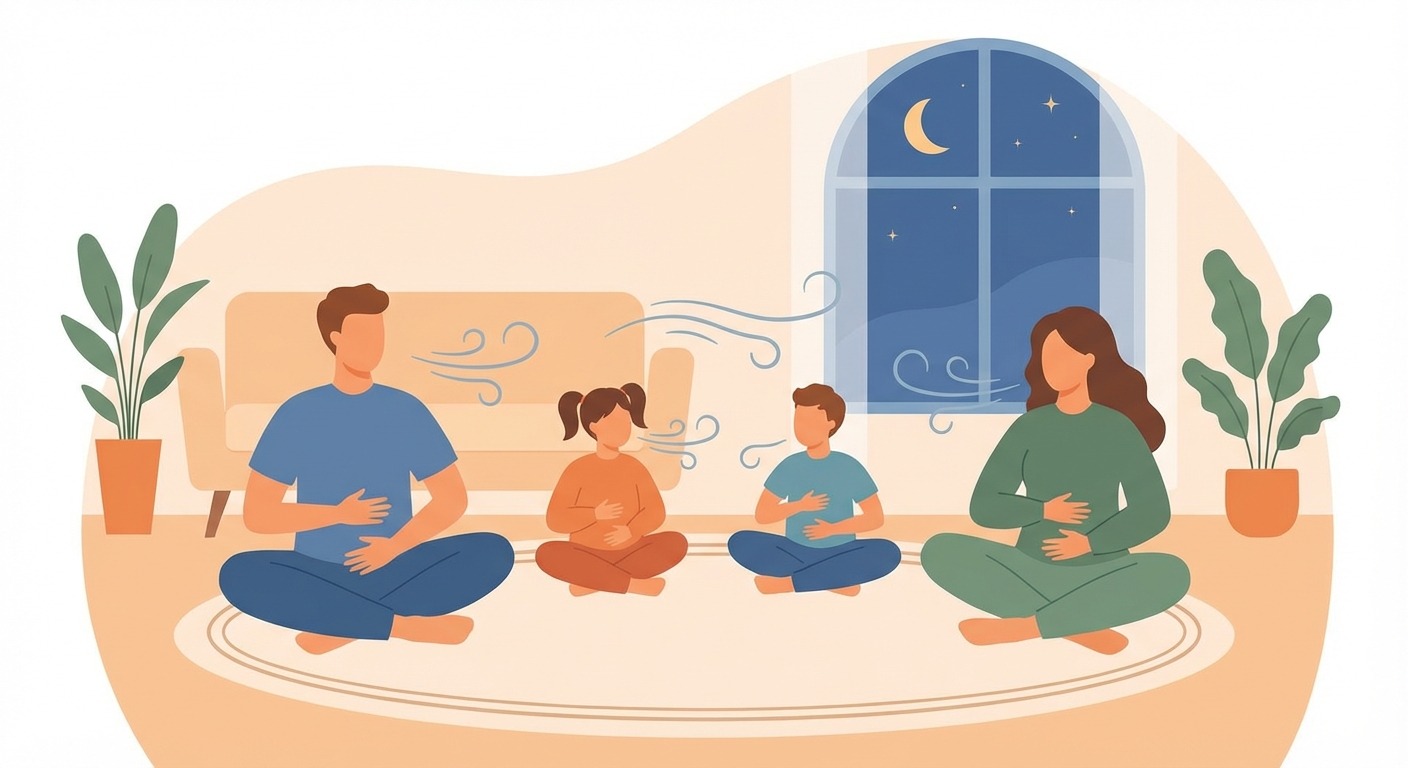
Watching a coherent breathing demonstration helps anchor the gesture. Then doing it together with the child normalizes regulation. This parent-child alliance creates a virtuous spiral.
- 🗓️ Plan two fixed rituals: calm wake-up and peaceful bedtime.
- 🧠 Name the stress: “It’s tough, let’s find a solution.”
- 🪫 Recharge early: power nap, brisk walk, micro-stretches.
Final insight: naming, then breathing, is better than suffering; clarity cuts off runaway stress.
Consequences on mental health, sleep, and the couple
When tension becomes chronic, parental exhaustion sets in. Parental burnout is identified by three markers: emotional fatigue, detachment from the role, and a feeling of ineffectiveness. When caught early, it recedes with a lightening plan and parental support.
Sleep disorders amplify everything. At night, the brain ruminates, falling asleep delays, then patience melts the next day. Breaking this cycle requires a clear closing ritual and conditions conducive to recovery.
Cascade effects not to be underestimated
- 🧩 Mental health: anxiety, irritability, emotional fatigue.
- 💬 Couple communication: misunderstandings, reproaches, avoidance.
- 📉 Performance: inattention errors, forgetfulness, procrastination.
- 🛌 Sleep: early awakenings, insomnia, chronic debt.
- 🍽️ Lifestyle hygiene: snacking, decreased activity, excessive screen time.
| Signal 🔔 | What it tells us 🧭 | Targeted action 🎯 |
|---|---|---|
| Overreacting 😡 | Empty emotional reservoir | 10-minute alone break, hydration + breathing |
| Logistical disputes 🧨 | Lack of couple space | Weekly couple schedule of 20 minutes |
| Fragmented sleep 🌙 | Hypervigilance | Soft light routine + paper reading |
| Feelings of failure 🕳️ | High self-criticism | Guided self-compassion for 5 minutes |
For realistic hygiene, simple tools help. For breastfeeding under tension, concrete landmarks like this article on breastfeeding and stress offer a soothing framework. Meals gain fluidity thanks to ideas for quick recipes for parents and babies. These are direct levers on the daily workload.
- 🧺 Outsource what can be: dry cleaning, drive-thru, occasional housekeeping help.
- 🕰️ Sanctuary screen-free slots two hours before bedtime.
- 🤝 Request clear backup: one evening out of two, one parent rests.
Final insight: protecting sleep and the couple’s relationship is the best anti-fatigue investment.

Parental stress: impact on children and educational responses
Children pick up subtle emotional variations from adults. When the home vibrates with tension, child stress often shows as sleep disturbances, hyperactivity, or sudden withdrawal. Rather than interpreting these signs as bad behavior, it’s better to read them as a call for help.
Teachers and educators remain valuable allies. A simple exchange can adjust school expectations and avoid escalation. Educational consistency between school and home reassures the child, who regains landmarks.
Concrete markers by age
- 👶 0-3 years: frequent crying, agitation; response: closeness, carrying, observed hunger and fatigue signals.
- 👦 4-7 years: nightmares, irritability; response: stable rituals, soothing stories, night light.
- 🧒 8-11 years: somatization, stomach aches; response: verbalization of emotions, inner weather journal.
- 👧 12-15 years: withdrawal, screens as refuge; response: usage contracts, physical activities, trusted adult.
| Age 🎯 | Observed sign 👀 | Soothing parental response 🫶 |
|---|---|---|
| 2 years | Bedtime tantrums 😭 | 3-step ritual, same time every night |
| 6 years | Tantrums after school 💢 | Snack + 20 minutes free play before homework |
| 9 years | Stomach aches 🤢 | Validation of emotions + 5 breathing cycles |
| 13 years | Isolation 📱 | Side-by-side walk, active listening, clear limits |
The physical environment also supports regulation. Choosing suitable diapers limits nighttime discomfort. A reliable bottle warmer smooths nights. To reduce headaches in front of the wardrobe, durable clothes simplify rushed mornings.
- 🎯 Validate and name the emotion: “You’re angry, that’s okay; we’ll help you.”
- 🔁 Stabilize key routines: morning, school return, bedtime.
- 🎨 Learn through play: drawing emotions, calm box, soft playlist.
Final insight: when the child feels understood and secure, their behavior follows; stability beats severity.
Concrete stress management strategies: routines, tools, and parental support
Stress management becomes more effective when it’s visible in the agenda. Small daily actions are better than rare big projects. Micro-rituals automate calming and free up mental load.
First lever, logistics. Delivered groceries reduce trips and friction. The online shopping option saves precious time. For snacks, simple and healthy choices like these snack ideas avoid negotiations at 5 p.m.
Concrete tools to simplify life
- 🍼 Baby feeding: bottles and pacifiers suited with these practical solutions.
- 🍲 Quick meals: draw from fast family recipes for busy evenings.
- ✂️ Home haircuts: save 30 minutes with kids-parents haircut tips.
- 💄 Parent in 5 minutes: effective beauty routines via these quick tips.
- 👶 Night logistics: optimize the bottle corner with a bottle warmer.
| Micro-ritual ⏱️ | Duration ⌛ | Measurable benefit 📈 |
|---|---|---|
| 4-6 breathing before opening the door | 90 sec | Less irritability at evening “rush” 😊 |
| Prepare bags and outfits the night before | 8 min | Mornings 20% smoother ⏩ |
| Couple check-in “daily weather” | 5 min | Fewer misunderstandings 💞 |
| Time-blocking with expressed breaks | 10 min | Less multitasking, more energy 🧠 |
Also plan a replenishment space: soft lamp, throw blanket, herbal tea. Tell the children: “when the candle is lit, mom/dad recharges for five minutes.” This simple rule teaches respect for everyone’s needs.
Routines don’t stifle spontaneity; they make it possible. Energy saved on logistics returns to play, conversations, and hugs.
- 📆 Screen-free blocks scheduled for the whole family.
- 📣 Short, visualized rules: max 3 icons per routine.
- 🤗 A weekly “family fun” appointment.
Final insight: operational simplicity frees emotional space, exactly where love flows best.
Positive parenting and resilience: from family pressure to calm strength
Positive parenting is neither permissive nor moralizing. It offers a clear and warm framework, where the adult regulates their own stress before correcting. This model strengthens trust and reduces repetitive conflicts.
When the house heats up, aiming for repair rather than perfection changes the atmosphere. A gently stated “let’s start again” soothes more than a sermon. Children learn more by imitation than injunction.
Simple protocols to anchor resilience
- 🫁 3 breaths together before solving a problem.
- 🧭 Descriptive language: “I see you’re clenching your fists,” instead of labeling.
- 🔄 Relational repair: authentic apology + reparative gesture.
- 🌱 Evening gratitude: everyone names one appreciated thing.
- 🎯 Realistic goals: one change at a time, celebrated weekly.
| Situation 🌀 | Parental response 🌿 | Expected effect 🌈 |
|---|---|---|
| Return-from-school crisis | Snack + 10 min free play + simple instruction | Quick decompression, cooperation restored 🙂 |
| Homework under tension | 10-min timer + movement break | Increased focus, fewer conflicts 🎯 |
| Siblings bickering | Name needs, offer limited choices | Less rivalry, more autonomy 🤝 |
| Exhausted parent | Kind adult time-out + water + fresh air | Lower reactivity, possible dialogue 🫶 |
For baby logistics, choosing reliable benchmarks relieves the mind. Practical feeding solutions avoid stressful improvisations. And when time is tight, some guidelines on everyday products prevent costly trial-and-error.
- 🧩 Name the educational goal before action.
- 🧠 Stick to the rule and offer an acceptable alternative.
- 💬 Close with a specific word of encouragement.
Final insight: family resilience is woven from small coherent choices, repeated without judgment.
“Calming your own heart is already soothing the home.”
{“@context”:”https://schema.org”,”@type”:”FAQPage”,”mainEntity”:[{“@type”:”Question”,”name”:”How to distinguish normal stress from parental burnout?”,”acceptedAnswer”:{“@type”:”Answer”,”text”:”Normal stress fluctuates and yields with rest and support. Parental burnout combines emotional exhaustion, role distancing, and persistent feelings of ineffectiveness. If symptoms last several weeks despite adjustments, one should consult and activate a parental support network.”}},{“@type”:”Question”,”name”:”Which quick routines really help in the evening?”,”acceptedAnswer”:{“@type”:”Answer”,”text”:”Prepare outfits and bags the night before, plan a protein-rich snack, 20 minutes without screens, and a three-step bedtime ritual. Add guided breathing with the child to lower family cortisol.”}},{“@type”:”Question”,”name”:”How to reduce the impact of parental stress on children?”,”acceptedAnswer”:{“@type”:”Answer”,”text”:”Validate the emotion, stabilize rituals, offer a decompression activity (free play, drawing, movement), and maintain open communication with the school. Consistency and relational security reduce child stress.”}},{“@type”:”Question”,”name”:”What concrete tools save time daily?”,”acceptedAnswer”:{“@type”:”Answer”,”text”:”Delivered groceries, batch-cooked meals, reliable equipment (bottle warmer, suitable diapers), and visible checklists. Parent resources like quick recipes or feeding solutions facilitate organization.”}},{“@type”:”Question”,”name”:”What if breastfeeding becomes a source of tension?”,”acceptedAnswer”:{“@type”:”Answer”,”text”:”Seek practical benchmarks and benevolent support. Dedicated articles on breastfeeding and stress, plus local support (consultant, midwife), reduce pressure and improve comfort.”}}]}How to distinguish normal stress from parental burnout?
Normal stress fluctuates and yields with rest and support. Parental burnout combines emotional exhaustion, role distancing, and persistent feelings of ineffectiveness. If symptoms last several weeks despite adjustments, one should consult and activate a parental support network.
Which quick routines really help in the evening?
Prepare outfits and bags the night before, plan a protein-rich snack, 20 minutes without screens, and a three-step bedtime ritual. Add guided breathing with the child to lower family cortisol.
How to reduce the impact of parental stress on children?
Validate the emotion, stabilize rituals, offer a decompression activity (free play, drawing, movement), and maintain open communication with the school. Consistency and relational security reduce child stress.
What concrete tools save time daily?
Delivered groceries, batch-cooked meals, reliable equipment (bottle warmer, suitable diapers), and visible checklists. Parent resources like quick recipes or feeding solutions facilitate organization.
What if breastfeeding becomes a source of tension?
Seek practical benchmarks and benevolent support. Dedicated articles on breastfeeding and stress, plus local support (consultant, midwife), reduce pressure and improve comfort.