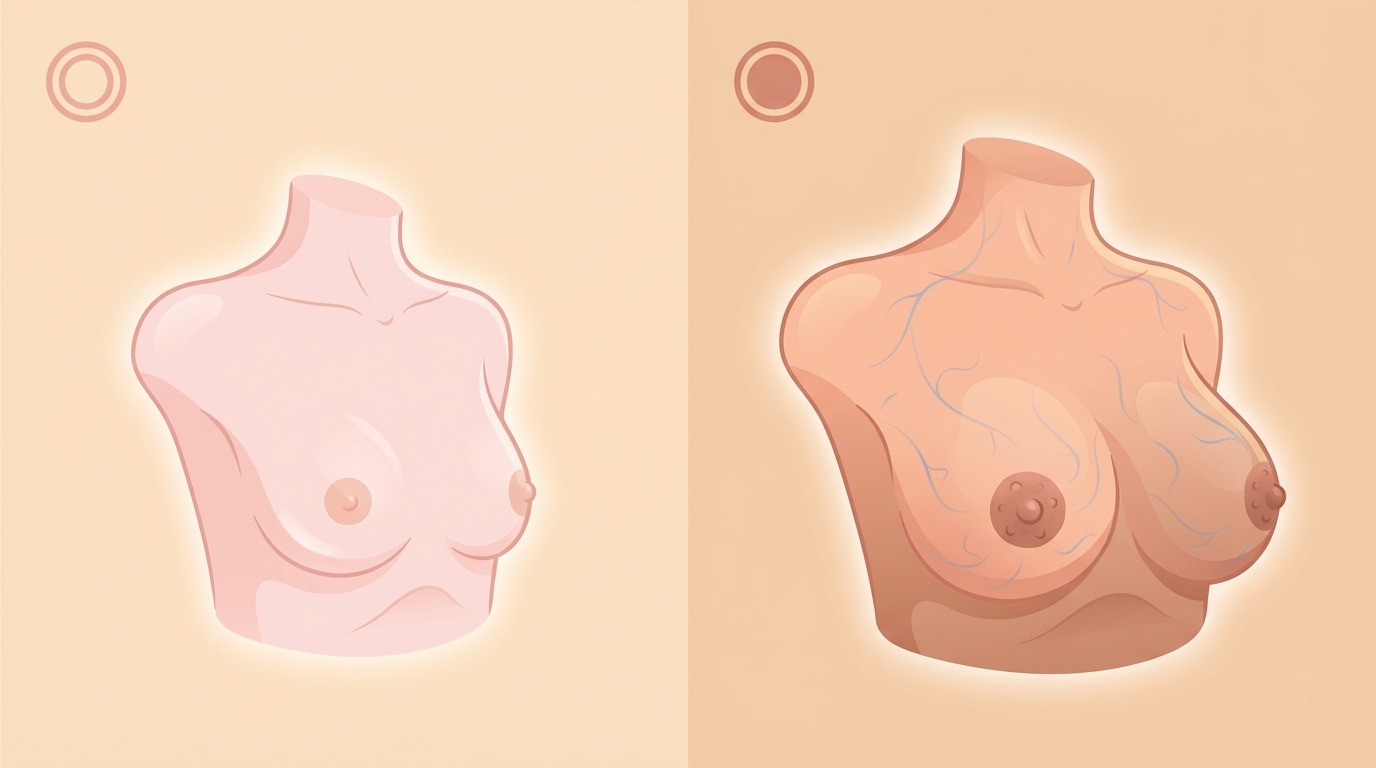
Breasts Pregnancy: Breast changes during pregnancy.
| Short on time? Here is the essentials ✨ |
|---|
| The breasts react very early to pregnancy 🤰: sensitivity, swelling, darker areolas, visible venous network. |
| Hormonal changes stimulate glands and ducts, causing volume increase 📈 and sometimes breast pain. |
| Colostrum can appear as early as the 2nd trimester 🟡; the milk let-down occurs around day 3 postpartum. |
| Breast care is essential: suitable bra, skin hydration, comfortable positions, warm compresses 💆♀️. |
| Mammography during pregnancy: possible if necessary, with protection; ultrasound remains the examination of choice 🩺. |
| Preparation for breastfeeding: information, trust and support take priority over “hardening” the nipples 📚. |
Over the weeks, the chest changes its appearance and prepares for a specific mission: to nourish a newborn. This process, far from a simple “volume increase,” involves a hormonal choreography that transforms breast tissue, modifies the skin, adjusts sensitivity, and initiates colostrum production. Well understood, this transformation reassures and guides towards concrete choices: lingerie, hydration, sleeping positions, and medical landmarks.
Because body signals can be confusing, this article brings together physiological markers, useful actions, and alerts to know. From first tingling sensations to questions about mammography during pregnancy, solutions for breast pain to preparation tips for breastfeeding, each section offers a practical compass. Through it all, the story of Lina, a 29-year-old expectant mother, illustrates a realistic path, between wonder and doubts, so that every reader gains clarity and confidence.
The development of breasts during pregnancy: everything you need to know
From the first weeks, hormonal changes (estrogens, progesterone, prolactin) trigger a cascade: mammary glands multiply and milk ducts organize. This remodeling explains the volume increase, skin tension, and sensitivity. For Lina, discomfort began around 5 weeks: too tight bra, tingling, then darker areolas.
On the vascular level, the blood flow rises. A direct consequence is the venous network becomes visible, especially on light skin. At the same time, Montgomery tubercles, those small “pearls” on the areola, secrete a protective lipid film that naturally hydrates the nipple. This is a major asset for breastfeeding, as this secretion limits friction and microcracks.
Early signs and realistic timeline
Between week 4 and week 8, breasts swell and gain weight. However, each body has its own pace: some gain two cup sizes, others hardly any. The variability mainly depends on initial glandular density. In practice, a non-wired support bra quickly relieves. At the same time, other conception indicators may appear: slight implantation bleeding, unusual fatigue, even a metallic taste.
Colostrum may leak from the second trimester in some women. This yellow-orange liquid, rich in immunoglobulins, signals that the breast becomes functional. Lina noticed small spots on her sports top around 24 weeks; washable nursing pads solved the issue.
Nipple, areola, and skin color
Under hormonal influence, the areola darkens and increases in diameter, facilitating infant latch-on. The skin tightens; stretch marks may appear if growth is rapid. Daily hydration and gentle massages improve elasticity, complemented by a diet rich in essential fatty acids. Moreover, a warm shower finished with a cool jet tones the skin without aggression.
This first major phase confirms the evidence: breasts don’t “just” get bigger, they reorganize for feeding a baby to come. This is the matrix for everything else.

How your breasts can change during pregnancy
The trajectory is not linear. Generally, volume rises in the first trimester, stabilizes afterwards, then increases again after delivery during milk let-down. Lina alternated quiet days and episodes of marked sensitivity, especially in the evening. This is common because sluggish venous drainage is felt at day’s end.
On a daily basis, several symptoms recur: tugging, occasional breast pain, itching due to skin stretching, and increased sensitivity to friction. However, sharp, localized, persistent pain warrants medical advice. Similarly, atypical pelvic pain should be checked for non-breast causes; this guide on ovarian pain during pregnancy can guide initial reflexes.
Trimester by trimester: what changes
First trimester: increased sensitivity, more pronounced areolas, sometimes first discharge. Second trimester: tightening skin, more stable volume, pronounced venous network. Third trimester: clearer sensation of heaviness, active preparation for breastfeeding, more frequent colostrum episodes. This progression serves one unique goal: effective breastfeeding from day 1.
Alerts not to overlook remain rare but clear. For example, a diffuse, painful redness with fever may suggest mastitis. Also, any unusual bleeding must be discussed; this concise article on bleeding during pregnancy helps frame urgency.
Managing discomfort without slowing active life
Several measures relieve without medication: soft sports bra, nursing pillow for side sleeping, warm herbal teas, warm compresses before shower, occasional cold at day’s end. Neutral oils (sweet almond if no allergy) hydrate skin, while regular bra hygiene limits irritation and odors. Finally, an upright posture reduces weight sensation.
To visualize functional anatomy and good practices, an enlightening video often surpasses a long explanation.
The key message remains simple: recognize the normal, spot the unusual, react early. Thus, comfort returns faster and confidence sets in.
Breast transformations and preparation for breastfeeding
Preparation does not mean rubbing or “hardening” the nipple. Effectiveness rather comes from good information, kind support, and guided latch-on. The goal: a deep attachment, centered on the areola, which avoids cracks and optimizes milk transfer. Lina attended a group workshop; that hour dispelled half of her fears.
Physiologically, the breast becomes fully functional around the 2nd trimester. Glands multiply, ducts branch out, and colostrum is stored in alveoli. After delivery, the drop in progesterone and rise in prolactin trigger milk let-down around day 3. Slight tingling then occurs, sometimes clear tension: frequent, effective feedings quickly relieve it.
Breast care and small tools that make all the difference
Certain actions prevent many troubles. Daily skin hydration strengthens elasticity. Breathable absorbent pads prevent macerations. Nursing shells prove useful in hypersensitivity but only occasionally. Above all, listen to body signals, as breaks and position changes matter as much as the best cream.
- 🧴 Hydrate after shower to trap water and soften skin.
- 👙 Choose two suitable bras: one for day, one for night.
- 🧊 Alternate warm and cool according to tension sensation.
- 🍼 Plan washable pads for colostrum leaks.
- 🤱 Request guided latch-on from birth if possible.
Transitions are sometimes considered, especially switching to bottle feeding. The markers in this guide on the breast-to-bottle transition help preserve comfort and milk production. To prepare before birth, a memo of symptoms and practical tips like this on pregnancy preparation proves valuable.
Nothing replaces a clear visual to understand positioning adjustment and baby’s mouth opening.
Ultimately, breast care during pregnancy combined with reliable information lays solid foundations. A well-understood breast is a calmer breast.
Breasts and pregnancy: screening, masses, and mammography in practice
Most nodules palpated during pregnancy are benign: galactoceles, cysts, fibroadenomas. However, a new persistent nodule must be evaluated. In first intention, ultrasound is the examination of choice because it visualizes structures well in dense breasts. If needed, mammography can be performed, with abdominal protection, and only for clear indications.
Lactation sometimes complicates clinical examination. However, professionals know how to distinguish milk stasis from a suspicious lesion. In case of infection (mastitis), heat, redness, and fever guide diagnosis; anti-infectious treatment does not require stopping breastfeeding, on the contrary, drainage helps. Lina experienced engorgement at day 5 postpartum; between frequent feedings, warm showers, and rest, the situation resolved.
When to consult without delay
Several signs require medical advice: unilateral bloody discharge, nipple ulceration, recent nipple deviation, hard irregular nodule, painful axillary lymph nodes. Conversely, small white pearls at nipple tip often indicate a blocked duct; local heat and effective latch-on often solve the problem.
Useful reminder: pregnancy comes with other sometimes disturbing bodily signals unrelated directly to the chest. For example, some women perceive a metallic taste linked to hormones; putting this symptom into perspective avoids unnecessary worries. Finally, any abnormal bleeding deserves examination; this file on bleeding frames the conduct to follow usefully.
Routine screening resumes after breastfeeding, when mammary density decreases. In 2026, recommendations emphasize individualization: age, history, and breastfeeding duration guide scheduling. One thing remains: better a reassuring check than prolonged doubt.
The takeaway is clear: reasonable vigilance, adapted tools, regained serenity.
After delivery: evolution, care, and misconceptions
Once the baby is here, new changes occur. First, milk let-down increases tension over 48-72 hours. Then, the breast “finds its rhythm” according to the infant’s demand. Later, during weaning, glandular involution gradually reduces volume. Lina, who breastfed for three months, saw her chest return close to its pre-pregnancy shape, with slightly more supple skin.
The myth “pregnancy ruins the breasts” oversimplifies greatly. Weight changes, genetics, connective tissue quality, and lifestyle matter more. Moreover, suitable support and regular hydration limit the feeling of looseness. Postural exercises and upper back strengthening also improve overall silhouette.
Winning moves to get through postpartum
In practice, a supportive bra, thin layers of emollient cream, and breathable clothing are best. For cracks, first check latch and position; applying a few drops of milk at the end of feeding supports healing. If fever develops, think mastitis and consult promptly.
Between emotions and bodily adjustments, staying informed remains protective. This guide on changes after delivery offers a useful roadmap. Those planning to alternate breastfeeding and bottle feeding benefit from planning, using this marker on breast-to-bottle transition to maintain breast comfort.
One last word on stretch mark prevention: gentleness always wins. No need for harsh exfoliation. A simple, regular routine makes a medium-term difference.
In the end, the key is twofold: respect physiology and honor comfort. This duo brings lasting good results.
Express checklist for a gentler daily life
To conclude, here is an actionable summary easy to adapt.
- ✅ Choose comfortable support that follows volume increase.
- 💧 Hydrate skin morning and evening, without irritating perfume.
- 🧘 Breathe and stretch: shoulders will thank you for good posture.
- 📚 Train in breastfeeding with a professional, if possible in person.
- 📅 Consult if an atypical sign persists over 72 hours.
Want to anticipate calmly? A stop by these markers for pregnancy symptom preparation sets good reflexes now.
When do the first breast pains appear during pregnancy?
Often between the 4th and 6th week. They are linked to hormonal changes and increased blood flow. Proper support and warm compresses help alleviate them.
Is colostrum normal before delivery?
Yes. Drops can occur as early as the 2nd trimester. Wearing pads and avoiding excessive stimulation is usually enough.
Should mammography be done during pregnancy?
Only if a doctor indicates. Ultrasound is preferred. Mammography, if necessary, is done with protection and minimal targeting.
How to prevent cracks when breastfeeding begins?
Deep latch, comfortable position, feedings on demand, light hydration of the areolas, and, if needed, support from a lactation consultant.
Will the breasts return to how they were before?
Most of the time, yes or nearly so. The result depends on weight, genetics, age, and connective tissue quality more than on breastfeeding itself.
“Breasts during pregnancy do not get out of order: they prepare to accomplish one of life’s most powerful acts.”