Child Does Not Like Sports: The child who does not like sports: what to do? (5-8 years).
| Short on time? Here is the essentials ✨ |
|---|
| A lack of interest in sports at 5-8 years old is common and often temporary 😊. |
| Turn physical activity into a game to reignite motivation 🎯. |
| Favor simple goals, short choices, and rituals to anchor the habit 🧭. |
| Movement supports health, well-being, and the overall education of the child 🧠. |
| Partnerships with schools and clubs for inclusive and playful adaptations 🤝. |
Between 5 and 8 years old, many children discover that the word “sports” mostly rhymes with rules, noise, and expectations. Yet, their need to move remains great and vital. So, how to help a child who doesn’t like sports rediscover the joy of movement without pressure or moralizing speeches? The answer shapes itself through positive, chosen, and short experiences where play becomes the driving force again. Families quickly notice: when physical activity feels like an adventure, motivation awakens.
The challenge, in 2026, is to reconcile well-being, education, and entertainment. School demands attention, social life requires landmarks, and screens capture time. This context is not an obstacle; it offers a new stage to reinvent physical activity. By focusing on pleasure, cooperation, and diverse experiences, each child can build their own relationship to movement. What if sports became a story of encounters and curiosity, much more than a performance?
Understanding the lack of interest in sports in children aged 5-8
Lack of interest in sports is not born from a whim. It often results from a combination of emotional, sensory, and social factors. At this age, the child prioritizes emotional security and predictability. A noisy gym, a shrill whistle, or a rushed locker room can be enough to block desire. Adults thus benefit from decoding these subtle signals and adjusting the environment.
Sensory profiles vary greatly. Some children seek contact, others avoid textures or sounds. A scratchy label, a ball that is too hard, and the experience turns into discomfort. By adapting material, rhythm, and intensity, we open the door to more peaceful participation. This approach respects temperament and fosters confidence.
Self-esteem also plays a central role. When rules seem confusing, fear of failure rises. This feeling directly impacts motivation. Proposing very simple steps restores a sense of agency. Repeated success, even modest, creates a new inner narrative: “I can do it.”
Motor development does not progress at the same pace for all. Landmarks evolve quickly at this age. Skills such as dynamic balance, throwing, or hand-eye coordination are built in stages. To clarify, consulting quality landmarks supports family choices. The information offered on early psychomotor milestones usefully clarifies gaps and scaffolding needs.
Past experiences strongly influence desire. A match where the child was benched, a mocking comment, and the connection to sports fractures. Conversely, a session where everyone encourages each other acts as a catalyst. The goal is not to make the child fragile, but to create a climate that reassures boldness.
The group also weighs in on decisions. Comparison among peers can stifle momentum. When expectations remain tacit, the child gets lost. Making expectations clear, displaying simple rules, and valuing individual progress relieve pressure. Movement then takes its natural place: a joyful means of exploration.
Concrete example: Maël, 7 years old, doesn’t like soccer. He feels “lost” on a noisy field. He is guided toward a small-group activity. He chooses a circus initiation focused on balance and soft juggling. After three weeks, he wants to run more. He has re-approached his breath, thus his pleasure in acting.
Adult language influences the relationship to movement. Talking about “efforts” and “work” sometimes establishes a stern image. Saying “missions,” “fun challenges,” or “adventures” instead sparks different curiosity. The child embarks because the meaning seems clearer. His brain loves stories and concrete images.
Finally, each family has a culture of the body and free time. Some love walks, others prefer reading. These pleasures are not opposed. Just combine a bit of walking, a bit of play, and a bit of calm. Movement takes its place, without forcing or guilt. This approach establishes a solid foundation.
Deep down, disinterest in sports rarely reveals a refusal of movement. It mostly highlights the need to adapt the framework to the child’s profile. Once this perspective is established, everything else flows more easily.
Turning physical activity into play: simple ideas that work
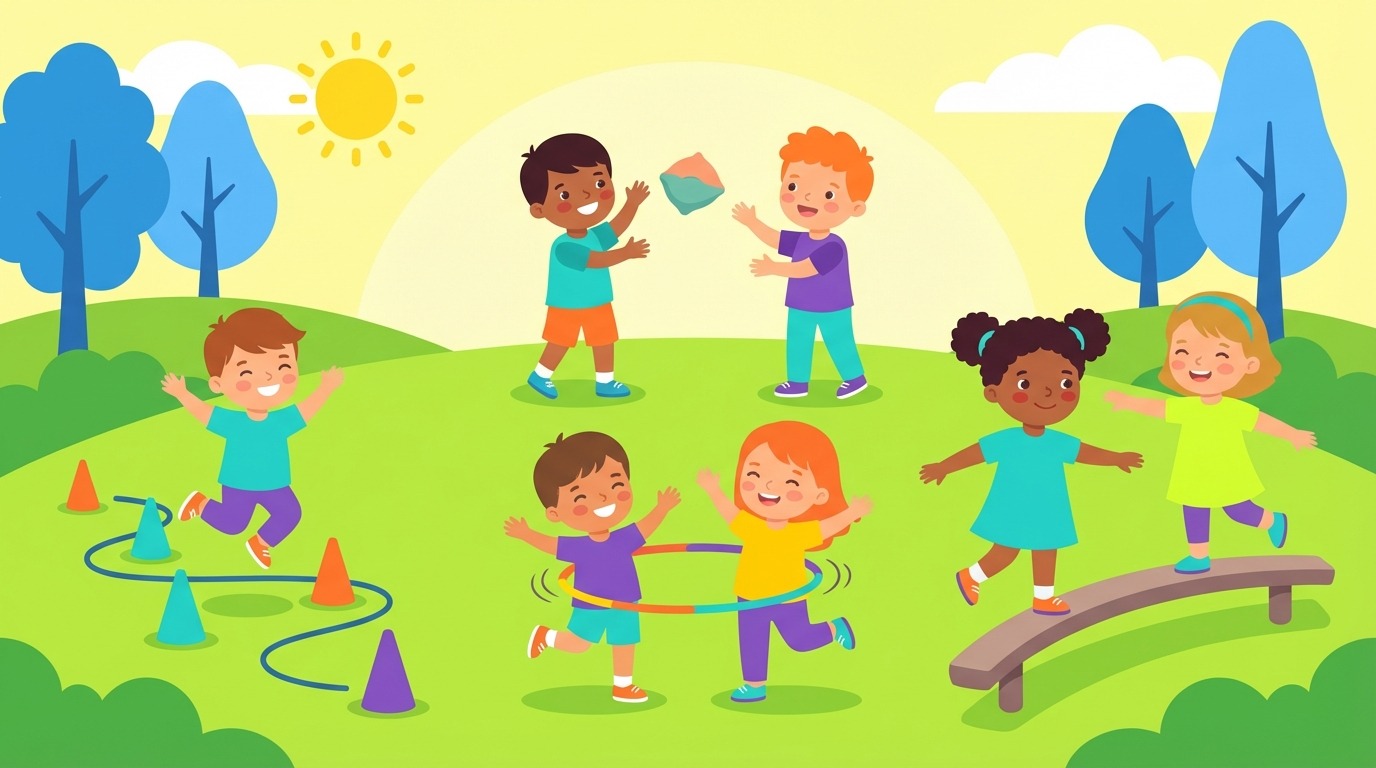
When sports are off-putting, play reignites the spark. The key is to trade long instructions for short missions. The field becomes an adventure setting, and movement serves the story. The child’s brain loves scenarios; it gets into action without realizing it.
Start with express formats. Ten minutes are enough to create a regular ritual. The goal is not performance but the desire to move. Combining soft music, clear transitions, and personal choices keeps motivation alive. The child engages because they feel involved.
Movement games that really appeal
Here are easy-to-deploy proposals at home or in the park. They adapt to sensory needs and coordination levels. Adults modulate intensity according to the weather, mood, and energy of the moment. The essential thing is to keep the rule of pleasure.
- 🦘 Kangaroo mission: jump from island to island using cushions on the floor.
- 🌀 Magic ribbon: draw trajectories in the air to the rhythm of a song.
- 🌳 Posture safari: animal statues, balance on a line, lion’s breath.
- 🚦 Red/green light: speed up, slow down, stop on a fun signal.
- 🏕️ Hut course: crawl under a table, go over a bench, roll a ball.
- 🎯 Soft throw: aim for a box with rolled-up socks.
- 💧 Bubble dance: pop soap bubbles to music.
These formats lay a joyful foundation. They prepare, if desired, for more formalized sports. Children better perceive their bodies, manage their breath, and dare more. The field of possibilities expands, without force.
Practical tools and inspirations
A visual timer helps limit the activity. An adventure notebook keeps track of completed challenges. To go further, synthetic resources provide clear landmarks. Families will find recommendations on physical activity adapted to age and weekly rhythm.
Well-chosen videos energize a session. They offer immediate ideas and a reassuring framework. Adults select short contents, without competition, and steer towards exploring movement. This filter avoids any unnecessary pressure.
A family playlist establishes a motivating ritual. Each piece evokes a scene: forest, sea, space. The child chooses the theme, the adult suggests movements. Together, they compose a unique moment. This co-creation develops autonomy and strengthens the emotional bond.
Variety fuels desire. Alternate indoors and outdoors, silence and music, solo and duo. Add sometimes a soft accessory: scarf, ring, light ball. This little extra adds depth to the session. It stimulates attention without overwhelming it.
By turning physical activity into play, movement becomes a living story again. The child acts out of curiosity, not obligation. This is the best guarantee for duration.
Kind and lasting motivation: strategies that respect the child
Motivation cannot be decreed. It is cultivated like a plant, with light, water, and patience. Here, light is meaning; water, small successes. Patience, finally, is the right to fumble without being judged.
Offering a real choice nurtures engagement. “Do you prefer the magic ribbon or the hut course?” This alternative puts the child in control. They get involved because they chose. Simply deciding increases the desire to try.
Playful and measurable goals
Short, precise, and fun goals are more effective. You can use adapted “SMARTies”: simple, motivating, adjusted, quick, timely. For example: “two back-and-forth jumps before snack time.” It’s clear, attainable, and rewarding.
Tracking remains light. A sticker chart or a drawing is enough. It’s about celebrating effort, not counting excessively. The child sees their progress and encourages themselves. This visibility nurtures autonomy.
Positive reinforcement that helps growth
Encouragements focus on action, not the person. “You persevered despite the obstacle” strengthens endurance. Comparisons between children are avoided. The message then focuses on the experience of movement. This framework facilitates measured risk-taking.
When motivation falters, shrink the goal. One minute of dancing, then break. The child catches their breath. They then regain momentum. This sidestep preserves pleasure and the relationship.
Rituals and flexible consistency
A small ritual, always at the same time, soothes the mind. After school, play the favorite song, then choose a challenge. Regularity sets a guiding thread. Unforeseen events remain possible, but structure reassures.
Gentle motivation techniques, already useful for homework, also inspire movement. The approaches proposed here: gentle motivation techniques show how to adjust the task, give meaning, and strengthen without overloading. We transpose these principles to movement, postures, and rhythmic games.
A symbol can serve as a trigger. A fabric cape signals “adventure mode.” The child puts it on and knows a mission is coming. This clear signal reduces negotiations. It creates a gentle transition between rest and action.
Cooperation also reinforces desire. We move together, laugh together. We co-create a course and applaud each other. This dynamic encourages buy-in. The child feels supported, not observed.
By combining playful goals, tailored reinforcement, and rituals, motivation becomes a lasting ally. The child progresses at their own pace, with pride.
Health and well-being: why subtle movement changes everything
Movement is the best ally of growth. Even subtle, it helps breathing, posture, and coordination. By moving, the child sharpens body awareness. They gain ease, endurance, and confidence.
Benefits are also observed in the classroom. Attention stabilizes better after a short activity. The brain benefits from regulated blood flow. Learning quality improves. Movement thus becomes a support for global education.
Sleep, mood, and calming
A ten-minute routine late afternoon facilitates falling asleep. The body expends energy, then relaxes. Mood regulates in the process because stress dissipates. Evenings gain softness.
The reading tool complements this dynamic well. A moment of calm after the session helps return to rest. For inspiration, a variety of paths exist. These resources value imagination and the relationship. Consult, for example, this insight on calm through reading.
Representation and access for all
Seeing diverse role models changes the game. When a child recognizes themselves, they dare more. Inclusive books, posters, and videos broaden the horizon. They show bodies, styles, and varied games.
A selection of books can nourish these conversations. Families can explore inclusive books on diversity to open doors. Representation shapes desire and guides activity choices. Movement then becomes welcoming for everyone.
Concrete daily organization
Two short slots are better than one long weekly session. For example, Wednesday and Saturday, ten to fifteen minutes. Intensities vary and a monthly nature outing is maintained. This rhythm adapts to schedules.
Fresh air brings a definite plus. Natural surfaces sharpen balance. The gaze projects far, the breath settles. Motivation follows this calmer framework. The child enjoys movement without overload.
When energy drops, adjustments occur. Switch to a breathing or posture game. Movement remains present but gently. This flexibility avoids boredom. It maintains the habit thread.
By prioritizing pleasure, variety, and representation, movement serves health and well-being. It supports education quietly, but profoundly.
Educational alliances: school, clubs, and family serving movement
Success often depends on bridges woven between adults. When school, clubs, and family align, the child feels supported. Messages converge, adaptations gain coherence. It then becomes easier to anchor rituals.
Dialogue with the teacher provides valuable clues. Some children move very well during recess, less so in PE. This difference guides activity choices. What works in a reassuring setting is transferred. Pleasure resurfaces.
Choosing welcoming environments
Small-group structures ease entry. Educators trained in play pedagogy naturally adapt rules. Cooperative games start, then finer instructions are introduced. The child feels ready because the path seems approachable.
Equipment matters. Soft balls, ribbons, large targets, colored floor markings. These supports remove fear of impact and failure. They free trial. Success becomes probability, not exception.
Family action plan and light follow-up
A visible calendar, with three “movement appointments” per week, stabilizes the habit. Check off, stick a sticker, share what was preferred. This narration strengthens positive memory. It supports motivation.
Curious families wanting to deepen previous period milestones will find useful landmarks here: development evolution at 3-4 years. These bases clarify next steps and adjustments to plan. They help personalize support from 5 to 8 years.
In case of persistent blockages, consult without delay. A psychomotrician or specialized educator’s insight refines analysis. The action plan gains precision. The child better understands the goal and thus calms down.
Ethics of pleasure and right to say no
The right not to like a specific sport must exist. Other gateways are then explored. Forest walks, free dance, balance bike, circus arts. Movement has a thousand faces. The child chooses the one that speaks to them.
One word suffices to guide this alliance: trust. It is nourished by small victories, benevolent looks, and clear goals. When adults coordinate, the path becomes simple. The child is more willing to follow.
To pace these cooperations, videos inspire workshops. They offer fun and accessible formats. Targeted research helps find suitable content. Here is a useful lead.
In the end, the educational alliance breathes life into daily life. It links health, education, and entertainment in the same pleasure-driven dynamic.
“Sports do not have to be immediately liked; movement, however, can always be told as play.” 🌟
Comment réagir si mon enfant refuse systématiquement une séance ?
Réduisez l’objectif à une minute ludique, proposez un vrai choix entre deux activités, puis valorisez l’effort. Si la fatigue est forte, remplacez par un jeu de souffle ou une marche courte. L’habitude prime sur la durée.
Quels sports pour un enfant sensible au bruit ?
Privilégiez des contextes calmes et des petits groupes : yoga enfants, escalade initiation, arts du cirque doux, natation en créneau peu fréquenté, danse créative, tir à l’arc ludique. Le matériel souple et les règles simples aident.
Combien de temps d’activité physique par jour ?
Visez de multiples temps de mouvement dans la journée, dont au moins 60 minutes cumulées d’activité variée selon les ressources. Les recommandations officielles peuvent guider ; adaptez au plaisir et à l’énergie du moment.
Mon enfant préfère lire : est-ce un problème ?
La lecture nourrit l’imaginaire et l’attention. Combinez lecture et micro-mouvements : postures d’animaux entre deux chapitres, danse d’une minute après une page. L’important reste l’équilibre entre calme et mouvement.
Comment gérer la comparaison avec les autres enfants ?
Remplacez la comparaison par l’auto-référence : « Tu progresses par rapport à hier ». Donnez des objectifs personnels, courts et concrets. Célébrez l’effort plutôt que le résultat sportif.