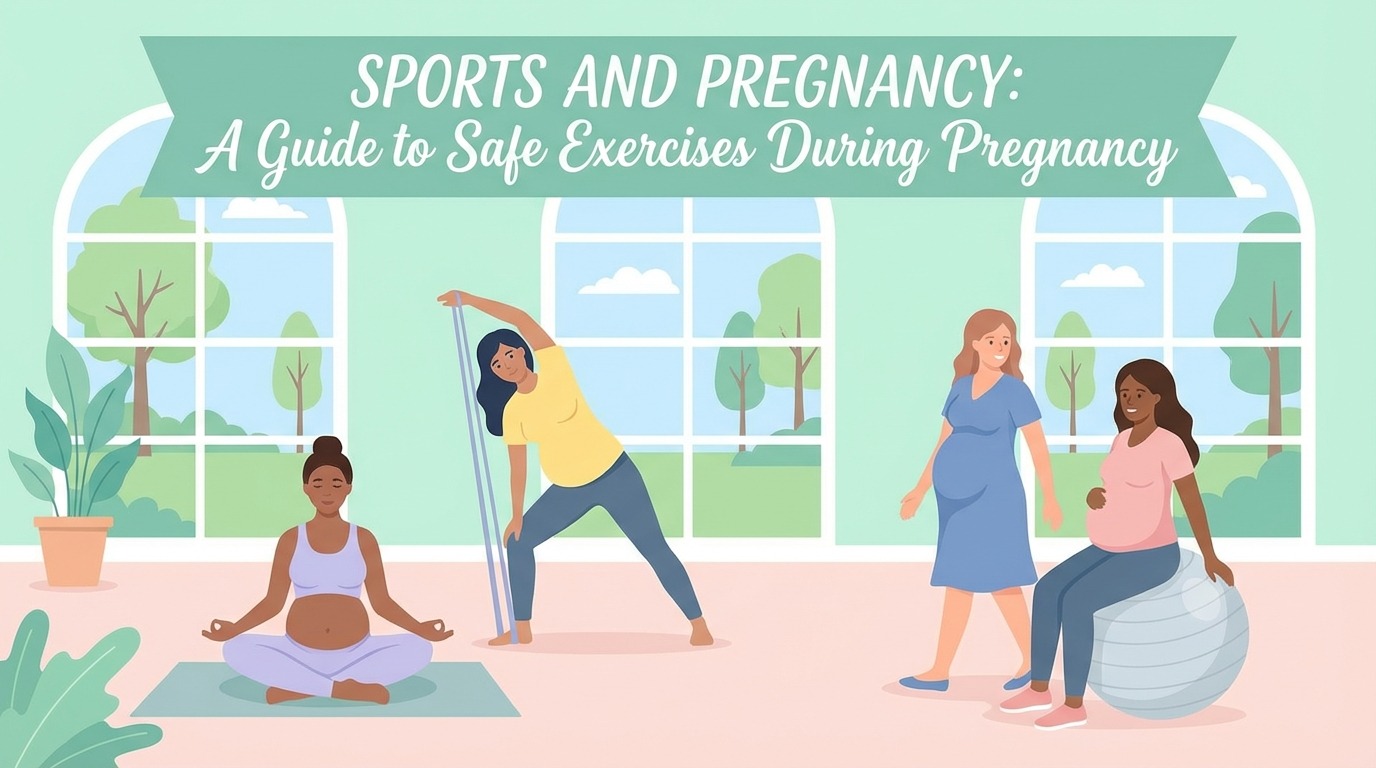
Sport and pregnancy: guide to safe exercises to practice during pregnancy
| In Brief ✨ |
|---|
| Gentle and regular activity reduces fatigue, supports morale, and prepares the body for birth 🤰 |
| The “talk test” guides intensity: if speaking becomes difficult, slow down 🗣️ |
| Pelvic floor strengthening and lateral breathing are pillars of safety 🧘♀️ |
| Walking, swimming, prenatal yoga, postural strengthening: reliable options each trimester ✅ |
| Listening to warning signs and adapting without guilt protects both mother and baby ❤️ |
| Suitable equipment (shoes, belt, cushions) makes training more comfortable 🧺 |
| Medical monitoring and supervised sessions provide a clear and motivating framework 🩺 |
Movement during pregnancy is now recognized as a true ally. By following simple markers, it improves sleep, regulates blood sugar, and soothes many tensions. Thanks to targeted exercises, every expectant mother can strengthen her posture, support her pelvic floor, and preserve her joints. Far from injunctions, a progressive and caring practice nurtures confidence while physiologically preparing for delivery. Because each trimester has its specificities, a clear guiding thread helps choose the right gestures without hesitation.
This guide gathers concrete advice, examples, and easy-to-apply markers. It highlights stable activities adapted to the changing needs of the body. From active walks to decompression stretches and prenatal yoga, the aim remains constant: move with pleasure, safety, and meaning. The practical tools offered simplify daily life, whether walking with a Baby Stroller, organizing a gym bag, or managing ligament pain. Thus, each session becomes a useful, gentle, and protective pause.
Sport and pregnancy: proven benefits and safety rules to know
Prenatal sport acts as a stabilizer of well-being. From a metabolic point of view, regular activity supports insulin sensitivity and limits excessive weight gain. On the vascular level, circulation is promoted, which lightens the feeling of heavy legs. Furthermore, regular movement stimulates proprioception and helps better inhabit a changing body.
Psychological benefits are also tangible. Indeed, moderate sessions reduce anxiety and optimize sleep quality. A simple, planned routine offers a valuable sense of control. Many also notice better pain tolerance during labor, thanks to developed breathing and endurance.
Essential benefits and intensity markers
The “talk test” remains a practical and reliable guide. You should be able to speak in full sentences during exercise. If the sentence breaks off, the intensity is too high. Perceived effort on a scale from 0 to 10 should be between 3 and 5 for the majority of sessions.
The ideal volume varies. Nevertheless, 150 weekly minutes of light to moderate intensity activity represent a reasonable target. Spread over 3 to 5 sessions, they fit better into daily life. Better a flexible regularity than a peak followed by a stop.
Warning signs and contraindications
Certain situations require immediate stopping. Vaginal bleeding, sharp abdominal pain, early regular contractions, marked shortness of breath, or decreased fetal movements are among them. In these cases, a consultation is required without delay.
High-impact or fall-risk activities should be avoided. High jump, contact sports, diving, and extreme heat expose to complications. Finally, after the first trimester, prolonged exercises lying on the back should be avoided if dizziness occurs.
- ✅ Active walking on stable ground 🚶♀️
- ✅ Swimming or gentle aquagym 🏊♀️
- ✅ Prenatal yoga and adapted Pilates 🧘♀️
- ❌ Contact or highly unstable sports ⛔
- ❌ Intense efforts in humid heat 🥵
Example of realistic progression
Lina, at the beginning of the second trimester, starts with 20 minutes of walking, three times a week. She adds 10 minutes of breathing and postural strengthening focused on the pelvis and shoulder blades. Over four weeks, she reaches 35 minutes of walking, then introduces a gentle circuit twice a week.
Thanks to this rhythm, she reduces her lower back pain and gains breathing ease. She also notes better transit and faster recovery after each workday. Her goal: stay consistent without seeking performance.
In summary, safety is built with clear markers and a fine listening to the body. This base prepares the concrete organization of sessions by trimester.
Safe exercises by trimester: detailed plan, examples, and adaptations
Each trimester proposes its own dynamic. In the initial phase, energy varies a lot, so the rule is gentleness. Then, the second trimester often becomes the ideal window to consolidate endurance. Finally, the third focuses on postural adjustments and functional preparation for birth.
First trimester: establish foundations without pressure
Active walking, 15 to 25 minutes, 3 to 5 times per week, forms a base. A gentle circuit can be added: partial wall squats, elastic band pulls, moderate hip bridges. Priority: technique, breathing, pelvis stability.
Decompression stretches for the neck and back relieve fatigue. A few thoracic lateral breaths, hands on the ribs, develop breath awareness. This precise work will promote effort management to come.
Second trimester: strengthen endurance and posture
This period often allows cautious intensification. Aim for 30 to 40 minutes of walking or low-resistance stationary cycling. Sequences strengthening the glutes and upper back improve overall alignment.
Guided exercises provide useful markers. Video content helps appropriate good placements and proper breathing without forcing.
In case of lower back tension, a targeted set makes a difference. Here is a practical resource on a exercise for back pain during pregnancy. Better to practice at moderate coolness, seeking spinal length more than amplitude.
Third trimester: prepare for the big day and manage energy
The strategy shifts to preserve breath and pelvic mobility. Interval walking, suspended water movements, hip stretches, and isometric adductor strengthening become central. Thoracic mobility work supports breathing at the end of pregnancy.
Positions favoring pelvic engagement are key: sitting on a ball, static lunges, pelvic oscillations pressed against the wall. The objective: relax without collapsing. Generous recovery time between sets maintains quality.
This trimester plan reassures and clarifies direction. It remains adaptable day to day according to fatigue and sensations.
Pelvic floor and breathing: essential techniques and safe gestures
The pelvic floor acts as a foundation. Well-coordinated with breathing, it stabilizes, supports organs, and participates in pressure management. A simple, repeatable learning is enough to gain great benefits.
Mastering contractions and letting go
The principle: inhale to let down and open, exhale to lift and feel a gentle contraction. This alternation guides muscle recruitment without tension. Aim for finesse, not maximal strength.
Three sets of 8 to 10 repetitions, 4 to 5 days a week, create an effective base. Then, integrate this reflex into daily life: lifting a light load while exhaling, or rising from the couch with the same timing.
Thoracic lateral breathing and pressure management
Placing the hands on the ribs and visualizing an umbrella opening sideways helps a lot. On inhalation, the ribs expand laterally, freeing the abdomen. On exhalation, the ribs come closer and a gentle tone of the center accompanies the movement.
This mechanism protects the perineum and abdominal wall. It also optimizes recovery between sets of overall exercises. Finally, it reduces breathlessness during uphill walking.
Posture, gentle core strengthening, and supervision options
Traditional intense core work is not recommended. Instead, favor “breath-controlled core”: quadruped with light activation, inclined plank on a raised plane, and anti-rotation with a low-tension elastic band. All is done without breath-holding or blocking.
Manual support can optimize body awareness. Adapted osteopathy or prenatal massage sessions complement the work well: read here on osteopathy and massages for pregnant women. Practitioner choice is based on recommendation and prenatal experience.
By applying these principles, stability and comfort increase rapidly. The breathing–perineum duo becomes a protective reflex daily.
Managing pain: back, ligaments, groin and relieving adaptations
Body tensions often come in waves. Lower back pain, ligament pulls, or groin discomfort are common. A structured strategy allows continuing to move without worsening symptoms.
Lower back: mobilize, strengthen, unload
The winning combination associates gentle mobilizations, glute strengthening, and posterior chain stretches. Additionally, a simple trick is to slightly raise the feet during seated breaks. This small change reduces lumbar strain angle.
Specific movements bring real relief. This practical guide presents an effective exercise for back pain during pregnancy. Better to work often, for short periods, to smooth pain throughout the day.
Ligament pain: understand and adapt
Uterine ligaments stretch over weeks. Sharp pains appear with position changes. This usual phenomenon is managed by slow transitions and deep breathing.
For deeper understanding, a clear resource explains ligament pain during pregnancy. Interval walking, gentle asymmetrical positions, and moderate local heat complement the arsenal. A cushion placed between the knees at night also helps.
Groin discomfort and pelvis: stability before amplitude
Groin pain sometimes signals overload of the adductors or strain on the pubic symphysis. The approach is to reduce range of motion, strengthen isometrically, and favor short steps. Gentle pelvic tilt with breathing improves tolerance.
To better identify symptoms, this dedicated file on groin pain during pregnancy details possible leads. Follow-up with a pelvic belt specialist then refines the exercises.
Comfort tools: cushions, belts, organization
The choice of good support changes life. A modular cushion supports the hips and lightens the lower back. At home, this comparison of the divisible pregnancy cushion describes clever options. During the day, a light pelvic belt, well-adjusted, can reduce irritation when walking.
When going out, a symmetrical posture with the Baby Stroller protects the pelvis. Also, planning breaks makes any outing more pleasant. A light bag worn cross-body distributes the load better.
- 🛑 Stop effort if sharp pain, dizziness, bleeding
- 🧊 Apply local cold in brief inflammatory phase
- 🌡️ Use gentle heat to relax muscles
- 📅 Break sessions to avoid overload
- 📣 Consult if pain persists more than 48 hours
In short, understanding the pain mechanism guides good choices. The regularity of small gestures is better than isolated big efforts.
Equipment, routines, and safety: practical checklist for a calm workout
A structured framework simplifies everything. The choice of shoes, equipment adjustment, and preparation of breathable clothing influence session quality. Afterwards, well-conducted recovery consolidates positive effects.
Useful equipment and organizational tips
Stable sneakers with good cushioning limit impact. A non-slip mat, a flexible elastic band, and a gym ball suffice for a complete program. For clothes, maternity leggings like those from Vertbaudet provide support and comfort.
For active outings, a maneuverable urban stroller such as a Bébé Confort model facilitates walking pace. Stores like Natalys offer a coherent choice of accessories. Finally, a water bottle within reach reminds to hydrate regularly.
Daily break: moving while preparing for baby’s arrival
Steps taken while spotting a sleeping bag at Petit Bateau, choosing a Fisher-Price play mat, or leafing through The Birth Book also count as activity. This moving time fuels motivation. Just keep a mobile posture and alternate loads between arms.
After the session, a gentle self-massage with suitable oil, for example from Mustela, promotes skin recovery. For longer walks, anticipate breaks and adapt the route to reduce fatigue. In the evening, a lukewarm bath relaxes the hips.
Structure of a typical session and quality signs
An 8-minute joint mobility warm-up opens tissues. Then, 15 to 25 minutes of light endurance or a postural circuit follow. To finish, 5 to 10 minutes of breathing and gentle stretches close the loop.
Good indicators: controlled breath, absence of sharp pain, feeling of lightness after the session. Conversely, crushing fatigue signals too high intensity. Then adjust volume or exercise type.
| Goal 🎯 | Exercise 💪 | Duration/Reps ⏱️ | Tip 🧠 |
|---|---|---|---|
| Endurance | Active walking | 25–35 min | Talk test |
| Posture | Elastic pull | 2×12 | Shoulders down, chest open |
| Hips | Static lunges | 2×8/side | Short steps, neutral pelvis |
| Perineum | Breathing + Kegel | 3×10 | Exhale to engage |
| Mobility | Cat–cow | 2×10 | Long back, smooth breath |
Finally, preparing the “cool down” during the day helps better recovery. A protein-rich snack and conscious stretches consolidate the session. The next day, the desire to move returns more easily.
Little equipment wink: a gentle walk with a light stroller, then a reading break while the baby drinks from an Avent or Dodie bottle fit naturally into an active routine. The essential is regularity and ease.
This checklist allows anticipating and acting clearly. It transforms each session into a reassuring and effective appointment.
How many times per week should you train during pregnancy?
Three to five short sessions are better than one long isolated workout. Aiming for 150 weekly minutes of light to moderate intensity, the body progresses without excess. The rhythm adjusts according to sleep, appetite, and daily sensations.
Which exercises should be absolutely avoided?
Contact sports, high fall-risk activities, diving, and intense efforts in humid heat are to be avoided. After the first trimester, prolonged lying positions on the back should be avoided if they cause discomfort. Safety always comes first.
How do you know if the effort is too intense?
If speaking in full sentences becomes difficult, the intensity is too high. Dizziness, sharp pain, or regular contractions require immediate stopping and medical advice. Fatigue that crushes for 24 hours also signals excess.
Is core strengthening dangerous during pregnancy?
Classic, rigid core strengthening is not recommended. In contrast, breath-controlled core, done in an inclined position or on all fours, supported by lateral breathing, provides stability and comfort in complete safety. Execution quality remains the priority.
What to do in case of ligament or groin pain?
Reducing range of motion, breathing deeply, and breaking efforts into parts helps a lot. A cushion between the knees and slow transitions limit pain. Dedicated resources on ligament and groin pain detail appropriate conduct.