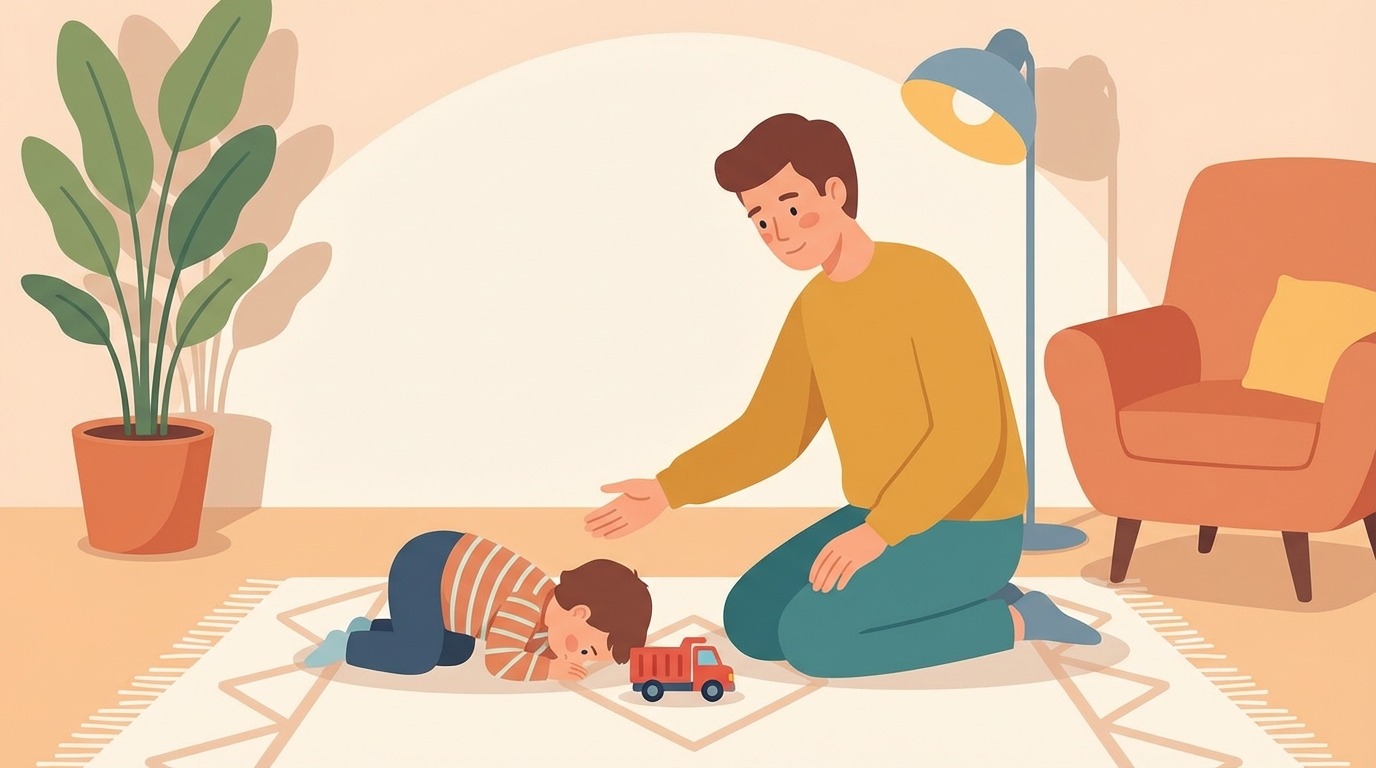
Child Lamentations: How to react to the lamentations of children aged 1 to 3 years.
| Short on time? Here’s the essentials 🚀 |
|---|
| Validate the emotion, not the behavior: acknowledge child whining and baby crying without giving in to every demand ✅ |
| Stay calm: the parental reaction regulates the child’s stress through emotional contagion 🧘♀️ |
| Use simple words through active listening: “You’re frustrated, you wanted to keep playing” 🗣️ |
| Prevent with routines, announced transitions, and snacks suitable for babies aged 1 to 3 ⏱️ |
| After the crisis, debrief, offer alternatives, and praise every small progress 🌱 |
Between 1 and 3 years old, emotional storms surprise by their intensity. However, they mainly reveal a developing brain seeking clear landmarks. In practice, child whining and baby crying express a need, sometimes hidden by tiredness, hunger, frustration, or a poorly anticipated transition. The challenge thus becomes twofold: responding to the real need and learning self-regulation, step by step, without silencing the emotion. The parental reaction directly influences what follows in the scene. A grounded and calm adult opens the door to a return to serenity.
In daily life, a few simple levers change the game. First, adapted child communication, with concrete words, limited choices, and a gentle tone. Next, a solid, coherent, and warm framework where rules remain stable. Finally, predictable rituals, a “quiet corner,” and playful child emotion management supports help to calm baby without rushing. The result is progressive but clear: families notice fewer outbursts and more cooperation. The important thing is to dare to repeat, day after day, because every repetition feeds emotional development and prepares calmer relationships.
Understanding whining between 1 and 3 years old: hidden needs and a developing brain
From 12 to 36 months, the child moves from a world focused on immediate needs to accelerated discovery of limits. This period sees the emergence of opposition, firm “no’s,” and intense demands. Child whining often arises when communication is no longer enough. The prefrontal cortex, which helps reason and inhibit impulses, matures slowly. It is therefore normal for frustration to overflow as cries, tears, or sharp gestures.
An example speaks to everyone. Lina, 26 months old, absolutely wants to put on her boots alone before leaving. Minutes pass, impatience rises, then the crisis breaks out. On the surface, it’s about boots. Deep down, it touches burgeoning autonomy, pride in succeeding, and fear of being rushed. The adult who recognizes these invisible layers responds better. They can suggest a “doing together” or offer two clear choices. The need to act and decide a little is respected.
Triggers often recur. Fatigue amplifies every friction, just like hunger, too much screen time, or a sudden transition. Leaving the park without warning becomes a break experienced as a loss. Conversely, warning ten minutes before, then five, then one, reduces surprise. The child adjusts little by little. This preparation decreases baby crying and encourages a gentler transition to the next stage.
Confusing tantrums with emotional overflow leads to dead ends. A child who cries loudly is not always trying to get something. They are also trying to release tension they cannot name. Labeling the emotion helps the brain reorganize. Saying “You’re angry, you wanted to keep playing” is like putting a flexible lid on a boiling pot. The intensity lowers, then listening becomes possible. The moral will come later, when the wave has receded.
Careful observation guides the parental reaction. Certain signs announce the storm: avoiding gaze, jerky movements, high-pitched voice, bodily agitation. Others, on the contrary, reveal the returning calm: slower breathing, relaxed body, gaze seeking the adult. Acting at the right moment saves energy for everyone. It’s less a battle than a dance paced by the little one’s signals.
Deep down, understanding doesn’t excuse everything but guides action. The child learns better when the adult combines calm firmness and active empathy. This alliance charts a secure path: emotion has its place, rules do too. This balanced approach prepares the next section, focused on concrete gestures to soothe.
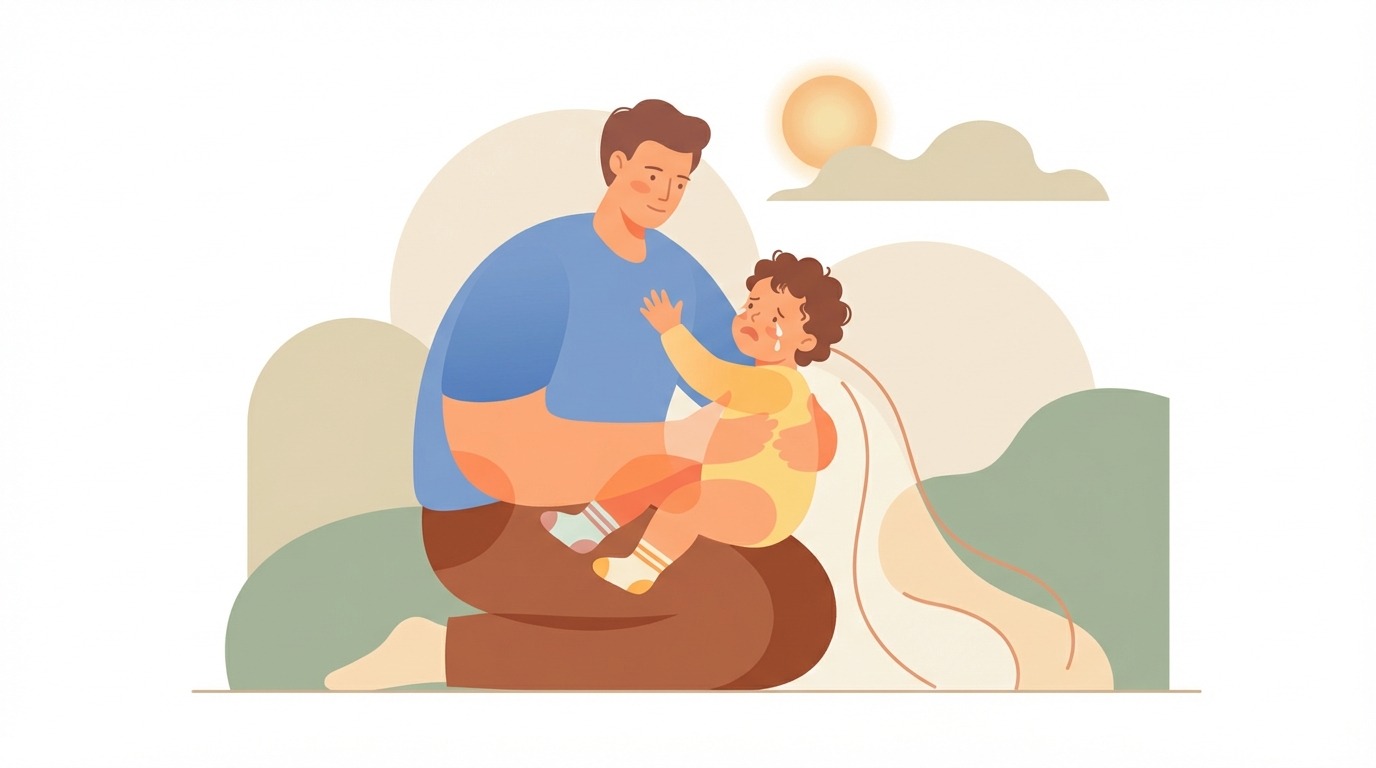
Soothing parental reaction: 7 concrete gestures to calm baby without ceding
Faced with baby crying or sudden anger, instinct sometimes urges to scold, threaten, or distract. Yet, the quickest path to soothing starts with a regulated attitude. The parent acts as an emotional thermostat. If they remain grounded, the child quickly regains calm. This mirror effect is observed daily, especially between 1 and 3 years, when emotional contagion is very strong.
1. Stay grounded and breathe slowly
Three deep calm breaths change the outcome of the scene. Shoulders relax, voice lowers, face opens. The child picks up these safety markers. A calm whisper is worth more than ten arguments. The little one’s brain doesn’t hear logic at the peak of the crisis but perceives the rhythm of a safe presence.
2. Validate the emotion and name it simply
The key tool in child emotion management remains labeling. “You’re frustrated. You wanted the swing again.” This sentence approves nothing, yet defuses. The implicit message says: “What you feel exists. You’re not alone in it.” A recognized emotion circulates better than one denied.
3. Set a clear and short limit
Calm firmness reassures. “We are leaving now. You can come down walking or in my arms.” The rule stands, the child keeps some power to act within a chosen framework. This combination limits escalation and protects the relationship. Without limits, anxiety rises. With too much harshness, the spirit closes off.
4. Offer physical containment
A brief, unforced wrap can help. The adult offers, the child accepts or refuses. “Can I hold you to help you calm down?” This containment reduces disorganized movements. It facilitates emotional de-escalation when the body goes all over the place.
5. Guide toward an acceptable release
Allowing hitting a cushion, blowing hard, jumping in place, or shouting outside channels the energy. Forbidding all expression leads to future explosions. Better to have harmless target gestures than absolute prohibitions impossible to keep. The important thing remains to set boundaries.
6. Debrief after the wave
Once calm returns, it’s time for a brief recount. “Earlier, it was hard. Next time, we’ll warn before leaving.” The brain connects dots, learns, then adds a strategy to its toolbox. This little feedback builds bridges between scenes.
7. Positively reinforce every effort
Noting and praising micro-progress anchors the momentum. “You breathed instead of pushing. Well done.” Repeated, this precise look builds pride in acting differently. Lasting change arises from these regular drops.
Quick reminder of key gestures:
- 🧘 Breathe and speak slowly
- 🗣️ Name the emotion in short words
- 🧭 Give a choice within a clear limit
- 🤗 Offer a comforting hug
- 🥊 Direct the release toward an object
- 🧩 Talk afterward, without judging
- 🌟 Acknowledge the precise effort
To see these gestures in action, targeted video research proves useful.
When combined, these seven supports make the adult more predictable. The child feels solid but gentle edges. That’s exactly what they hope for, even in the heart of the screams. The next part explores child communication and active listening to further smooth these scenes.
Communication and active listening: words that soothe and structure
Between 1 and 3 years old, few words suffice, provided they’re well chosen. Active listening begins by looking at the child, getting down to their level, and allowing silence. This silence is not emptiness. It contains. It shows the adult can stay there, neither fleeing nor fighting. Then come short, concrete sentences.
Useful scripts for heated moments
“I see you. You’re angry. Your hands want to hit. The cushion is here.” This sequence acknowledges, channels, suggests. Another script: “You want the truck. Today is no. You can have the blue or the red one.” Limited choices avoid endless negotiation. They restore some control without diluting the rule.
When the child refuses to listen
Insisting on reasoning feeds the struggle. Better a bridging sentence: “I’m listening. We’ll talk later.” Then the adult falls silent, stays close and calm. The pictorial message passes ahead of argument. For a baby aged 1 to 3, the music of the voice counts as much as words.
Games and tools to strengthen emotional language
The emotion wheel, cards with faces, or a puppet that “experiences” anger make vocabulary concrete. The child points, shows, or acts the scene. Play lowers the guard and opens the door to learning. A cozy “quiet corner,” with cushions, a sensory bottle, and illustrated book, becomes a reassuring refuge. You go there with the child, not to exile them.
In Maya’s family, Tom, two and a half years old, resumes a simple ritual: “I blow like a dragon” when tension rises. This symbolic gesture marries imagination and breathing. Within days, Tom asks for it himself. The sign is clear: the skill emerges. That’s live emotional development.
Adults’ coherence strengthens the whole system. If school, daycare, and home use similar codes, the child orients faster. A shared notebook or a “how to soothe Tom” sheet smooths relay. The same gesture, the same phrase, and the child regains their internal map.
Words heal, but attitude carries them. Knees on the ground, gentle gaze, slow movements: the body says “safety.” The voice follows, with short sentences. This harmony creates an atmosphere where the rule becomes audible. The next video gathers demonstrations of these micro-skills.
Combining scripts, games, and coherence, child communication ceases to be a battlefield. It becomes a springboard for what follows: preventing crises through daily organization.
Preventing crises: routines, transitions, and soothing environment
The best crisis is the one that doesn’t break out. Anticipation protects the day’s balance. Young children love to know what’s coming. Simple, stable, visible rituals calm from the morning. An illustrated routine chart, even basic, serves as a compass. Each step is checked off with a sticker or magnet.
Biological rhythm and emotional fuel
Sufficient sleep, protected naps, and regular meals form the base. A belly too empty or too full often triggers clashes. An afternoon snack rich in fiber and protein holds the course better than a sugary spike. A well-fed, hydrated, and rested little body manages frustration better.
Announced and playful transitions
Switching from play to bath or leaving the park remains tricky. A gentle countdown reduces the shock: “Three more slides, then we leave.” Then, a playful bridge is offered. “We’ll walk like elephants to the door.” Movement distracts without denying the emotion. The child crosses over instead of being torn away.
Environment that soothes and stimulates just enough
Too much noise, objects, or screens overload the brain. Sorting by bins, alternating visible toys, and allowing time without stimuli soothes. Warm light in the evening invites slowing down. A rug on the floor becomes an island of calm for leafing through, breathing, or cuddling a comfort toy.
To help organization, here’s a practical checklist to post near the entrance.
- 🕒 Announce each transition with two reminders
- 🥛 Provide water and slow snack (fruit + yogurt)
- 🧩 Organize toys by zones to avoid overload
- 📵 Turn off screens at least 60 minutes before bedtime
- 🌙 Establish a short and consistent bedtime ritual
- 👟 Take 5 minutes ahead to avoid rushing
One last word about time. Rushing sparks the fuse. Leaving five minutes earlier, preparing clothes the night before, and placing shoes by the door truly change the atmosphere. The child senses margin. The adult breathes. Everyone wins.
Following these landmarks, opposition episodes lose intensity. The next section describes what to do right after the crisis, to turn the storm into lasting learning.
After the storm: debrief, repair, and strengthen emotional development
Once the wave has passed, the most formative time begins. The brain is once again available. We can then revisit the scene. The goal is not to accuse but to learn. The adult guides with simple questions: “What helped you?” “Next time, what can we try?” This short debrief installs a memory of solutions.
Repair the relationship and re-state the rule
The bond first, the rule next. “I love you very much, even when you scream. Screaming hurts ears. We hit the cushion, not people.” The child hears they are not their behavior. This nuance builds self-esteem. It also prevents shame from blocking learning.
Restorative consequences rather than punishments
When damage occurs, repair together if possible. Pick up thrown blocks, help return a book in place, apologize if hurt: these concrete gestures link cause and effect. They build responsibility without crushing. Punishment cut off from meaning adds anger without instructing.
Progress journal and strength language
Noting two successes per week changes perspective. “You waited your turn on the slide.” “You blew before pushing.” These proofs accumulate and nourish confidence. The child discovers their preferred strengths: budding patience, courage, curiosity. Naming them makes them grow.
In Lina’s family, a “pride jar” receives a colored pebble for each noticed effort. Ten pebbles open a simple special moment, like reading a chosen book or making pancakes. Social pleasure replaces obsession with material gifts. Cooperation becomes more natural.
When to worry and seek help? Some red flags exist: marked and lasting regression, self-harm, persistent lack of eye contact, major sleep disorders, frequent violence hard to contain. In these cases, consulting a professional provides adjusted landmarks. The goal remains to adapt environment and support, not to label too early.
Through these steps, the child integrates a foundational truth: emotion passes through, the rule protects, love remains. This is how difficult scenes transform into life skills. The loop is closed, and daily life regains sweetness.
“When the adult calms down, the child learns. When the adult listens, the child builds.”
How to distinguish tantrum from real distress in a 2-year-old child?
Observe the signals. Distress often comes with a stiff body, short breath, avoiding gaze, inability to listen. The tantrum lessens when the child regains control or an acceptable alternative. In both cases, validating the emotion then restating the rule helps get past the block.
Should child whining be ignored to avoid ‘reinforcing’ the behavior?
Ignoring the emotion creates distance. Better to briefly welcome the emotion, suggest an acceptable outlet (breathing, cushion, quiet corner), then hold the limit. This way, appropriate expression is reinforced, not the complaint. Active listening is not giving in, it is guiding.
What words to use to calm baby without too much talking?
Prefer very short phrases: “I see.” “You’re angry.” “We’re leaving now.” “Walk or arms?” The music of the voice matters as much as the words. Speak slowly, get to their level, show the option with gesture if needed.
How to prepare a difficult transition, like leaving the park?
Announce departure 10, 5, then 1 minute before. Offer a playful bridge (walk like animals, sing the way). Offer a choice within the rule: leave scootering or walk hand in hand. Praise the effort at the exit.
What to do if the crisis escalates despite everything?
First secure: remove what can cut or break, offer gentle containment, guide toward an acceptable release. Stay silent if logic doesn’t get through. When the wave subsides, debrief in 2 minutes, then restate the rule and praise a small precise progress.