
Fear Oral Presentations: Column: the fear of oral presentations.
| Short on time? Here is the essential ✨ |
|---|
| Fear of oral presentations is normal 😌 — it mixes anxiety, stress, and avoidance habits. |
| Targeted preparation 🧭 — clear plan, short rehearsals, physical anchors — transforms public speaking. |
| Nervousness management 🫁 — breathing, thought reframing, micro-exposures — strengthens self-confidence. |
| Lively communication 🎯 — hook, story, interaction — captures attention without overacting. |
| Feedback 🔁 — measures progress, highlights priorities, avoids sterile self-criticism. |
The stage impresses, the voice shakes, the throat tightens: fear of oral presentations hits hard, both for shy students and seasoned adults. Yet, facts are stubborn: with strategic preparation and pragmatic nervousness management, anxiety lowers, stress becomes manageable, and self-confidence settles in. This article explores concrete levers, nourished by everyday examples and field practices, to tame public speaking without masking sensitivity. Between breathing rituals, simple scripting, and attention exercises, each path interlocks to create clear and warm communication. And because speaking is learned like walking, the exploration progresses step by step, with precise tools and stable landmarks, to finally dare to share ideas confidently — and enjoyably.
Fear of oral presentations: understanding anxiety, stress, and shyness to tame public speaking
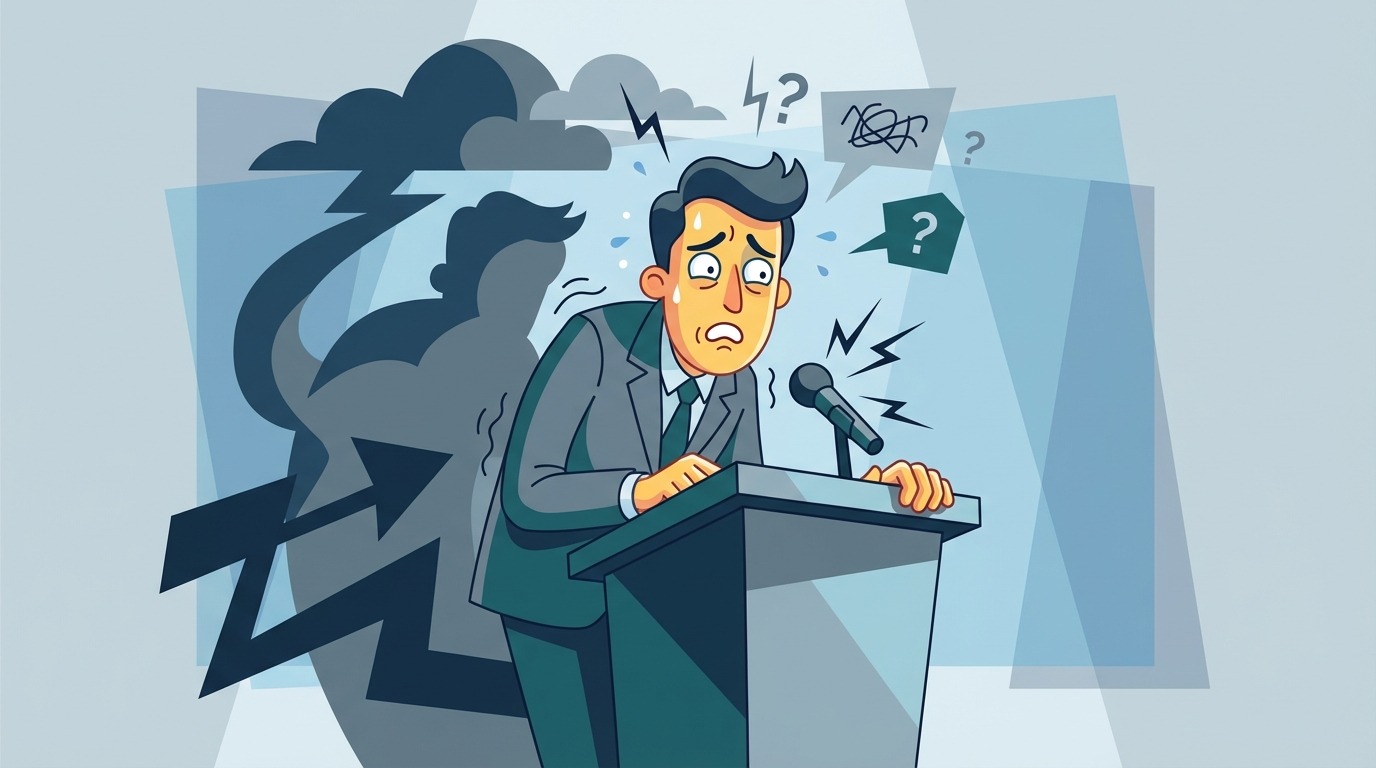
Fear of oral presentations combines three forces: a physiological activation (fast heart, sweaty hands), a threatening mental reading (“I will fail”), and avoidance habits. Together, they fuel anxiety and reinforce shyness. Good news: this triad becomes deregulated, then rebalanced, with concrete gestures and adapted preparation.
Why does the body race so much? Because it reads oral presentation as a high-stakes social test. The brain then directs energy towards escape. Reinterpreting these signals as momentum rather than danger already reduces stress. Saying “my body is mobilizing to help me” changes the game.
Let’s illustrate with Nadia, a high school student, who avoided every public speaking. After many refusals, her fear grew. One week before her presentation, she set micro-steps: read aloud for 2 minutes, present her plan to a friend, then simulate the presentation in front of her mirror. This gradual progression created memories of success, stronger than anxious anticipation.
Signals, interpretations, and avoidance loops
Body sensations alone do not create panic. It is catastrophizing interpretation that ignites the reaction. Replacing “I will stammer” with “if I freeze, I breathe and rephrase” installs a functional scenario. The brain likes simple plans; let’s give it clear steps.
Avoidances, meanwhile, maintain the fear. Each evasion offers immediate relief… and undermines self-confidence. Breaking the loop requires a measured dose of exposure. No question of going all at once; it is about accumulating repeated and measurable micro-wins.
Concrete examples that reassure
A middle school student suggests starting with a question to the audience. An adult chooses a short personal story, then a striking statistic. In both cases, the intention clarifies communication and supports memory. The framework becomes reassuring.
Finally, drawing inspiration from other fears helps. A child’s night awakenings teach naming emotion without enlarging it. Resources on night terrors illustrate how regulation passes through presence and routine. Similarly, oral presentations benefit from being ritualized.
Checkpoint: understanding the mechanics reduces opacity; taming sensations prevents escalation; and ritualizing opens a stable door to action.
Preparation of oral presentations: transforming anxiety into method and building self-confidence
Preparation of a presentation is not limited to content. It adjusts substance, form, and energy. Three main axes dominate: clarifying the message, scripting in simple steps, and training short but often. This triad deflates fear and increases self-confidence.
Clarify the message: one idea, three supports
Formulating a compass phrase recenters the intention. Then three supports suffice: a fact, an example, an implication. This format limits overload and gives rhythm. For example: “Reading aloud strengthens classroom listening.” Supports: short study, teacher testimony, practical exercise.
Scripting in 3 acts
Act 1: the hook. A question, a mental image, or a mini-story. Act 2: the heart, with a simple A-B-C plan. Act 3: the engagement with the audience, by launching a concrete application. This structure soothes anxiety, as it provides rails.
Short and varied rehearsals
Rather than long exhausting sessions, aim for three rehearsals of 6 minutes. One while walking, another recording yourself, the last before a person. This consolidates motor memory and vocal ease. Between sessions, an attentional break renews engagement.
- 🧩 Write your compass phrase — clear goal
- 🎬 Choose a hook — dynamic start
- 🪜 Provide an A-B-C plan — solid guidance
- 🎧 Record yourself 90 seconds — immediate feedback
- 🤝 Test before 1 peer — social security
Family metaphors help. Preparing an oral presentation is like organizing a shared moment: you anticipate, then you let it live. Ideas of picnic nicely illustrate light but thoughtful logistics.
After a short breathing video, anchoring the exercise in the morning routine secures the start of the day. The brain likes predictable repetition; let’s exploit it.
Finally, the voice benefits from warming up: mouth in “ou-ah,” reading tongue twisters, and gentle neck stretches. Three minutes suffice to stabilize the tone, which lowers perceived stress from the first sentence.
In sight: a simple, repeatable, and smiling method, so that public speaking remains lively without becoming overwhelming.
Nervousness management during the presentation: effective techniques to calm anxiety and channel energy
Nervousness signals a stake. Instead of fighting it, it can be channeled. Three tool families prevail: breathing, focused attention, and pragmatic autosuggestion. Each is trained off-stage, then activated live.
Coherent breathing and micro-pauses
Inhale 4 seconds, exhale 6. Two minutes like this lower cardiac activation. Before speaking, place feet, relax shoulders, and smile gently. These micro-gestures send a safety message to the nervous system.
Focused attention: the anchor and support point
Choose a landmark in the room — a color, an allied face — stabilizes the gaze. Then alternate 20 seconds of speech and 2 seconds of silent pause. This punctuation protects clarity and relaxes the audience.
Pragmatic autosuggestion: action phrases
Three key phrases help: “I speak slowly,” “I breathe between two ideas,” “I look at the back row.” They guide action, not mood. The brain more willingly follows a concrete instruction than a vague order.
| Technique 🧠 | Goal 🎯 | Duration ⏱️ |
|---|---|---|
| Breathing 4-6 | Reduce stress | 2 min |
| 2-second pause | Clarify communication | At each idea |
| Visual anchor | Stabilize gaze | Continuous |
| Autosuggestions | Guide action | Before and during |
Sleep also influences nervousness. Understanding vigilance development from early childhood reminds that calming is learned. A detour through baby awareness shows how regularity creates security. Adults are not exempt from this rule.
If anxiety surges suddenly, a pivot phrase helps: “I don’t have to be perfect, I have to be clear.” This permission reduces fear of mistakes and frees listening. The audience prefers embodied speech to recited text.
Focus on essentials: guide energy, don’t deny it; give sensory supports, not empty slogans.
Lively communication and impact: capturing attention and maintaining listening without overload
Effective communication starts within the first ten seconds. The opening sets the attention contract. Three sober options shine: the intriguing question, the precise mental image, and the short story. Each is practiced and timed.
Hooks that work
The question creates a mental hook: “Who here has ever lost their thread during an oral presentation?” The mental image paints the scene: “Imagine your heart beating like a metronome.” The story, finally, connects emotions and facts without pathos.
Storytelling and visual aids
A visual is valuable by its simplicity. A photo, a curve, a diagram, no more. Too many elements saturate. The story, linked to the visual, serves the idea, not the other way around. We describe, illustrate, return to the goal. This back-and-forth smoothes the oral presentation.
- 🪄 Intriguing question — active curiosity
- 🖼️ Mental image — reinforced memory
- 📖 Mini-story — emotional engagement
- 🗺️ Single diagram — visual landmark
To fuel the imagination, animal imitation games surprisingly help. They unlock voice and gesture in a playful way. Some ideas of animal games inspire quick and smiling warm-ups.
After watching an example, what is especially retained is managing silences. A well-placed silence is worth an extra slide. The audience breathes; the message imprints. Here is effort saved and impact gained.
Operational conclusion of the section: aim clear, short, embodied. Attention follows intention.
After the presentation: useful feedback, confidence consolidation, and sustainable progress
The moment after shapes the trajectory. Good feedback transforms a performance into a springboard. Three questions suffice: what worked well, what was missing, what to test next time? We write, classify, plan.
Measure and ritualize progress
Create a simple grid, scored from 1 to 5: posture, pace, gaze, clarity, pause management. Two measures per month suffice. Visible progress nourishes self-confidence more surely than any vague compliment.
Self-kindness and meaningful rewards
A comforting snack after effort marks the brain. Why not tender apple cookies? The gesture symbolizes the closed loop: preparation, action, recovery. Thus, a serene relationship with the stage settles.
Adapt the goal to the context
Some days, aiming to “say the essential” suffices. Other times, work on lateral gaze. Adjusting avoids tense perfectionism. By analogy, supporting a child’s fear between 1 and 3 years goes through concrete and caring stages; oral presentations follow the same logic.
Finally, thanking someone who helped consolidates the social safety net. The stage is never a solitary adventure. Humans regulate… with humans.
Final point of the section: progress is cultivated; it does not happen by chance.
How to reduce nervousness the day before an oral presentation?
Prepare a mini-ritual: 5 minutes of 4-6 breathing, checking the plan in 3 points, then screen cut-off 45 minutes before bedtime. An action phrase — “Tomorrow, I speak slowly and breathe between ideas” — programs the brain.
What to do if the voice shakes from the first sentence?
Place your feet, exhale long, then mark a short silence. Reformulate the opening in a maximum of 6 words. A micro-pause well assumed appears professional and stabilizes the tone.
Should the text be memorized word for word?
No. Memorize the compass phrase, three supports, and an action conclusion. The rest is expressed in natural language. This flexibility reduces anxiety and improves communication.
How many rehearsals before the big day?
Three short rehearsals (6 to 8 minutes) per day over 3 days often suffice. Vary: speaking while walking, audio recording, then testing in front of a person.
How to capture the attention of a distracted audience?
Start with a concrete question, illustrate with an example close to their reality, and use a single clear visual. Keep pauses to re-engage the gaze.
“Your voice doesn’t have to be perfect; it has to be present.”