Child Pronounces Sounds Incorrectly: Chronicle: your child pronounces certain sounds incorrectly.
| Short on time? Here’s the essentials ✨ |
|---|
| Mispronunciation errors on CH/J sounds are common up to 4 and a half years old 🤗. |
| After 5 years old, if the child still confuses CH and J, a consultation with a speech therapist is recommended 🧑⚕️. |
| Distinguishing speech, articulation, and language avoids conceptual confusion 🧠. |
| Phonetic correction is done through modeling, play, rhythm, and fun repetitions 🎲. |
| In 2026, waiting times can range from 6 to 24 months: better to spot early ⏳. |
In many families, a little “sat” for “chat” or “zouet” for “jouet” evokes tender smiles before raising questions. Should we worry if a child mispronounces certain sounds, especially the famous CH and J, known to be tricky? Benchmarks exist, mechanisms are known, and solutions are concrete. Bringing together the keys to language development and phonetic acquisition, this guide clarifies normal stages, possible delays, and effective levers to support child communication without unnecessary pressure.
Because every child’s voice matters, the focus is on a fine understanding of language disorders and articulation disorders, on active listening daily, and on simple activities applicable at home. Through precise examples, playful tools, and age benchmarks, the goal is to offer phonetic correction respectful of each pace. And when a speech therapy opinion is required, the right reflexes ease a smooth journey.
Understanding pronunciation in the child and untangling articulation, speech, and language
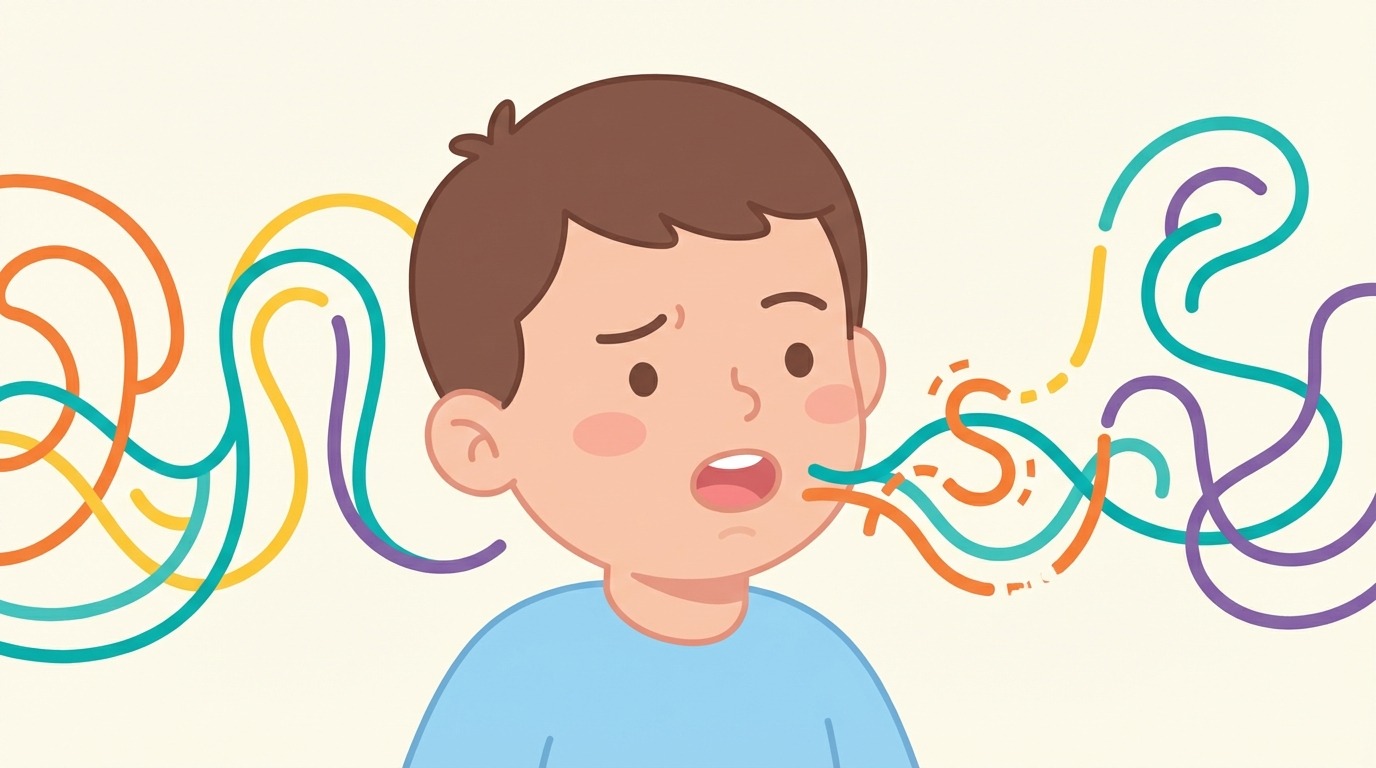
Pronunciation reflects how a child orders their speech organs to produce distinct sounds. Tongue, lips, jaw, soft palate, and breath come into play in a fine choreography. A slight delay in this “ballet” is enough to turn a [ʃ] into [s], or a [ʒ] into [z]. These are called pronunciation errors which often remain transient during early childhood.
It is essential to distinguish three levels. Speech concerns the production of sounds. Articulation refers to the precise motor gesture allowing the formation of these sounds (dyslalia is evoked when difficulty is persistent and targeted). Language, finally, deals with meaning: understanding and organizing words into sentences. Confusing these levels blurs diagnosis and support.
Articulation disorders are characterized by stable substitutions, deletions, or deformations. For example, always replacing CH with S (“aussure” for “chaussure”), or pronouncing “sat” instead of “chat”. This regularity contrasts with more random variations seen in some speech delays, where the child tries, hesitates, then changes approach depending on context.
The typical path follows clear milestones. Between 3 and 6 months, the baby coos; between 6 and 12 months, babbles and plays with intonation. Around 12 months, the first words appear (“maman”, “papa”, “coucou”). Around 2 years, utterances lengthen and comprehension progresses quickly. Around 3 years, sentences become structured, even if complex sounds are still developing.
Why these hesitations? The brain builds sound maps while coordinating oral gestures. Accuracy comes after quantity of tries. Therefore, early targeting of the correct gesture accelerates phonetic acquisition. Through imitation, kind feedback, and sound games, the child strengthens motor and auditory schemas.
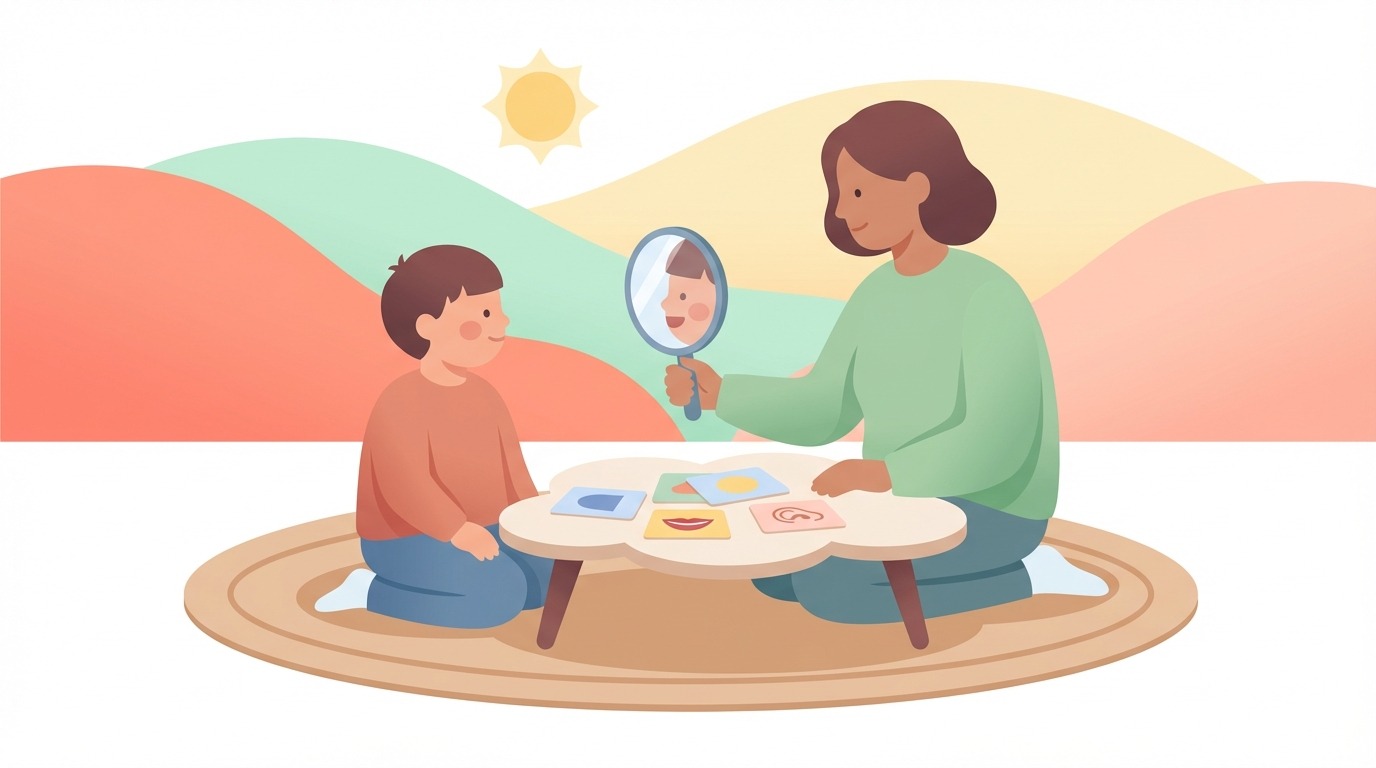
A concrete example illustrates this point. Lina, 4 years old, says “sien” for “chien”. At home, her parents calmly model: “the dog comes here”, emphasizing a bit on [ʃ]. Over weeks, the auditory contrast imprints. Then, in front of a mirror, Lina discovers the rounded lip placement and retracted tongue. Gradually, the form “chien” emerges without a command to repeat. The final key lies in the combination of clear input, observed gesture, and playful practice. This logic will naturally lead towards difficult fricative sounds.
Why CH [ʃ] and J [ʒ] are difficult: key ages, substitutions, and good reactions to adopt
CH and J belong to the family of fricatives. They require breath control, a tightened channel, and precise tongue placement. This technical trio explains their delayed mastery. According to recent clinical benchmarks, most children master these sounds between 4 and 4 and a half years, but a significant portion only fix them a little later.
The most common phenomenon is called phonological substitution. The child replaces [ʃ] with [s], and [ʒ] with [z], because these are easier to produce. “Chat” becomes “sat”, “jouet” becomes “zouet”. This motor economy is normal in the learning process. The issue is not to forbid the error but to model the correct form.
The context within the word also changes the picture. The same sound can appear at the beginning (“chocolate”, “joli”), in the middle (“écharf”, “project”) or at the end (“brioche”, “garage”). The initial, medial, and final positions do not always stabilize at the same pace. A child can succeed with “chapeau” but fail “vache”. Spotting these nuances allows tailored work.
How to react daily? First, avoid asking the child to repeat immediately after. Repetition under pressure freezes the faulty gesture and creates tension. Then, calmly say the target word emphasizing the key sound: “Do you want the chapeau?” This kind and reflective correction constitutes a natural phonetic correction, without judging or correcting bluntly.
Additionally, playing with auditory contrasts sharpens the ear. Offering minimal pairs such as “sot/chaud”, “su/ju” as sorting games helps the child hear the difference before producing it. Perception guides production; the reverse is more costly at this age.
Finally, relying on melodies and rhythms anchors gestures. Repetitive nursery rhymes offer an excellent ground. To vary materials, resources like these nursery rhymes for awakening and these nursery rhymes and songs for children naturally introduce CH and J in a joyful sound bath. The pleasure of anticipating a refrain motivates correct articulation.
To remember: take time to listen, model without constraint, vary sound positions, and rhythm the practice. When these ingredients combine, accuracy follows. The next section details when these delays become real warning signs.
For further visual exploration, a second video features breath and oral-facial gesture games adapted to home. This multimodal support helps the child link what they feel to what they hear, a crucial point for fricatives.
Phonetic acquisition benchmarks, warning signs, and when to consult a speech therapist
Phonetic acquisition benchmarks follow a robust progression. Between 2 and 3 years, most simple sounds settle. Between 3 and 4 years, sequences become clearer, but fricatives like CH and J sometimes remain unstable. By 5 years, pronunciation sharpens markedly. Yet, every journey is unique, and contextualized observation is key.
Warning signs are known. At 3 years, lack of sentences or pronouns raises questions. Reduced understanding by wider community, beyond family circle, is another signal. Likewise, many inversions or simplifications after 4 and a half years require consultation. This useful page on a child from 1 to 3 years who does not speak lists situations and early concrete steps.
It is also important to differentiate a stable articulation disorder from a variable speech delay. Classic example: “pestacle” for “spectacle” indicates an unstable rearrangement of consonant clusters. Conversely, systematically saying “sat” for “chat” shows a fixed phoneme substitution. The speech therapist relies on these clues to guide intervention.
At the population level, 5 to 8% of French children present articulation difficulties. This figure underscores the importance of early detection. In 2026, access delays to care vary by region, sometimes between 6 and 24 months. Acting early, even via home adjustments, limits cumulative delays and preserves the child’s confidence.
Situations requiring swift action are clear. A child who gets frustrated, avoids speaking, or withdraws deserves quick listening. Suspected hearing loss must be checked, as slight sensory loss disrupts anchoring of sound contrasts. Finally, an associated oro-motor disorder may slow precision of gestures and requires targeted exercises.
For the youngest, simple sensory activities already structure the oral base. Exploring boxes, blowing on feathers, pressing vibrating pads on lips link breath, vibration, and articulation. These ideas join activity paths like these activities for a 17-month-old baby or this creative game of playing with a cardboard box. Multiplying experiences, the child refines oro-sensory benchmarks.
Ultimately, a simple criterion sums up the decision. If, after 5 years, CH/J confusions persist and hinder understanding outside the family, a speech therapy assessment becomes relevant. Better a reassuring opinion than a lingering doubt. Meanwhile, structuring playful routines nurtures progress.
Phonetic correction strategies at home: games, modeling, and effective routines
The home is a living laboratory for phonetic correction. The idea is not to “teach class” but to weave natural opportunities. Three axes prevail: ear, gesture, and rhythm. Each provides an essential brick, and their combination produces cumulative effect.
Ear work begins with controlled exaggeration. Saying “chooo-co-laaa” stretching the breath highlights the continuous noise of [ʃ]. Conversely, “ssss” shows the hissing sound. The child hears, compares, then imitates. Adding “minimal pairs” like “chou/sou” helps evoke the key contrast.
The gesture reveals itself in front of a mirror. Lips round for [ʃ]; the tongue retracts slightly. For [ʒ], the configuration is close, but vibration thickens. Mimicking a “sound shower” passing from the teeth to the back makes the idea concrete. A few seconds often suffice for the child to feel the difference.
Rhythm, finally, structures motor memory. Nursery rhymes and chanted formulas provide a framework. Repeating “cha-cha-cha” clapping hands, then chaining “ja-ja-ja” establishes stable sequences. Favorite refrains, repeated every evening, reinforce regularity without cognitive fatigue.
To avoid pitfalls, some simple rules save time. Do not ask to repeat just after an error. Do not point out the mistake harshly. Calmly say the target word with warmth. And slow parental speech to provide a clear model. This verbal ecology creates a favorable environment for the “good gesture”.
Here is a practical memo to post on the fridge:
- 🎯 Calmly model the target word emphasizing the sound.
- 🎲 Play minimal pairs (chou/sou, jus/zou) 5 minutes daily.
- 🪞 Use a mirror to observe lips and tongue without forcing.
- 🎵 Sing a nursery rhyme with two key words CH/J every evening.
- 🗣️ Speak more slowly and mark difficult syllables.
- 💧 Work on breath: bubbles, feathers, pinwheel.
To nurture these rituals, nursery rhyme libraries offer an inexhaustible reservoir. The links cited above provide updated selections. Creating a small home playlist alternates pleasure and repetition, a winning combination for pronunciation.
One last point makes the difference: anchoring success. When the child succeeds with “chapeau”, animating a mini ritualized “bravo” fixes the gesture. Social joy works like cement. Thus, the home becomes a concrete, effective, and joyful springboard towards articulatory stability.
Articulatory rehabilitation tools and games: from targeted fun to progressive follow-up
Some tools organize training in clear steps, from isolated sound to sentence. “Articule!” offers boards to work each phoneme in initial, medial, and final positions. Three main formats prevail: “sound race” for motor attack, “power of 3” for consolidation, and “Phono-Phrases” to generalize in context. Sounds S, Z, CH, J, L, R, F, V, T, D, K, G and various clusters follow without overload.
“Articule 2” broadens the spectrum. It targets consonant-vowel coarticulation on short then longer words. Oral and nasal vowels, plosives and fricatives, as well as clusters around R and L are worked on. Exercises can be done in sound oppositions or minimal pairs. The principle: specificity, progression, and just enough redundancy, as the brain likes well-marked paths.
“The articulation guide” structures phonetic correction step by step. Place of articulation, auditory aids, facilitating gestures, praxies, sung syllables, words in three positions, graduated sentences, then automatisms: everything logically chains. Lists by positions (initial, middle, final) speed preparation of home sessions.
Picture dictionaries, from 3 years old, are valuable allies. Everyday scenes, animals, objects and actions feed lexicon and narration. Describing, comparing, classifying develops the semantic component of language, which feeds back articulatory accuracy. Because a well-represented mental word is easier to pronounce.
To link these tools to your family’s needs, a summary table can guide choice:
| 🧩 What need does each tool address? |
|---|
| “Articule!”: start and consolidate a sound in three positions 🔁 |
| “Articule 2”: refine coarticulation and work on minimal pairs 🎯 |
| “Articulation Guide”: follow a complete step-by-step progression 📘 |
| Picture dictionaries: enrich lexicon and stimulate narration 🗂️ |
Daily, 10 well-targeted minutes are better than a scattered hour. Keeping focus on a micro goal (e.g. CH at word start for a week), phonetic acquisition installs without fatigue. Regularity is the friend of success.
Brief case study: Clément, 6 years old
Clément consistently replaced CH with S. At home, his parents used minimal pairs three times a week, plus an evening rhyme with two CH words. In two months, successes at word start generalized to medial and final positions. Regained confidence relaunched his speaking at school. Effectiveness comes from a clear target, gentle feedback, and rhythmic practice.
“The toolbox” is now set. What remains is to know when to consult a professional and how to navigate current delays to maintain the child’s momentum.
Speech therapy in 2026: when to consult, how to organize, and preserve child communication
Consulting a speech therapist becomes relevant when understanding by unfamiliar adults remains limited, when the child gets frustrated or avoids speaking, or when CH/J confusions persist after 5 years old. An assessment clarifies the nature of the delay: targeted articulation disorder, broader speech delay, or combined with an auditory or oro-motor factor.
Waiting times, sometimes long, require a strategy. At first contact, it is wise to ask for a list of preliminary exercises or start-up resources. During waiting, structuring a short routine (breath, minimal pairs, rhyme, mirror) maintains dynamics. This period becomes a launch ramp rather than dead time.
The first appointment will objectify the situation: history, observation of pronunciation in varied positions, phonological perception evaluation, and intelligibility measurement. The plan will target one or two sounds at a time, with measurable goals. Generalization in school context will then be finely adjusted.
For ecological support, the family-school link matters. Sharing two keywords with the teacher (“CH at word start” for example) aligns adults. Child communication gains security when expectations are clear and kind. The child feels their progress is seen and valued.
Caregivers’ health and access to care remain a national issue. European Speech Therapy Day, March 6, reminds us of these professionals’ key role. Meanwhile, each family can act. The rituals described above, supported by music and play, consolidate the foundation. The speech therapist then refines the path with precision.
For young parents, a gentle wink: choosing a name, singing a rhyme, telling a story, all nurture the future voice. In this regard, resources like this guide for choosing the perfect name or this app dedicated to baby names participate in the same attention: honoring the child’s uniqueness, including sonority. The voice builds as much with sounds as with bonds.
In sum, consulting at the right time, organizing during the wait, and cultivating brief but regular routines ensure a solid path. The clarity of this trio reassures the family and frees the child’s speech.
“Good pronunciation is born from play, blossoms in kindness, and anchors in the small victories of each day.”
At what age should I worry if my child confuses CH and J ?
Confusions are frequent up to 4 and a half years old. After 5 years, especially if the environment misunderstands the child, an assessment with a speech therapist is relevant.
Should I ask my child to repeat when they make a mistake ?
Better to avoid. Calmly model the correct form by emphasizing the target sound, then replay the scene later, playfully.
What simple exercises can I do at home ?
Minimal pairs (chou/sou), nursery rhymes with CH/J, mirror to observe the gesture, breath games (bubbles, feathers). Ten regular minutes suffice.
Do pronunciation errors come from a lack of attention ?
No. They mainly reflect oro-motor coordination and phonological perception in the process of developing. Guided and joyful practice helps a lot.
Waiting times are long : how to avoid wasting time ?
Ask the clinic for starting advice, set up a mini daily routine, and keep a progress notebook to prepare for treatment.