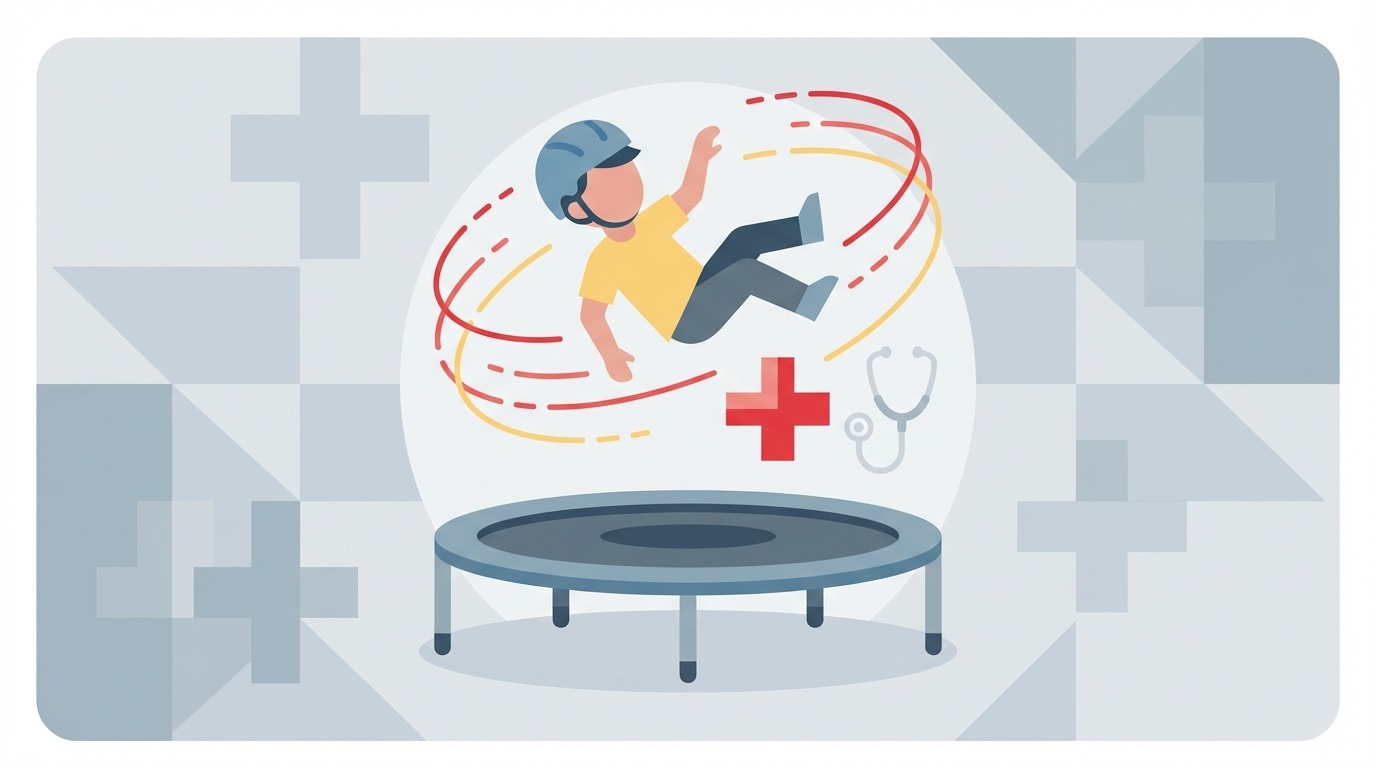
Dangerous Trampoline: Pediatricians warn: the trampoline is dangerous
| Short on time? Here’s the essentials ⏱️ |
|---|
| Pediatricians warn: the trampoline exposes children to serious injuries, especially without supervision 👀 |
| Only one child at a time, no flips, no access before 6 years old 🚫 |
| Netting, spring padding, flat ground, and solid anchors: safety starts with the equipment 🛡️ |
| Typical accidents: sprains, wrist/elbow fractures, head trauma, sometimes spinal injuries ⚠️ |
| Real prevention relies on clear rules + active adult presence ✅ |
| Scientific societies (AAP, AAOS) advise against domestic purchase in the United States 📚 |
Each year in France, nearly 200,000 trampolines are purchased, often driven by the image of a “sporty and joyful” game. However, pediatricians describe a less lighthearted reality: a worrying increase in accidents among children, sometimes involving serious injuries. Emergency departments report sprains, fractures, and head traumas, sometimes requiring surgical interventions. This issue is not trivial; it raises questions about the place of danger in family leisure activities.
In several countries, scientific societies raise warnings. The American Academy of Pediatrics and the American Academy of Orthopaedic Surgeons discourage domestic purchase. In France, emergency doctors recall painful scenes sometimes requiring morphine. Supervision is no longer negotiable: it becomes the first barrier to safety. The goal of the following dossier is not to induce guilt but to equip families with concrete prevention, operational rules, and playful alternatives.
Dangerous trampoline: why pediatricians warn and what the data says
The trampoline appeals because of the energy it releases and the conviviality it creates. Nevertheless, pediatricians emphasize that the activity combines propulsion, multiple impulses and unpredictable landings. This mix multiplies biomechanical risks for the growing child. The immature skeleton poorly absorbs rapid twists and unpredictable impacts.
In emergency departments, one reason recurs: poor landing after a bounce amplified by the presence of another child. The lighter one flies higher and falls with a speed their body cannot control. This mechanism causes ankle sprains, knee injuries, and upper limb fractures.
Injury mechanisms in children: understanding to better prevent
On an elastic fabric, stability is compromised. Each jump modifies the center of gravity, and the slightest involuntary rotation turns the body into a projectile. Thus, the wrist tries to absorb the fall and sometimes fails by hyperextension. The elbow would dislocate less often if the rules “no stunts, no pushes” were strictly respected.
The spine remains exposed when a flip is attempted without an appropriate mat or professional supervision. Head trauma also occurs during collisions of head against knee. Moreover, a worn or poorly installed net allows lateral ejection with impact on hard ground.
What scientific societies and emergency doctors say
In the United States, the AAP and AAOS advise against domestic use. Their message is clear: the family environment does not provide the necessary supervision to limit serious accidents. In France, pediatric emergency doctors share the same cautious stance. Some insist: it is better to forgo the purchase than face a preventable fracture.
An emergency doctor in Valenciennes popularized a radical advice in a pediatric outreach book: get rid of the trampoline rather than rely on luck. The statement sometimes shocks, but the intention aims at prevention of the most serious injuries.
This cluster of warnings does not condemn all motor play. It encourages prioritizing the danger and investing in close supervision when the equipment is already at home. The reader benefits from knowing precisely the scenarios of accidents to outsmart their logic.
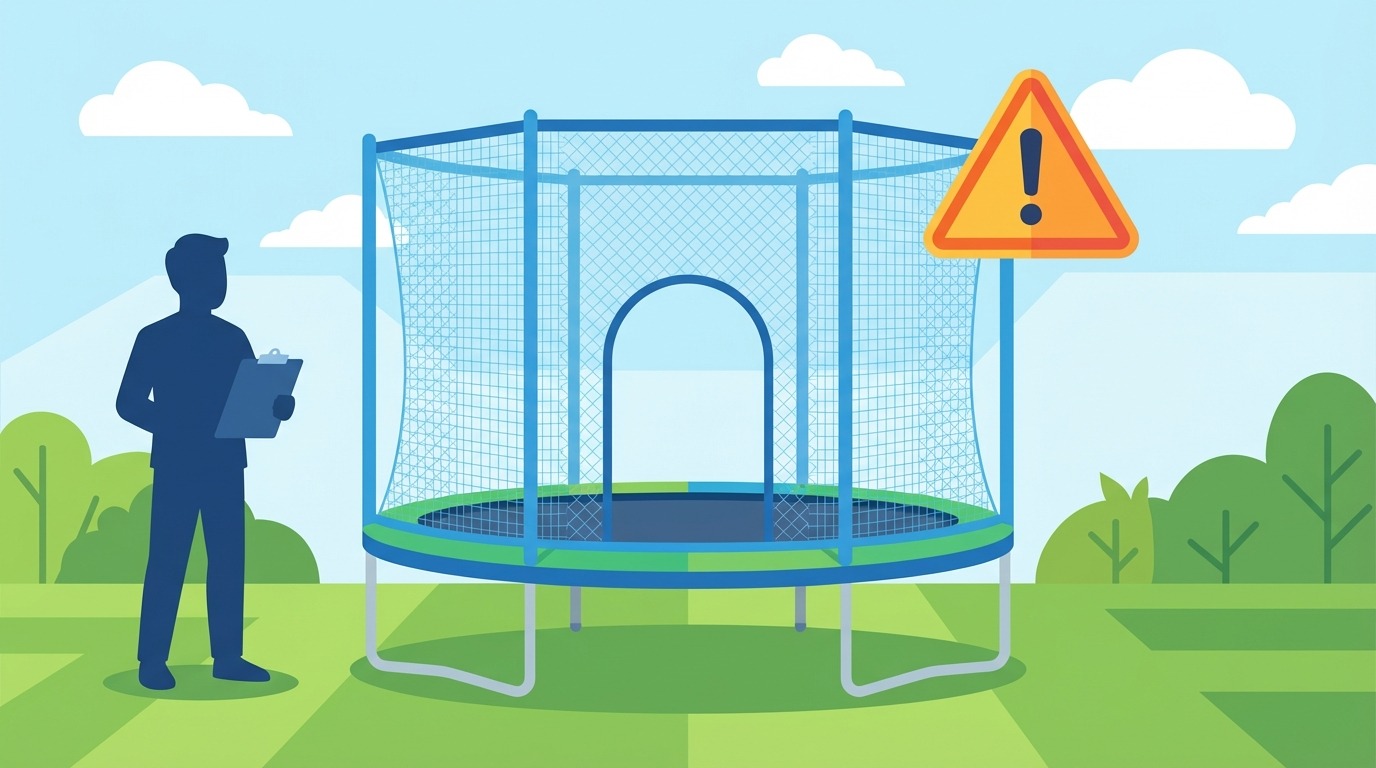
Injuries and accident scenarios on trampolines: from common to serious
The most frequent injuries involve the ankle, knee, and wrist. A misstep is enough when the fabric returns poorly anticipated energy. Then come elbow fractures during extended-arm landings, and head traumas during collisions between children jumping together.
More severe cases exist, especially after failed flips. The spinal column can suffer compression or fracture, notably in hyperflexion. Also, a subdural hematoma remains possible during a violent head impact. The functional prognosis is thus engaged.
Quick typology of observed injuries
- 🦶 Ankle/knee sprains after unstable landings
- ✋ Wrist or elbow fractures after a fall on the hand
- 🧠 Head trauma from collision or fall off the mat
- 🦴 Spinal injuries after flips or landing on the neck
- 💥 Rib bruises from impact against the frame or another child
The “Martin family” illustrates a classic sequence. A birthday gathers five cousins on the same mat. The eldest bounces hard, catapults the youngest who lands awkwardly and fractures a wrist. A second collision causes a head-to-knee impact and vomiting. The emergency assessment confirms the collective dimension of the risk.
From sprain to surgery: severity scale
A simple sprain is treated with ice and rest, but a severe sprain requires immobilization and rehabilitation. A displaced wrist fracture sometimes requires reduction under anesthesia. Sometimes, pins are necessary. In spinal cases, specialized care is immediately required.
Pain can be intense, so strong analgesics may be needed. This is why prevention takes precedence over reaction. It is better to prevent the accident than manage long immobilization for a school-aged and sporty child.
To complete this mapping of accidents, a brief video search allows observing basic instructions given by physiotherapists and trained coaches. These contents help visualize gestures to avoid.
After these concrete examples, a focus is necessary on safety at home. Operational rules radically change the situation, especially when displayed and repeated.
Prevention and safety at home: rules that save ankles and wrists
Families who keep a trampoline must establish a clear framework. First, only one child on the fabric. Then, no flips or acrobatic stunts. Finally, no access before 6 years old. These three pillars greatly reduce risks of collisions and dangerous landings.
Equipment matters as much as rules. A good condition safety net prevents falls off the mat. Thick protections cover springs, hooks, and frame. Installation on perfectly flat ground limits imbalances. Regular visual checks complement every session.
Practical and quick checklist
- 🛡️ Protection net intact and properly closed
- 🧽 Full padding of springs and frame
- 📏 Flat ground, solid anchors, clear area around
- 👤 One child at a time, no stunts, no pushing
- ⏱️ Limited playtime, break at first sign of fatigue or overexcitement
- 👀 Active and constant adult supervision
- 🧦 Non-slip socks, jewelry and glasses removed
- 🩺 Medical advice if musculoskeletal or neurological history
The family agreement works well: a sign, pictograms, and a charter signed by the children. Thus, everyone understands the rule and the reason. This ritual perpetuates caution and avoids endless negotiations at the edge of the mat.
A word about weather. Wet fabric is slippery and alters trajectories. In strong wind, the equipment can move despite anchoring. Activity stoppage is necessary in these conditions. Prevention remains a daily philosophy, not a punctual reminder.
With these safeguards, practice remains better controlled. The next point addresses purchase and installation, as safety starts with product choice.
Choosing and installing a trampoline while reducing danger: standards, assembly, and maintenance
The first reflex is to check compliance with European standards, notably EN 71-14 dedicated to trampolines. A frame made of thick galvanized steel provides rigidity. An inner net, fixed as close as possible to the fabric, limits the risk of impact against the frame.
Springs require a thick cover without gaps. The seams must withstand repeated twisting. Ideally, an entry closes with a zipper plus carabiner. This double system prevents unintended opening during sessions. The size must correspond to the available surface.
Smart installation and planned maintenance
A flat location, cleared of obstacles, makes all the difference. A gravel yard or concrete ground increases fall severity. Dense grass or shock-absorbing tiles provide a gain. An anchoring kit limits movement during strong wind.
A maintenance schedule simplifies technical supervision. Each month, check net, seams, foam, and fixtures. After winter, tighten screws, inspect corrosion and replace worn parts. In case of tear, immediate stoppage is mandatory.
The second-hand market is attractive, but caution is necessary. Non-original parts and worn nets turn the purchase into a hidden risk. Better to invest in certified parts. A readable manual and spare parts available online are positive signs.
In France, sales remain dynamic. However, attention to assembly directly conditions safety. A product correctly installed, well maintained, and used with strict rules offers a clear reduction of danger, without ever totally canceling it.
Safer alternatives and education on supervision: balancing fun and prevention
Families often look for energy expenditure. Fortunately, alternatives exist, with better control of risks. Gymnastics halls offer supervised workshops with mats and trained coaches. Indoor parks equipped with giant airbags reduce impact during stunt attempts.
Ninja courses at limited height, running, beginner pumptrack cycling or ball games on the floor deliver the same promise: move, laugh, and challenge oneself. At school, balance and proprioceptive strengthening sessions protect ankles and knees for a long time.
Building a safety culture that motivates children
Supervision becomes more effective if understood as a positive act. Setting clear rules, explaining the “why,” and valuing compliance give children an active role. Badges, cooperative challenges, and symbolic rewards strengthen adherence.
Non-guilt-inducing communication works better. Saying “here’s how you stay strong and agile” rather than “don’t do that” improves listening. Moreover, showing concrete examples anchors good reflexes. Siblings respond well to shared responsibilities.
Finally, the trampoline should never become a “child parking lot.” No device replaces an attentive, available adult ready to interrupt the session. This vigilance, far from spoiling the fun, secures the atmosphere and protects smiles.
“A happy child is a child in motion, guided by simple rules and vigilance that never wavers.”
{“@context”:”https://schema.org”,”@type”:”FAQPage”,”mainEntity”:[{“@type”:”Question”,”name”:”u00c0 partir de quel u00e2ge un enfant peut-il accu00e9der au trampoline ?”,”acceptedAnswer”:{“@type”:”Answer”,”text”:”Les pu00e9diatres recommandent du2019u00e9viter avant 6 ans. Le du00e9veloppement moteur, la coordination et la force musculaire restent immatures. Mu00eame apru00e8s 6 ans, les ru00e8gles un par un, pas de saltos, et une surveillance adulte active demeurent indispensables.”}},{“@type”:”Question”,”name”:”Les filets de su00e9curitu00e9 suffisent-ils u00e0 u00e9viter les accidents ?”,”acceptedAnswer”:{“@type”:”Answer”,”text”:”Non. Un filet ru00e9duit les chutes hors du tapis, mais nu2019empu00eache ni les collisions ni les mauvaises ru00e9ceptions. Il su2019ajoute aux autres mesures : rembourrages, sol plat, ru00e8gles strictes et pru00e9sence du2019un adulte.”}},{“@type”:”Question”,”name”:”Pourquoi les sociu00e9tu00e9s savantes du00e9conseillent-elles lu2019usage domestique ?”,”acceptedAnswer”:{“@type”:”Answer”,”text”:”Parce que les environnements familiaux cumulent facteurs de risque : plusieurs enfants en mu00eame temps, tentatives de figures, entretien irru00e9gulier. Les u00e9tudes recensent des blessures fru00e9quentes et parfois graves, du2019ou00f9 un message de prudence fort.”}},{“@type”:”Question”,”name”:”Quelles sont les trois ru00e8gles prioritaires u00e0 afficher pru00e8s du trampoline ?”,”acceptedAnswer”:{“@type”:”Answer”,”text”:”Un seul enfant u00e0 la fois, pas de salto ni du2019acrobaties, et accu00e8s interdit avant 6 ans. Ces piliers, associu00e9s u00e0 un filet et u00e0 un rembourrage en bon u00e9tat, diminuent nettement le risque du2019accident.”}}]}At what age can a child access the trampoline?
Pediatricians recommend avoiding before 6 years old. Motor development, coordination, and muscular strength remain immature. Even after 6 years old, the rules of one at a time, no flips, and active adult supervision remain indispensable.
Are safety nets enough to prevent accidents?
No. A net reduces falls off the mat, but does not prevent collisions or bad landings. It is added to other measures: padding, flat ground, strict rules, and adult presence.
Why do scientific societies discourage domestic use?
Because family environments combine risk factors: several children at the same time, stunt attempts, irregular maintenance. Studies record frequent and sometimes serious injuries, hence a strong message of caution.
What are the three priority rules to display near the trampoline?
One child at a time, no flips or acrobatics, and access forbidden before 6 years old. These pillars, combined with a net and padding in good condition, greatly reduce the risk of accident.