Eczema: All about eczema
Redness, itching that wakes you at night, skin that feels tight right after a shower: eczema, also called dermatitis, disrupts the daily life of babies, children, and adults. However, better understanding skin inflammation, its symptoms, and the key actions changes everything: discomfort diminishes, confidence returns. In 2026, the recommendations are clear: a combined strategy of skin care, regular hydration, avoiding triggering allergies, and appropriate treatment makes the difference. This guide illuminates the mechanisms, types of eczema, good habits to adopt, and mistakes to avoid. Concrete examples, drawn from family and school life, help move from theory to action without hesitation. Because if it itches, it’s not fate: every action counts and every improvement is earned, patiently.
The common thread: protect the skin barrier, limit the “itch-scratch” cycle, and prevent superinfections. In infants, eczema appears early, while adults often develop contact eczema linked to everyday products or materials. In between, school, sports, and weather challenge the skin: anticipation is required. This text provides a clear plan, reliable benchmarks, and practical resources, especially to identify an allergen or distinguish eczema from a fungal infection or scabies. The result: calmer nights, lighter days, and a routine that restores the skin’s role as a shield.
| Short on time? Here’s the essential ⏱️ |
|---|
| 💡 Eczema is a non-contagious inflammation, with itching and red patches. |
| 🧴 Top priority: daily hydration with an emollient, even outside flare-ups. |
| 🩹 During a flare-up: local treatment with dermocorticosteroids as advised by a doctor. |
| 🚫 For contact eczema: identify and avoid the allergen (gloves, suitable textiles). |
| ⚠️ Stop scratching: trim nails, cool the area, protect the skin at night. |
| 👶 Parents: follow tips for treating baby’s eczema and adjust skin care. |
Eczema: essential definitions, mechanisms, and symptoms to recognize
Understanding dermatitis and the skin barrier
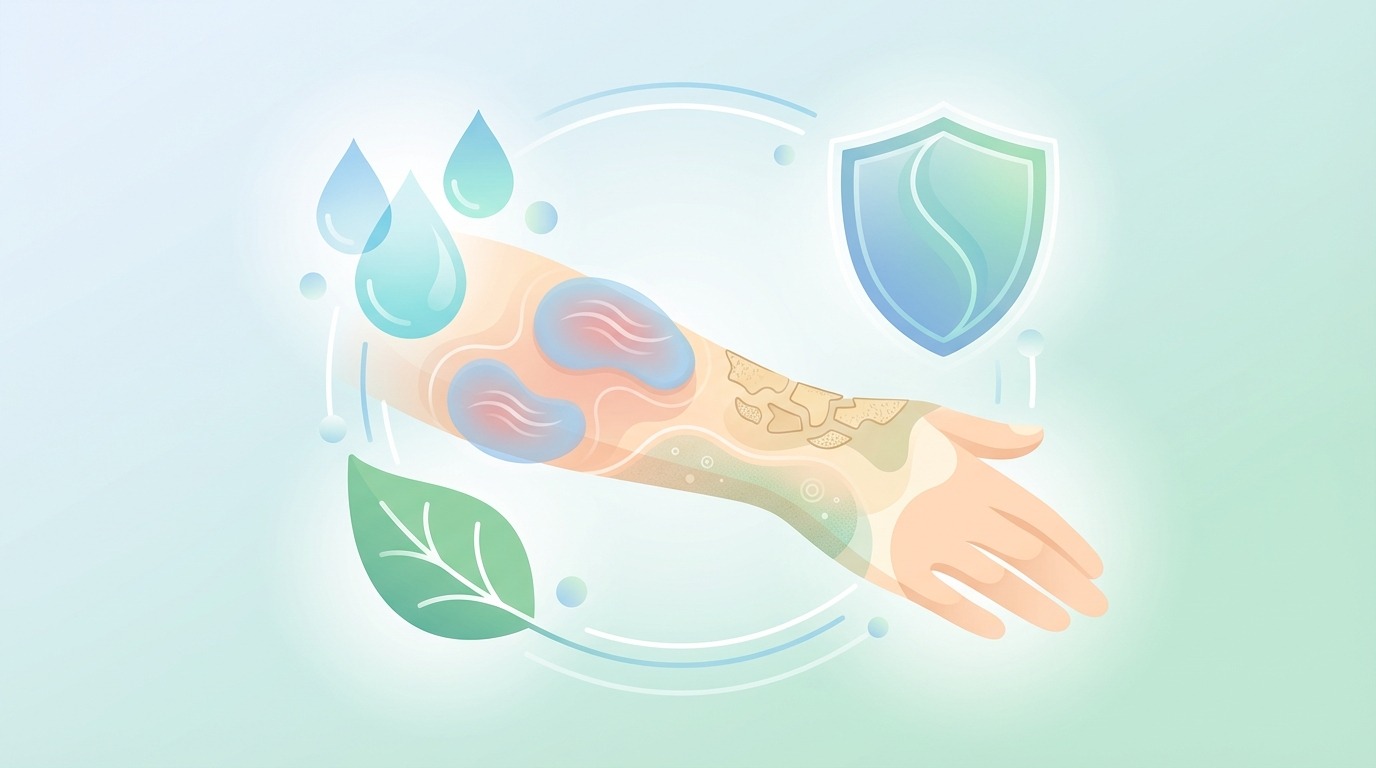
Eczema is a dermatitis: the skin inflames, becomes red, rough, and very dry. The skin barrier, supposed to retain water and block irritants, then allows allergens and microbes to pass. Thus, the inflammation self-perpetuates, and hydration becomes the number one ally. Without it, flare-ups multiply and discomfort sets in.
This imbalance is not contagious. Nevertheless, it requires a routine: clean without aggression, nourish without suffocating, treat without delay. When the barrier repairs, symptoms lessen and nights calm.
The unmistakable signs
During a flare-up, red patches poorly or well delimited are observed, blisters that ooze if scratched, then crusts. Itching (pruritus) remains the most uncomfortable marker. In some, pain is added, especially if the skin is cracked. Even outside flares, persistent dryness betrays a weakened barrier.
The “itch-scratch cycle” is formidable: the more you scratch, the more it itches. Nails create micro-wounds and favor superinfections, often caused by staphylococcus. Yellowish oozing, fever, or rapid worsening require consulting a doctor.
Differentiating eczema from other skin conditions
Not everything that itches is eczema. Athlete’s foot or scalp ringworm also itch, but the “crown” shape, smell, and location help distinguish them. Similarly, scabies, caused by a parasite, burrows small “tracks” and affects close contacts.
Moreover, psoriasis causes thicker, well-defined plaques covered with pearly scales. Finally, hives trigger fleeting, very mobile papules, often linked to food or drug allergies. Medical evaluation secures the diagnosis.
Real-life situations: alert and action
After swimming, a child complains of burning in the elbow folds. Chlorine irritated the dry skin; a lukewarm shower, a rich emollient, and an anti-inflammatory local treatment started early stop the flare-up. Another scene: patches under a new watch suggest nickel contact eczema. Removing the object speeds healing.
Last example: after flu, patches spread fast and ooze. A superinfection is suspected; medical advice is essential to adjust treatment and prevent complications. Vigilance pays off: acting early means gaining comfort.
In summary, quickly spotting symptoms and breaking the “itch-inflame” circle remains the guiding line that sustainably protects the skin.
Types of eczema: atopic, contact, and special cases
Atopic eczema: allergic background and early flare-ups
Atopic eczema often starts before age 2, sometimes as early as 3 months. A family history of allergies increases risk: if one parent is atopic, the child often is too. Flare-ups alternate with remissions. With consistent hydration routine and well-administered treatment, many children see crises space out then disappear during adolescence.
Location guides diagnosis: in infants, face and cheeks are affected, as well as limbs and behind ears. Between 1 and 2 years, folds (knees, elbows, wrists) become preferential. For more detail, a practical file on eczema in children helps adapt daily care.
Contact eczema: localized allergic reaction
In contact eczema, the skin reacts to a specific allergen. The wrist, navel, or earlobe often reveal nickel. The face or eyelids inflame after certain creams or make-up. Feet react to leather or rubber from shoes. Here, the inflammation is where contact occurred, guiding the investigation.
Identifying the culprit opens the door to healing: sometimes simply stopping contact is enough. However, allergens lurk everywhere; medical support and patch testing may be necessary.
Exposed professions and everyday situations
Certain jobs multiply contact with irritants and sensitizers: construction (cement, paint), healthcare (gloves, disinfectants), hairdressing (dyes), horticulture (pesticides). A protection protocol helps: appropriate gloves, barrier creams, gentle washing, and skin care with rehydrating products after each shift.
At home, perfumed detergents, fabric softeners, or strong cleaners sometimes trigger dermatitis. Unscented formulas are favored, and laundry is rinsed thoroughly. An exposure diary speeds allergen identification in case of relapse.
Borderline cases and possible confusion
Stress amplifies itching, without alone causing eczema. Meanwhile, virus-related eruptions, including Covid-19, can temporarily mimic a flare; they resemble more hives or chilblains. Hence the importance of a rigorous clinical diagnosis when the picture is confusing.
Finally, dyshidrosis (small blisters on hands and feet) belongs to special forms; it requires targeted care to limit maceration and soothe pain. Thoughtful management makes returning to activities more peaceful.
To move from theory to action, a video resource can complement these clinical references.
Eczema diagnosis: when to consult and how to avoid pitfalls
Good alert indicators
Consult without delay when patches spread quickly, ooze, become infected, or disrupt the child’s sleep. Likewise, a flare-up not responding to usual treatment within a week deserves medical advice. In febrile or very fussy infants, caution prevails.
A practitioner assesses evolution, environment, and impact on daily life. These elements guide the choice of action plan and the need for additional tests.
Rule out differential diagnoses
The clinician first seeks to exclude a fungal infection (active border, scales, typical location) or scabies (tracks, nocturnal itching, cases in close contacts). Then, eczema is distinguished from psoriasis by the thickness and adherence of scales. This clarification avoids therapeutic dead ends.
Sometimes isolated eyelid lesions require analysis of used cosmetic products. A simple exposure pause can serve as a pragmatic test before deeper investigations.
Patch tests, photos, and severity scale
In contact eczema, patch tests identify responsible allergies. The patient leaves with a concrete avoidance list: change material for a watch, swap a cream, adapt gloves. Meanwhile, standardized photos help objectively track improvement.
A clinical scale guides the intensity of treatment. The drier, cracked, and more extensive the skin, the more diligent the use of emollients and topical anti-inflammatories must be. This precise management limits relapses.
Avoid mistakes that prolong the crisis
Two traps persist: water too hot and harsh washing. They strip protective lipids and worsen inflammation. Another frequent error: stopping dermocorticosteroids too early, while erythema remains active. A gradual weaning, medically approved, reduces this risk.
Finally, unjustified mistrust of corticosteroids deprives a safe and effective tool when properly prescribed. The goal is not to avoid treatment but to use it correctly, then consolidate with daily hydration.
At the end of this stage, the course is set: a clear diagnosis opens the way to targeted and reassuring skin care for the whole family.
Treating eczema: effective routines, medications, and daily gestures
The winning duo: dermocorticosteroids + generous hydration
During flare-ups, dermocorticosteroids quickly soothe inflammation and itching. They are applied in a thin layer, usually once or twice daily at first, then spaced out until patches disappear. No need to massage extensively; regular application suffices.
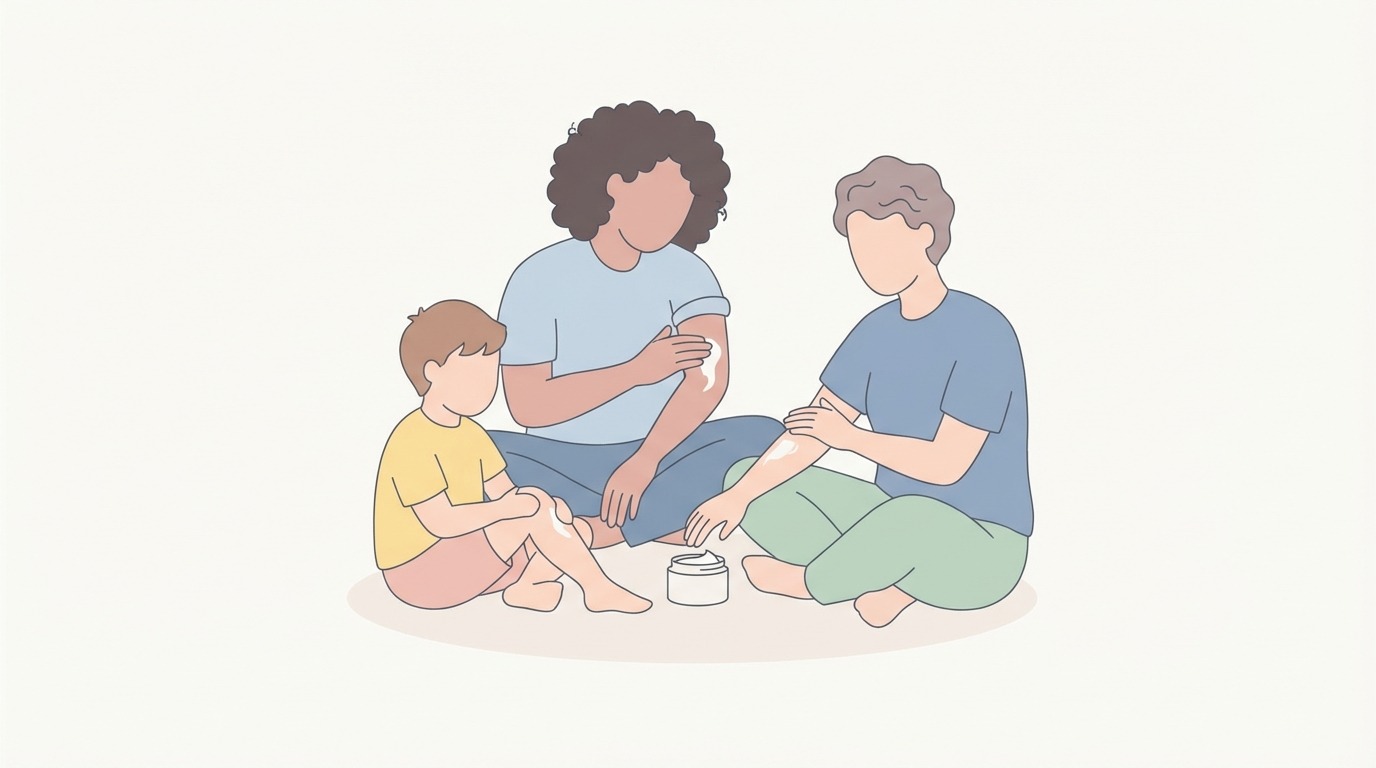
Outside flare-ups, hydration restores the skin barrier. An emollient chosen for climate, season, and affected area prevents relapses. Keeping stock within reach in the bathroom and school bag facilitates adherence.
Avoid the allergen and protect the skin daily
In contact eczema, avoidance remains central. Replace the nickel buckle or watch, favor cotton in direct contact, choose tolerated shoes. At work, appropriate gloves and barrier creams limit risk.
At home, simplify: lukewarm water, soap-free cleansers, short showers. After bathing, gently pat the skin dry before applying the emollient. These modest adjustments change daily experience.
Practical checklist to post near the mirror
- 💧 One lukewarm shower, 5–10 minutes.
- 🧼 Soap-free cleanser on necessary areas, no bubble baths.
- 🧴 Emollient within 3 minutes after shower, daily.
- 🩹 Dermocorticosteroid during flare, as prescribed.
- 🧦 Cotton on the skin, avoid wool and synthetics in contact.
- ✂️ Short nails, night gloves for children if needed.
- 🌬️ Air out the home, limit smoke and dust.
- 🌞 Adapt outdoor: hat, clothing, and advice to protect children from the sun.
Case studies and useful resources
For toddlers, tips for treating baby eczema show how to harmonize bathing, skin care, and dressing. At school, a simple plan informs the team: allow emollient, avoid irritating paints, provide a quiet corner in case of crisis.
If a superinfection occurs (pain, oozing, fever), the doctor may add antibiotics. This measure targets justified cases and fits into a global strategy. A video can also clarify the right gestures to adopt at home.
Living with eczema in 2026: prevention, environment, and family autonomy
Prevention over cure: micro-habits that pay off
Consistency always wins. A timer after the shower reminds of emollient use. A “backup” set follows the child in their backpack. A renewal schedule avoids stockouts. These details build lasting skin stability.
At home, declutter the bathroom of perfumed products, and use a simple detergent. During outdoor activities, remember the fragile skin: textile protection, rinsing after swimming, and hydration immediately upon leaving the locker room.
Children and teens: guided autonomy, step by step
Train children to recognize alerts—tingling, tightness, redness—to encourage a prompt response. A “before/after sport” pictogram near the bag reminds key steps. Meanwhile, explaining the difference between acne, eczema, and irritations limits confusion and wrong product choices. For further help, a guide on causes of pimples in children aids in avoiding treating everything the same way.
In adolescence, new exposures arise (cosmetics, jewelry). Observing reactions and noting tolerated brands consolidates autonomy without multiplying painful experiments.
Environment, seasons, and activities
Cold dries the skin, heat increases sweat and irritates. Adjust emollient texture accordingly: richer in winter, lighter in summer. After park play or spring family activities, the rinsing and hydration ritual is resumed immediately.
On trips, a minimalist kit accompanies: gentle cleanser, emollient, dermocorticosteroid, soft clothes, and a list of known triggers. Anticipating means offering yourself more freedom.
Stress management and restorative sleep
Pruritus prevents sleep, and fatigue increases itching: this cycle must be broken. Regular bedtime, suitable room temperature, and a cream within reach soothe. Brief breathing techniques, before turning off the light, reduce the perception of itching.
At school and work, explaining the condition reduces misunderstandings. Clear information changes others’ views: no, eczema is not contagious; yes, simple accommodations help a lot.
Ultimately, the golden rule is summed up in one sentence: establish flexible routines that protect the skin without confining life.
Useful benchmarks for the family
To complete the toolbox, a focus dedicated to fragile and irritable skin in children is available: consult these practical tips on childhood eczema and adapt skin care daily.
And because good skin spotting reassures, keep in mind that some small white bumps on infants (milia) are benign, unrelated to dermatitis. Knowing how to distinguish soothes the whole family and avoids unnecessary treatments.
Can eczema disappear with age?
Yes, atopic eczema often regresses in late childhood or adolescence, especially with regular hydration and well-managed treatments. However, dry skin sometimes persists; the maintenance routine remains essential.
Should diet change in case of eczema?
Not systematically. Food allergies more often trigger hives than contact eczema. Before any exclusion diet, seek medical advice, especially for breastfed infants or those on formula.
How to prevent superinfections caused by scratching?
Trim nails, protect the skin at night (cotton gloves), cool locally, and quickly treat inflammation. In case of oozing, fever or pain, consult a doctor: antibiotics may be needed.
Shower or bath: which to choose during a flare-up?
Prefer a lukewarm short shower with a soap-free cleanser. Pat dry, then apply the emollient within 3 minutes to lock in hydration.
Can you exercise with active eczema?
Yes, with adjustments. Wear soft textiles, rinse skin immediately after exercise, then apply emollient. Avoid perfumed products in locker rooms that may irritate.
“Taming eczema is transforming each care into a silent victory, and each day into a promise of comfort.” ✨