Myths Realities Lunch: Myths and realities about lunch (1-3 years).
At a time when a thousand opinions circulate about the first meal, it becomes crucial to distinguish breakfast myths and breakfast realities in 1-3 year olds. Between family habits, biological rhythms, and social influences, early morning sometimes resembles a puzzle. Recent studies nuance the idea of a “magic” meal: the morning offers an excellent opportunity to provide nutrients, but it neither erases sleep quality nor the balance of other meals. Thus, 1-3 year old nutrition is considered over the entire day, with flexibility and kindness.
On the ground, professionals observe curious and changing children. One day, big hunger; the next, bird’s appetite. Should we worry? No, if the children’s food portrait remains overall varied and regular. The main challenge is not to impose, but to offer. Spotting hunger signals, shaping calm children’s eating habits, and composing a balanced breakfast are simple levers. Here are practical benchmarks, concrete examples, and arguments that make a difference to build a healthy breakfast without pressure but with method.
| Short on time? Here’s the gist ⏱️ |
|---|
| Breakfast is not “the most important”; each meal counts 🍽️ |
| Waiting for the real hunger of the toddler avoids the morning battle ⏳ |
| An intake of protein calms hunger longer 🥚 |
| Sleep + routine = better mood than forcing to eat 😴🙂 |
| Aim for variety: fruit, whole grains, dairy, good fats 🥛🍎🌾 |
| Prefer natural fibers; caution with added fibers 🌿 |
| Adapt to rushed mornings: portable snacks, quick recipes 🚗 |
| Build positive children’s eating habits without pressure 💬✨ |
Breakfast myths vs breakfast realities: what science and practice show for 1-3 year olds
The belief “breakfast is the most important meal” often returns. In 1-3 year olds, the reality is more nuanced: the morning is an ideal opportunity to provide fruit, whole grains, dairy products, and good fats. However, the argument for a superior status remains fragile. Recent science favors an overall vision: each meal and snack contribute to nutritional needs and development.
Why does this myth persist? Historically, campaigns glorified the role of the first meal. Yet, current analyses consider key variables: sleep, supervision, food access. When these factors are solid, attention increases, regardless of the exact timing. This does not discredit the morning; it places breakfast in a global balance. Thus, “important” does not mean “more important.”
The example of Lina, 2 years old, illustrates this tension well. On daycare days, she drinks milk and nibbles a banana. On weekends, she eats better: whole grain bread, peanut butter, pear. Her growth follows her curve and her energy remains stable. What to conclude? The children’s food portrait is read over the week. Occasional fluctuations do not threaten the balance as long as variety returns often.
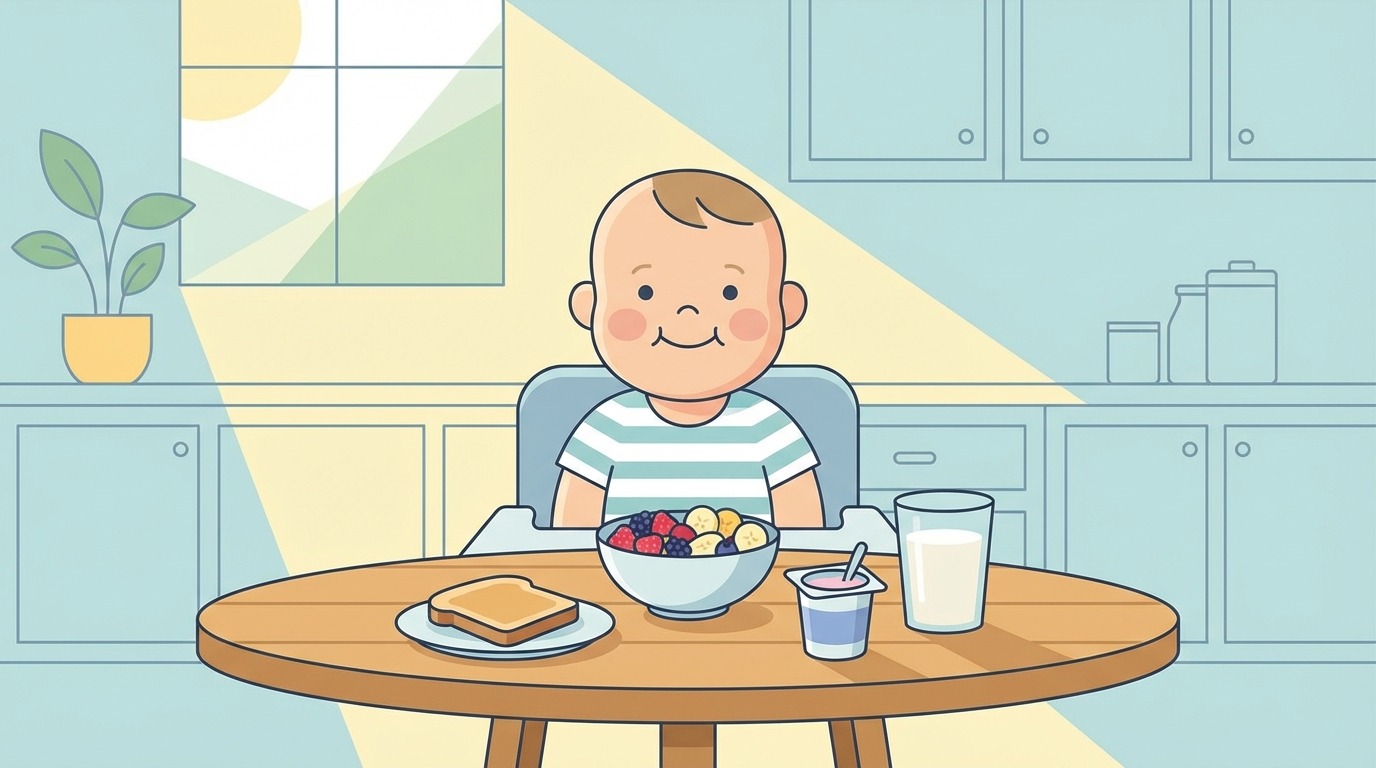
What does a nourishing first meal look like for a toddler? Simple options work very well: plain yogurt with oats and a fruit; a nut butter toast with unsweetened compote; scrambled egg, whole grain bread, clementine segments. This base offers complex carbohydrates, proteins, natural fibers, and micronutrients. Flavors remain mild, textures adapted.
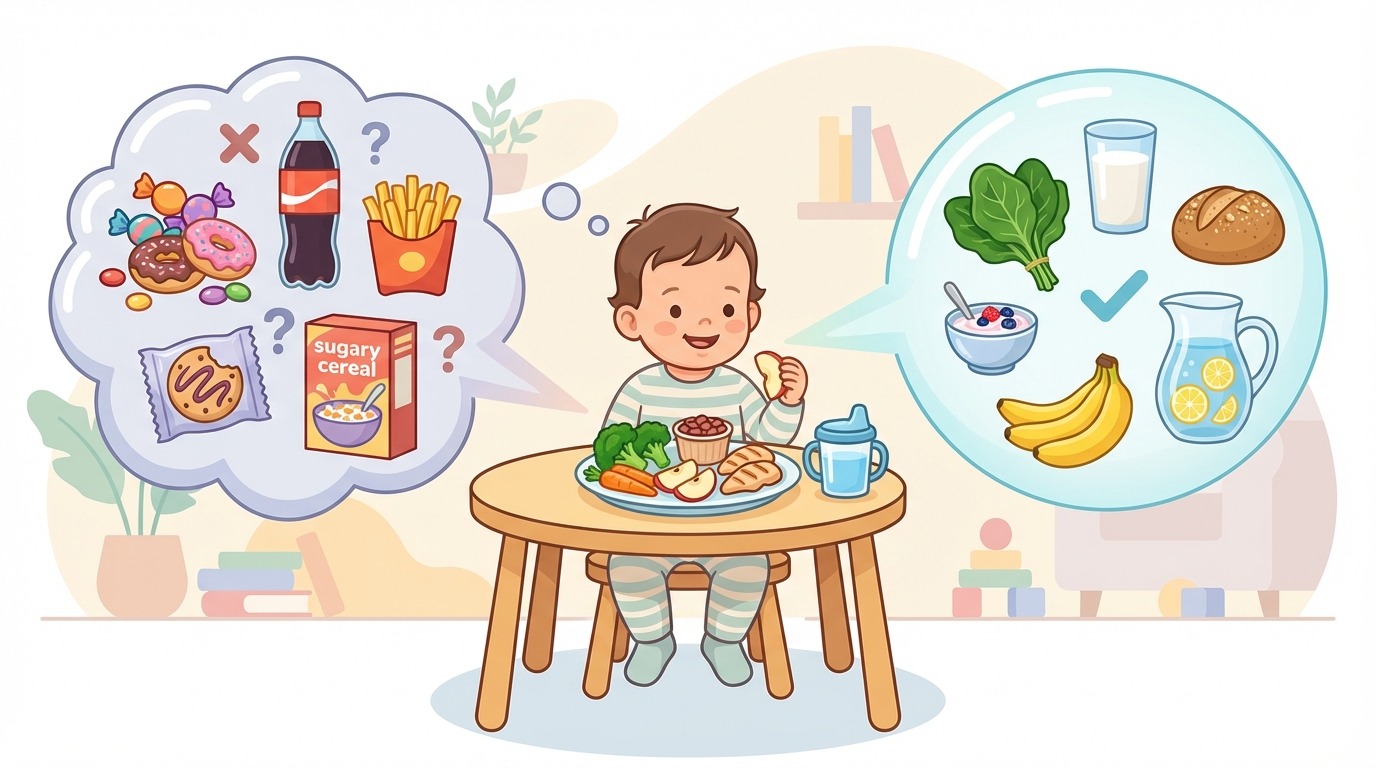
As for drinks, water keeps its place. Milk is included depending on age and local recommendations. Sugary drinks do not bring specific benefits in the morning. Furthermore, adding sugar to the bowl or bottle maintains a marked preference for sweetness. It is better to rely on the natural taste of foods.
Ultimately, the winning angle is clear: breakfast realities rhyme with quality, not hierarchy. Valuing diversity, respecting internal signals, and establishing a flexible routine form the winning trio.
Hunger, schedules, and morning routines: when and how to offer the first meal
Another myth claims that a child must eat immediately upon waking. Yet, the body has reserves. Waiting 20 to 60 minutes often allows hunger signals to appear. This approach develops internal listening, essential for regulating appetite. Forcing to eat blurs these benchmarks and creates resistance.
How to manage leaving for daycare when appetite is slow? Several options exist. Waking the child a bit earlier gives time to the body. Otherwise, offering a small portion helps: half a banana, a minimally sweet mini muffin, cheese, a handful of low-sugar cereal. Then, the mid-morning snack will take over without stress.
Busy families appreciate on-the-go solutions. A modest smoothie, toast cut into sticks, or cold omelette cubes can be eaten on the way. To reduce pressure, a ritual sometimes starts the day before: setting the table, pouring the flakes, washing the fruit. Mental load drops and the morning flows more smoothly.
When the context heats up, food becomes a power struggle. Yet, calm routines favor appetite. Concrete advice to manage difficult mornings then serve as a safety net: limited but real choices, playful timer, soft playlist, and ritualized departure. Thus, the relationship with breakfast remains positive.
And if the child still refuses? Stay calm. Repeat exposure without punishment. Name sensations: “You’re not hungry now, that’s OK. We’ll offer a snack later.” This consistency reassures. In the medium term, the child learns they can trust their body and the adult.
Last powerful lever: participation. Around 18-24 months, children love pouring, mixing, touching. Baby self-feeding inspires safe adaptations: ripe banana in segments, toast in strips, mini omelette cubes. Handling promotes curiosity and often, the desire to taste.
The key idea imposes itself: respect the rhythm, ritualize without rigidity, and co-construct the morning with the child, this is opening wide the door to a calm appetite.
Mood, energy, and attention: what breakfast changes… and what it does not
Many think that a child without breakfast will be grumpy and unfocused. Sometimes, this is true. But the cause lies elsewhere: lack of sleep weighs heavier than the plate. An exhausted toddler regulates emotions and appetite less well. Hence the importance of stable sleep hygiene, evening rituals, and screens off before bedtime.
Studies linking breakfast and performance sometimes forget the family context: supervision, regularity, homework support in older children. In 1-3 year olds, the issue is not the grade but the ability to explore, play, and interact. A peaceful morning, with a healthy breakfast at the key, supports mood. However, constraint and ultimatums undermine it.
To enhance mental availability without dramatizing the plate, other routines help. Reading a short story during or after the meal calms and connects. To go further, discovering the benefits of shared reading opens simple paths, even for five minutes.
Children from disadvantaged backgrounds benefit from school breakfast programs, especially by effect of regularity and access. This reminds a reality: the social context modulates the meal impact. At home, aiming for warm consistency matters as much as the menu.
In practice, observing the child remains the best barometer. If they laugh, play, and self-regulate, the trajectory is good. If they doze, look first at sleep, then the snack. Avoid quick interpretations secures everyone.
The bottom line is summed up in one sentence: care for sleep and atmosphere, then offer a simple meal, that’s what truly boosts morning energy.
Protein, fiber, and portions: building a healthy and filling breakfast without over-promising
The myth of “mandatory proteins” calls for a measured response. No, it’s not essential every morning. Yes, it’s very useful to limit early hunger. In 1-3 year olds, a small protein source is enough: egg, plain yogurt, cheese, milk, nut butter, or silken tofu. The idea is to combine complex carbs and protein, for gentle satiety.
Regarding fibers, aim for natural first. Fruit, oats, whole grain bread, ground seeds if adapted. Caution with products enriched with added fibers: some can cause bloating in little tummies. Tolerance varies; listening to the body prevails.
The portion? Small hand, small hunger. Volume evolves daily. Rather than filling up, offer small amounts and serve again if needed. Avoid pressure to finish. Pleasure guides appetite better than constraint.
- 🍞 Whole grain toast + peanut butter + pear segments = lasting energy
- 🥣 Oatmeal with milk + cinnamon + unsweetened compote = gentle satiety
- 🥚 Scrambled egg + bread sticks + diced tomatoes = simple protein
- 🧀 Cottage cheese + peach cubes + soft flakes = adapted textures
- 🥛 Plain yogurt + banana slices + ground seeds = natural fiber
And sugar? No need to add any. Fruits satisfy the craving for sweetness. Reading labels avoids the traps of highly sweetened products for children. Building a taste less focused on sugar is played early, without banning but by guiding.
Organizational tip: cook in batches on weekends. Portions of pre-cooked oatmeal, hard-boiled eggs, soft cornbread, and washed fruit bags win every morning. These reserves reduce improvisation and soothe the table.
In short, combining moderate protein, natural fibers, and adapted portions outlines a comfortable morning for belly and mind.
Parent advice and quick ideas: a balanced breakfast that adapts to each family
Families have different constraints. The challenge is not perfection but adjustment. Three levers hit the mark: prepare in advance, standardize 2-3 formulas, and plan a portable plan B. This strategy prevents blockages and keeps the focus on balance.
“Batch” recipes help a lot. Omelette-muffins freeze and reheat in one minute. Homemade cornbread goes with yogurt and fruit. These filling formats seduce small hands, without long table times.
When the child likes to do alone, offer foods easy to grasp speeds up. Toast sticks, soft fruits, and cheese cubes nurture food autonomy. The adult remains safety guardian, but lets the child explore their rhythm. This cooperation nurtures confidence and facilitates the next meal.
The context also matters. Set up a clear breakfast corner, stable dishes, and an apron the child chooses give benchmarks. Mornings are sometimes won the evening before: choosing the bowl, washing the fruit, putting away the favorite spoon. This micro-participation creates positive anticipation.
Finally, accepting appetite cycles reduces pressure. A week of big hunger can follow a lighter period. The parent’s role remains constant: offer, pace, secure. The child decides the quantity respecting internal signals.
A compass emerges: simplify, anticipate, and stay flexible. It’s this trio that transforms a chaotic morning into a nourishing and lively moment.
“Less pressure, more benchmarks: this is how the first meal truly nourishes the day.” 💫
My 2-year-old child often refuses to eat in the morning; should I be worried?
If they grow well and remain active, no. Wait for hunger signals, offer small amounts, and plan an early snack. Avoid pressure; appetite regulates better in a calm environment.
Should protein always be included at breakfast?
Not necessarily, but a small source (yogurt, egg, milk, nut butter) prolongs satiety. The goal remains balance over the day, not perfection at each meal.
What to give when leaving very early for daycare?
Opt for portable: half a banana, minimally sweet mini muffin, cheese, toast sticks, or a light smoothie. The mid-morning snack will complement without stress.
How to limit sugar at breakfast without frustrating my child?
Offer fruit, plain yogurt, and low-sugar cereals. Avoid adding sugar; vary textures and mild spices (cinnamon, vanilla) for pleasure without excessive sweetness.
My child is grumpy without breakfast; what should I check first?
Sleep. A regular bedtime and sufficient nights improve mood and appetite. Then, focus on a simple breakfast without forcing to finish.