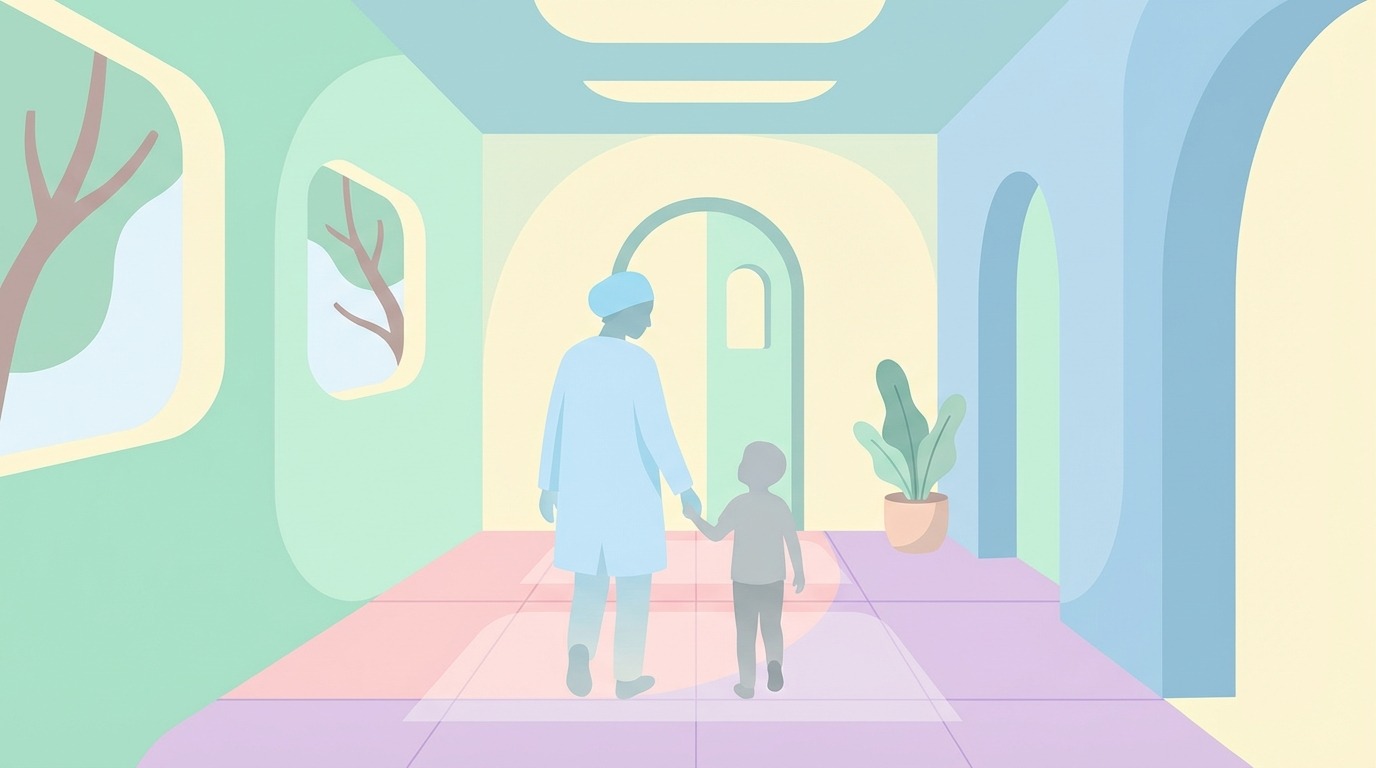
Grey Child: Chronicle: the grey child.
Driven by a keen sensitivity and a professional attention to the world of childhood, this chronicle takes a close look at Enfant Gris : Chronique : l’enfant gris by linking Baptiste Beaulieu’s novel to very concrete issues: psychology, emotions, development, and caregiving practices. The story features Jo’, a pediatric intern, No’, a little boy whose skin has turned gray due to a blood disease, and Maria, a distant mother who is first believed absent before being revealed as complex. Through the “tear,” a pivotal event where reality shifts, the figure of the gray child becomes a metaphor for identity wavering between presence and absence, between individuality and conformity imposed by the hospital and society.
This reading combines a literary analysis with a field perspective on early childhood. It highlights the role of play, humor, clowns, but also the protective lie and the taboos surrounding illness. It suggests simple avenues to transform a moving novel into a practical compass: tame the unknown, welcome fear, give words to children without betraying their imagination. In this perspective, expression becomes a form of care, and the chronicle a way to inhabit fragility. Because this is the challenge: to hold together the art of storytelling and the rigor of everyday life, so that each child, gray or vibrant, finds a place that resembles them.
| Short on time? Here’s the essentials ⭐ |
|---|
| 🧒 The gray child embodies the boundary between presence and absence; he questions identity in a caregiving context. |
| 💬 The expression of emotions protects psychical development in the face of illness and grief. |
| 🎭 Play, humor, and hospital clowns re-enchant reality without denying it. |
| 🧭 A literary chronicle can guide concrete actions: prepare, explain, reassure. |
| 🤝 The family–caregiver alliance reduces the pressure of conformity and supports the individuality of the child. |
Enfant Gris : Chronicle of the gray child – plot, characters, and human significance
Baptiste Beaulieu’s novel, published by Mazarine in 2016 (416 pages), brings together an unforgettable trio: Jo’ the intern, No’ the child with skin grayed by a hematologic disease, and Maria the withdrawn mother. The hospital frames the encounter, but tenderness and unrest draw its map. From the first pages, an event called “tear” fractally splits reality. Behind this term, a tipping point: the child’s ghost now follows the caregiver. The chronicle then transforms into a quest, almost a rational tale, where the invisible has the consistency of a memory touched by hand.
Why does this story strike so true? Because it reveals the intimate mechanics of childhood confronted with the incomprehensible. No’ plays, laughs, guesses, and above all watches. He understands in bursts what adults keep silent. Jo’ responds with humor, sometimes with gentle lies, hoping to preserve a spark of courage. These detours might be judged. Yet, the text reminds that lying happens only with our collective consent. This idea unsettles and questions: when the adult protects, what exactly does he protect, the child or himself?
Maria, for her part, escapes obvious interpretations. A rare presence, brusque gestures, repeated departures: she shocks. Then Jo’s investigation loosens the knot. The loving mother can be hindered, the failing mother can be hurt, and the two are often confused. The characters’ psychology then opens, delicate and nuanced. As Jo’ advances, each one’s identity reassembles. Individuality asserts itself beyond the cliché of the “good parent” or the “perfect caregiver.”
The “room 33” becomes a symbol. One senses it is the place where children do not return. The novel accepts this astonishment but refuses despair’s grimace. It prefers the poetic thread, the small light of ordinary days, the shared pranks. It says that the expression of emotions keeps warm. It dares to make laughter emerge from tragedy, without diminishing time’s seriousness.
Within this framework, the gray child is not a gimmick. He is the mirror of adults. In his contact, Jo’ discovers himself less invulnerable, truer. The chronicle then becomes a rite of passage. It reminds us that a caregiver is not just a lab coat, and a sick child is not just a file. If reality wavers, it may be so that each can find a floor beneath their steps. That is why this story lasts beyond the last page: it refuses ease and revalorizes faithful presence, even if clumsy.
Final insight of this section: telling childhood under tension requires holding both discretion and precision; this novel succeeds, and that is its strength.
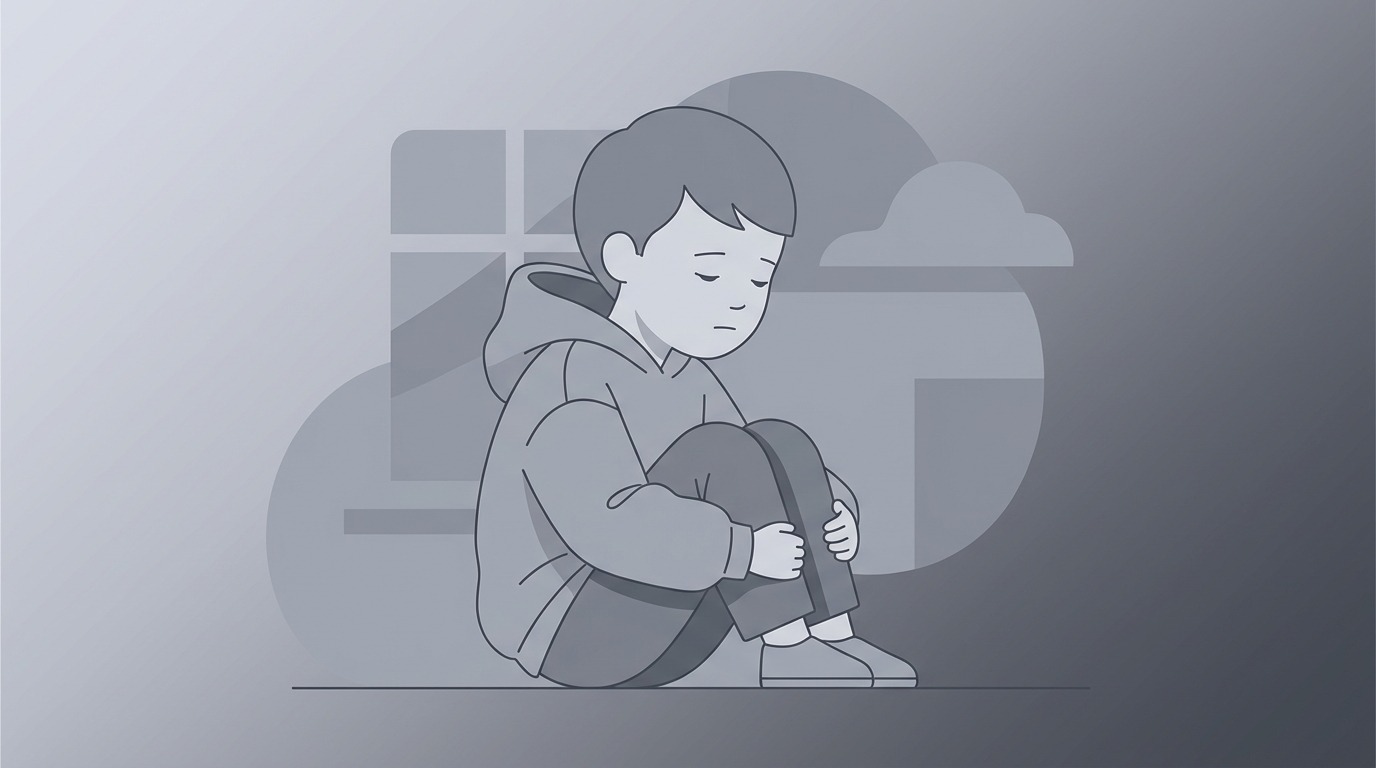
Enfant Gris and child psychology: emotions, identity, and individuality versus conformity
Watching No’ and Jo’ invites reconsidering how children face adversity. In a pediatric ward, rules are necessary, sometimes harsh. However, the conformity imposed by care must not crush individuality. The book illustrates this point: a child remains a child, even surrounded by IVs. He needs landmarks, play, rituals. He demands accurate words for his fears. And he knows when an adult skirts the truth without gentleness. Here, the expression of emotions becomes complementary treatment.
Clinically, emotional regulation is not innate. It is co-constructed. Simple techniques nourish this process: guided breathing, transitional objects, drawings that tame anxiety. When a caregiver or parent offers these regularly, the child integrates more stable internal landmarks. This point meets literature: Jo’ invents stories and reinscribes No’ into a livable world. He is given a framework to think about what is happening. And suddenly, identity holds better, not by heroism but by ordinary, repeated gestures.
For families, practical resources extend these findings. Managing emotional storms benefits from relying on concrete and reliable guides. For example, this article offers step-by-step pointers to soothe without stifling expression: learning to calm a child. Far from any injunction, these approaches support the development of affective autonomy. They value listening, labeling feelings, and benevolent co-regulation.
Moreover, not all children have the same baseline sensitivity. Highly reactive profiles, sometimes called hypersensitive, require an even more predictable environment. Sensory landmarks, light modulation, and routine stability protect these temperaments. For orientation in these nuances, accessible insight on early childhood can be helpful: the hypersensitive child between 1 and 3 years old. It reveals concrete levers to transform intensity into resource.
The novel also recalls an obvious fact: children read non-verbal cues. A fleeing gaze, a shaking hand, a laugh a little too loud, and the child understands something is wrong. Rather than playing a drama, it is better to adjust truth to their age. Name the illness without overwhelming with technical terms. Set a framework where questions are allowed. By doing so, individuality feels acknowledged. The conformity needed for care then feels like a structure that contains, not a constraint that breaks.
Identity in construction: when the chronicle opens a space for expression
The very form of the chronicle acts as a laboratory. It welcomes doubt, reveals ambivalence. In this literary space, infant identity, shaken by the hospital, regains anchorage: shared humor, clowns, caregivers’ stubborn tenderness. No’s ghost is not a narrative flourish; it embodies the surviving part seeking a witness. The child asks, “Do you still see me?” Answering yes, delicately, is helping him hold on.
Ultimately, the gray child confronts us with our own way of being there for the little ones. The quality of adult presence regulates fear. When the adult adjusts, the child gains emotional mastery. When the adult imposes without explaining, the child freezes. The challenge is clear: make the relationship the first care.
To remember: recognize, validate, ritualize. Three simple verbs so that emotional expression becomes a lasting support and not a feared overflow.
Practical lessons from the chronicle: preparation, rituals, and expression to support development
Transposing a novel to daily life requires precise actions. A hospitalized child doesn’t only need medication. He needs an expression channel suited to his age. Before invasive care, step-by-step preparation changes the game. Besides, a French-language guide gathers useful advice to anticipate fears and establish security routines: preparing a child for surgery. It contains the key idea of this chronicle: predictability protects trust, and trust reduces perceived pain.
Between appointments, ordinary life must be nourished. Rainy days drain energy quickly. Simple and pleasant activities restore rhythm and consolidate the child’s identity beyond patient status. This selection may inspire moments of concrete joy: activities for children on rainy days. A blanket fort, shadow theatre, a postcard workshop for the hospital room: so many little enclaves of freedom.
Emotions arrive in waves. A prepared adult knows how to surf rather than fight. Co-regulation passes through breathing, bodily anchoring, and calming scenarios. One can create a personalized “emotional toolbox”: mood stickers, hourglass, soap bubbles, resource image. This kit highlights individuality: everyone chooses what soothes them. Léon will like blowing bubbles; Aya will prefer modeling clay; Sam will ask for a hug and a book. Conformity disappears in favor of an ecology of care centered on the person.
- 🧰 Calming toolkit: hourglass + stress ball + soothing image.
- 🎭 Pre-care ritual: “candle” breath + choice of a “captain” comfort toy.
- 📚 Bridge story: mini-narrative that explains the medical gesture in simple words.
- 🎵 Soft playlist: three landmark songs to breathe together.
- 🗺️ Emotion map: we point “where it tightens” in the body and name it.
The novel also shows the gray zones of truth. Should everything be said? Right away? The ethical line lies in adjustment. Give honest information, calibrated to age and emotional state. Do not deny pain, but offer concrete outcomes. Saying “it will sting for ten seconds,” then timing out loud, soothes more than “it won’t hurt.” Again, expression becomes therapeutic because it restores predictability.
The role of hospital clowns, often mentioned, is no detail. They weave a play space where the child can be strong and fragile at once. Their presence recalls a discreet law: a child’s identity always overflows the diagnosis. We cling to it, recognize ourselves, and fear recedes. This practice connects to literature by its taste for discrepancy: laugh with, never at the child.
End point: prepare, ritualize, play. Three practical axes that support emotional development without masking reality.
Critical reading of the gray child: style, symbols, structure, and ethics of the narrative
Beaulieu writes as one watches over a child: without unnecessary emphasis, with acute attention to the right detail. The “tear” is not a trick. It is a dramaturgical pivot authorizing the cohabitation of two planes: the measurable and the sensitive. This hybrid structure produces a fertile effect: gravity advances without heaviness. The style, sometimes playful, never loses the moral compass. There are jokes, yes. But they serve the dignity of the characters. They mend the frayed seams of fear.
Symbolically, grayness does not mean absence of color. It designates an in-between: not quite light, not quite night. The gray child thus stands at the threshold. He forces adults out of binary answers. The motif of “room 33” functions like a memento mori. We know what it means, but dare not name it. The book names it through concentric circles: stories, gestures, looks. This detour is not an escape. It is a narrative technique for psychic preservation.
Ethically, the novel refuses two traps: caregiver heroization and mother moralization. Jo’ is not a saint. Maria is not a monster. The chronicle works to undo these caricatures. We hear the friction of reality. We also see how social expectations’ conformity crushes singularities. Yet literature here defends the individuality of concrete beings. This is what makes the book so alive in 2026 still: its tender lucidity about our shadow zones.
Technically, the narration follows a logic of affective investigation. Scattered clues, flashbacks, poetic sidesteps. This form embraces the wavering psychology of Jo’ and Maria. It takes time to explain without dissecting. It offers keys without closing all doors. The ending remains open to interpretation, a coherent choice: leaving the reader a space for expression to put their own colors on the gray.
The question of the protective lie remains. The text treats it as a risky tool, sometimes necessary, never trivial. Its power depends on use and follow-up. A lie without repair breaks trust. A transitional arrangement, later recentered, can cushion a shock. The tightrope is narrow; the novel shows it without cutting for all. The message is summed up in a maxim: preserve the child’s truth, not just the adult’s peace.
Reading key: a style serving people, symbols that illuminate without crushing, and a relational ethic preferring complexity over judgment.
Accompanying vulnerability daily: from hospital to home, a chronicle of ordinary care
When the door to the room closes, the story continues at home. Emotional follow-up does not stop with discharge. For this, families benefit from spotting simple markers: keep a question log, plan slow times, ritualize bedtime. Continuity of care also involves hygiene, prevention, and education about common childhood illnesses. Informing without alarming remains imperative. Clear resources on common conditions avoid diffuse fears and nurture parental autonomy, for example about hand-foot-mouth disease or scabies in children. Knowledge reassures; it restores agency.
The school-care link deserves equal attention. A child needs a place among peers. An Individualized Reception Project, when necessary, guarantees realistic adaptations. The classroom group must learn to welcome without stigmatizing. We then talk about pedagogy of differences: same rules, adjusted looks. Within this frame, individuality does not contradict the collective; it enriches it. The novel suggests this through its absolute respect for secondary characters, never reduced to their function.
The family, on its side, cultivates the art of presence. This does not mean unlimited availability, but quality attention. Ten truly full minutes are worth more than a drifting hour. Reading aloud, recounting the day in two voices, baking a Wednesday ritual cake: these are simple gestures weaving a sense of security. Grandparents, godparents, siblings further extend this support net. The chronicle shows how alliances save ordinary lives.
The caregiver network is not left behind. A readable report, a clear phone line, a follow-up email address: these organizational details ease underlying anxiety. In hospital, clowns remind that health is not just a number or a curve. At home, rituals take up the torch. We learn there that play is never wasted time. It is a language, primary and universal, through which identity asserts and fear recedes.
Finally, a word about adults. They bear, sometimes exhaust themselves. Asking for help is not defeat. A support group, a consultation, or a weekly walk far from screens free accumulated emotions. The novel recalls that an adjusted adult soothes a child. In other words, self-care is part of caring for others. This relational ecology, humble and robust, is the best prevention.
In short, home extends hospital when landmarks are preserved, bonds ritualized, and the burden shared. This is how gray shades and durable colors return.
Micro-tools to stay aligned without giving in to conformity
To keep the course, a self-check chart can help convert the chronicle into regular actions. The goal is not to add obligations but to secure the ordinary. Emojis here serve as a visual reminder.
| 🧭 Practical reminder for adults and caregivers |
|---|
| 🕒 Did I set aside 10 minutes of full presence today? Yes/No |
| 💬 Did I name at least one emotion with the child? Yes/No |
| 🎲 Did I propose a bonding game or ritual? Yes/No |
| 📞 Did I clarify a point with a health professional? Yes/No |
| 🌿 Did I take 15 minutes to recharge? Yes/No |
Final marker: benevolent consistency protects more surely than irregular performance.
What does the motif of the “gray child” mean in the chronicle?
It symbolizes the in-between of existence in the context of illness: neither completely present nor entirely absent. This motif sheds light on identity under construction, the fragility of landmarks, and the necessity of framed emotional expression to support psychic development.
How to talk about a treatment or surgery to a child without causing anxiety?
Be honest, concrete, and brief. Prepare with rituals (breath, comfort toy, story), describe the procedure with simple words, and offer time for questions. A detailed guide helps structure this approach: “preparing a child for surgery.”
Don’t laughter and clowns trivialize the seriousness?
No, if they respect the child’s rhythm. Play creates a safe bubble where fear can be expressed. It does not deny gravity; it makes it bearable. The goal is to offer emotional leeway, not to mask reality.
Should everything be told to a child about their illness?
The truth is adjusted to the age and moment. Avoid lasting false pretenses, but information can be dosed to preserve emotional safety. The essential: remain reliable, revisit unclear points, and validate feelings.
How to reconcile the child’s individuality and the conformity of care?
By explaining rules, allowing spaces of choice (play, rituals, calming tools), and keeping personal landmarks (comfort toy, music, drawings). The structure contains, individuality breathes: it is the right balance.
“In the grayness of difficult days, tenderness is not just another color: it is the light that reveals them all.”