Helpful Children: Toddlers Less Helpful in the Presence of Other Children
| Short on time? Here is the essential |
|---|
| 🧠 Toddlers help less in the presence of others because responsibility is diluted (bystander effect). |
| 🎯 Clear instructions and a “helper of the day” revive helpfulness in groups. |
| 🤝 Secure attachment supports social development and cooperation. |
| 👧🧒 Gathering siblings reduces stress and facilitates sharing and interaction. |
| 📈 Between 2018 and 2023, placements of children increased, hence a need for trained teams. |
| 🛠️ Simple rituals transform competition into visible daily cooperation. |
Less helpful when other children are present, quicker to help when they feel responsible: toddlers follow a subtle logic of context. A small German study documented this phenomenon from preschool, reminding that presence of others modifies the reflex to help. This “bystander effect” is not a moral flaw but a strong marker to guide education, social development, and group life.
In daycares, blended families or Children’s Villages, daily life confirms this finding. A precise instruction revives helpfulness, while ambiguity slows initiative. Children quickly learn if the adult expects an action from them, especially when roles are visible and recognized. Hence the value of rituals, clear signals, and spaces designed to favor interaction and cooperation.
At a time when professionals welcome entire siblings and an increasing number of toddlers, every gesture counts. Emotional security, quality of relationships, and clarity of rules transform occasional help into habit. The challenge is not to force altruism but to enlighten responsibility, secure the child, then orchestrate micro-situations where sharing and mutual aid become natural.
Helpful Children: understanding why toddlers are less helpful in the presence of other children
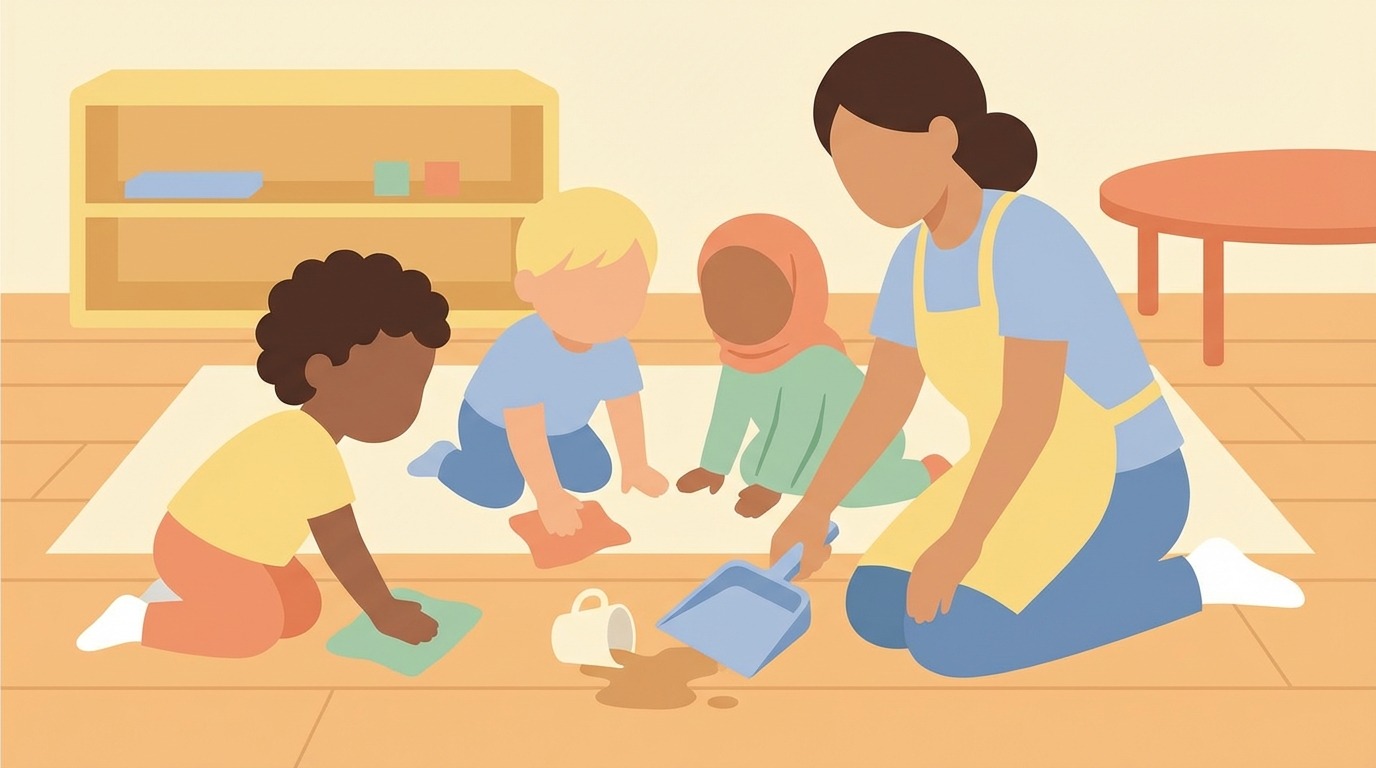
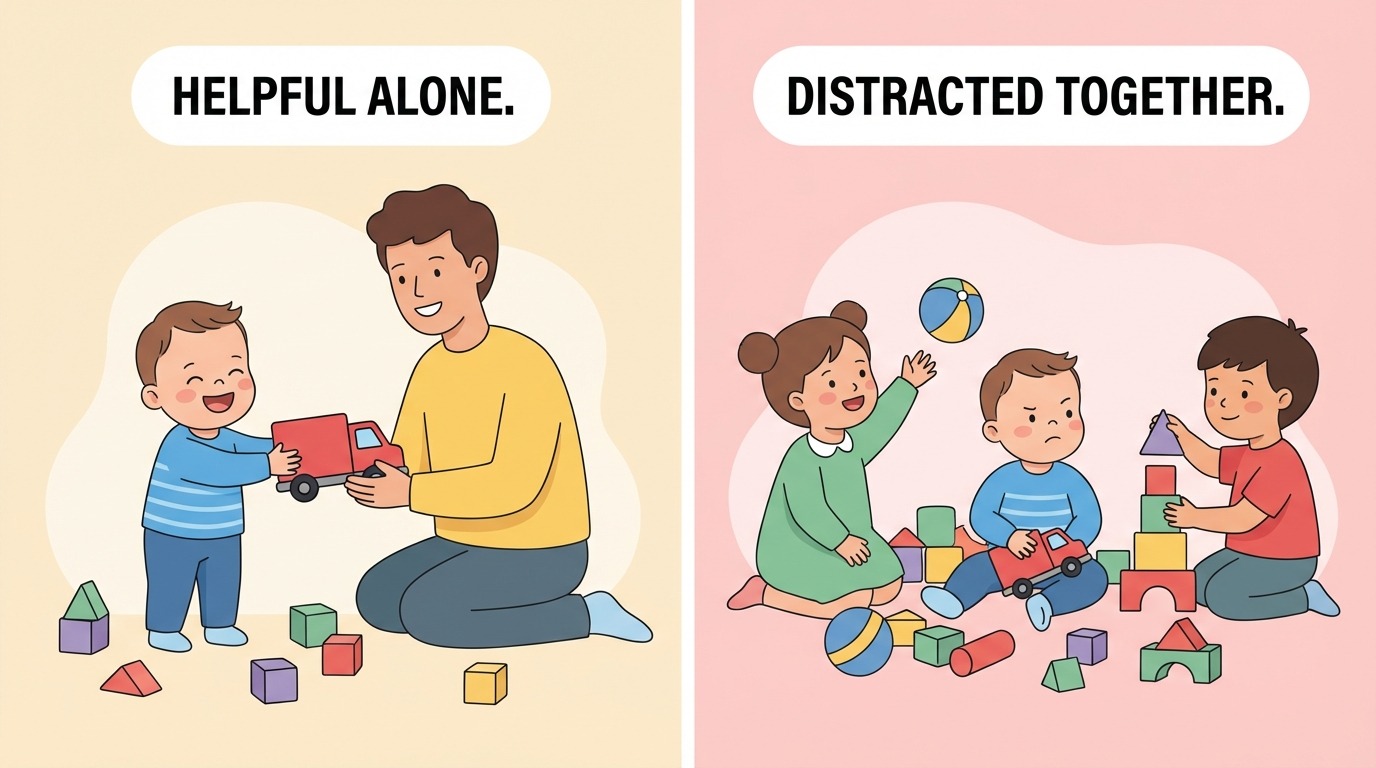
The coloring experience, often cited, sheds light on the core of the subject. When the adult spills water and the child is alone, help comes quickly. As soon as other children are in the room, the impulse decreases. The explanation lies in the “diffusion of responsibility.” Everyone waits for the other, or believes the other will act. The presence of others changes the immediate calculation.
Researchers asked the children after the scene. Many say they understood the need for help. Yet, few declare themselves responsible if others could help. Helpfulness thus remains sensitive to what the child perceives as their role. In a clear context, the prosocial impulse reappears. This is not a lack of empathy, it is a subtle management of social signals.
Social and cognitive mechanisms behind the bystander effect in toddlers
From 4 or 5 years old, the child distinguishes “what belongs to them” from “what belongs to the group.” They align with implicit norms. A nominative request lifts hesitation. A lingering gaze or a gesture pointing to a child acts as a green social light. The initial interaction thus structures the response.
Social neuroscience confirms the role of intention signals. Toddlers read emotions, then infer the next step. Their brain needs clear markers to move from feeling to action. Brief and positive instructions help. A phrase like “Lina, can you bring the sponge?” reduces ambiguity and activates cooperation.
Explicit responsibility and clarity of expectations
When an adult specifies who does what, helpfulness increases. The role of “helper of the day” works well because it makes responsibility visible. The child knows it’s “their turn.” This visibility protects group dynamics against competition or uncertainty.
Non-verbal language also counts. A smile, open posture, an outstretched hand create a welcoming gateway toward help. Through repetition, the child internalizes expectations and acts automatically. Today’s clarity generates tomorrow’s initiative. This is the subtle spring that transforms a group into a community of mutual aid.
Deep down, toddlers want to help. They mainly wait for the context to allow it. The framework produces the act.
Children’s social development: attachment, interaction, and cooperation daily
For a child to help, they must first feel secure. The early years establish these foundations. Stable attachment figures offer necessary markers. This base calms the emotional system and frees energy for interaction and cooperation. Without this, the child protects before helping.
Teams welcoming siblings observe this. When bonds are maintained, stress decreases. Older children reassure younger ones and model helping gestures. Helpfulness then circulates by positive contagion. The same children then dare to help peers outside the sibling group.
Secure attachment and early social roles
A toddler who receives predictable responses learns that the world responds. They try more easily. This inner security authorizes sharing and thoughtful giving. At home or in daycare, stable routines make expectations readable. The child better reads group codes.
Sensitive periods reinforce the effect. During the “first 1,000 days,” social experiences strongly mark development. A kind climate multiplies helping attempts. Spontaneous offers appear: holding a door, bringing a comfort toy, comforting a friend. This soil later nourishes prosocial behaviors in preschool.
Brain plasticity and prosocial learning
Toddlers’ brains remain remarkably plastic. They create circuits at the pace of lived experiences. The more explicit the opportunities for mutual aid, the more fluid helpfulness becomes. Brief encouragements count here more than long speeches. A “thank you, that was precious” often suffices.
Concrete cases illustrate this. A child arriving with motor delays quickly progresses in a stable home. Older siblings stimulate, the team supports, rituals set the pace. Daily cooperation becomes the school of life. The child gains social skills and confidence.
This dynamic prepares the next stage: managing help when the group grows. The challenge then shifts from bonding to coordination. The next section explores this orchestration.
Watching these scenes on video helps teams align. Professionals adjust their instructions and spot key signals. Families also find simple ideas to adapt at home. The shared view creates a common language.
Presence of others, competition, and sharing: turning tensions into cooperation
When several children gather, competing dynamics emerge. Each seeks attention, the rare object, the spot near the adult. Competition is not a problem per se. It signals a need. The adult’s role is to channel it towards cooperation.
The water-spilling scene shows this well. If the adult asks “Can someone help me?,” everyone hesitates. If the adult says “Malo, take the sponge; Zoé, hold the bowl,” the group activates. Responsibility becomes visible again, thus acceptable. This switch depends on role clarity.
From the family living room to daycare: micro-dynamics to watch
At home, the fastest often takes over. In daycare, the implicit rule “whoever sees, acts” creates frustration. Children then learn to bypass or give up. Without orchestration, interaction turns to avoidance. Helpfulness slowly fades.
Small adjustments transform the scene. A space for the helping tool, visible turns, a single instruction. The adult shows and validates. The atmosphere changes quickly. The child understands their place without imposing.
Concrete strategies to stimulate helpfulness in groups
- 🪄 “Helper of the day” posted on the wall: clear responsibility and calm pride ease competition.
- 🧩 Two simultaneous roles for the same task: one picks up, the other wipes, long live cooperation.
- ⏳ Visual timers or hourglasses: short turns calm the group and foster sharing.
- 👀 Visual clues (red sponge, help basket): the task “calls” the child, even without words.
- 🌟 Immediate social reinforcement (“Thank you, you saved the drawing”) rather than material reward.
- 📣 Nominative and positive instruction: “Lila, can you help Tom?” activates interaction.
- 📋 One-minute end-of-day review: everyone names a helping gesture observed 👍.
These levers don’t force the child. They make help likely. Routines create predictability. The child then embraces the action without inner conflict. The group reaps peace and the joy of acting together.
Cooperative games gently embed these rules. We laugh, try, and repeat. Progress becomes visible without pressure. Adults keep a light spirit while holding the framework.
Gathering siblings and securing teams: the real-world environment
In care setups, teams have seen more toddlers arriving in recent years. Between 2018 and 2023, the number of children entrusted to social services grew noticeably. The 0-6 age group weighs more, with a marked jump among 0-3 year-olds. Homes therefore must adapt finely.
Keeping brothers and sisters together remains a milestone. It reduces trauma and supports social development. Older children reassure, younger ones imitate, mutual aid settles. The family group becomes a resource again. This continuity provides strength for what follows.
Concrete organization for toddlers
Welcoming an infant disrupts the home. You need a bed, childcare equipment, first-age toys. Rules are rewritten to respect sleep and keep screens away. Teens adapt their language because toddlers’ ears pick up everything.
Nothing prevents adding a bed near an older sibling to secure the night. The older child’s rhythm remains protected, though. Each retains a full place. This balance preserves relationship quality, drivers of daily helping acts.
Supporting the professionals who support children
Taking care of a baby requires intense presence. Night awakenings are tiring. Pairs, shifts, and specialized profiles secure care. Continuing education equips gestures and postures.
Psychological support helps put words on experiences. Life stories sometimes disrupt. An analytical framework soothes and guides. Teams then retain the necessary accuracy to encourage helpfulness without forcing.
Spectacular progress reminds us of child plasticity. A mute child on arrival speaks after a few weeks of stable routines. Cooperation among peers speeds up motor skills and language. In a secure environment, helping gestures arise naturally.
This environment confirms a simple idea. The quality of the bond drives the quality of help. The framework enables the act. The adult plays the role of conductor.
Equipping toddlers’ helpfulness: rituals, instructions, and games that trigger help
Rituals structure space and time. They make responsibility visible. A “missions” board with photos speaks louder than a long speech. The child knows where to go and what to do. The gesture follows the trace.
Brief and positive instructions reassure. A phrase, a gesture, a look suffice. Tone matters as much as content. Kindness firmly paves the way. The child projects into action.
Shared responsibility and language of action
A pair of helpers per task avoids direct competition. We separate complementary roles. One brings, the other tidies. Sharing becomes concrete, thus acceptable. Interaction gains fluidity each turn.
The language of action favors verbs. “Bring,” “hold,” “wipe.” This vocabulary draws the path. Toddlers respond better than to abstract commands. The brain likes clarity.
Cooperative games and training
A two-person course with an object to carry trains cooperation. A clue hunt where each holds a piece of the puzzle values all profiles. Failures become trials. The joy of helping establishes by joyful repetition.
An express review closes the loop. Everyone names a helping gesture received or given. We celebrate without hierarchy. The message remains clear: here, helping is part of life. This culture of support irrigates the entire day afterwards.
In the end, well-designed micro-rituals suffice. Helpfulness becomes a habit more than a performance. The child finds a role, the group finds peace.
“Clarify the role, secure the bond, and little hands will do great things.”
{“@context”:”https://schema.org”,”@type”:”FAQPage”,”mainEntity”:[{“@type”:”Question”,”name”:”Pourquoi mon enfant aide-t-il moins quand du2019autres enfants sont pru00e9sents ?”,”acceptedAnswer”:{“@type”:”Answer”,”text”:”La responsabilitu00e9 se dilue en pru00e9sence du2019autrui. Cet u201ceffet du tu00e9moinu201d freine lu2019initiative si la consigne reste vague. Des ru00f4les nominatifs et des tu00e2ches visibles relancent lu2019u00e9lan prosocial.”}},{“@type”:”Question”,”name”:”Quelles consignes fonctionnent le mieux avec les tout-petits ?”,”acceptedAnswer”:{“@type”:”Answer”,”text”:”Des phrases courtes, positives et adressu00e9es u00e0 une personne pru00e9cise. Ajoutez un support visuel (photo ou objet repu00e8re) et un retour immu00e9diat et chaleureux.”}},{“@type”:”Question”,”name”:”Faut-il ru00e9compenser un enfant qui aide ?”,”acceptedAnswer”:{“@type”:”Answer”,”text”:”Privilu00e9giez la reconnaissance sociale (u201cmerciu201d, sourire, valorisation en groupe). Les ru00e9compenses matu00e9rielles du00e9placent la motivation et ru00e9duisent lu2019initiative u00e0 long terme.”}},{“@type”:”Question”,”name”:”Comment gu00e9rer la concurrence entre enfants pour aider ?”,”acceptedAnswer”:{“@type”:”Answer”,”text”:”Du00e9coupez la tu00e2che en deux ru00f4les complu00e9mentaires, organisez des tours tru00e8s courts et affichez lu2019ordre. La concurrence se transforme alors en coopu00e9ration structuru00e9e.”}},{“@type”:”Question”,”name”:”u00c0 quel u00e2ge peut-on instaurer des rituels de serviabilitu00e9 ?”,”acceptedAnswer”:{“@type”:”Answer”,”text”:”Du00e8s 2-3 ans, avec des gestes simples, des images et des consignes bru00e8ves. u00c0 4-5 ans, la compru00e9hension de la responsabilitu00e9 rend ces rituels particuliu00e8rement efficaces.”}}]}Why does my child help less when other children are present?
Responsibility is diluted in the presence of others. This “bystander effect” slows initiative if the instruction remains vague. Nominative roles and visible tasks revive prosocial impulse.
Which instructions work best with toddlers?
Short, positive phrases addressed to a specific person. Add a visual support (photo or cue object) and immediate, warm feedback.
Should a child who helps be rewarded?
Favor social recognition (“thank you,” smile, group appreciation). Material rewards displace motivation and reduce long-term initiative.
How to manage competition between children for helping?
Divide the task into two complementary roles, organize very short turns, and display the order. Competition then transforms into structured cooperation.
At what age can helpfulness rituals be introduced?
From 2-3 years, with simple gestures, images, and brief instructions. At 4-5 years, understanding responsibility makes these rituals particularly effective.