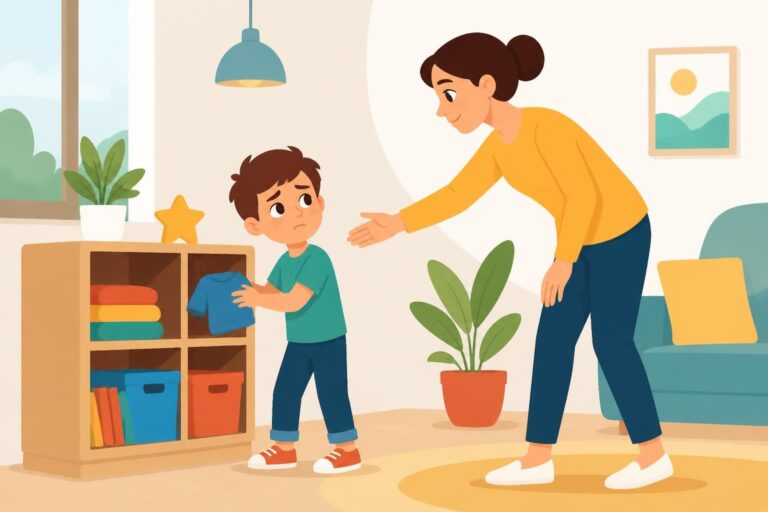
Tantrum Three Four Years: Managing crises in the 3-4 year-old child.
| Short on time? Here is the essential ⏱️ |
|---|
| At three and four years old, tantrums are linked to brain development and emerging independence 🧠 |
| Identify triggers: fatigue, hunger, transitions, overstimulation 🔍 |
| During the tantrum, focus on calm, safety, validating emotions 🫶 |
| Prevent with routines, limited choices, and a consistent framework 🧩 |
| After the storm, reinforce emotional education with playful tools 🎲 |
| Consult if tantrums are daily, very intense, or disrupt family life 🚨 |
| Parents model tantrum management: their calm guides the child ✨ |
Between two and four years old, the child becomes aware of their will, explores limits, and discovers the impact of their emotions. Tantrums can then explode, sometimes in seconds, like a wave that overwhelms everything. However, these behaviors reflect normal development and are not tantrums. They are a raw emotional language that parents can learn to understand and support. Thanks to clear landmarks and consistent education, the home regains its breath.
This period requires precise reflexes. First, recognize the warning signs. Then, respond with a stable stance. Finally, build routines that reduce the intensity of storms. Concrete examples, useful phrases, and playful tools form an effective toolbox. This guide offers a tantrum management approach that is both firm and caring, adapted to the reality of busy days.
Tantrum at three and four years: understanding the emotional engine to act better
The famous “three-year-old tantrum” sometimes continues up to four years. This pivotal moment is explained by a powerful trio: autonomy, strong emotions, and immaturity in regulation. The prefrontal cortex, which helps with self-control, matures slowly. The emotional brain, meanwhile, runs at full speed. Hence these disconcerting contrasts between laughter and storm.
When a child says “no” forcefully, they are not attacking their parents. They are asserting their identity. They are also testing the framework. Frustration arises quickly because language does not always follow thought. Thus, the tantrum becomes a discharge rather than a strategy. This gap requires a precise reading of needs hidden behind the behavior.
Imagine Aya, three years old, who collapses before going to the nanny. The night before, bedtime was late. A quick transition, a shoe difficult to put on, and the explosion happens. The trigger is not “the shoe”. It is fatigue plus hurry. At this age, the sum of micro-frustrations lights the fuse.
Moreover, Léon, four years old, refuses a new puree. Again, the issue is not “disobedience”. Sensory disgust can weigh in. To untangle these threads, a perspective on food disgust in children helps adjust expectations. We then move from an arm-wrestling match to a fine understanding of body signals.
Stress increases emotional storms. An overly busy daily life, loud noises, or poorly prepared separations increase reactivity. Spotting stress signs in young children allows acting upstream. Thus, the environment becomes a key lever in tantrum management.
Every family can rely on positive parenting principles. These landmarks establish a fair, nonviolent, and consistent framework. They value listening, clear rules, and positive reinforcement. This alliance strengthens the inner security of the child.
Quick landmarks to decode triggers
Some clues often recur in a child of three years or four years. Observing them already reduces the intensity of storms. Here is a list to keep in mind, especially during sensitive moments.
- 😴 Fatigue at the end of the day or after a shortened nap
- 🍽️ Hunger or thirst, especially if the snack was light
- ⏱️ Unprepared transitions (stopping a loved activity)
- 🎧 Overstimulation (noise, crowd, screens, series of novelties)
- 🧩 Frustration related to skills still under development
- ❤️ Need for attention when quality time lacks
Finally, an essential reminder reassures adults: these tantrums are stages. They mark a construction. With adapted tools, the home regains direction.
Prevent before it explodes: routines, choices, and calming environment
Prevention remains the most effective strategy. A stable framework reduces the scale of each tantrum. Flexible but clear routines secure the child. They signal what is coming, limit surprises, and decrease cognitive load.
First, ritualizing sensitive moments helps a lot. Getting up, departure, meals, return, and bedtime benefit from following a routine. Then, transitions are prepared with visual cues or timers. Finally, limited choices give power without diluting authority. This simple trio has a major effect on behavior.
Practical chart of risk situations and useful responses
| Trigger ⚡ | Prevention 🛡️ | Useful phrase 🗣️ |
|---|---|---|
| Tiring end of day | Rich snack + calm play | “You’re tired, let’s slow down together.” |
| Activity ➜ bath transition | Timer + visual announcement | “When the music stops, it’s bath time.” |
| Unexpected hunger | Accessible healthy snack | “Your belly is talking, let’s feed it.” |
| Overstimulation | Calm corner + soft light | “Let’s take a break in the calm.” |
Along the same lines, instructions benefit from being formulated positively. Saying what to do directs action. For example, “We walk inside” guides better than “Don’t run.” This detail deeply changes the scene.
For children sensitive to noise, simple adaptations soothe. Noise-cancelling headphones, a visual routine, or a refuge corner support self-regulation. Better understanding a hypersensitive child aged 1 to 3 years helps tailor supports.
Emotions are also worked on upstream. Playful supports, cards, or stories develop emotional vocabulary. The tools for managing emotions provide concrete ideas. Thus, emotional education becomes a daily and joyful training.
Ritualize without rigidifying
Routine should not stifle spontaneity. We keep doors open to play, laugh, and improvise. However, anchor points remain non-negotiable: sleep, safety, respect for others. This balance makes the atmosphere peaceful without losing momentum.
To illustrate, Lina’s family established a musical “start signal” to tidy up. The same song launches the transition. Result: fewer cries, more autonomy. Because the signal is clear, cooperation increases.
Additionally, the principles of positive parenting remind us of the importance of coherence between adults. When messages remain aligned, the child calms faster. The home gains clarity, and tantrum management becomes smoother.
What to do during the tantrum: simple gestures, safety, and soothing words
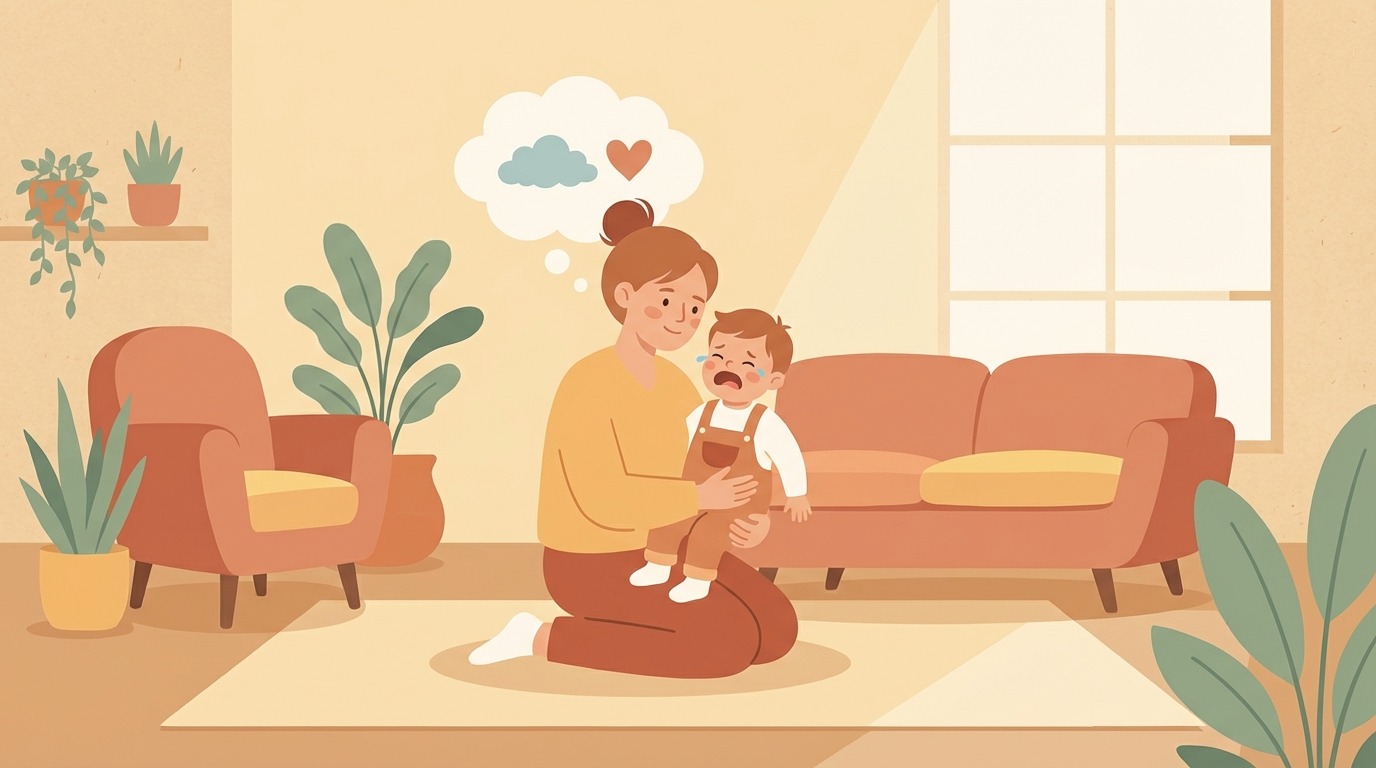
When anger erupts, the child loses their bearings. They can no longer hear reasoning. The first reflex is to secure the space. Dangerous objects are moved away. We protect without shouting. This calm presence becomes an anchor.
Then, we validate the emotion. Saying “I see this is very hard” does not endorse the behavior. It welcomes the feeling. This emotional mirror lowers tension and rekindles connection. The implicit message is powerful: “You are safe with me.”
The body needs help. Offering a butterfly breath, hand on the belly, shows a way. Or blowing hard on a feather. These short, repeated techniques enter body memory. They support long-term self-regulation.
Minute-by-minute protocol
First, calm and safety. Then, simple words and a soft voice. Next, just-right proximity depending on the child. Some ask for a hug, others prefer a gentle perimeter. Finally, wait for the descent before any explanatory exchange.
A concrete example helps. Sacha, four years old, screams because the park is closing. The adult gets down to their level, gently moves away the hitting arms, and says: “You are very angry. I keep everyone safe.” The child still screams, then calms down. Afterwards, a glass of water and a quiet moment finish the scene.
Children learn by imitation. Seeing an adult breathe, lower to eye level, and stay steady during the storm changes the scenario. This model is worth more than a long speech. The social brain copies what it sees.
Because some physical signals mimic reactivity, excluding fever or malaise reassures. When in doubt, check. Here is a useful memo for taking temperature when in doubt. This simple check avoids hasty interpretations of behavior.
Finally, a clear limit remains necessary. One can say: “I prevent you from hitting, I help you calm down.” Firm but empathetic. This alliance between firmness and gentleness protects the relationship and maintains authority.
After the storm: consolidate emotional education and autonomy
Once the storm has passed, learning begins. The brain is available again. We debrief without judging. We name facts, sensations, and emotions. Then, we co-construct an alternative for next time. This ritual establishes new pathways.
Concrete tools are valuable. The “calm corner” is not a punishment but a refuge. We place an anger cushion, books, a sensory bottle, and emotion cards there. The child goes with the adult, explores, and returns when ready. This practice supports trust.
The solution box fills quickly. Drawing anger, jumping ten times, blowing on a paper wheel, drinking a sip of water. These micro-physiological routines change the internal tempo. They teach the child to “deal with” their feelings.
Moreover, language remains an ally. We use short scripts: “When I’m angry, I blow. When I hit, I repair.” We repair by offering a pro-social gesture. For example, bringing a cold compress to the bumped friend or helping put the blocks back.
It is wise to investigate less visible triggers. Allergies or digestive pains disturb daily life. A practical guide on peanut allergy helps spot associated signals. Health often influences behavior. Careful observation avoids misunderstandings.
Emotions build early. The affective needs of 13-18 months lay the foundations of attachment. A reminder on affectivity in children aged 13 to 18 months sheds light on current scenes. When attachment is secure, tantrums regulate better.
In the long run, coherence between adults is worth gold. We defuse contradictions. We clarify who decides what and how. And reaffirm family values: respect, safety, mutual aid. This stability strengthens education and nurtures autonomy.
Finally, repetition changes the game. Each micro-training, each positive reinforcement, establishes a habit. The child gains mastery. The parents relax. And the curve of storms softens.
When to worry and how to get support: landmarks for consulting
Some situations require advice. We get alarmed if tantrums are very frequent, daily, and long. Repeated violent gestures, biting, or inability to calm down after the episode require evaluation. Impact on social life or school is also a clear indicator.
We also monitor health. Painful night wakings, appetite loss, or recurrent pains cloud interpretation. When in doubt, consult. In 2026, access to teleconsultation facilitates the first triage. Professionals guide, reassure, and offer concrete solutions.
Before the appointment, keeping a tantrum journal helps a lot. Note the time, context, intensity, duration, and what soothed. This dashboard highlights hidden reasons. It guides the practitioner and speeds up assistance.
For families wishing to strengthen their educational foundations, landmarks are available. The principles of positive parenting provide a proven framework. This approach is combined with tools to manage emotions to achieve lasting effects.
Moreover, the environment is not neglected. Noise, light, schedule, and quality of shared time are assessed. Sleep routines and meals are also checked. A simple recalibration sometimes transforms the entire family climate.
Finally, asking for help is never a failure. It is a sign of responsibility. A solid network supports the child and eases mental load. Together, the family goes through the period with more serenity.
{“@context”:”https://schema.org”,”@type”:”FAQPage”,”mainEntity”:[{“@type”:”Question”,”name”:”How long does a typical tantrum last at three or four years old?”,”acceptedAnswer”:{“@type”:”Answer”,”text”:”Most tantrums last between 2 and 10 minutes. They may feel endless, but the curve often drops as soon as the child feels safe and understood. Beyond 15 minutes frequently, a review of your routines and triggers is necessary.”}},{“@type”:”Question”,”name”:”Should the tantrum be ignored for it to extinguish?”,”acceptedAnswer”:{“@type”:”Answer”,”text”:”Ignoring the emotion, no. Ignoring some behaviors, sometimes. We welcome the emotion, block dangerous gestures, and keep a calm presence. Once the storm has passed, we offer an alternative solution and a repair.”}},{“@type”:”Question”,”name”:”How to talk to a three-year-old child during a tantrum?”,”acceptedAnswer”:{“@type”:”Answer”,”text”:”Use short sentences, a low voice, and concrete words. Name the emotion: “You are angry.” Anchor safety: “I protect you.” Avoid long explanations as long as tension remains high.”}},{“@type”:”Question”,”name”:”Which routines reduce the risk of explosion?”,”acceptedAnswer”:{“@type”:”Answer”,”text”:”Regular meals and sleep, transitions prepared with a timer, and limited choices. Add a calm corner, breathing tools, and stories about emotions to strengthen self-regulation.”}},{“@type”:”Question”,”name”:”Do tantrums indicate a behavioral disorder?”,”acceptedAnswer”:{“@type”:”Answer”,”text”:”Most of the time, no. They reflect normal development and difficulty managing frustration. We consult if they are extreme, daily, or if other warning signs persist despite adjustments.”}}]}How long does a typical tantrum last at three or four years old?
Most tantrums last between 2 and 10 minutes. They may feel endless, but the curve often drops as soon as the child feels safe and understood. Beyond 15 minutes frequently, a review of your routines and triggers is necessary.
Should the tantrum be ignored for it to extinguish?
Ignoring the emotion, no. Ignoring some behaviors, sometimes. We welcome the emotion, block dangerous gestures, and keep a calm presence. Once the storm has passed, we offer an alternative solution and a repair.
How to talk to a three-year-old child during a tantrum?
Use short sentences, a low voice, and concrete words. Name the emotion: “You are angry.” Anchor safety: “I protect you.” Avoid long explanations as long as tension remains high.
Which routines reduce the risk of explosion?
Regular meals and sleep, transitions prepared with a timer, and limited choices. Add a calm corner, breathing tools, and stories about emotions to strengthen self-regulation.
Do tantrums indicate a behavioral disorder?
Most of the time, no. They reflect normal development and difficulty managing frustration. We consult if they are extreme, daily, or if other warning signs persist despite adjustments.
“A child who screams doesn’t need a higher wall, but a clearer beacon.”