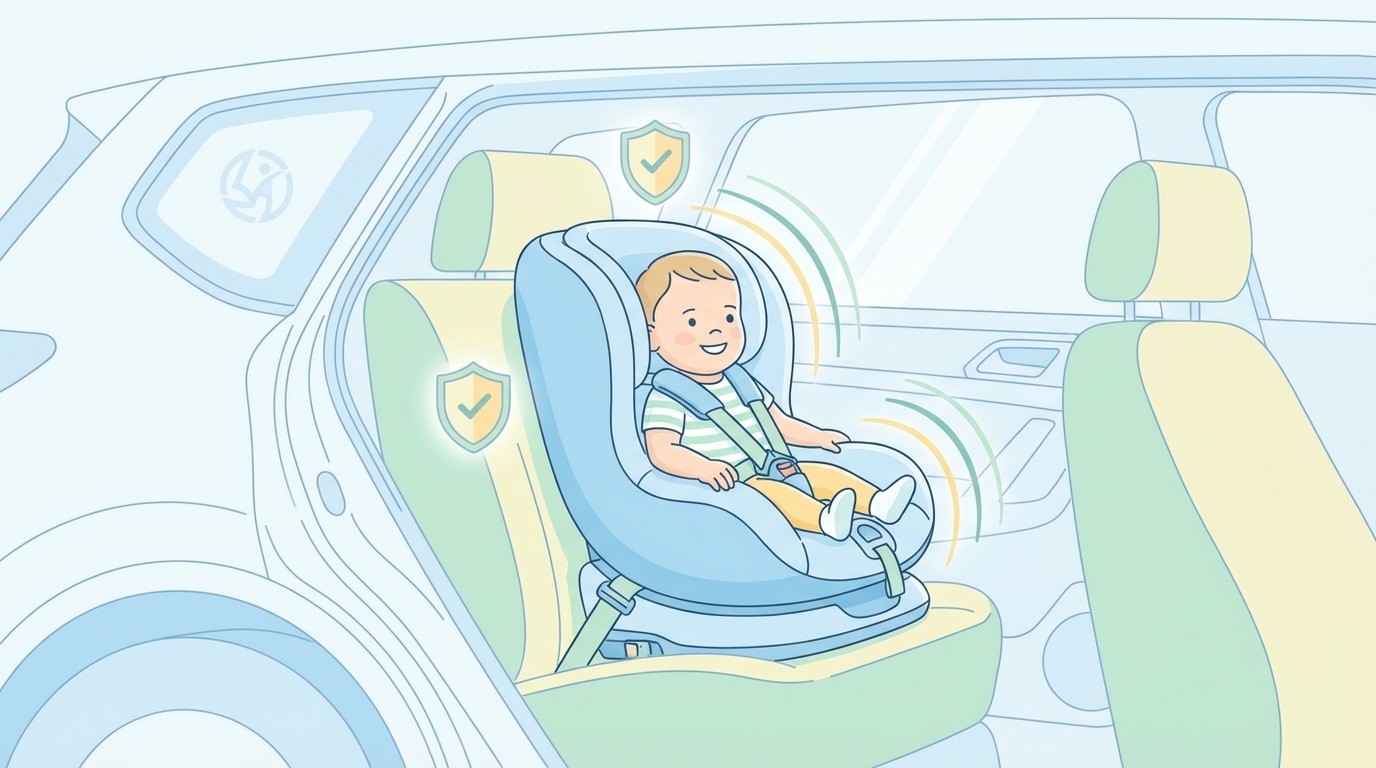
How to Choose the Right Car Seat for Your Child’s Safety
| In Brief ✅ |
|---|
| 👶 Choose based on size, age, and body shape, not just the age on the label. |
| 🔒 Prefer the i-Size (R129) standard and keep the child rear-facing as long as possible. |
| 🧩 Check Isofix compatibility or seatbelt with your car before buying. |
| 🛠️ Install carefully, follow the instructions, and check the harness tightness before each trip. |
| 🧼 Think about maintenance, cleaning, and replacement after an accident or impact. |
| 🏪 Compare in stores (Vertbaudet, Natalys…) and look at independent tests before purchasing. |
| 💡 Don’t sacrifice safety for budget: a well-rated seat truly protects in a collision. |
Choosing the right car seat requires combining technical information with everyday experience. Families juggle with the child’s size, seat space, seat installation, and trips of varying lengths. In this context, the i-Size standard, rear-facing positioning, and ISOFIX serve as guiding principles to build solid protection. Catalogs display dozens of models, yet some simple benchmarks help sort quickly. The best option remains the one that combines safety, comfort, and compatibility with the car.
To clarify these choices, the example of Léa and Martin resonates with many. Their little girl is growing fast and their two cars are different. They want to avoid installation errors and limit handling. They test several seats, check the angle for the infant’s head, and compare the harnesses. They also consult crash test feedback. This structured approach avoids shaky compromises. It especially allows traveling more serenely, even when the road extends or an unexpected detour is necessary.
Standards, safety, and informed choice for a truly protective car seat
A car seat protects when it matches the child’s size and development. The UN R129 i-Size standard sets this modern framework. It classifies by size in centimeters, mandates side impact tests, and encourages extended rear-facing. The R44/04 standard classifies by weight and remains authorized but is gradually being phased out. To avoid confusion, check the approval label before purchase. It indicates the size or weight range and the type of attachment.
Why does rear-facing make the difference? The head and neck are better supported during a frontal collision. Forces distribute over the back, much stronger than the growing neck. Experts recommend rear-facing support at least until 15 months, and ideally until 4 years depending on body shape. This approach significantly reduces severe cervical injuries.
ISOFIX anchors reduce errors. The connectors lock with two clicks, then the support leg or top tether strap stabilizes the whole system. In cars without ISOFIX, the seatbelt remains safe if you follow the instructions exactly. Take the time to pull the strap to eliminate slack. One extra centimeter can change the outcome in a collision.
Lateral safety also weighs heavily. Deep shells, EPS or EPP inserts, and absorption cushions protect the head. Some models add adjustable modules on the door side. Test the adjustment with your vehicle’s seat. Good fitting must remain simple, even when light is low in a parking lot.
Independent comparisons provide valuable benchmarks. The 2025 and 2026 ratings highlight gaps between models. Look for solid results in frontal and side impacts. Beware of overly versatile products covering a very wide age range. They offer service but a specialized seat often protects better at each stage.
Families also appreciate ergonomics. A well-positioned 5-point harness, clear belt guides, and easy-to-adjust recline change life. In practice, this set of details avoids contortions. It reduces forgetfulness and errors when buckling the belt, especially when the child is restless.
To better visualize the differences in standards, this table helps to orient. It doesn’t impose a choice, it simply clarifies the vocabulary.
| Standard 📏 | Classification 👶 | Side tests 🛡️ | Safety objective 🚗 |
|---|---|---|---|
| R44/04 | By weight (kg) | Optional depending on models | Historic, still authorized |
| R129 i-Size | By size (cm) | Mandatory | Extended rear-facing and increased compatibility |
When in doubt, return to basics. Choose the most recent standard when possible, keep rear-facing long, and favor intuitive installation. Well-thought simplicity strengthens daily safety.
Age, size, types of seats and rear/front-facing position: the practical guide
The right seat corresponds to a growth stage. Three categories cover most needs: shells for infants, 2nd age seats for young children, then boosters for older ones. Carrycots are reserved for specific uses and very short trips. In practice, a child generally uses two or three successive seats. Avoid premature switching from one category to another. Size and harness adjustment are the deciding factors.
The shell welcomes the infant with an adapted recline. Head support and the reducer protect the smallest. Rear-facing is essential here. Many shells fit on an ISOFIX base. Some also clip onto a compatible Baby Stroller, which simplifies transfers. Bébé Confort offers coordinated sets, as do other brands.
The 2nd age seat takes over when the baby’s head nears the upper edge of the shell, or when the size limit is reached. Rear-facing remains recommended as long as possible. Several manufacturers offer swivel models. This function makes daily installation easier for arms and back. It also helps to tighten the harness well without twisting.
The booster with backrest accompanies the last phase. The vehicle’s seatbelt then holds the child. The backrest guides the diagonal strap in the right place and protects in side impact. Keep this device until at least 1.35 m, even 1.50 m depending on local regulations and stature.
To visualize transitions, here are simple benchmarks. They don’t replace the manual, but help decide at the right moment:
- 🧠 When the head reaches the edge of the shell, change category.
- 📏 When size exceeds the i-Size limit, move to the next seat.
- 🎯 When the harness can no longer be adjusted at shoulder height, adjust or change.
- 🔄 Keep rear-facing as long as morphology allows, ideally until 4 years old.
- 🧩 Prefer a specialized seat over an overly evolving model if the car allows.
In real life, Léa and Martin combined a compact shell and a rear-facing swivel 2nd age seat. Their little one often sleeps in the car. They chose a model with fine recline to avoid head bobbing. They also carry a bag with Dodie diapers and a small Petit Bateau blanket. This simple routine makes trips more peaceful.
Accessories deserve sorting. A non-approved headrest or added strap can hinder the harness. Better stay with elements supplied by the manufacturer. For skin comfort, a gentle routine with Mustela after a long trip helps prevent irritation related to sweating. For the bottle, Avent offers airtight containers that limit leaks in the travel bag.
Stores like Vertbaudet or Natalys often offer demonstrations. Testing rotation, recline, and legroom helps anticipate growth. Some advisors agree to install the seat in parking to validate compatibility. This is a real plus when the rear bench is narrow.
For further insight, a step-by-step video on i-Size criteria provides good references. It complements the manual’s advice and safety organizations’ recommendations.
If a question persists, consult reliable sources. For example, these child safety tips gather useful key points. By following these milestones, you move forward with a clear and reassuring roadmap.
Installation, vehicle compatibility, and zero fastening errors daily
The best protection collapses if installation remains approximate. Always start with the instructions and diagrams. Then check every attachment point. With ISOFIX, push until a clear click, then deploy the support leg on the floor or tighten the top tether strap. Without ISOFIX, tighten the belt as much as possible and lock the blocking device if the car has one.
The rear bench sometimes holds surprises. Some vehicles have narrower center seats or deep anchors. Others integrate floor flaps that change how the support leg is managed. Check these details in the vehicle’s manual. When in doubt, a base compatible with several cars simplifies life for blended families or grandparents.
The harness protects when positioned at or just below the shoulders rear-facing, and at or just above shoulders front-facing. Remove thick coats. A thin fleece warms without hindering tightness. The “pinch test” trick helps: you should not be able to pinch the strap between fingers at the collarbones.
Errors often recur on the same points. Twisted straps, poorly positioned support leg, and too loose harness make the top three. Create a small control ritual before each departure. Thirty seconds suffice to tighten the strap, check ISOFIX indicators, and adjust the headrest.
Seat-car-passenger compatibility sometimes requires rethinking the arrangement. Place the seat in the middle if the belt and base allow. This position keeps away from side impact zones. If installing in front, deactivate the airbag for a rear-facing seat and push the passenger seat back as far as possible.
Léa and Martin learned to film their installation to send it to a mechanically savvy relative. This cross-check helped spot a strap caught by the buckle. Since then, they follow a checklist stuck on the rear door. This reminder avoids forgetfulness when rain speeds up the start.
A detailed tutorial can save time and prevent invisible errors. Slow-motion sequences and zooms on the anchors show the essentials. Here is a search that gathers relevant videos on the subject:
If you share vehicle use with a nanny, align practices. Clear communication gets everyone on the same page. This guide can also help assess a third party’s skills. To deepen this point, these tips for finding a good nanny offer a useful framework for safety while traveling.
Comfort, ergonomics, and child well-being during trips
A calm child stays better buckled and copes better with the road. Comfort is not just foam. Recline, fabric breathability, and headrest quality also matter. Summer covers reduce sweating. Newborn inserts support the neck without compressing. Test the angle in your car, because seat cushion and bench slope modify the real effect.
Rear-facing may seem to offer less space. However, most models leave enough legroom after 2 years. Children often bend their knees without discomfort. An anti-rebound bar and a well-adjusted support leg stabilize the seat. This stability limits micro-movements that tire during long trips.
Routines play a big role. A small Fisher-Price toy attached to the back of the seat holds attention. A Petit Bateau blanket reassures at nap time. An Avent bottle or suitable bottle avoids thirst in summer. After the trip, a gentle wash with Mustela removes heat and sweat, which reduces harness irritation.
Beware of non-approved accessories. A poorly placed cushion can displace the belt path. An unplanned strap spacer can increase risk. Stay with brand elements when possible. When in doubt, ask the store. Vertbaudet and Natalys often have teams trained in compatible solutions.
Head position during sleep also matters. Too upright an angle favors head flop. Conversely, too wide an angle may poorly support the torso. Look for a compromise with the manual’s help. Manufacturers sometimes supply a bubble level or visual marker. On the road, take regular breaks. The car seat does not replace a bed, even for an infant.
Sometimes myths persist about newborn posture. It is better to rely on reliable sources when a position seems strange or unphysiological. This decoding about the so-called “Indian bridge” position helps understand the baby’s body better. You can thus distinguish a normal reflex from real discomfort and adjust the insert if needed.
Vigilance extends to sleep outside the car and overall safety habits. Some research sheds light on neurological maturation and risk prevention. To nurture your safety culture, this file on infant physiology recalls key principles to integrate daily. This knowledge does not replace medical advice, it completes attentive vigilance on the road and at home.
In summary, comfort and safety strengthen each other. A well-adjusted seat, pleasant textiles, and a break ritual make the difference on long trips. A calm child stays better buckled, hence better protected.
Budget, store trials, second-hand, and sustainable criteria
Budget varies depending on options. Rotation, adjustable support leg, and advanced side protections add cost. Yet, a well-rated seat lasts longer and protects better. Before buying, set a realistic range. Then compare safety performance and ease of use. A product handled without effort reduces errors, thus increases real safety.
Specialized stores provide access to car trials. At Vertbaudet or Natalys, advisors can check angle, legroom, and harness access. Try if possible in each of your cars. Some families use a single ISOFIX base and move the shell daily. This modularity suits urban parents combining transport and car.
Second-hand attracts by price. It remains delicate for safety. Avoid a seat without a clear history. Even a light impact can damage the structure. If you get a model from a relative, demand the manual, approval label, all original parts, check the manufacturing date and absence of recalls.
Independent tests provide objective benchmarks. They also rate undesirable compounds. These criteria matter for the child’s health. Historic brands like Bébé Confort invest in research and fabric quality. They often offer washable covers that extend service life. Gentle washing preserves foam and maintains energy absorption performance.
For families multiplying activities, anticipate related needs. A bottle holder, a seat organizer, and a back protector keep the car clean. A Baby Stroller compatible with the shell reduces handling with a sleeping infant. For memories, The Birth Book slipped in the bag immortalizes first trips. These are little extras, but build a reassuring routine.
Safety goes beyond the car. When your child moves to bike, keep the same precautionary reflexes. This guide on helmet and bike seat shows continuity of good practices. Families harmonizing routines save time and avoid contradictions. Consistency of rules reinforces children’s adherence.
Finally, set a maintenance budget. Plan a spare cover, a cleaning kit, and suitable wipes. Avent bottles or Dodie pacifiers sometimes cause sweet stains. Clean quickly to avoid weakening textiles. Keep at hand a link to reliable benchmarks like these safety tips. You gain serenity knowing where to look for validated information.
An informed purchase relies on trial, reading tests, and an overall vision of uses. This approach turns budget into a real protection investment.
Maintenance, replacement after accident, and ready-to-use checklists
A car seat remains reliable when maintained. Vacuum to remove crumbs and gravel that damage fabrics. Gentle washing prolongs foam life. Read the manual to choose the right cycle and temperature. Avoid harsh stain removers that weaken fibers. Then carefully reassemble each element. A badly repositioned strap alters force paths during a collision.
After an accident, replace the seat. Even if nothing is visible, the structure may have absorbed an impact. Manufacturers detail replacement protocols. Keep proofs of purchase and photos for insurance. Some brands offer accident warranty. Inquire when buying to avoid surprises.
Create short checklists. A “departure” list checks harness tightness, angle, and strap routing. A “maintenance” list reminds washing schedule and visual buckle check. Add a “weather” point to plan for summer cover or a soft blanket. This organization reduces mental load and prepares for unforeseen trips.
In family life, items often change cars. Identify each seat with a discreet label. Note usual headrest position for each child. A non-permanent marker suffices. Thus, the right adjustment is found at a glance, even when sharing the car with grandparents.
Ongoing training also helps. Look for an installation workshop in your city. Firefighters or specialty stores sometimes run free sessions. Additionally, a video guide supports you daily. You can record a short demonstration on your phone to remind key gestures to relatives.
Finally, look beyond the car. Harnessing and ergonomic principles apply on other supports. A bike trailer, a baby carrier, or a bike seat require the same rigor. Continuity of these reflexes builds a family safety culture. It complements the choice of the right car seat and increases real effectiveness.
To finish, here is an “all-terrain” list to keep near the front door. It targets essentials with concrete items quick to check off:
- 🟢 Harness tight (pinch test OK).
- 🟢 Headrest aligned with shoulders.
- 🟢 Strap not twisted, buckle clipped.
- 🟢 Seat locked (green ISOFIX indicators if present).
- 🟢 Clean cover, inserts in place.
- 🟢 Planned breaks for long trips.
This simple routine provides consistency. Day after day, it turns actions into protective reflexes.
At what age to switch to front-facing without compromising safety?
Keep the child rear-facing at least until 15 months. Extend if possible until 4 years old depending on size. Base the decision on the seat’s i-Size limit, the harness position, and head support.
ISOFIX or seatbelt, which to choose for a reliable installation?
ISOFIX reduces errors and speeds up installation. The belt remains safe if you follow the instructions and properly tighten the strap. Test in your car before purchase to confirm compatibility.
Can a second-hand car seat be bought safely?
Avoid without complete history. After an impact, replace the seat. If you receive a model from a relative, demand the manual, approval label, all parts, and check manufacturing date.
How to manage heat in summer without compromising the harness?
Favor breathable covers, light fabrics, and hydration breaks. Do not loosen the harness. Remove thick coats and use a thin layer or light blanket.
Which accessories are truly useful for daily trips?
A seat organizer, a summer cover, an approved sunshade, and a back protector. Avoid accessories not provided by the brand that alter strap paths.