


Physical Changes Pregnancy: Physical changes and common ailments in the 3rd trimester of pregnancy.
| Short on time? Here is the essentials ⏱️ |
|---|
| • In the third trimester, weight gain and the shift of the center of gravity increase lower back pain and abdominal pressure. 💡 Support belt, gentle stretches, and aligned postures help relieve. |
| • Shortness of breath is common because the uterus rises and O₂ needs increase. 🌬️ Diaphragmatic breathing, breaks, and sleeping on the left side help. |
| • Hormonal changes slow down digestion. 🔥 Splitting meals, staying hydrated, and elevating the torso reduce reflux and constipation. |
| • Swelling of the legs, varicose veins, and hemorrhoids are often mechanical. 🦵 Compression stockings, regular mobility, and elevated legs reduce edema. |
| • Skin and breasts change intensely (stretch marks, chloasma, colostrum). 🌞 Sun protection and gentle emollient care preserve skin comfort. |
| • Fatigue and fragmented sleep dominate the final pregnancy ailments. 😴 Soothing ritual, short naps, and pillow supports optimize the night. |
The third trimester concentrates the biggest physical changes of pregnancy. The abdomen rounds, breath becomes short, and nights fragment, while the body orchestrates the final phase of fetal growth. This period reveals an admirable mechanics: the heart speeds up, blood volumes increase, and the musculature adapts to carry, protect, and prepare for birth. Yet, pregnancy ailments insistently show up: lower back pain, abdominal pressure, reflux, cramps, and leg swelling.
Understanding why these symptoms occur changes everything. By identifying action levers, each day gains comfort and serenity. Between physiology and concrete actions, this article offers reliable markers, immediately applicable advice, and examples that speak to everyday life. A common thread follows the reading: Lina, 34 weeks of amenorrhea, illustrates the challenges and solutions that truly relieve. Objective: to transform theory into practical tools and make the third trimester a demanding but better mastered stage.
Weight gain, posture, and lower back pain in the 3rd trimester of pregnancy
Weight gain accelerates during the third trimester. It often exceeds the last five kilos because baby, placenta, amniotic fluid, and maternal fluids increase together. The center of gravity shifts forward, which accentuates the lumbar curvature. At the same time, relaxin and progesterone loosen ligaments to prepare the pelvis for delivery. This increased flexibility makes some joints more unstable. This combination explains the rise of lower back pain and pelvic tugs.
Why the back hurts more at the end of pregnancy
The spine compensates for the forward weight by a more pronounced lordosis. The paravertebral muscles then work continuously, leading to contractures. The abdominal belt, stretched by uterine growth, less effectively stabilizes. Sometimes there are ligament pains at the pubic symphysis, especially during position changes. When Lina carries her groceries, the discomfort radiates to the buttocks: the piriformis activates too much and sometimes compresses the sciatic nerve.
It remains useful to differentiate mechanical pain from warning signs. Pain triggered by effort, relieved by rest and heat, suggests a musculoskeletal origin. Conversely, pain associated with fever, bleeding, or neurological issues demands rapid consultation. To understand these specific tugs, a clear dossier on ligament pains during pregnancy provides concrete references.
Actions that really relieve
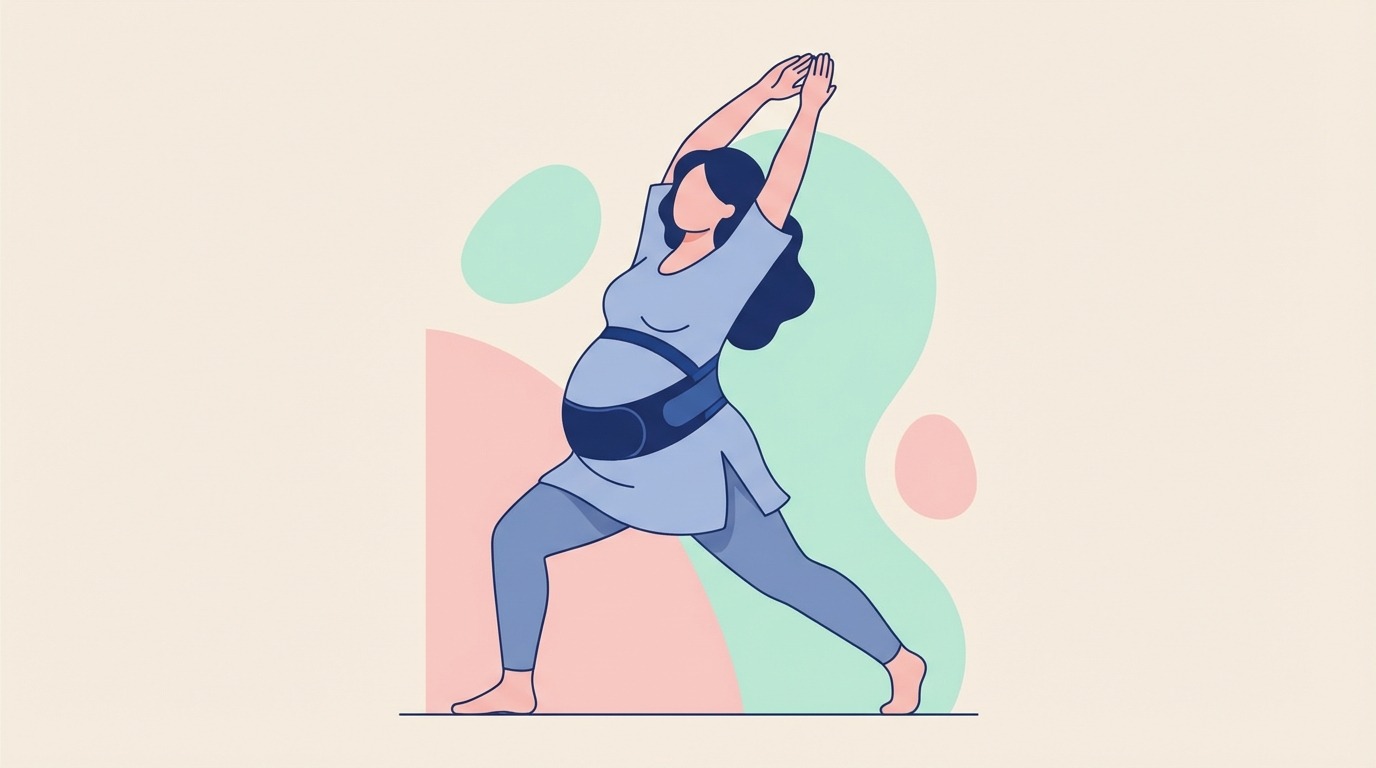
Effective strategies combine alignment, gentle mobility, and targeted support. Feet spaced at hip width, knees soft, and the rib cage “stacked” above the pelvis rebalance loads. Stretches of the psoas, quadratus lumborum, and glutes reduce latent tensions. A support belt can help if used occasionally and properly adjusted. Pelvic floor strengthening, synchronized with exhalation, stabilizes the pelvis without forcing.
- 🧘 Stretches 2–3 times/day: cat-cow, lateral flexions, hip openers.
- 🧦 Wear stable sneakers: added stability reduces postural fatigue.
- 🌡️ Local heat for 15 min on tense areas, then gentle mobilization.
- 🪑 Sit high, pelvis tilted forward, lumbar cushion to maintain curves.
- 📦 Lift in a lunge, load close to body, exhale on effort.
Daily, Lina places a pillow under each forearm while working on her computer. Her neck relaxes, trapezius muscles stop compensating. She alternates sitting, standing, and walking every 40 minutes. The episodes decrease within a week.
Going further: adapted physical activity and warning signs
Walking, gentle aquagym, and prenatal yoga maintain core strength and proprioception. The pelvis becomes more mobile, thus less painful. However, sharp, asymmetric pain with functional impairment requires consultation. Accompanied by regular contractions, fluid loss, or bleeding, it directs toward the maternity ward. This triage protects mother and baby, while avoiding harmful immobility.
Final key: better distribute abdominal pressure during efforts by exhaling “as if fogging a window.” The pelvic floor cooperates, the back breathes, and movements become possible again.
Breathing, shortness of breath and circulation: managing abdominal pressure without panic
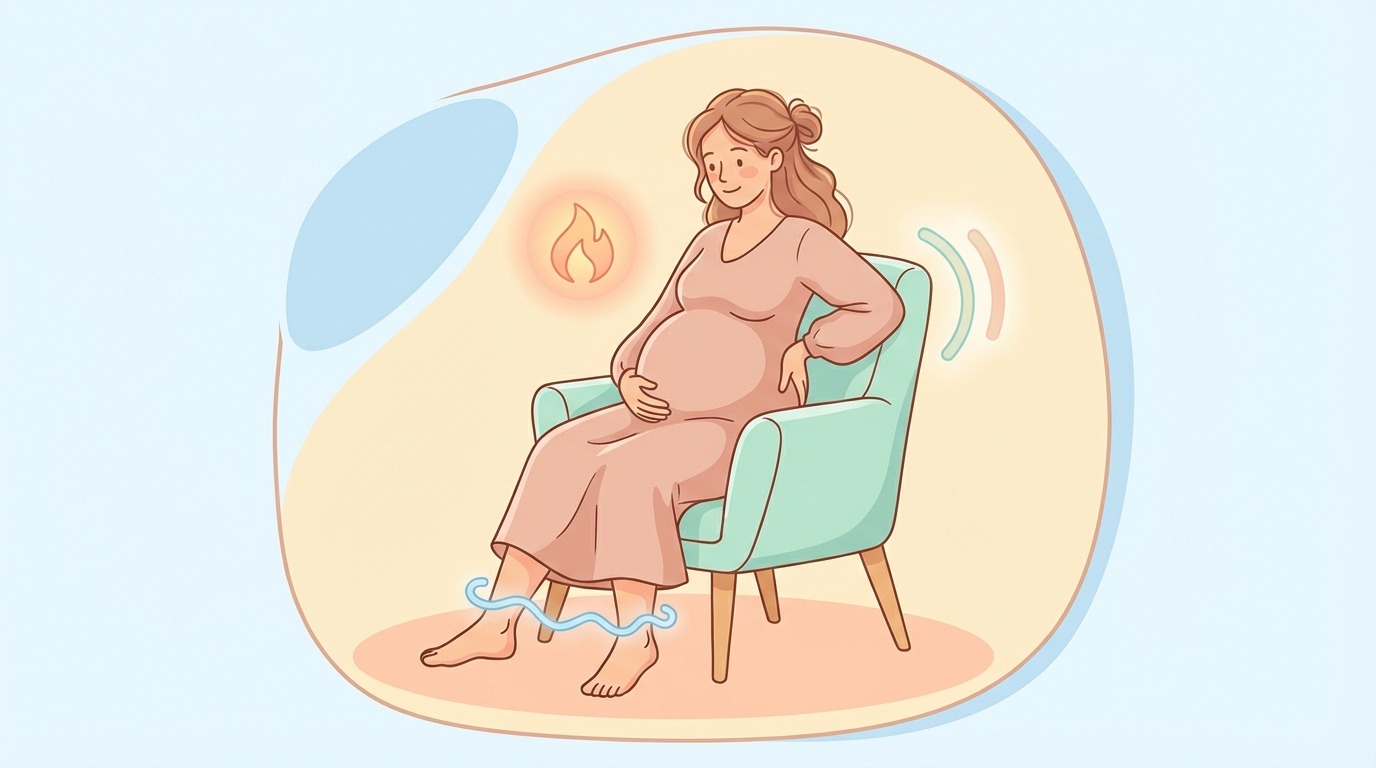
The uterus grows upward and pushes the diaphragm. Oxygen needs also increase with fetal growth. Result: shortness of breath occurs with modest effort. The heart speeds up, blood volume rises by nearly 30–40% at the end of pregnancy, and the vena cava is sometimes compressed when lying on the back. This explains dizziness when lying flat and the sensation of short breath upstairs.
Reprogramming breathing: from chest to “360° cage”
The diaphragm rises but remains mobile laterally. A “360° breathing” uses the low opening of the ribs and the back. Hands placed on the sides, inhalation expands ribs outward, then exhalation engages deep abdominals. This technique frees space and distributes abdominal pressure. It also relieves lower back pain by reducing thoracic stiffness.
Position counts as much as method. Sleeping on the left side limits compression of large vessels and improves venous return. Sitting with the sternum “proudly” high avoids crushing the diaphragm. Facing stairs, pausing on each landing becomes a strategy, not a weakness.
Breathing exercises become more effective when integrated during the day. Three cycles before lifting load, two cycles after climbing, and a few cycles at bedtime form a simple and powerful ritual. For Lina, these routines reduced the feeling of tightness in less than ten days.
Circulation and supine hypotension: safe gestures
Venous return slows when the uterus presses on the inferior vena cava, especially when lying on the back. Turning to the side, sliding a pillow under the right hip, or slightly elevating the torso lessens hypotension. Compression stockings of appropriate class, prescribed if needed, support venous flow and reduce leg swelling. Moving ankles pumps blood toward the heart: writing the alphabet with toes, several times a day.
It is important to distinguish physiological shortness of breath from warning signs. Shortness of breath that disappears at rest, without chest pain, falls within normal third trimester expectations. On the other hand, dyspnea at rest, chest pain, sudden swelling of face or hands, or unusual headaches require immediate medical evaluation.
Sleep and positioning: the “multi-pillow” effect
To sleep better, placing a pillow between the knees aligns the pelvis, and another under the belly supports the uterus. The rib cage then moves more freely. Practical advice presented in this guide on tips for better sleep during pregnancy gathers simple tricks to apply as of tonight. These adjustments limit both nocturnal shortness of breath and micro-awakenings.
In summary, effective breathing and clever positioning do not eliminate mechanical constraint but free a comfortable margin of maneuver. Confidence returns, and so does the breath.
Digestion, bladder, and venous circulation: reflux, constipation, and leg swelling
Hormonal changes during the third trimester slow digestive motility. Progesterone relaxes the cardiac sphincter and prolongs gastric emptying time. Coupled with the mechanical pressure from the uterus, it favors reflux and heartburn. The intestine, also more sluggish, contributes to constipation and bloating. Meanwhile, the compressed bladder causes frequent trips, especially at night.
Limiting reflux without deprivation
The most robust strategy rests on three pillars: split, fluidify, and elevate. Smaller, more frequent meals reduce intragastric pressure. Drinking between meals rather than during eating lowers stomach volume. Sleeping with the torso elevated slows acid rise. Fatty, very spicy, or acidic foods, cautiously tested, identify individual triggers.
Lina replaced a heavy dinner with two light snacks spaced an hour apart. Her nighttime heartburn dropped. She now finishes the main meal two to three hours before bedtime, allowing the digestive system time to work.
Constipation and microbiota: moving forward
Walking, hydrating, and enriching the plate with soluble fibers improve food bolus progression. Prunes, soaked chia seeds, and oats are valuable allies. A fixed toilet routine creates a useful colic reflex. If discomfort persists, consultation allows considering safe options. Above all, avoiding prolonged straining protects the pelvic floor.
Bladder and infectious risks: useful vigilance
Pollakiuria is logical. However, burning urination, fever, or high back pain signal infection and require consultation. Urinating after each intercourse, drinking regularly, and not holding back are protective reflexes. Simple hygiene, without harsh products, maintains local balance.
Edema, varicose veins, and hemorrhoids: mechanics and solutions
Leg swelling comes from a mechanical and hormonal conjunction. Uterine pressure hinders venous return, and the venous wall relaxes. Active breaks, ankle movements, and leg elevation two to three times daily relieve. When seated, avoid crossing legs. Standing, shift weight from one foot to the other to stimulate the venous pump. Hemorrhoids, varicose veins in the anal area, often regress after delivery but benefit from prevention by good intestinal regularity.
- 🦶 Short, frequent walks: 5–10 min every hour when possible.
- 🧴 Emollient cream against anal discomfort, and hygiene with lukewarm water rather than harsh soap.
- 🧊 Cold packs occasionally in case of hemorrhoid flare-up, max 10 min.
- 🧦 Compression stockings if recommended, put on in the morning before edema.
- 💧 1.5–2 L of water per day, more if hot or active.
If bleeding appears, consultation is necessary. A clear guide on symptoms and bleeding during pregnancy helps distinguish the benign from the urgent. Note: if the second trimester ultrasound indicated a low-lying placenta, monitoring is strengthened at the end of pregnancy.
In conclusion of this digestive and venous section, the combination “split, move, elevate” creates the most tangible cumulative effect. Legs breathe, stomach calms, and energy returns.
Skin, breasts, and hormonal changes: understanding and soothing
The skin reflects hormonal and circulatory changes of the third trimester. Hyperpigmentation intensifies: linea nigra on the belly, darker areolas, sometimes pregnancy mask on the face. Stretch marks may appear or thicken on the abdomen, hips, and thighs. Meanwhile, sebaceous gland activity varies: acne for some, dryness for others. Sweating increases as metabolism speeds up.
Preventing stretch marks: mechanics, hydration, and patience
Prevention remains multifactorial. Hydrating the skin does not change collagen genetics but improves elasticity and reduces the feeling of tightness. Gentle massages, always lateral to respect stretched skin, increase local microcirculation. Steady, gradual weight gain reduces stretching speed. Above all, avoiding harsh products preserves the skin barrier.
Lina ritualized a light oil application after showering, on still damp skin. She favors simple compositions without strong fragrance. Her goal is not perfection but daily comfort and softness.
Pregnancy mask and sun: a luminous strategy
Chloasma reacts to UV. Broad-spectrum sun protection, SPF 50+, reapplied every two hours outdoors, limits hyperpigmentation. Wide-brimmed hats and sunglasses add a mechanical barrier. After delivery, the mask often fades, but dermatological follow-up can be useful if spots persist. Powerful depigmenting agents remain medical territory during pregnancy and breastfeeding.
Breasts and colostrum: preparing without trauma
Breasts gain volume and sensitivity. Colostrum may leak, a sign of normal initiation. A bra without underwires, adjustable, avoids compression and distributes support. Hygiene should remain gentle: lukewarm water, delicate drying, no rubbing. In case of pain or marked asymmetry, evaluation rules out cyst, infection, or blocked duct.
Bumps, itching, sweat: soothing without overtreating
Acne outbreaks are treated with minimalist routines: gentle cleanser, non-comedogenic moisturizer, and targeted local care adapted to pregnancy. Diffuse itching responds well to twice-daily emollients and short lukewarm showers. Any sudden rash accompanied by fever, jaundice, or extensive lesions warrants consultation.
Popularization has its use: yes, stretch marks lighten over time. Yes, skin “bounces back” largely. No, no oil erases already formed marks for sure. This kind realism protects against guilt-inducing marketing and emphasizes comfort, safety, and acceptance.
In short, protecting, hydrating, and reducing mechanical load compose a robust guideline. Skin follows the rhythm, and confidence grows.
Typical pregnancy ailments of the 3rd trimester: fatigue, sleep, Braxton Hicks contractions
Fatigue stems from several factors: weight to carry, nights interrupted by urge to urinate, reflux, intense dreams, and apprehension about delivery. Braxton Hicks contractions set in irregular waves. They harden the belly without real rhythm and calm with hydration or position change. Distinguishing practice contractions from true labor reassures and avoids unnecessary trips to the maternity ward.
Optimizing sleep despite everything
A stable ritual precedes bedtime: low light, short reading, slow breathing, and writing a brief reminder. 20-minute power naps recharge energy without harming night sleep. The trio of “cocoon” pillows stabilizes pelvis, belly, and rib cage. These basics supplement simple rules: avoid late blue screens, light dinner, and ventilate the bedroom.
To enrich your practices, this guide on sleep tips during pregnancy gathers experience-validated tricks. Partner and relatives also play a key role: reducing mental load, taking over some tasks, and emotional support really help.
The partner also goes through an intense period. An article on future dad’s stress shows how to turn worry into active support. When the environment understands the mechanisms of fatigue and nocturnal vigilance, maternal sleep quality concretely improves.
Braxton Hicks contractions vs true labor: the useful checklist
Practice contractions are irregular, moderate, and vary with activity. They subside with hydration, rest, gentle warmth, or slow walking. Labor contractions increase in intensity, come closer, and last longer. These signs may be accompanied by fluid or bloody discharge and radiating pain in the back and lower belly.
For Lina, drinking a large glass of water, taking a lukewarm shower, and lying on the left side suffices to pass the “practice” wave. However, rhythmic pain that intensifies, combined with unusual discharge, triggers her organized departure to the maternity ward.
Daytime energy, night calm: the plan
During the day, alternating active tasks and short breaks avoids exhaustion. Morning sun walks reset the biological clock, improve mood, and promote easier falling asleep in the evening. At the end of the day, a lukewarm bath or self-massage of trapezius lowers internal “volume.” This fine management restores balance despite the constraints of the third trimester.
Underlying message: pregnancy ailments do not equal inevitability. With targeted sleep hygiene, breathing routines, and clear markers to read contractions, the home stretch gains serenity.
“The body knows, the mind learns: when one listens to the other, birth opens with confidence.”
Quels signes distinguent les contractions de Braxton Hicks des contractions de travail ?
Les premières sont irrégulières, de faible intensité et cèdent au repos, à l’hydratation ou à la chaleur. Les contractions de travail deviennent régulières, plus longues et plus intenses, se rapprochent dans le temps et s’accompagnent souvent d’une douleur lombaire et pelvienne plus marquée. Toute perte de liquide, de sang ou douleur continue impose de contacter la maternité.
Comment soulager le gonflement des jambes au troisième trimestre ?
Marchez brièvement mais souvent, bougez les chevilles, surélevez les jambes plusieurs fois par jour et évitez de croiser les jambes assise. Les bas de contention, choisis avec un professionnel, améliorent le retour veineux. Hydratez-vous suffisamment et répartissez l’activité tout au long de la journée.
Le reflux pendant la grossesse peut-il être évité ?
Il peut être réduit en fractionnant les repas, en évitant les gros volumes au dîner, en limitant les aliments très gras ou épicés, et en dormant le buste surélevé. Boire entre les repas et attendre 2–3 heures avant de se coucher après avoir mangé aide aussi. Un avis est utile si le reflux devient douloureux ou s’accompagne de vomissements persistants.
La fatigue du troisième trimestre est-elle inévitable ?
Elle est fréquente, mais on peut la moduler. Des siestes courtes, une hygiène de sommeil rigoureuse, une alimentation régulière et l’allègement de la charge mentale (avec l’aide de l’entourage) améliorent sensiblement l’énergie. Les oreillers de positionnement et le sommeil latéral gauche facilitent la respiration et limitent les réveils.
Quand consulter en urgence ?
Consultez si vous observez des saignements, une perte de liquide, une douleur abdominale ou lombaire intense et régulière, une baisse des mouvements fœtaux, un mal de tête inhabituel avec troubles visuels, un œdème soudain du visage ou des mains, ou une fièvre. En cas de doute, mieux vaut appeler la maternité.