Development 31-36 Months: The development of the child from 31 to 36 months.
| Short on time? Here’s the essentials 🚀 |
|---|
| 31-36 months = surge in cognitive growth and child language 🧠🗣️ |
| Motor development refines: fine motor skills and gross motor skills gain precision 🧩🏃 |
| Pretend play structures learning and socialization 🎭🤝 |
| Autonomy explodes: dressing, helping, choosing, trying 👕🥄 |
| Clear limits + a stable routine = fewer tantrums, more social interaction 😊📅 |
| Observe, stimulate, reassure; consult if hearing or language raise concerns 🩺👂 |
| Variations are normal; the key is steady progress 🔍📈 |
Between 31 and 36 months, toddlers multiply visible and invisible achievements. Balances shift weekly, from soaring sentences to quickening steps. This period showcases a powerful alliance between cognitive growth, motor development, and emotional flourishing. Daily life becomes a living laboratory where objects, stories, and rituals build lasting skills.
Parents also notice a strong desire for autonomy. Choosing the red shoe, climbing the sidewalk alone, asking “why?” after “who?” and “where?”: these actions clearly express the eagerness to learn. The goal is not to “do faster,” but to offer appropriate experiences, a stable framework, and warm presence. The pace individualizes, but solid markers guide support.
Gross motor skills and fine motor skills between 31 and 36 months: focus on precision and confidence
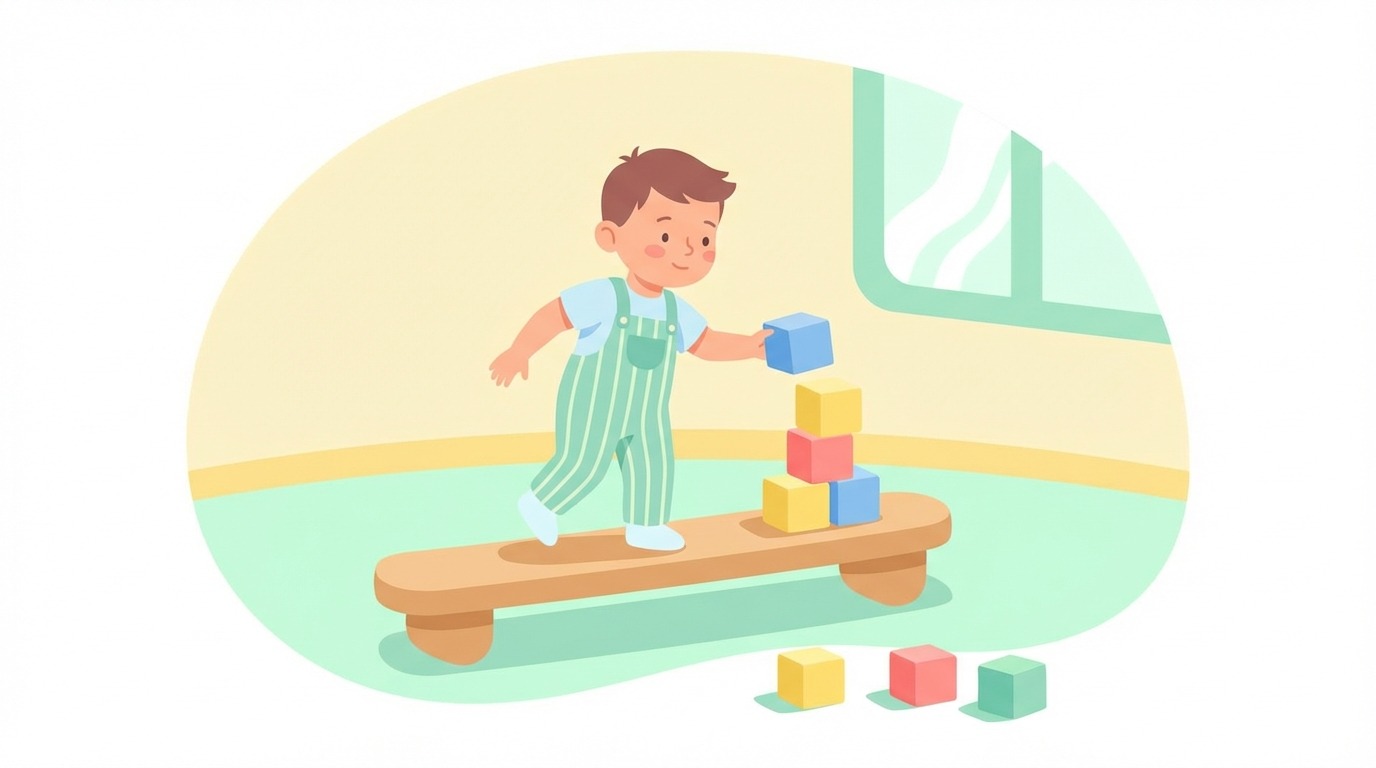
At this stage, motor development reaches a critical milestone. Gross motor skills gain fluidity: running without falling, jumping with both feet, climbing stairs sometimes alternating legs. Meanwhile, fine motor skills refine: stacking taller cubes, screwing, unscrewing, turning a knob, beginning a circular stroke. The child adjusts movements thanks to sensory and emotional feedback from successful action.
Why do these advances seem so fast? First, nervous system maturation allows better coordination. Next, learning by repetition in varied contexts stabilizes motor patterns. Finally, intrinsic motivation is important: the child wants to “do like the grown-ups,” which fuels attempts. A sidewalk becomes a balance beam, a cutlery drawer a sorting workshop.
However, acceleration does not erase heterogeneity. Some children jump high but struggle with zippers. Others draw neat circles but still run zigzag. The essential thing remains progress. Milestones are not verdicts; they are beacons illuminating a unique path.
Winning motor activities daily
A living room, a yard, or a park are enough to nurture gross motor skills. A course with cushions to step over, an improvised tunnel between two chairs, lines on the floor to walk “like on a bridge”: these simple setups offer tailored challenges. For fine motor skills, large beads, modeling clay, and kitchen tongs are highly effective.
- 🧱 Course “jump-walk-crawl”: rhythm effort and coordinate the whole body.
- 🧵 String big beads: pinch, aim, and work on eye-hand coordination.
- 🧃 Open-close containers: strengthen grip and understand cause-effect.
- 🖍️ Draw big gestures then fine strokes: move from broad to precise.
- 🎯 Throwing games into a basket: calibrate force and adjust distance.
Safety frames exploration. Shoes that stay on, clear space, age-appropriate objects: these precautions allow the “reasonable risk” that builds confidence. When failure occurs, praising effort restarts the attempt. Saying “You tried three times, your throw is improving” feeds perseverance.
Markers, vigilance, and the myth of acceleration
It’s tempting to want to “boost” acquisitions. However, data show that motor development does not accelerate artificially through overstimulation. What works is variety, regularity, and adjustment to current desires. A walk in the forest, a box of dry beans to sort, a slide to climb: the child builds competence through play.
Useful warning signals: persistent regression or very frequent falls deserve consultation. Similarly, a very little-used hand may raise questions. Early detection opens targeted and light supports, often temporary. In most cases, simple environmental and time adjustments suffice to restart momentum.
Ultimately, regular and joyful practice is better than performance. Motor skills are a body language; they tell the story of growing confidence.
Child language and cognitive growth: 31 to 36 months, the decisive leap
The duo child language and cognitive growth experiences remarkable acceleration. The child follows longer instructions, combines three words or more, asks “who,” “what,” and “where” questions. Gradually, clearer articulation makes them understandable by less familiar people. It’s not just about talking more; it’s about thinking more finely, connecting, comparing, and remembering.
Numbers and colors enter the scene. Associating “two” with two apples or saying “smaller” for a thinner object shows a developing mental sorting. Telling a micro-story, repeating rhymes, commenting on a drawing: these practices strengthen memory, attention, and planning. The child also begins to reproduce simple sequences, like a “big-small-big” tower.
Neuroscience confirms the value of verbal and sensory routines at this age. To understand what is at play, a clear reading of the brain development between 1 and 3 years enlightens parents. Plasticity is very strong; the quality of exchanges influences lexical richness and syntactical fluency.
Stories, songs, open questions: three powerful levers
Reading every day activates comprehension before expression. Naming characters, anticipating what’s next, connecting to real life all build bridges. Singing meaningful and rhyming nursery rhymes develops rhythm, phonological awareness, and love of words. Open questions finally force the child to select, describe, and take a stance: “What do you see out the window today?”
In the car or walking, the world becomes a living dictionary. Leaves, clouds, motorcycle sounds, light rain: vocabulary roots in experience. Children love linking word and gesture. Saying “first,” “second” during a toy race gives meaning to numbers. It’s concrete, fun, and effective.
Digital tools can help if kept brief, interactive, and accompanied. A short video watched together then recounted by the child illustrates good use. The adult comments, encourages, and follows up: “Do you remember the cat? What does it do next?” Passive exposure doesn’t offer these benefits. Shared speech does.
Monitoring some warning lights remains wise. Almost total absence of words, simple instructions not understood, limited interest in mouth sounds call for hearing verification and consultation. Most often, parental guidance and a few speech therapy sessions reignite progress. Alerts serve to act early, without unnecessary anxiety.
At heart, speaking enlightens the world and loving speaks loudly. Language soaked in affection and curiosity gives wings to thought.
Pretend play, socialization, and social interaction: imagination as a training ground
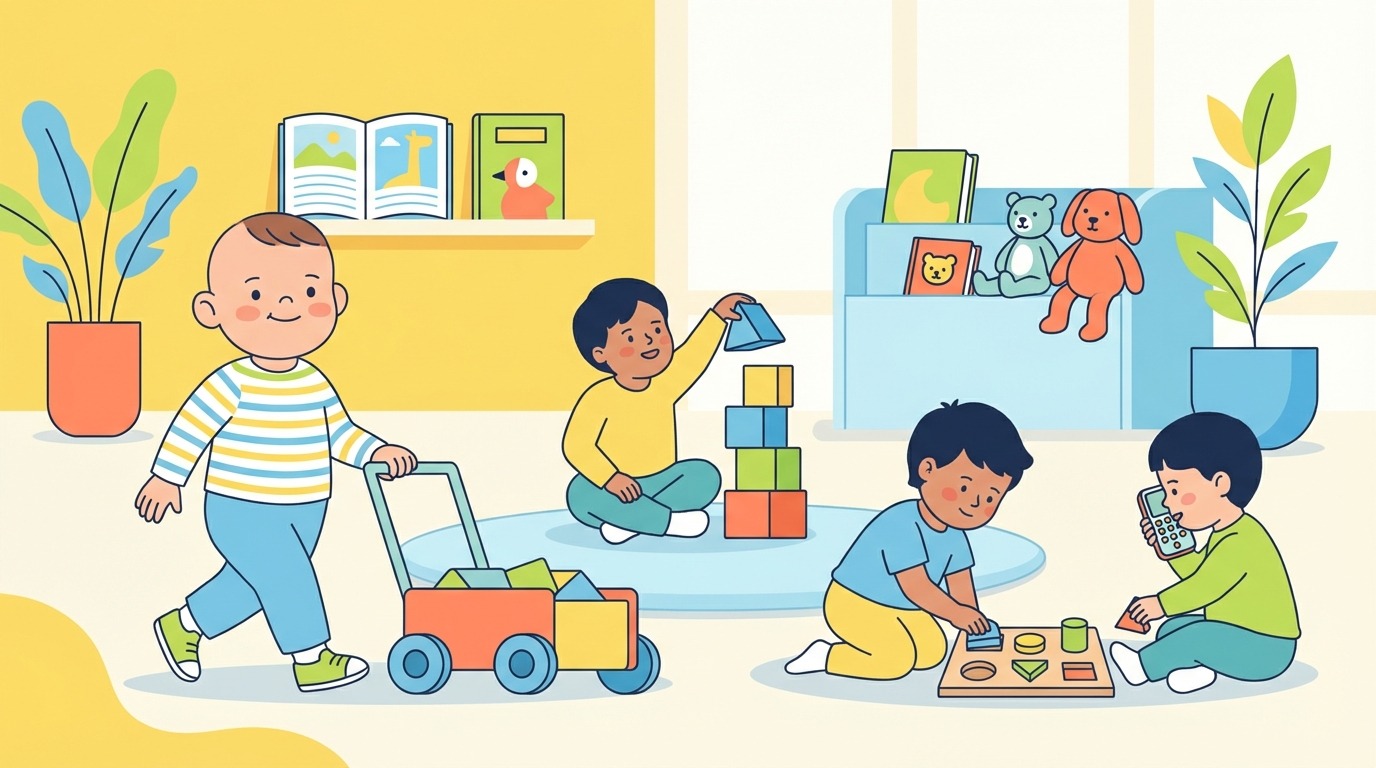
At 31-36 months, pretend play becomes central. Pretending to be a seller, parent, or veterinarian structures learning. The doll “goes to school,” the truck “is tired,” the stuffed toy “is hungry”: the child transfers known scenarios to experiment with roles and rules. This miniature theater supports socialization and social interaction.
What’s new? Parallel play opens to associated play. Children play side by side, then begin to share some objects, sometimes take turns. Saying “It’s mine!” is not just opposition. It’s the birth of the “self” and boundaries to tame. Adults set the frame, name the feeling, and offer alternatives: “You want this truck. You can have it after Sam’s turn.”
Awareness of moral rules emerges little by little. Rather than scolding, it’s useful to explain “why.” Dedicated resources on moral awareness in children provide clear guidelines. At this age, adult coherence matters more than strictness. A simple reminder, always phrased the same way, soothes conflict and prevents emotional escalation.
Supporting emotions and rules without breaking momentum
Tantrums punctuate this quest for independence. Prevention remains the best remedy: enough rest, announced transitions, limited choices. When a tantrum bursts, stay close, contain, breathe together. Then return to the original scenario. Children learn by repetition and shared attention; a predictable reaction creates inner security.
Regular meetings at the park or friends’ houses encourage socialization. Activities in pairs reinforce listening: build a farm with blocks, make “leaf soup” in the garden, simulate a toy checkout line. A comprehensive overview of children’s social development helps tailor support.
- 🎭 Stage a “store”: wait turn, say hello, pay symbolically.
- 🧸 Care for the “sick” stuffed toy: develop empathy and emotion vocabulary.
- 🚦 Play traffic lights: listen, inhibit, move on green.
- 🧃 Share a pitcher of water: pour for the other, then for self, alternate.
- 📦 Tidy together: sort by color or size, and end play calmly.
A telling anecdote: Noa, 34 months, refuses to lend the blue locomotive. The adult sets a two-minute timer, verbalizes waiting, then confirms the trade. After three turns, Noa spontaneously offers an alternative: “You, the green one. Me, the blue one after.” This repeated micro-contract becomes a social skill.
In sum, imagination is not an escape from reality. It’s a protected workshop where language, rules, and friendship are made.
Daily autonomy: dressing, helping, becoming an actor of the day
Autonomy bursts forth everywhere between 31 and 36 months. Dressing with help, choosing two clothes, taking off shoes, pushing up sleeves: these gestures nourish self-esteem. In the kitchen, pouring with a small pitcher or mixing batter develops coordination and responsibility. Holding the spoon longer without dropping it, wiping up a spill: the child becomes a partner.
Why does this often ease tensions? Because the child gains real power, limited but tangible. Offering two limited choices avoids endless negotiations. Saying “Do you want the soft pants or the red pants?” protects the initiative’s momentum and maintains adult’s direction. Routines reduce cognitive load. A stable order “pee – hands – table – story” reassures and frees energy to play and learn.
Learning cleanliness illustrates this transition well. Watching for readiness signs, offering without forcing, quietly celebrating successes. A sticker chart may suffice. Accidents are not failures; they inform about fatigue, excitement, or environment. Breathe, clean, restart: consistency outweighs rush.
Mini-tasks, maxi-benefits
Assigning small daily missions supports fine motor skills and gross motor skills. Setting napkins on the table, bringing a brush, watering a plant: the child joins the group. Verbal gratitude “Thank you, your help counts” reinforces the value of the act. This recognition stabilizes future prosocial behaviors.
Sleep and feeding form the foundation. With balanced input and regular schedules, the child better regulates mood and curiosity. Less conflict, more attempts. Social interaction benefits from this balance: playing with others requires available energy and focused attention.
Some days, everything tangles. A calming ritual can help: a short book, breathing with the stuffed toy, soft light. Then off you go again. Learning isn’t linear; it undulates. Accepting this movement invites the child to try again, without fear of failure.
Ultimately, becoming autonomous is not managing alone. It is learning to rely on oneself while leaning on a reliable presence.
Observe, assess, support: reliable markers and when to seek advice
Development descriptions use domains like motor skills, language, cognition, and social-affective. Yet these lines overlap. Progress in language eases socialization; a motor challenge can slow curiosity. Assessment is thought of over time, at home, in daycare, and with a doctor if needed. Standardized tools like the Denver II help situate a profile without boxing it in.
What to look for between 31 and 36 months? Active curiosity, desire to speak and act, growing ability to wait a short turn, and varied pretend play. Attention still fragments quickly, and that’s normal. The important thing is the trend: better today than yesterday on one point, maybe a plateau tomorrow, then a leap.
If in doubt about language, a hearing test is the first step. Many children with speech delay have normal intelligence. Simple parental guidance, a bath of books, and daily exchanges often reignite dynamics. For further insight, an overview of children’s intellectual development provides a solid framework to understand interactions between language, memory, and attention.
Case study: when vigilance pays off
Milo, 33 months, understands everything but speaks little outside home. Hearing is checked, no issues. A daily reading routine, open questions, and role-playing with figurines are established. Two months later, Milo describes a scene in four words and names three colors. Nothing spectacular, but clear and lasting progress.
Parents sometimes seek a “mirror” of readable markers. Summaries like this development mirror help situate without comparing. Because comparing freezes, while observing frees. If needed, the pediatrician or early childhood professional adjusts advice and, if necessary, proposes additional assessment.
A reminder is in order: kindness does not exclude demand. A clear framework, adjusted expectations, and lots of play. That’s the trio that makes it work.
“Between 31 and 36 months, every small step becomes a big story: curiosity guides, routine reassures, and love charts the path.” ✨
Quels repères moteurs observer entre 31 et 36 mois ?
Chercher une marche plus assurée, des sauts pieds joints, une montée d’escaliers plus fluide, et une motricité fine plus précise (tourner un bouton, enfiler de grosses perles, débuter des cercles). L’important reste la progression régulière, pas la vitesse.
Comment enrichir le langage sans forcer ?
Lire chaque jour, poser des questions ouvertes, chanter des comptines qui comptent, commenter ensemble les scènes du quotidien. Les échanges chaleureux et réguliers sont plus efficaces que les exercices isolés.
Quand consulter pour le langage ?
Si l’enfant comprend peu de consignes simples, n’associe presque pas de mots, ou si l’on doute de l’audition. Une évaluation auditive est prioritaire; une guidance parentale et, si besoin, quelques séances d’orthophonie relancent souvent les acquis.
Comment gérer les partages et les conflits de jouets ?
Anticiper, proposer des tours chronométrés, nommer les émotions, offrir des alternatives concrètes. La constance des règles apaise. Les jeux symboliques et les routines de rangement renforcent l’autorégulation.