Power of Caresses: The power of caresses for toddlers
Touch is the very first language. Before words, caresses trace an invisible path between the adult and the child, soothe emotions, and build emotional security. Today, this bond is being reformed. After years of imposed distance, a movement is underway to restore the full place of gentle gestures, light contact, and embodied affection. Recent research sheds light on this subtle power: the skin captures slowness, the brain responds, the autonomic nervous system calms down. And toddlers flourish, more serene, more available to explore. It’s not a trend; it’s a biological necessity.
In nurseries, maternity wards, and homes, the same observation returns: when the hand becomes warm, the parent-child relationship gains fluidity, attention settles, and well-being improves. A caress at the right speed, an announced and respected contact, a ritualized gesture in the evening: so many concrete tools to support development, regulate emotions, and reduce stress. Because gentleness is never owed, it is offered and listened to. And when it lands just right, it changes everything: the heart slows down, the gaze opens, and daily life takes on a softer hue.
| Little time? Here’s the essentials ✨ |
|---|
| 🫶 Slow caresses activate C-tactile fibers: immediate calming, well-being, and bodily grounding. |
| 🧠 Kind touch stimulates oxytocin and the vagus nerve: stress and emotion regulation. |
| 👶 For toddlers, contact rhymes with development and emotional security. |
| 🤝 A strong parent-child relationship is woven through simple, regular tactile rituals. |
| ✅ Golden rule: ask, observe, respect the bodily “yes/no,” always 🙌 |
The power of caresses in toddlers: neuroscience, calming, and growth
Why can such a gentle caress change everything? Baby skin is rich in specific sensory receptors, sensitive to slow strokes. These signals activate circuits that speak directly to the emotional brain. Result: the nervous system gains stability and relaxation sets in. This nerve modulation is far from trivial; it paves the way for better attention and finer regulation of stress responses.
Rhythm matters more than strength. A speed of about 3 to 5 cm per second acts like a neurophysiological lullaby. This “tenderness speed” sends a clear message to the brain: you are safe. Thus, the vagus nerve activates, heart rate decreases, and breathing calms. In toddlers, this cascade favors falling asleep and recovery, two essential pillars of development.
On the hormonal level, affection stimulates oxytocin, often called the “bonding hormone.” It increases trust, reduces anxiety, and facilitates social interactions. This is seen daily: a baby gently caressed regularly shows more availability for play, more easily accepts novelty, and more willingly seeks the adult’s gaze. Caresses then become a true lever for well-being and learning.
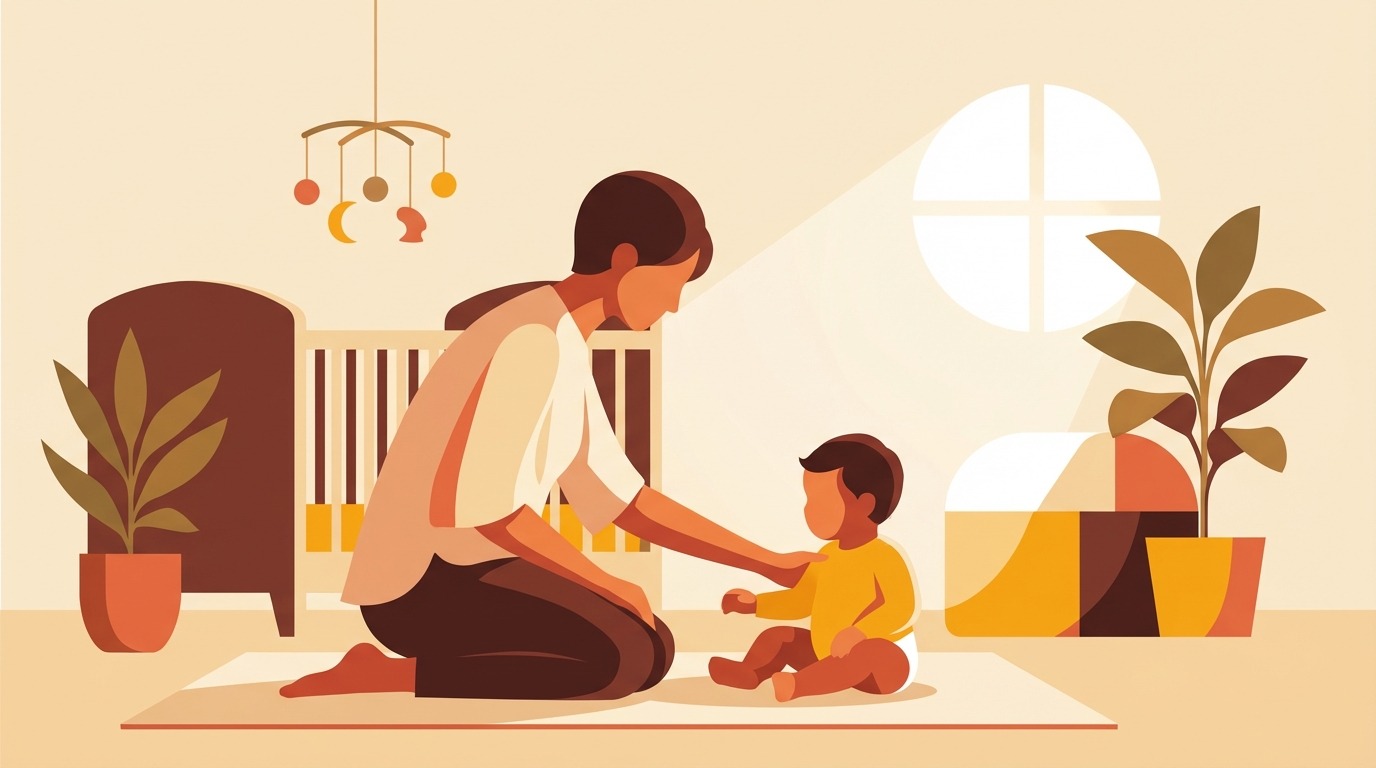
This power also relies on predictability. When the gesture is announced (“I place my hand on your arm”), the body does not tense up. The child anticipates, chooses, participates. This relational quality establishes lasting emotional security, which will later protect exploration, trust, and autonomy. A simple tactile ritual after the bath is sometimes enough: warm hand on the belly, light strokes on the arms, gentle pressure on the feet. The implicit message remains: “you are important, you are accompanied.”
In short, caresses offer a solid neurological and emotional foundation. They reduce stress load, facilitate falling asleep, and support brain plasticity so active during the first years. Here, science catches up with common sense: just touch weaves calmer, more curious children, more open to the world.
Building emotional security: the tactile language of the parent-child relationship
Emotional security is built through the repetition of consistent micro-gestures. A hand placed for a few seconds on the back, a light touch on the forehead, a containing pressure on the shoulders: each mark of affection tells the child they can rely on it. This relational cement nourishes basic trust and opens a space where emotions find their place. Yet, toddlers’ emotions overflow quickly. Adjusted touch acts like a shore where they can settle.
Establishing rituals helps this stability. After a snack, some parents trace an “ant trail” on the child’s arms at a steady pace to renew attention. Others use the “invisible blanket”: a hand wraps the back before a delicate transition. These gestures are conceived as an alphabet of connection, where each letter has its function. For ideas of gentle games respectful of the sensory rhythm, resources like kisses and tickles for children offer useful guidelines.
Touch can also relieve mild pain. During a vaccination, steady pressure on the shoulder combined with a slow caress on the forearm distracts attention and reduces perceived pain. It’s not magic but modulation of sensory circuits. Add a calm voice and a confident gaze: the cocktail reduces internal alarm and supports emotional regulation.
However, beware of confusion. A caress is not “taken,” it is offered. Even a baby shows a bodily “no”: arching back, turning head away, clenched fists. These signals invite to slow down, use voice, or postpone the gesture. This relational ecology protects the child’s dignity and paradoxically strengthens the desire for contact, because they know they can say stop. Over time, this respect nurtures richer and more joyful interactions.
When the house is buzzing and the day flies by, a few anchors suffice. The key idea remains simple: regularity, gentleness, consent. By cultivating this discreet art, the parent-child relationship gains depth and emotional clarity.
Tactile rituals that make a difference
- 🌙 Bedtime routine: warm hand on the belly, three breaths together, light strokes on the arms; guaranteed calm touch.
- 🧸 After daycare: “snail hug” (slow, firm pressure from top to bottom) to release tension and support well-being.
- 🎨 Before storytime: “feather rain” (light fingers on the scalp); the brain shifts to rest mode, emotions smooth out.
To extend these chosen moments, playful inspirations are offered here: moments of awakening. Each idea adapts according to the child’s age and sensitivity, without seeking performance.
Concrete gestures to soothe and stimulate toddler development
Needs vary by age, but a guiding thread remains: slowness. It creates an environment conducive to neurological maturation. Here is a short, precise protocol, easy to integrate into a busy day. It respects the biology of touch and supports overall development.
Start with the announcement. Saying what will happen reassures the child: “I am caressing your arm to help you relax.” Then, place the hand for steady pressure during two breaths. Then, stroke from shoulder to wrist three times at a steady speed. The brain perceives a pattern, the nervous system responds with measurable relaxation. Repeat on the other side to balance and end with a pillow-hand under the nape for a few seconds.
This 60 to 90 second circuit is used at bedtime, before a trip, or when the child becomes restless. It can be applied to the feet to prepare for sleep: toes squeezed and released, circles on the sole, thumb pressure one by one. The key lies in listening: if the body pulls back, adjust or stop. Thus, caresses remain a resource, never a constraint.
Care settings also offer opportunities. During a diaper change, a steady hand on the belly reduces startle reactions and promotes cooperation. During a cold, a gentle thoracic massage in a figure-eight accompanies breathing. Parents then discover they have a real shared self-soothing kit. To deepen foundations, this guide on newborn development and care offers clear and accessible markers.
Effects are quickly noticeable: easier falling asleep, faster calming returns, and more energetic waking moments. This dynamic radiates through the whole family, because a regulated child brings a more available parent. The virtuous circle is established, discreet but robust, and strengthens the day.
5-5-5 mini-program for busy parents
- ⏱️ 5 breaths together, hand on the child’s belly: grounding and emotional security.
- 🫶 5 slow strokes per arm: activation of slow fibers, calming emotions.
- 🦶 5 thumb pressures one by one on the feet: overall relaxation and better sleep.
These micro-rituals are short, repeated, and predictable. They cultivate trust and structure the day without weighing it down.
Relearning respectful touch: consent, culture, and co-regulation
The world has changed, and so have the codes. Respecting consent now crosses all educational spheres. Even an infant deserves delicacy: announce the gesture, watch for signs of agreement, back off if the body resists. This framework is not a constraint; it frees interactions. Because a child who knows their “no” is heard takes more risks to say “yes” later.
In an urban nursery, called here “The Hummingbirds,” the team introduced a card of tactile rituals. Each child has a repertoire: hand on the back for falling asleep, containing pressure for separations, no caress on the head if it surprises. In three months, end-of-day crying dropped. Parents saw spontaneous requests emerge: “more warm hand.” Regularity paid off without overstimulating.
The family context also matters. Some homes resonate loudly, others whisper softly. Touch adapts to these climates. In a noisy environment, deep pressure helps better than light strokes. Conversely, a hypersensitive baby will benefit from barely touched, brief caresses followed by a pause. Adjust rather than impose: this is the heart of a culture of compassionate contact.
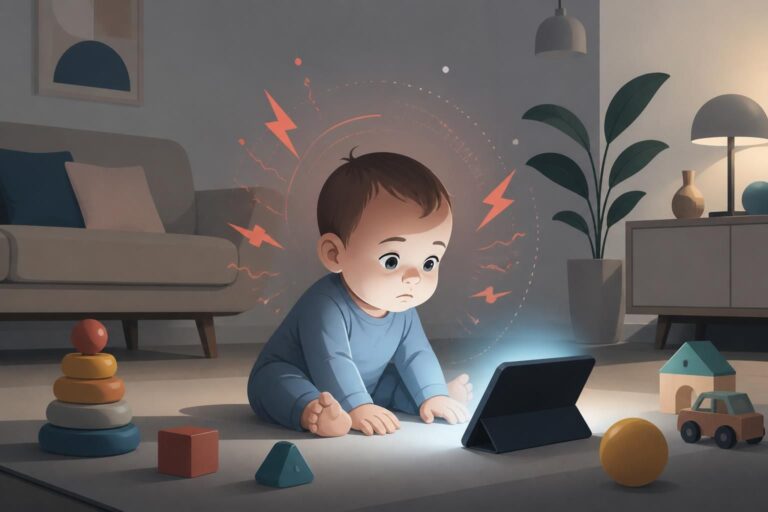
And what about screens? They monopolize visual attention and steal minutes of closeness. Putting the body back into daily life is reintroducing margins of silence and listening. Before a video, offering 30 seconds of “heavy hands” on the shoulders recenters the child. This buffer reduces agitation that often follows screen-time cutoffs. Gradually, the child learns to ask for this buffer themselves.
The goal is not to solve everything with caresses but to rely on them to better co-regulate. In this alliance, the adult offers a rhythm, the child proposes a tempo. Together, they invent a simple and profoundly human dance.
Self-caresses and co-soothing: families’ tactile toolbox
Parents don’t always have time. Yet, tiny sequences make all the difference. Self-touch also counts: when the adult places their hand on their own heart and breathes slowly, they model regulation. The child observes, imitates, then internalizes this movement. Co-regulation takes root in these visible, repeated, and consistent moments.
A home program can unfold over four weeks. Week 1: install a single pillar gesture at the same time each day. Week 2: add a variation (arms then feet). Week 3: associate a short phrase: “I hold you, you can relax.” Week 4: the child chooses their favorite gesture. This progression builds solid landmarks and strengthens autonomy, as the little one becomes an agent of their own soothing.
To track effects, a few simple indicators suffice: time to fall asleep, frequency of awakenings, intensity of tantrums, ability to return to play after frustration. Noting these points without pressure offers a precise picture of progress. When improvement is seen, motivation grows and rituals settle for good.
Families testify that a “2-minute kit” in the morning is enough: shoulder pressure, two slow caresses per arm, lantern-hand on the chest during a song. Leaving for school becomes smoother, separation less charged. The secret? Coherence between gesture, gaze, and voice. The body does not lie; when the adult calms, the child aligns.
Finally, thinking of touch as an open language changes the relationship. One speaks with the palm, punctuates with a stroke, silences with a placed hand. And the child, a fine bodily linguist, responds. This sensitive grammar is learned, refined, and leaves a happy trace in the body’s memory.
“A just caress is sometimes worth a thousand words: it teaches the heart to breathe, and the world to become gentler.”
À quelle fréquence proposer des caresses aux tout-petits ?
Mieux vaut peu mais régulier : 1 à 3 rituels courts par jour suffisent. L’important reste la qualité : lenteur, constance et respect du signal d’accord.
Comment savoir si mon enfant accepte le contact ?
Regard qui se pose, tonus qui se relâche, respiration plus lente : ces signes indiquent un oui corporel. Dos qui se creuse, tête qui s’éloigne ou mains qui repoussent : on ralentit ou on stoppe.
Les caresses aident-elles pendant les soins médicaux ?
Oui, une pression contenante associée à un effleurement lent réduit le stress et la douleur perçue. Annoncez le geste, restez à vitesse stable, et accompagnez par la voix.
Quelles zones privilégier pour apaiser ?
Bras, dos, épaules et pieds répondent bien aux effleurements et pressions douces. Évitez la tête chez les bébés sensibles et observez toujours la réaction.