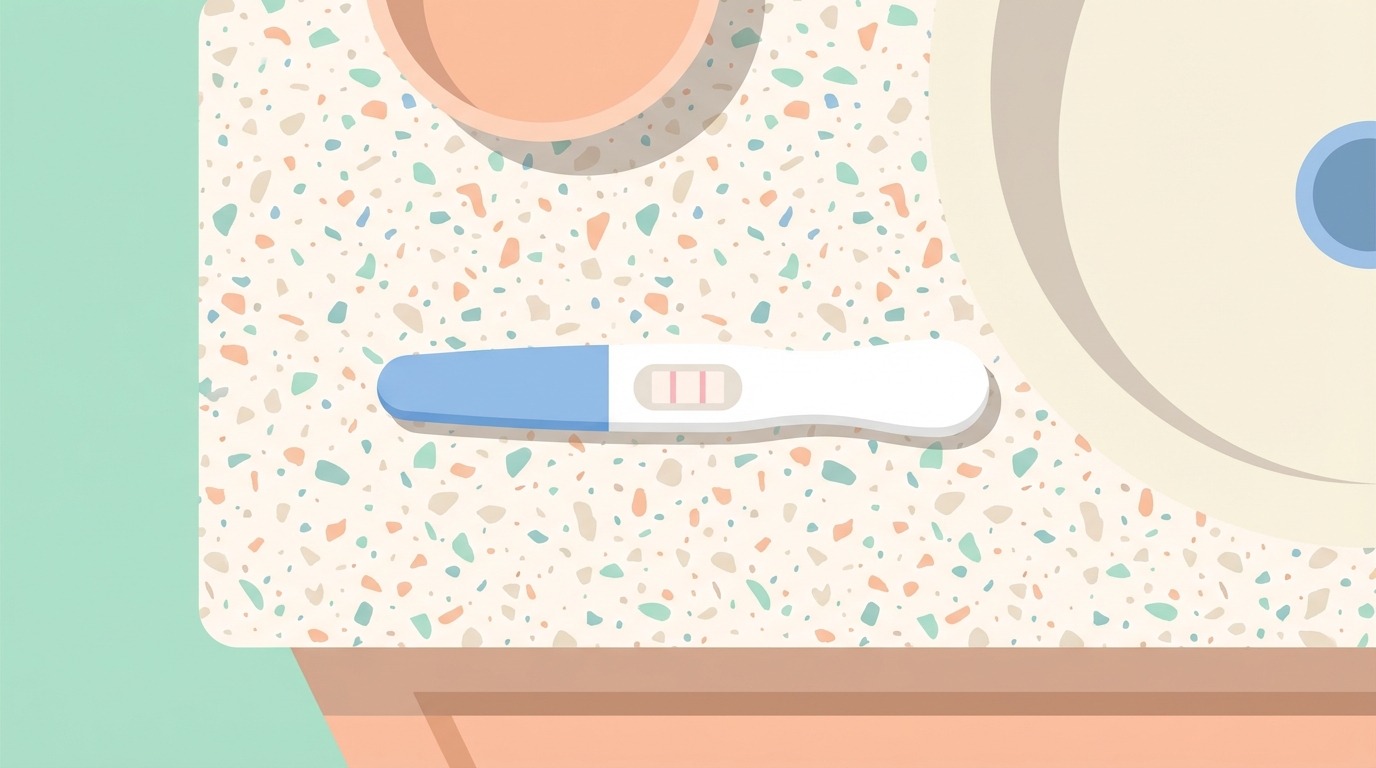
Pregnancy Tests: All about pregnancy tests.
| Short on time? Here’s the essential ⏱️ |
|---|
| Take the pregnancy test starting from the first day of missed period to maximize reliability 🗓️ |
| Use the first morning urine and respect the test waiting time indicated by the instructions ⏳ |
| Never re-read the test after the recommended time to avoid the evaporation line 📖 |
| A well-used urine test is very reliable; the pregnancy blood test confirms and dates the pregnancy 🔬 |
| In case of doubt or atypical symptoms, retake a test or consult a professional, including CPEF 🤝 |
The topic may seem simple, yet it always raises the same questions at the crucial moment. How exactly does a pregnancy test work and when does it give a solid result? Between the urine test sold in stores and the pregnancy blood test performed in laboratories, choices abound and each meets a specific need. To avoid pitfalls, one must understand the role of hCG, the influence of the menstrual calendar, and good usage practices.
Recent testimonials illustrate this well. A person like Lina, 29 years old, tested too early after unprotected intercourse, got a negative then, a week later, a clear positive. This scenario is not uncommon. Pregnancy hormone rises quickly, but not instantaneously. Thus, pregnancy test reliability depends primarily on timing and execution. This guide brings together clear landmarks, concrete examples, and useful links to proceed calmly, whatever the circumstances.

Everything to know about pregnancy tests: functioning, hCG, and reliability
A pregnancy test detects a specific hormone, hCG, secreted after embryonic implantation. This hormone roughly doubles every 48 to 72 hours in the beginning. Thanks to this rapid progression, today’s devices offer a reliable response when used at the right time.
Two families dominate the market. The urine test is done at home, often via a strip or a digital test. The pregnancy blood test quantifies the hormone in the blood and allows very early confirmation. In practice, the two approaches complement each other in a coherent pathway.
How hCG triggers the test reaction
Tests contain antibodies that recognize hCG. When urine or blood carries it, a reaction occurs and displays a visual signal. A stick may show a line, a cross, or a digital result. The important thing remains the results interpretation according to the instructions, as each brand has its codes.
Biology explains the differences. After fertilization, implantation generally occurs 6 to 10 days later. hCG then begins to rise. Before this step, detection is unlikely. That is why a test taken too early can yield a negative despite an early pregnancy.
Reliability, detection thresholds, and limits to know
Pregnancy test reliability depends on the detection threshold and timing. Many tests detect hCG around a few dozen IU/L. “Early pregnancy tests” try to detect before the missed period. They remain useful, but the risk of false negatives increases.
A test used under good conditions achieves high performance. Then, the pregnancy blood test consolidates results and helps date the pregnancy. It also becomes precious in case of atypical symptoms, pain, or bleeding.
Concrete example to clarify
Imagine Élodie, with a regular 28-day cycle. She tests on the first day of delay. Her pregnancy test result appears positive within three minutes. The instructions recommend reading at 3 minutes and discarding at 10 minutes. She respects these times. The laboratory, consulted afterward, confirms the pregnancy by assay.
Conversely, Hugo and Maëlle test four days before the presumed period date. The negative reassures them, but the period does not come. Retesting five days later, a strong “+” appears. The first test was not “false”; it was too early. Timing explains the gap.
In short, knowing hCG and its evolution, respecting the instructions, and choosing the right moment form a winning trio. The next section details this key timing.
When to take a pregnancy test and at what time of day
The timing of the test weighs heavily on the result. Generally, it is better to test from the first day of missed period. At this date, hCG often reaches the detection threshold of most devices.
Some prefer an early pregnancy test. These models may detect several days before the delay. However, increased sensitivity does not eliminate the risk of false negatives. A second test a few days later then becomes wise.
Missed period, early tests, and personal context
With an irregular cycle, caution is necessary. It might be reasonable to wait 48 to 72 hours of missed period to improve pregnancy test reliability. Otherwise, a blood test can sort things out earlier and avoid uncertainty.
A common question: should I fast? No, the important thing remains to use the first morning urine. To go further, this point is detailed here: is fasting useful for a test?
Time of day and waiting time
In the morning, urine is more concentrated. hCG is more detectable, especially very early. During the day, it is still possible, but drinking a lot can dilute the hormone. In all cases, respect the test waiting time of the instructions.
The reading window matters. Reading too early risks a false negative. Reading too late risks an evaporation line. This faint line does not mean “pregnant.” It corresponds to the drying of the strip, not to a specific reaction.
Practical case: from doubt to reliable result
Lina tested eight days after unprotected intercourse with an early pregnancy test. The result showed “not pregnant.” Five days later, she retested upon waking: “pregnant.” The explanation is low hCG at the first attempt.
Digital tests can also give an estimate of weeks. It’s practical but does not replace medical dating. If pregnancy is confirmed, the steps for follow-up after a positive test help structure what comes next.
Finally, for those who want to go very fast after a delay, blood assay provides an earlier answer. This choice is detailed below and in this clear resource on the usefulness of the blood test. In the meantime, keep an eye on the reading window: it remains your safeguard.
How to properly perform a urine test at home
The pregnancy test from the pharmacy is accessible, fast, and economical. For a robust result, the method matters as much as the technology. You must prepare the material, read the instructions, time the test waiting time, and interpret correctly.
First of all, check the expiration date and the packaging integrity. A test stored in warm conditions or expired can distort reading. It is preferable to choose a CE-certified brand and keep tests away from humidity.
Essential step-by-step instructions
- 🧴 Prepare a clean container if you do not urinate directly on the strip.
- 🌅 Use the first morning urine to enhance hCG detection.
- ⏳ Strictly respect the test waiting time indicated by the instructions.
- 📖 Read the result window within the recommended interval, not after.
- 🗑️ Discard the test after the deadline to avoid results interpretation errors (evaporation line).
These steps seem simple, yet they avoid most mishaps. A stopwatch on the phone often helps, especially with tests that show lines progressively.
Common mistakes and effective countermeasures
Drinking excessively before the test dilutes urine. This dilution may mask a still low hCG. Conversely, waiting for a time of day when urine is more concentrated improves sensitivity.
Another mistake is testing too early out of impatience. For those who want to test before the delay, this guide on the early pregnancy test explains what to expect. If negative, it is better to retest after a few days.
Interpret without error
A pregnancy test result is read literally according to the instructions. A single control line indicates “negative” on most classic models. Two lines, a cross, a “+” symbol, or a digital display confirm “pregnant.”
Some fertility drugs contain hCG. They can cause a transient positive. To understand these particular situations, consult the errors leading to a false positive. In case of doubt, a blood test quickly settles the question.
If the test remains negative but the period does not come, retest five to six days later. In certain circumstances, a professional will propose a blood assay to precisely verify the level of hCG.
Pregnancy blood test: usefulness, prescription, and optimal follow-up
The pregnancy blood test measures hCG precisely. It often detects earlier than a urine test and provides quantitative information. This numerical value guides the ongoing follow-up, especially at the start of pregnancy.
Why use it? Firstly, to confirm an uncertain result. Then, to date the pregnancy and evaluate its progression, as the level must increase coherently. In case of pain or bleeding, this assay becomes a key tool.
Why measure beta-hCG
A curve that doubles approximately every 48 to 72 hours reassures. Conversely, a slow progression may lead to searching for a cause. An ectopic or non-progressing pregnancy requires immediate attention. Repeated assay, combined with ultrasound, quickly guides diagnosis.
To delve deeper, the usefulness of the blood test is detailed in a clear and accessible resource. With a positive urine test, this assay complements the information. With persistent doubt, it reassures and speeds decisions.
Prescription, access, and reimbursement in practice
In France, a doctor, midwife, or health center can prescribe the assay. This prescription for a test facilitates coverage. Without prescription, the laboratory performs the assay, but it will not be reimbursed.
Furthermore, CPEF (Family Planning and Education Centers) offer confidential reception. You can ask questions, take a test, and receive appropriate guidance. This entry point reassures during moments of doubt.
Useful figures and good practices in 2026
In 2026, laboratories provide rapid results, often the same day. The test waiting time in the lab remains short. Quantification of hCG is done with very low thresholds, improving early detection.
A single assay informs, but a dynamic over 48 hours reassures better. If the level stagnates or drops, the professional adapts management. This ability to act quickly makes all the difference for health and peace of mind.
In summary, blood confirms, dates, and guides. Urine test reassures quickly at home. Together, they offer a readable and effective pathway.
What to do after a positive or negative pregnancy test result
A pregnancy test result “positive” opens a new chapter. One must then schedule a consultation and a blood assay. The steps for follow-up after a positive test help structure the first weeks.
A “negative” result with persistent delay encourages waiting a few days then retesting. In case of doubt, a blood assay quickly settles the debate. Teleconsultation support may also guide the next steps.
In case of a positive test
Start by confirming via a blood assay. Then prepare the first examinations and discuss lifestyle habits. Folic acid supplementation and stopping toxic products are often required.
Practically, a consultation with a professional sets the schedule. It aligns advice on lifestyle and risk factors. This step strengthens safety and confidence.
False positives, false negatives, and evaporation lines
False positives remain rare. They sometimes occur after treatments containing hCG or after a recent event (miscarriage, abortion). In these cases, a blood test and ultrasound clarify quickly.
False negatives are more frequent when testing too early. Diluted urine or reading too quickly can also produce misleading results. Re-reading after the deadline sometimes produces an evaporation line, which must not be confused with a positive.
Particular situations not to neglect
Bleeding can occur early in pregnancy. It does not always mean miscarriage. However, significant losses require evaluation. The article on heavy periods and testing provides useful markers.
Meanwhile, the pharmacy pregnancy test remains the best first step. It combines accessibility and good performance. Finally, keep in mind that results interpretation must follow the instructions, not intuition.
This graduated approach—urine test, blood assay if needed, then follow-up—offers a reliable framework. It reduces stress while securing important decisions.
Choosing between urine test, early test, and blood test: decisive criteria
The choice depends on urgency, medical context, and budget. Each of the three tools suits a specific use. Comparing them well avoids repeated purchases and persistent doubts.
A standard urine test is sufficient from the first day of delay. An early pregnancy test can be used if impatience prevails, but retesting is prudent. The pregnancy blood test is essential when solid confirmation or dating is needed.
Reasoned comparison and practical advice
Need discretion and speed? Home test excels. Concern about an atypical symptom? Laboratory provides numerical response. Seeking global advice? An appointment with CPEF or a professional coordinates everything.
Also, cost matters. Tests bought in stores are affordable. Laboratory tests can be reimbursed with a prescription. This organization limits wandering and reassures quickly.
Final checklist for a calm decision
- 🛒 Priority to a CE-certified and non-expired pharmacy pregnancy test.
- 🌗 Test at J+1 of delay to optimize pregnancy test reliability.
- 🕒 Respect the test waiting time and reading window.
- 🔁 If negative with delay, retest 5-6 days apart.
- 🧪 In case of doubt, get confirmation by a pregnancy blood test.
Overall, the best choice is the one that fits your current situation. Information, patience, and a good method form the winning trio.
{“@context”:”https://schema.org”,”@type”:”FAQPage”,”mainEntity”:[{“@type”:”Question”,”name”:”Is the pregnancy test more reliable in the morning?”,”acceptedAnswer”:{“@type”:”Answer”,”text”:”Yes. The first morning urine is more concentrated in hCG, especially very early in pregnancy. This reduces the risk of false negative and improves detection.”}},{“@type”:”Question”,”name”:”How long to wait before reading the test?”,”acceptedAnswer”:{“@type”:”Answer”,”text”:”Respect exactly the waiting time indicated in the instructions, often 2 to 5 minutes. Do not re-read the test after the delay to avoid evaporation lines.”}},{“@type”:”Question”,”name”:”Should I fast for a urine test?”,”acceptedAnswer”:{“@type”:”Answer”,”text”:”No. Fasting is not useful. However, avoiding drinking excessively before the test helps not to dilute hCG.”}},{“@type”:”Question”,”name”:”When to consult after a positive test?”,”acceptedAnswer”:{“@type”:”Answer”,”text”:”As soon as possible. A professional will prescribe a blood assay and organize prenatal follow-up. In case of pain or bleeding, consult urgently.”}}]}Is the pregnancy test more reliable in the morning?
Yes. The first morning urine is more concentrated in hCG, especially very early in pregnancy. This reduces the risk of false negative and improves detection.
How long to wait before reading the test?
Respect exactly the waiting time indicated in the instructions, often 2 to 5 minutes. Do not re-read the test after the delay to avoid evaporation lines.
Should I fast for a urine test?
No. Fasting is not useful. However, avoiding drinking excessively before the test helps not to dilute hCG.
When to consult after a positive test?
As soon as possible. A professional will prescribe a blood assay and organize prenatal follow-up. In case of pain or bleeding, consult urgently.
“A well-chosen test, at the right time, turns doubt into decision and stress into confidence.”