Separation Anxiety: Understanding and Managing Separation Anxiety in Children.
| Short on time? Here’s the essentials ⏱️ |
|---|
| 🧠 Separation anxiety is normal between 8 and 24 months but becomes a disorder if it persists, intensifies, and disrupts daily life. |
| 🧩 A secure attachment protects the child and encourages exploration, while fear of abandonment increases avoidance. |
| 🧺 Brief goodbye rituals, transitional objects, and predictability soothe separations. |
| 🛠️ In case of disorder, child therapy (CBT, gradual exposure) and relaxation techniques provide concrete help. |
| 🏫 Collaboration with school or daycare strengthens emotional security beyond the home. |
| 🌱 Parental support and adult stress management reduce the child’s anxiety. |
Separation anxiety is part of the major stages of emotional development in children. It signals that the attachment bond is well established and that the outside world is still blurry. However, when distress overflows family routines, school, sleep, or appetite, the question of a disorder arises. Concrete benchmarks, simple rituals, and clear communication then create a reassuring ramp toward autonomy.
In many families, crying at the daycare gate or morning tummy aches are not tantrums. They are alarm signals that can be decoded and soothed. Validated approaches, such as gradual exposure and child therapy, reduce avoidance and strengthen trust. The key lies in a winning duo: consistent parental support and cooperation with care settings. Together, these pillars weave lasting emotional security.
Separation Anxiety in Children: Key Emotional Development Markers
Between 8 and 24 months, separation often triggers crying. The child recognizes familiar people and fears what is out of sight. This is expected and reassuring. The tipping point occurs when anxiety prolongs, intensifies, and disrupts daily life.
To clarify diagnosis, several criteria guide observation. Persistent fear of being away from attachment figures, separation-themed nightmares, morning somatic complaints, repeated school refusal, and a duration of at least four weeks are markers. These signs must impact socialization, the classroom, or sleep.
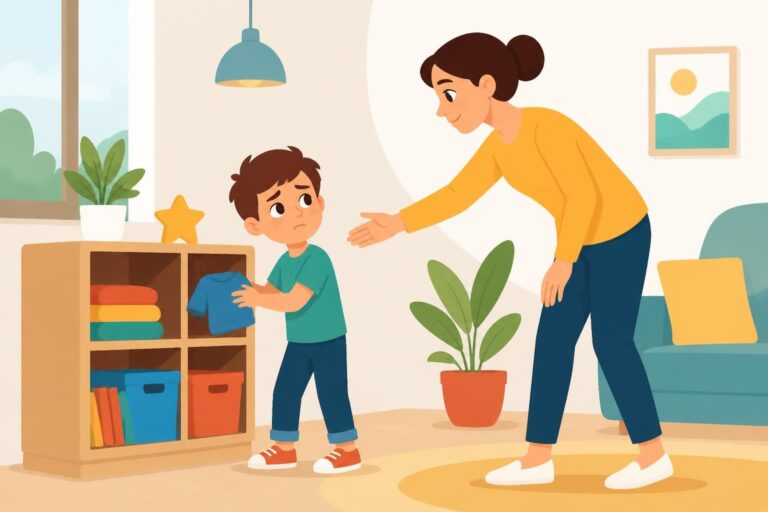
A precise example helps to get bearings. Lina, 3 years old, screams in the daycare cloakroom, clutches her comfort object, and says her tummy hurts. On weekends, she already anticipates Monday. When the parent leaves after a goodbye, the crying resumes even more intensely. This back-and-forth maintains the fear. A brief, clear, and consistent goodbye reduces confusion.
Some children become quiet rather than noisy. They avoid contact, become absorbed in sleep, or cling to the home. Quietness does not cancel the intensity of the worry. Hence the importance of attentive observation, without dramatizing.
Separation anxiety disorder must remain isolated. It is not explained by another neurodevelopmental or psychotic condition. This point guides towards targeted care, focused on secure attachment and self-regulation skills.
For intervention, predictability helps. A parent explains the schedule, announces who drops off and who picks up, then keeps their promise. Consistency soothes. The first improvements are seen in the classroom, during group activities, and then with morning eating.
Finally, the quality of the bond is not measured by the intensity of crying. A securely attached child may cry at departure, then play ten minutes later. The ability to calm down and explore indicates that trust is established. This compass supports the accompaniment.
Spotting Signs without Dramatizing
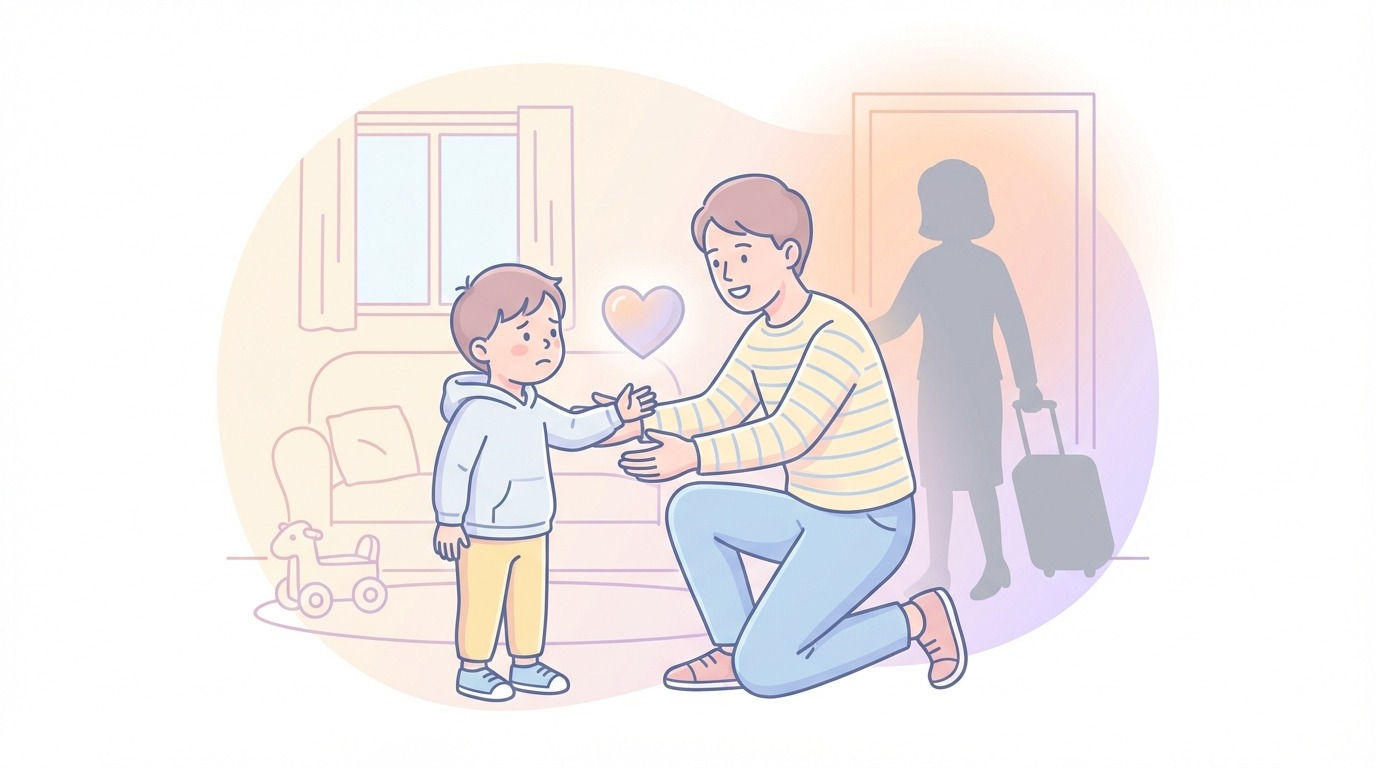
Crying alone does not qualify as a disorder. Observation focuses on frequency, duration, impact, and avoidance behaviors. The entourage also notes what soothes, like hide-and-seek games or a stable goodbye ritual.
When usual strategies fail and worry invades the days, assessment by a professional clarifies. The goal is not to label, but to guide towards effective tools. The challenge is to restore security so the child regains their exploratory drive.
When to Consult and How to Act Quickly
Consultation is necessary if the child refuses school for several weeks, suffers from recurrent somatic symptoms, or if separations become impossible. A brief child therapy, with gradual exposure and parental guidance, often changes the trajectory.
First targets: reduce avoidance, establish benchmarks, and strengthen frustration tolerance. The goal is to transform each departure into a predictable, short experience, followed by a announced return. This way, fear loses its power.
Causes and Mechanisms: Secure Attachment, Fear of Abandonment, and Family Context
Attachment theory explains why fear of abandonment can arise. In Mary Ainsworth’s famous experimental situation, the child’s behavior at the parent’s departure and return reveals attachment quality. Secure attachment promotes exploration, then calm reunions.
Several factors make a child more vulnerable. Innate sensitivity, early experiences, and life transitions play a role. Moving, hospitalization, or parental separation increase anxious vigilance. It’s better to prepare for these breaks.
For medical events, anticipation reduces stress buildup. Practical resources help to prepare a child for hospitalization and explain planned absences. Telling with simple words decreases unpredictability.
Toddlers sometimes combine fears and anger. Understanding 1–3 year-olds’ behavior illuminates reactions to separations. Clear limits and stable routines form a reassuring framework.
Moreover, shyness can mask more diffuse anxiety. Providing gentle, progressive support allows helping a shy preschooler without rushing them. Small victories build confidence.
There are also parental triggers. The CINE stress model recalls four sources: lack of control, unpredictability, novelty, and threatened ego. A tense parent at the gate unconsciously transmits this tension. Working on one’s own stress management reduces emotional echo in the child.
Family transitions are sensitive. When delivering happy news, it’s better to choose words and timing carefully. Communication benchmarks, like those for announcing a pregnancy to a partner, inspire a calm way to inform the child and reassure them about upcoming changes.
Finally, some paths require specific support. Starting kindergarten for former preterms often needs more adaptation time and close coordination with the educational team. This personalized attention limits anxiety.
Personal and Contextual Factors: How Do They Interlock?
A vigilant temperament combined with anxiety-inducing events can create fertile ground for avoidance. The child does not avoid out of defiance but to protect themselves. By working on predictability, the environment becomes less threatening.
The parent-child axis remains the best lever. A calm presence, brief instructions, and a warm but firm stance frame emotion without denying it. This framework bears fruit from the first weeks.
The Role of the Parent Model
Faced with stress, the child imitates. A parent who breathes slowly, speaks calmly, and stays the course shows that the storm passes. This modeling is as valuable as the content of the words. It offers a measure of calm.
Little by little, the child internalizes these benchmarks. They discover they survive separation. They learn that return is certain. This repeated proof, more than explanations, establishes trust.
Preventing and Soothing: Rituals, Games, and Daily Parental Support
Anticipating, ritualizing, and linking places form a winning triptych. The peekaboo game teaches object permanence. Transitional objects build a symbolic bridge between home and school.
Goodbye rituals benefit from staying brief. A simple message, an assumed separation, and a kept return create a memory of security. Coming back to say goodbye rekindles anxiety.
Sleep forms a foundation. Stable bedtime rituals lower hypervigilance. A well-rested child better regulates emotions in the morning.
Narration also helps. Telling the typical day, displaying an illustrated schedule, and repeating the drop-off-return sequence clarify expectations. The child’s brain loves familiar scenarios.
Practical Toolbox for Calm Separations
- 🧸 Comfort object + symbolic anchor: a heart drawn on the hand reminds of the bond during the day.
- 📜 Return card: a card with two boxes: “I drop off,” “I come back.” Validated together at return time.
- 📦 Courage box: a few photos and a mini-object allowed by school to reassure discreetly.
- ⏳ Visual clock: an hourglass to materialize the duration of the goodbye. Short and steady.
- 🎵 Sound ritual: two hummed notes at the gate, never more than ten seconds.
- 📚 Stories: books about separation read at night, paired with a final cuddle.
- 🌤️ Pre-care: 5 minutes in class before separation, then a clean departure to the referring adult.
Early fears often manifest as sudden refusals. This article on common fears between 1 and 3 years helps distinguish temporary fear from lasting anxiety. The better the distinction, the better the response.
Similarly, the educational team must be informed of chosen rituals. Shared instructions avoid inconsistencies. Consistency accelerates habituation.
Why Do These Tools Work?
They reduce unpredictability and increase perceived control. Separation remains a challenge but becomes comprehensible. The child regains power to act.
With repetition, the brain associates departure with a certain return. The internal alarm sounds less loudly. Courage grows almost unconsciously.
When Anxiety Becomes a Disorder: Child Therapy and Validated Relaxation Techniques
If anxiety persists and overflows daily life, child therapy is necessary. Cognitive-behavioral therapy (CBT) has a solid evidence base. It targets three areas: catastrophic thoughts, avoidance, and tolerance to bodily sensations.
The central principle is gradual exposure. A separation ladder is set up, from easiest to hardest. Progress is made step-by-step, without skipping stages, strengthening each success.
A concrete protocol illustrates this approach. Week 1: 2 minutes in an adjacent room. Week 2: 5 minutes with a referring adult. Week 3: drop-off at school with 10-second goodbye. Week 4: departure at the gate without accompaniment into class.
Parental guidance supports the process. It teaches responding neutrally to protests, maintaining the framework, and valuing effort. Compassion allies with gentle firmness.
Relaxation Techniques and Stress Management for Young and Old
Relaxation techniques complement exposure. Box breathing, soap bubbles to extend exhalation, and visualization of a “safe place” calm the internal alarm. These tools integrate into morning and evening routines.
Parental stress management is a major lever. Gentle physical activity, brief meditation, or coherence breathing exercises reduce emotional contagion. A regulated parent becomes a beacon.
School can offer a quiet corner, a visual schedule, and a reference adult for reception. This parent-child-team triangulation harmonizes expectations and smooths progress. Security becomes generalized outside the home.
Measuring Progress and Preventing Relapses
A separation diary, with anxiety ratings from 0 to 10, objectivizes advances. Setbacks are not failures. They indicate fatigue, illness, or contextual change.
Previous steps are then reactivated briefly. Confidence returns within a few days. Regularity remains the best antidote.
School, Daycare, and Social Life: Building Emotional Security Beyond the Home
The challenge often begins at the gate. A ritualized welcome, a stable reference adult, and a quick handover prevent goodbye drift. The classroom becomes a secondary security base.
Pre-visits, meeting the team, and gradual adaptation time build trust. For more sensitive paths, such as former preterms, specific benchmarks help. This article on starting kindergarten for former preterms sheds light on these adjustments.
Social activities expand the circle of trust. An afternoon at a relative’s, a short workshop, then a local mini-camp provide suitable steps. Each success strengthens emotional autonomy.
School and family benefit from synchronization. Simple instructions circulate: brief goodbyes, no “rescue” mid-morning, valuing efforts. This coherence lowers alarm signals.
Family–Educational Team Cooperation Tools
- 🗂️ Reference sheet: goodbye phrases, transitional object, preferred calming signals.
- 🕰️ Consistent schedules: arriving and leaving at fixed times reduces unpredictability.
- 🗣️ Common keywords: same formulations at home and in class to reassure.
- 🏷️ Reference adult: a known attachment point for drop-off and transitions.
When a major separation period is approaching (internship, trip, hospitalization), prior communication decreases the unknown. Here is a resource to prepare a child for hospitalization. The same principles apply to other departures.
Some children combine anxiety and social inhibition. Suggestions to help a shy preschooler complete the support, without forcing interactions. The goal is to offer steps sized to the child.
Over weeks, separations become simpler. The child better welcomes distance. They know one returns, and that the classroom remains a safe place. This silent certainty changes everything.
“The shorter the goodbye, the longer the trust lasts.”
{“@context”:”https://schema.org”,”@type”:”FAQPage”,”mainEntity”:[{“@type”:”Question”,”name”:”What is the difference between normal and disordered separation anxiety?”,”acceptedAnswer”:{“@type”:”Answer”,”text”:”The normal form appears mainly between 8 and 24 months, decreases with rituals, and does not durably impair daily life. We speak of a disorder if the fear persists beyond four weeks, intensifies, causes avoidance (school refusal, somatic complaints), and disrupts sleep, appetite, or socialization.”}},{“@type”:”Question”,”name”:”How to respond to crying at departure?”,”acceptedAnswer”:{“@type”:”Answer”,”text”:”Prepare the child, verbalize the plan (“I drop you off, I come back after the song”), say goodbye briefly, entrust the child to a reference adult, and leave without returning. Welcome the emotion without lingering, then praise the effort upon return.”}},{“@type”:”Question”,”name”:”Which transitional objects are most useful?”,”acceptedAnswer”:{“@type”:”Answer”,”text”:”A comfort object, a small photo, a heart drawn on the hand, or a “I’m coming back” card suffice. The object serves as a symbolic bridge between home and school. The important thing is consistent use, more than the object itself.”}},{“@type”:”Question”,”name”:”When to consult and whom to turn to?”,”acceptedAnswer”:{“@type”:”Answer”,”text”:”If separations remain very difficult for several weeks with nightmares, morning pains, school refusal, or social withdrawal, consult a child psychologist or child psychiatrist. A brief CBT with gradual exposure and parental coaching is often effective.”}},{“@type”:”Question”,”name”:”How to involve school or daycare?”,”acceptedAnswer”:{“@type”:”Answer”,”text”:”Share a reference sheet (goodbye ritual, transitional object), designate a reference adult, stabilize schedules, and agree on common keywords. Adaptation steps and a quiet corner reinforce emotional security.”}}]}What is the difference between normal and disordered separation anxiety?
The normal form appears mainly between 8 and 24 months, decreases with rituals, and does not durably impair daily life. We speak of a disorder if the fear persists beyond four weeks, intensifies, causes avoidance (school refusal, somatic complaints), and disrupts sleep, appetite, or socialization.
How to respond to crying at departure?
Prepare the child, verbalize the plan (“I drop you off, I come back after the song”), say goodbye briefly, entrust the child to a reference adult, and leave without returning. Welcome the emotion without lingering, then praise the effort upon return.
Which transitional objects are most useful?
A comfort object, a small photo, a heart drawn on the hand, or a “I’m coming back” card suffice. The object serves as a symbolic bridge between home and school. The important thing is consistent use, more than the object itself.
When to consult and whom to turn to?
If separations remain very difficult for several weeks with nightmares, morning pains, school refusal, or social withdrawal, consult a child psychologist or child psychiatrist. A brief CBT with gradual exposure and parental coaching is often effective.
How to involve school or daycare?
Share a reference sheet (goodbye ritual, transitional object), designate a reference adult, stabilize schedules, and agree on common keywords. Adaptation steps and a quiet corner reinforce emotional security.