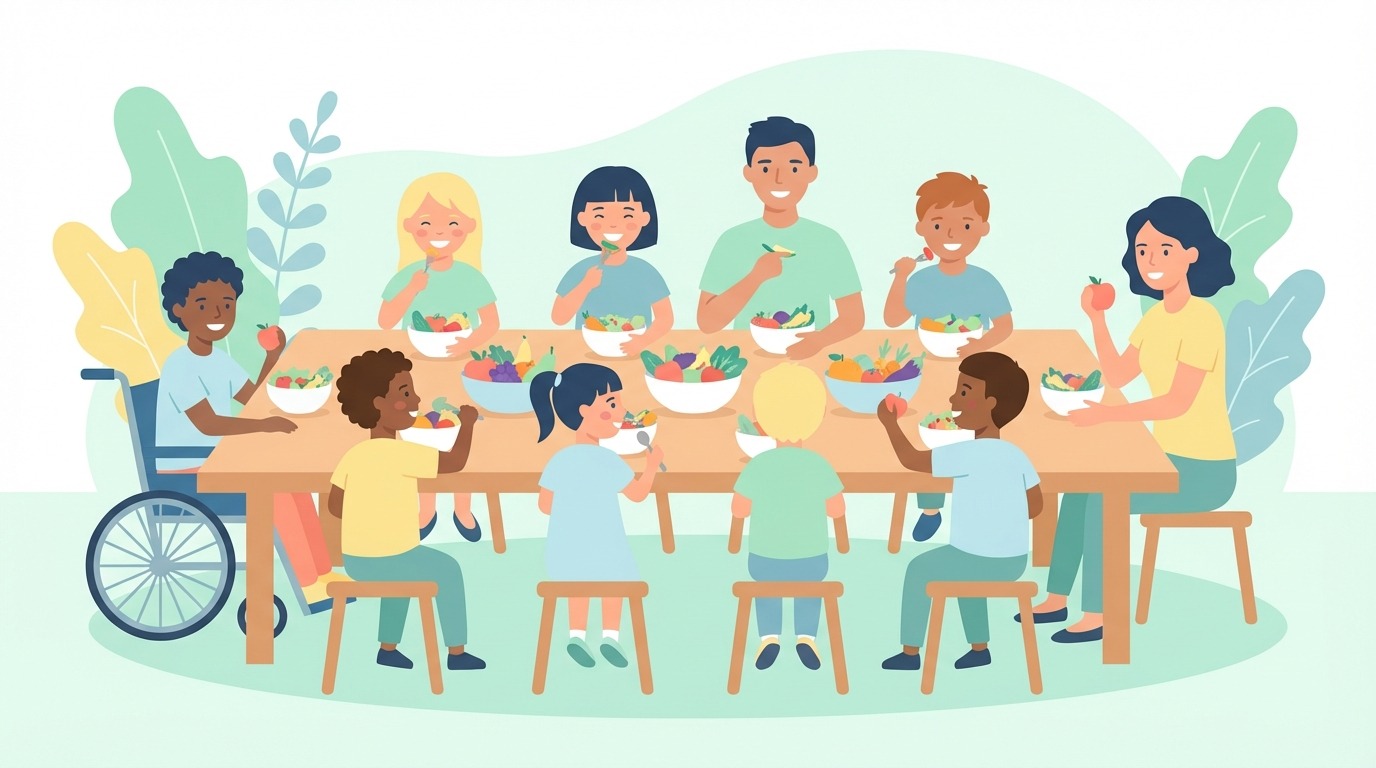
Foods Children Salt Sugar: Foods for children: beware of salt and sugar
| Short on time? Here’s the essentials ⏱️ |
|---|
| Reduce Sugar 🍭: aim for simple snacks (fruit + plain dairy) and avoid sugary drinks daily. |
| Control Salt 🧂: no added salt in baby purees; prefer mild herbs and spices for flavoring. |
| Benchmarks 📏: WHO less than 5 g of salt for ages 2–15; ANSES ~75 g of sugars for 8–12 years, without excess. |
| Avoid ultra-processed 🧃🍪: hidden salty and sweet in sandwich breads, sauces, cookies, flavored yogurts. |
| Eating habits 👶: frequent exposure to vegetables, home cooking, reading labels, and moving every day. |
Salt and sugar shape toddlers’ palates early on, and this duo can slip from innocent pleasure to subtle excesses. In Infant Nutrition, the challenge is twofold: protect Child Health today while programming a healthy relationship with food tomorrow. Commercial Children’s Foods display appealing masks; yet many hide high levels of Salt and Sugar. This reality demands clear benchmarks, simple habits, and attentive care.
A winning strategy relies on a Balanced Diet that respects the sensitivity of kidneys, brain, and microbiota. It values natural taste, limits ultra-processed products, and sets up reassuring rituals. Throughout the pages, concrete advice, quantified comparisons, alternatives, and culinary tips will guide every parent. Goal: turn the Salt-Sugar Risks into levers for Health Prevention and Child Well-being.
Children’s foods: understanding salt and sugar risks for health
Why such an attraction to salty and sweet from a very young age? In industry, salt and sugar act as natural flavor enhancers. The taste seems more intense, and the child experiences immediate pleasure. This sometimes leads to a lasting preference, hard to adjust. According to WHO, for 2 to 15 year-olds, the red line is under 5 g of salt per day. Regarding sugar, ANSES recommends about 75 g of sugars for 8–12 years, avoiding concentrated intakes. Regular excess affects blood pressure, satiety, and blood sugar.
For infants, caution is crucial. Immature kidneys poorly filter excess salt. For a baby around 10 kg, very low intakes without additions are targeted. Vegetable purees, unsweetened compotes, and adapted milks suffice. Later, “hidden” salt appears: sandwich bread, charcuterie, packet soups, savory snacks. The same scenario with sugar: sweetened cereals, flavored yogurts, bars, and drinks. The better choice is water, whole fruits, and plain dairy.
Effects go beyond the scale. Excess sugar alters hunger regulation: the brain receives a distorted signal, and snacking increases. The liver converts surplus into fats; a setting for insulin resistance develops. Concentration and mood variations can appear. Long term, preference for salty raises the risk of hypertension and cardiovascular diseases. To deepen the link between sensory exposure and preferences, see these insights on children’s food dislikes and neophobia.
The first years are also a critical window for the brain. A calm, varied diet rich in useful nutrients supports plasticity. Benchmarks on salt and sugar thus serve a broader goal: overall development. To understand the stakes, this guide on brain development between 1 and 3 years is a useful resource.
In this perspective, reducing is not banning. Salt remains necessary for water balance and iodine for the thyroid. Sugar provides energy. It’s all about dose and quality. From the start, it’s relevant to distinguish sugars naturally present in milk and fruit from added sugars. The same logic applies to natural sodium in foods and added salt. A simple guideline: raw products, homemade recipes, and carefully read labels.
A final point is essential: nutrition works hand in hand with sleep and movement. An adapted physical activity, described here for every age, complements health strategy: see age-appropriate physical activity. Thus, every meal becomes a building block for prevention.
Infant nutrition: quantified benchmarks and tasty alternatives
Clear limits reassure families. For babies, no added salt is necessary. From six months, it’s possible to introduce mild spices and herbs, without heat. The goal? Awaken the palate without overwhelming the taste buds. For older children, a simple red thread helps: water at the table, no sugary drinks daily, and desserts based on fruit. Ultra-processed products are reserved for special occasions.
For guidance, this summary chart is handy at shopping and meal planning. It forbids nothing; it guides toward safer and delicious choices.
| Age 👶👧 | Max recommended salt 🧂 | Suggested free sugars 🍬 | Alternative ideas 🌿 |
|---|---|---|---|
| 6–12 months | No addition | Very limited | Homemade purees, unsweetened compotes, mild herbs 😊 |
| 1–3 years | Well below 5 g/day | Few added sugars | Plain yogurt + fruit, water, whole wheat bread 🥝 |
| 4–8 years | < 5 g/day | Limit sweet products | Snack fruit + nuts, unsweetened compote 💧 |
| 9–12 years | < 5 g/day | ANSES ~75 g/day sugars | Homemade granola, dark chocolate, unsweetened drinks 🍫 |
Daily, a snack becomes an ally rather than a trap. Concrete ideas are detailed in this file on healthier snacks. Organizationally, home cooking saves time with good tools and quick recipes; these tips for quick meals for children make a difference on busy evenings. The key is to keep things simple and use reliable raw materials.
Culinary tips optimize flavor without salt: steaming, oven, papillote, grill. Water dilutes flavors, steam concentrates them. The trick of blanching bacon bits, choosing fresh over hard cheeses, or using unsalted cooking water from vegetables to cook rice and pasta are true “pluses.” Herbs (basil, parsley, chives) and spices (turmeric, mild paprika, cumin) give a joyful and colorful cuisine.
To stay on track, a small labeling ritual helps. Target, per 100 g: sugar < 20 g, saturated fat < 8 g. For 0–3 years, avoid added salt products. This visual marker, placed on a shopping list, avoids hesitant back-and-forths. After a few weeks, it all becomes automatic.
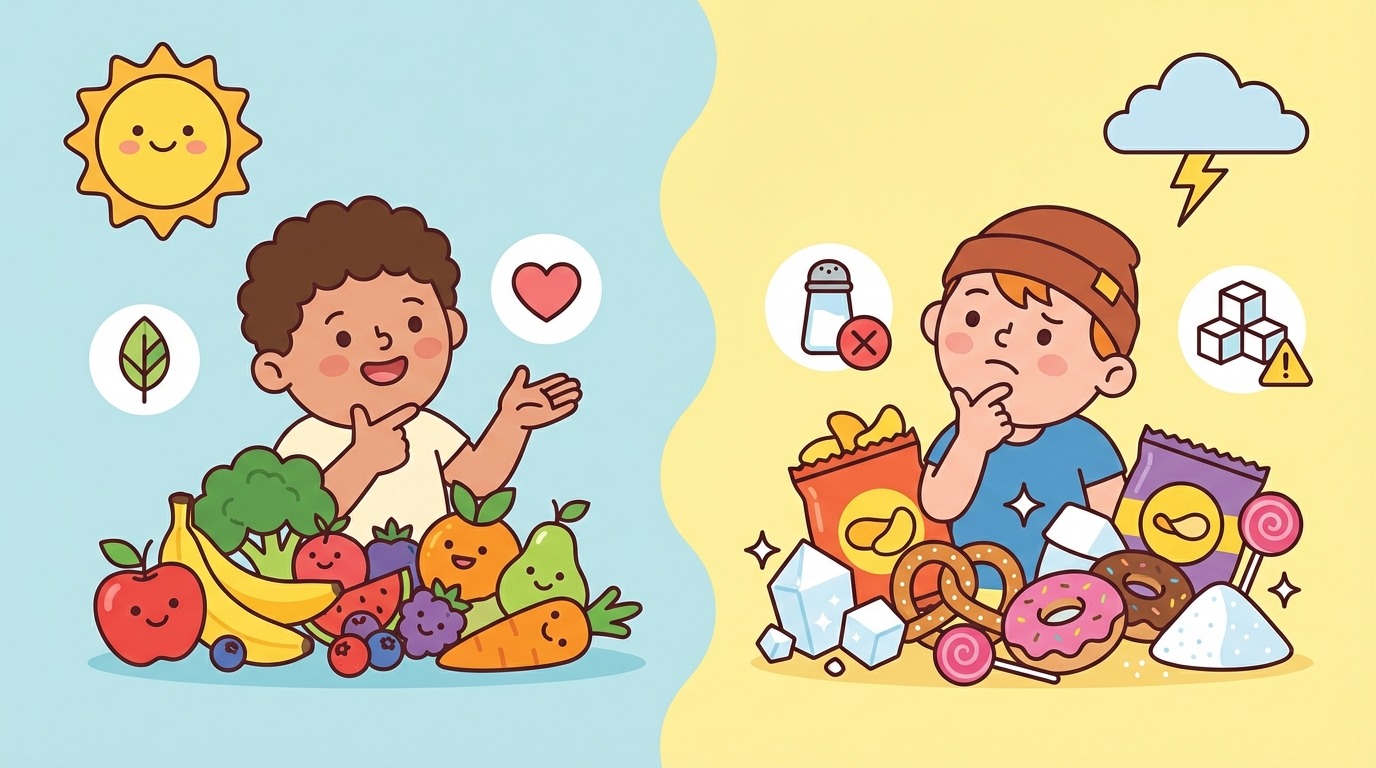
Eating habits: educating the taste without excess salt and sugar
The palate is built by repeated exposure. Ten to fifteen encounters with a vegetable may be necessary. A positive presentation works: small portions, playful plates, pairing a familiar food with a new one. Léa’s family experienced this. By offering roasted carrot weekly, accompanied by herbs and a drizzle of oil, acceptance came without pressure.
Refusals are part of learning. To keep on track, it is useful to know the protective mechanisms of neophobia and dislikes. A practical guide explains how to tame them without forcing: see children’s food dislikes and neophobia. Offer, don’t impose; and avoid replacing by a sweet food, as this reinforces the “refusal = dessert” pattern.
The table context matters as much as the recipe. Without screens, with calm times, curiosity increases. Routines reassure: stable times, structured starter-main-side, water available. To prevent disputes and encourage autonomy, these keys on table behaviors are valuable. Children quickly learn to self-regulate if the environment remains consistent.
Sugar maintains a demand loop. Break it by replacing sugary drinks with homemade flavored water (cinnamon stick, orange slices). Reserve cakes for festive moments. For breakfast, oats, plain dairy, and fruit hold until lunch. Hunger is more stable, attention at school too.
- 🍎 Replace sweet snacks with fruit + a handful of nuts.
- 🌿 Season dishes with herbs and citrus, not salt.
- 💧 Serve fresh water at every meal, no soda.
- 🧑🍳 Steam or bake to concentrate flavors.
- 📦 Read the label: < 20 g sugar/100 g and low salt for children.
By structuring the environment and the story around the meal, the child discovers they can like what is neither sweet nor salty. This constant and warm framework builds lasting trust.
Health prevention: effects of too sugary or salty a diet
Beyond weight, the entire physiology reacts. Excess sugar strains liver and pancreas. Repeated blood sugar spikes cause fatigue. In the short term, fragile teeth, disturbed appetite, and concentration variations are observed. Sugar “calls” for sugar because satiety sensation shifts. Long term, insulin resistance develops. Meanwhile, too much salt maintains a sensory preference and raises the risk of adult hypertension.
International data stress the urgency: tens of millions of children live with excess weight. Pediatric BMI follow-up helps distinguish transient adiposity rebound from a worrying trajectory. Diet is not the sole factor but is a major lever. Another lever is regular physical activity, essential for regulating appetite and mood. For tools, this guide on age-appropriate physical activity offers concrete benchmarks by age group.
Micronutritional quality also protects. Iron, for example, supports attention and immunity. Clear benchmarks on good iron intake help prevent fatigue. An overly sugary menu may replace nutrient-dense foods, creating silent deficiencies. Hence the interest in rebalancing early.
Children’s gut microbiota, still developing, is sensitive to the salt-sugar duo. Some research suggests a highly processed diet weakens this ecology. To broaden the digestive stakes view, this file on the rise in Crohn’s cases in children offers reflections. Without alarming, it promotes a more plant-based plate, rich in fiber, low in salt, and modest in added sugars.
One last point deserves highlighting: prevention doesn’t mean restriction. It sets a flexible framework, a majority of “wise” meals, and fully embraced celebrations. Thus, the message remains positive, adherence durable, and Health Prevention becomes a family reflex.
Everyday practice: shopping, labels, and anti-excess organization
Victory is won at the supermarket. Read the label calmly, targeting three lines: sugar, salt, saturated fatty acids. Simply put, a “children’s” product is not synonymous with an adapted product. Mascots and bright colors are marketing signals. The home rule can be: no added salt up to 3 years, less than 20 g sugar/100 g, and few ingredients. Following this compass, the cart changes effortlessly.
At snack time, alternatives exist. Fresh fruit, plain yogurt, a square of dark chocolate, and water make a winning trio. To vary, get inspired by healthier snack ideas. To save time, these tips for quick meals for children secure busy evenings. Finally, the table atmosphere matters. These benchmarks on table behaviors smooth exchanges.
In cooking, everything conspires to reduce salt without losing flavor. Sear, roast, perfume. Minute vinaigrette with lemon, herbs, and a touch of yogurt replaces many salty sauces. Avoid having savory snacks within hand’s reach. “Visible stocks” shape snacking. A fruit bowl on the table, ready crudités in the fridge, and a refilled water bottle support good decisions.
- 🧃 Replace sodas with water + infused fruits.
- 🧂 Cook without salting, then adjust only on adults’ plates.
- 🍫 Prefer dark chocolate and limit sugary bars.
- 🥦 Include vegetables at every meal, even in small portions.
- 📚 Educate gently: read the label together and choose “the winning alternative.”
By sharing these actions, the family anchors solid Eating Habits. Children gain autonomy, and Balanced Diet settles in the long term.
“Less artifice, more taste: that’s how every bite becomes a step toward health.”
{“@context”:”https://schema.org”,”@type”:”FAQPage”,”mainEntity”:[{“@type”:”Question”,”name”:”Should salt and sugar be completely banned in children?”,”acceptedAnswer”:{“@type”:”Answer”,”text”:”No. Salt and sugar have a place in the diet, but in the right amounts. No added salt for babies, and sugar in moderate quantities. The goal is to avoid very salty or sugary products and to favor raw foods.”}},{“@type”:”Question”,”name”:”What drinks should be offered daily?”,”acceptedAnswer”:{“@type”:”Answer”,”text”:”Water remains the best drink. Juices, even 100% fruit, should be reserved for occasions. Sodas and sugary drinks should not be part of the routine, as they quickly increase sugar intake.”}},{“@type”:”Question”,”name”:”How to replace salt in cooking for children?”,”acceptedAnswer”:{“@type”:”Answer”,”text”:”Use fresh herbs (basil, parsley, chives), mild spices (paprika, turmeric, cumin), citrus zest, and cooking methods that concentrate flavor (steam, oven, papillote).”}},{“@type”:”Question”,”name”:”What if my child refuses vegetables?”,”acceptedAnswer”:{“@type”:”Answer”,”text”:”Offer without forcing, in small portions and varied forms (roasted, sticks, soup). Repeat exposure 10 to 15 times. Avoid compensating with a sweet dessert to not reinforce preference for sweets.”}},{“@type”:”Question”,”name”:”What simple benchmarks in the supermarket?”,”acceptedAnswer”:{“@type”:”Answer”,”text”:”Aim for < 20 g sugars/100 g, little or no salt for 0–3 years, and short ingredient lists. Prefer raw products and homemade cooking whenever possible."}}]}Should salt and sugar be completely banned in children?
No. Salt and sugar have a place in the diet, but in the right amounts. No added salt for babies, and sugar in moderate quantities. The goal is to avoid very salty or sugary products and to favor raw foods.
What drinks should be offered daily?
Water remains the best drink. Juices, even 100% fruit, should be reserved for occasions. Sodas and sugary drinks should not be part of the routine, as they quickly increase sugar intake.
How to replace salt in cooking for children?
Use fresh herbs (basil, parsley, chives), mild spices (paprika, turmeric, cumin), citrus zest, and cooking methods that concentrate flavor (steam, oven, papillote).
What if my child refuses vegetables?
Offer without forcing, in small portions and varied forms (roasted, sticks, soup). Repeat exposure 10 to 15 times. Avoid compensating with a sweet dessert to not reinforce preference for sweets.
What simple benchmarks in the supermarket?
Aim for < 20 g sugars/100 g, little or no salt for 0–3 years, and short ingredient lists. Prefer raw products and homemade cooking whenever possible.