Stress Young Child: Stress in young children from 1 to 3 years old.
| Short on time? Here’s the essentials ⚡ |
|---|
| The stress of the young child is mostly visible in behavior: opposition, biting, screaming, withdrawal 😮💨 |
| Early warning signs exist: sleep disorders, changing appetite, somatizations, hypersensitivity 🔎 |
| Before 3 years old, the brain is very sensitive to cortisol; the adult “co-regulates” the emotions 🧠 |
| The best stress management is played out in routine, active play, listening, and simple words 🧩 |
| A calm environment and secure family relationships protect development 🫶 |
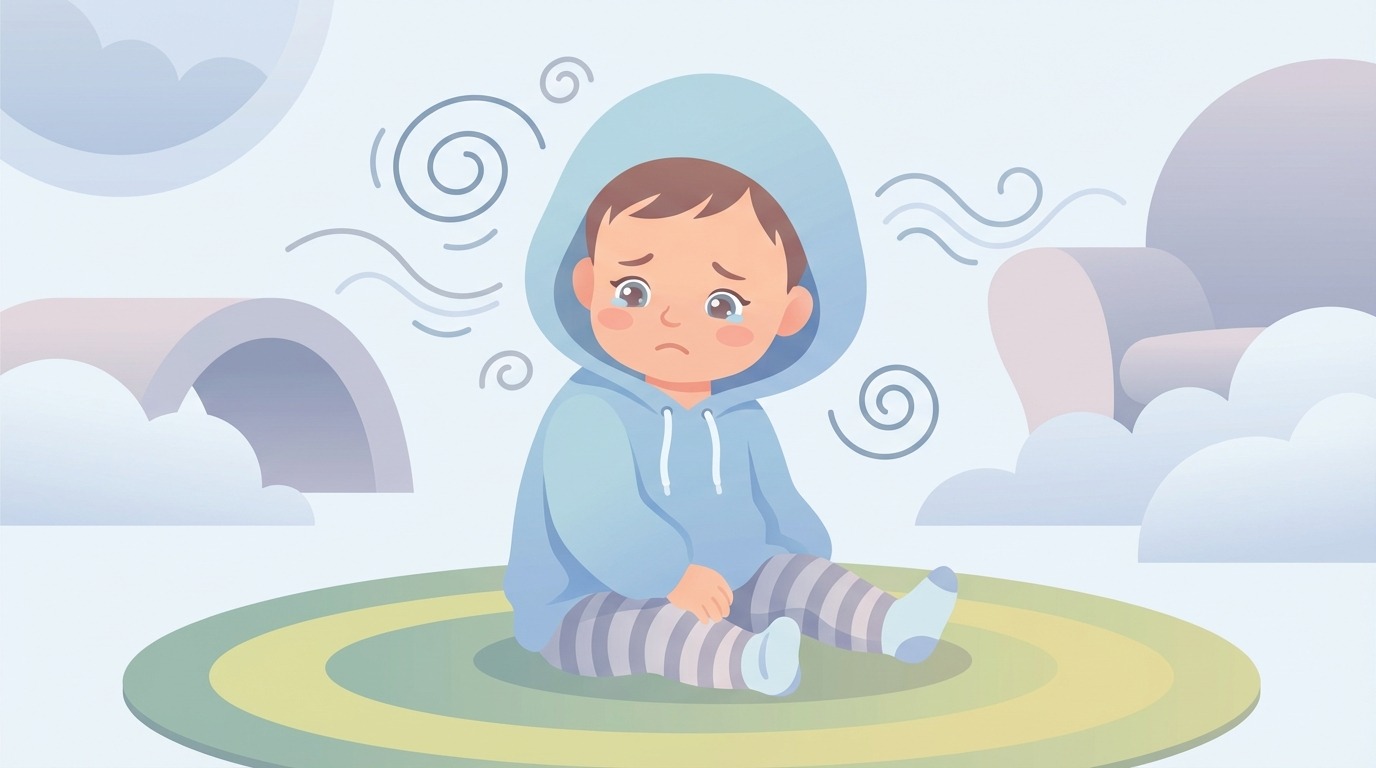
Between one and three years old, stress often takes unexpected forms. A tantrum when putting on shoes, a tantrum at the supermarket, or a sudden refusal to eat are not whims. Often, they express anxiety, fatigue, or sensory overload. The toddler does not yet have the words to say what they are experiencing. They therefore speak with their body, gestures, tears, and silences.
This period is also an opportunity. The brain learns quickly at this stage, especially when the adult secures the relationship. Thus, small daily strategies can transform a difficult day. It is enough to spot the early warning signs, name the emotions, and offer a stable framework. With landmarks, a child at 3 years old regulates better. And each victory strengthens mutual trust.
Warning signs of stress in the young child from 1 to 3 years old
Behaviors that speak loudly
When stress rises, the young child may bite, push, or scream. It is not “naughtiness.” It is a signal. The nervous system is overwhelmed and looking for an exit. Subtle changes are also observed: an avoiding gaze, shoulder tension, refusal of contact. Another striking sign is repeated opposition. It expresses a need for control in a world that is too unpredictable.
The key is to see these gestures as messages. For example, Malo, age 2, hits his friend after a noisy morning. After a quiet time, he calms down in turn. The behavior is explained by overload, not by aggressive intention. To support this moment, it is useful to set a short and gentle framework. “I protect you, I help you, you are safe.”
Sleep, appetite, and somatizations
Sleep disturbances often appear first. Night awakenings, difficulty falling asleep, or nightmares signal a warning. The body also speaks. Stomach aches, eczema, or regurgitations sometimes appear when tensions last. At mealtime, the child may refuse foods or suddenly change appetite. These variations are not trivial.
To act, the meal environment matters. Simple landmarks help: regular timing, small portions, limited choices. Resources on mealtime behavior and on disgust of certain foods illuminate these phases well. Nutrient intake can also be checked. Iron in the diet supports energy and attention. A deficiency increases irritability and fatigue.
Symbolic play and withdrawal
Withdrawal, refusal to play, or the need to always stay close to the adult are signals of stress. Conversely, symbolic play can soothe. Around 3 years old, an imaginary friend may appear. This invented companion is often a healthy strategy to organize emotions. It serves as a regulation tool. This phenomenon is described in an accessible way here: imaginary friend in the child.
When the child isolates more, it is necessary to alert gently. The objective is not to force. It is better to offer a quiet presence, some short rituals, simple choices. Regularity reassures the nervous system. And a soothed toddler quickly regains the appetite to explore. That is the most reliable indicator.
By reading these signs as messages, the adult gains a precious power: to intervene early and appropriately.

Common causes: emotions, transitions, and family relationships
Separations and new situations
Starting daycare, the arrival of a sibling, or moving are typical triggers. The brain likes landmarks. Without them, anxiety rises. Between 13 and 18 months, attachment consolidates, and fear of separation intensifies. This point is well illustrated in this guide on emotional life at 13–18 months. Offering a short and regular separation ritual limits overwhelm. A key phrase, a brief hug, a transitional object often suffice.
Sensory novelty also matters. Very noisy rooms, bright lights, and crowds tire. It is therefore necessary to modulate. Alternating activity and quiet time protects balance. Transitions are better anticipated with a visual timer or a signal song. The child then knows what is coming next. Their psychology settles.
Mirror effect of adults
The stress of adults is reflected in the young child. A hurried, worried, or exhausted parent, even silent, sends a powerful nonverbal message. The little one picks up the tension and aligns with it. This emotional contagion is not inevitable. A few breaths, a slower tone of voice, and a posture at eye level change the game.
Moreover, shopping can be a trap for overstimulation. Concrete tips to prevent tantrums in the store are precious, like those offered here: shopping with a child. Preparing a mini pictorial list, giving a role (carrying a light package), and planning a healthy snack prevent many turbulences.
Peers, movement, and need for discharge
Active play helps stress management. Running, climbing, rolling, jumping, it’s the natural valve. When the body moves, tension decreases. Age-appropriate ideas are found here: physical activities by age. Then, a calm ritual follows. The contrast anchors security.
Among peers, misunderstandings are frequent. Lending, waiting, sharing require a brain still under construction. It is not a lack of education, but a lack of maturation. The adult then acts as a verbal “bridge.” “You want the car. Leo is holding it. We wait for the timer. Then, it’s your turn.” The short phrase calms anxiety and makes the scene predictable.
Understanding the causes loosens the grip. Once the triggers are identified, the solutions become obvious.
Neuroscience and development: what stress does to the brain from 1 to 3 years old
The HPA axis and cortisol, simple version
When facing a perceived threat, the hypothalamic‑pituitary‑adrenal axis releases cortisol. In small doses and occasionally, this response helps adaptation. When prolonged, it tires the system. The toddler’s brain then molds around vigilance rather than curiosity. The heart beats faster, breathing accelerates, and attention fragments.
At this age, co‑regulation is essential. The social brain builds through contact with a calm adult. A calm voice, slow gestures, and consistent routine stabilize internal chemistry. One does not “learn” to calm down by explanation. One absorbs it in relationship.
Hippocampus, amygdala, prefrontal cortex
The hippocampus consolidates memory. The amygdala processes danger. The prefrontal cortex organizes inhibition and attention. Under chronic stress, these areas lose flexibility. The child becomes more reactive, less available for exploration. Plasticity exists, however. Stable routines, restorative sleep, and imaginative play promote repair.
For deeper study, this file on brain development from 1 to 3 years offers a clear synthesis. In 2025, several journals confirmed the importance of a predictable emotional environment. In practice, a peaceful emotional climate is worth a thousand instructions.
Sleep, learning, and environment
Sleep consolidates learning. Yet cortisol hinders falling asleep and fragments the night. We can therefore act on the day to improve the night. Periods of activity followed by a quiet “airlock,” simple dinner and visual ritual all reduce anticipatory anxiety. Result: smoother falling asleep and less grumpy wake-ups.
To visualize these mechanisms, a video search can help share materials with the educational team or family.
By nurturing curiosity rather than alarm, we protect attention and memory circuits.
Supporting a crisis: concrete gestures and positive communication
Before the crisis: spotting early warning signs
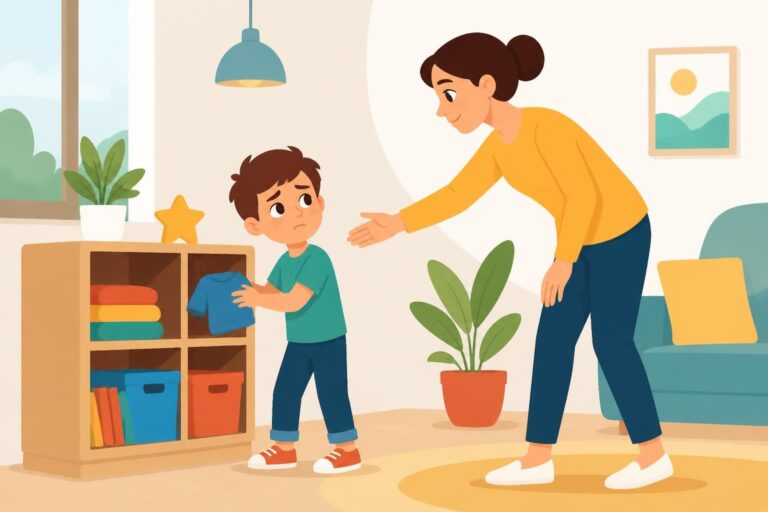
A lost gaze, a stiffening body, a rising voice. These signals announce the surge. As soon as they appear, we slow down. We crouch to be at eye level. We name the emotion without judgment. “You are very angry. I help you.” This brief phrase provides a framework. It does not increase pressure.
In childcare facilities, a “calm box” sometimes circulates. It contains a stress ball, a soft cloth, a short book. This portable space shows that one has the right to need help. The message is powerful and normalizes regulation.
During the crisis: a 5-step method
- 🛑 Stop the escalation: low voice, safe distance, slow gestures.
- 🫶 Contain without restraining: protect if necessary, avoid struggle.
- 🗣️ Name the emotion: “It’s hard to wait,” “You are frustrated.”
- 🌀 Offer a sensory outlet: breath in the hand, squeeze a security blanket.
- 🔁 Replay the scene: offer turn-taking to repair the bond.
These steps are quickly learned as a team. A training day crossing neuroscience, positive communication, and body techniques can accelerate progress. Modules led by a childcare educator and a sophrologist create concrete bridges between theory and practice.
After the crisis: story, symbolic play, repair
Once the wave has passed, the child can listen. A short story organizes the experience. “You wanted the scooter. Paul was holding it. You shouted. We waited for the timer. Then, you rode.” The brain associates words and sensations. Symbolic play extends this integration. Puppets allow replaying without accusing.
Sometimes, an imaginary friend serves as intermediary. One can dialog with it to lighten the child’s ego. Light humor releases tension, but irony is avoided. A second video resource often helps families engage.
When the repair ritual becomes a habit, trust quickly reinstalls.
Preventing daily: routines, nutrition, movement, and bonds
Protective rhythms and rituals
A schedule does not need to be rigid. It must be readable. Getting up, meals, naps, play, bath, bedtime. Pictograms or a photo strip suffice. Predictability lowers the alarm. It nourishes autonomy. It’s also useful to announce transitions. “In five minutes, we put on shoes. Then we go to the park.” Short phrases and visual steps soothe anxiety.
Separations benefit from being ritualized. A special kiss, a key phrase, and a clear goodbye. Never hide to leave. The child must know. Without this loyalty, trust cracks. Co‑regulation starts with coherence.
Movement, fresh air, and exploration
The body needs intense movement every day. Motor activities are the best stress management for a young child. We alternate running, climbing, balancing, and calming down. Appropriate suggestions are available here: activity ideas by age. The outdoors offers rich sensations without artificial overload.
At the park, micro-challenges boost pride. Climbing a high step, sliding, throwing a heavy ball. We praise effort, not performance. Self-esteem anchors in process. And socio-emotional development naturally follows.
Soothing plate and peaceful meals
Fast sugar excites, then tires. A simple dinner, with proteins, vegetables, and whole grains stabilizes mood. Thinking of iron makes a difference. A practical guide on iron in children answers common questions. Food refusals are also explained by neophobia. This point is detailed in disgust and food refusals.
The mealtime scene deserves clear landmarks. Preventing conflict involves realistic expectations. We put down small amounts, allow time, and avoid blackmail. These practical recommendations are gathered here: meals and behaviors. And if the day has been very stimulating, we simplify. Better a lighter meal than an exhausting battle.
Finally, some days require errands or long trips. Targeted tips prevent family exhaustion, like those listed for managing shopping with a toddler. Well-thought prevention leaves more energy for playing and bonding.
Living routines, an adjusted plate, and daily movement provide a solid base. On this basis, family relationships flourish.
Zoom on useful resources and key milestones
Need a simple reminder for everyday life? Here are three concrete reminders to put on the fridge.
| Practical daily reminders 🧭 |
|---|
| Before going out: snack, security blanket, mini visual plan 👜 |
| Upon return: 10-minute calm time, hug, water 💧 |
| Before bed: 3-step ritual (story, soft light, song) 🌙 |
These simple landmarks reduce the unexpected and thus stress. The child reads the world like a book with well-ordered pages.
To go further on the brain and emotions
A common thread helps understand each phase. First, the emotional bond, illustrated here for 13 to 18 months: attachment and emotions. Then brain maturation, synthesized here: brain 1–3 years. By linking these two axes, we choose just-right gestures, neither too much nor too little. The child moves forward confidently, the adult too.
“A calm child learns everything.”
{“@context”:”https://schema.org”,”@type”:”FAQPage”,”mainEntity”:[{“@type”:”Question”,”name”:”What are the first signs of stress to spot in a child from 1 to 3 years old?”,”acceptedAnswer”:{“@type”:”Answer”,”text”:”Early warnings include sleep disorders, unusual irritability, food refusals, somatizations (stomach aches), sudden withdrawal or repeated tantrums during transitions. A sudden behavioral change is a signal to take seriously.”}},{“@type”:”Question”,”name”:”How to react during a big tantrum without worsening the situation?”,”acceptedAnswer”:{“@type”:”Answer”,”text”:”Slow down, get to eye level, speak little and softly. Name the emotion, protect without forcing, and offer a sensory outlet (security blanket, breath, water). Once the wave has passed, recount the scene in a few sentences to consolidate calm.”}},{“@type”:”Question”,”name”:”Can stress harm brain development at this age?”,”acceptedAnswer”:{“@type”:”Answer”,”text”:”Yes, if it becomes chronic. Repeated cortisol weakens attention, memory, and sleep quality. A secure relationship, stable routines, and active play protect brain plasticity.”}},{“@type”:”Question”,”name”:”Should one worry about an imaginary friend at 3 years old?”,”acceptedAnswer”:{“@type”:”Answer”,”text”:”No, it is often a healthy strategy to organize emotions and cope with solitude. However, one ensures it does not isolate the child long-term. If it becomes exclusive or anxiety-inducing, seek professional advice.”}},{“@type”:”Question”,”name”:”What daily habits reduce family stress?”,”acceptedAnswer”:{“@type”:”Answer”,”text”:”Regular schedules, announced transitions, daily movement, simple meals, and step-wise bedtime ritual. Add active listening and clear words. These habits stabilize the whole household.”}}]}What are the first signs of stress to spot in a child from 1 to 3 years old?
Early warnings include sleep disorders, unusual irritability, food refusals, somatizations (stomach aches), sudden withdrawal or repeated tantrums during transitions. A sudden behavioral change is a signal to take seriously.
How to react during a big tantrum without worsening the situation?
Slow down, get to eye level, speak little and softly. Name the emotion, protect without forcing, and offer a sensory outlet (security blanket, breath, water). Once the wave has passed, recount the scene in a few sentences to consolidate calm.
Can stress harm brain development at this age?
Yes, if it becomes chronic. Repeated cortisol weakens attention, memory, and sleep quality. A secure relationship, stable routines, and active play protect brain plasticity.
Should one worry about an imaginary friend at 3 years old?
No, it is often a healthy strategy to organize emotions and cope with solitude. However, one ensures it does not isolate the child long-term. If it becomes exclusive or anxiety-inducing, seek professional advice.
What daily habits reduce family stress?
Regular schedules, announced transitions, daily movement, simple meals, and step-wise bedtime ritual. Add active listening and clear words. These habits stabilize the whole household.