Video Children: Sensory Activities for Toddlers.
| Short on time? Here’s the essentials ⚡ |
|---|
| 🎥 Select a short and calm children’s video to introduce an activity, then move immediately to the real game to anchor playful learning. |
| 👐 Focus first on tactile stimulation (edible dough, colored rice, sensory bags) for the fine motor skills of toddlers. |
| 🧼 Safety first: non-toxic materials, continuous supervision, allergy checks, and strict hygiene. |
| 🎶 Alternate soft sounds, visual contrasts, and delicate natural scents for harmonious sensory development. |
| 🗓️ Create preschool activity rituals (sensory bin Monday, nursery rhymes Wednesday, scents Friday) to establish landmarks. |
| 🧩 Involve the child in preparation (pouring, transferring, mixing): autonomy and confidence soar. |
| 📊 Observe concrete progress in 3 areas: coordination, attention, emotional self-regulation. ✨ |
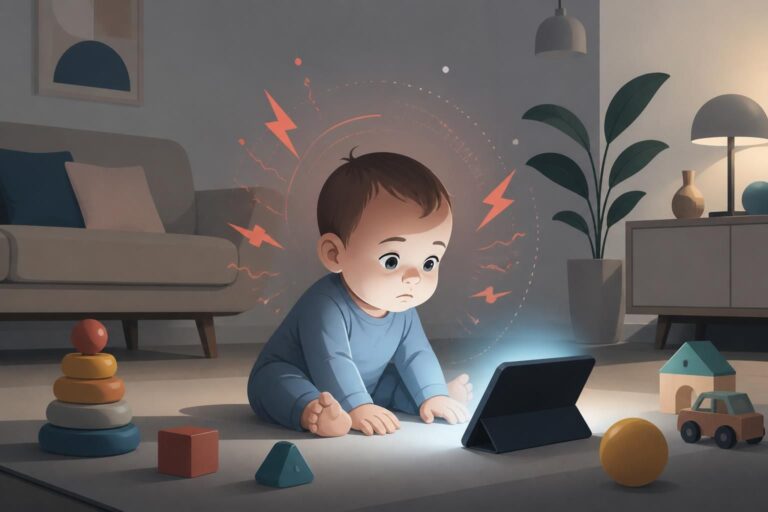
From the nursery to the living room, every texture, every color, and every scent becomes a field of exploration. Sensory activities inspire action, trying, and repeating. They transform curiosity into a driver of sensory awakening, while laying the foundations of solid fine motor skills. To guide the momentum, a well-chosen children’s video inspires, reassures, and demonstrates the gesture; then, the adult’s hand fades away and leaves room for initiative.
This guide gathers concrete ideas, safety guidelines, and organizational tips, tested with toddlers aged 6 to 24 months. Throughout the pages, Lila (11 months) and Noé (18 months) illustrate the real impact of rich sensory development: more precise gestures, steadier attention, better channeled emotions. Because playful learning is not a luxury but an effective strategy, each proposal integrates into the day without expensive materials or endless preparation.
Children’s videos and sensory activities: the winning duo for sensory awakening
The first years shape perception and coordination. When an activity starts with a short children’s video, the child observes a model, understands the intention, and starts faster. This entryway reduces frustration: Lila absorbs the gesture of transferring, then she handles the rice without apprehension. The brain connects the demo to the action; attention stretches and success arrives sooner.
Why is this sequence so effective? First, the image moves and grabs attention, but it is the hand that learns. Then, the adult can name the actions during and right after the sequence: “pour, shake, crush.” Language outlines playful learning and stimulates working memory. Finally, the variety of media (touch, sight, sound) multiplies entry points to competence.
At a group level, this lever accelerates the start. Recent early childhood literature shows a correlation between multimodal alternation and active engagement. To situate the stakes in France, this numbered overview of early childhood highlights priorities: see key early childhood data. In short: when the gesture follows the demonstration, sensory development gains coherence. Final insight: the video introduces, the play consolidates, the repetition anchors.
Safety, organization, and equipment: the indispensable trio for calm sensory activities
Before 12 months, everything goes to the mouth. Therefore, material choices must remain impeccable: natural textures, food-grade products, large washable items. A quality play mat in 2026 makes the space comfortable and limits slips. Bins are cleaned after each session and materials changed if several groups follow. The adult keeps close supervision, especially with water and seeds.
Safety also means clear rules. Present the material, show how to touch, then rephrase the limits: don’t throw the rice, keep sand in the bin. To support autonomy without risk, these practical markers help a lot: rules and prohibitions adapted to age. Allergy vigilance remains non-negotiable: flour, citrus, herbs, vegetable oils, tolerance is checked.
Regarding budget, reuse works wonderfully. Creative ideas at home turn simple objects into effective educational games: scent bottles, glitter bottles, pouring containers. An iconic mascot, like Sophie la girafe, reassures and motivates. And for safe elevated gestures, the Montessori observation tower adds practical dimension: pour, mix, wipe. Key point: good organization calms the session and frees the joy of exploring.
Tactile stimulation: 5 educational games that strengthen fine motor skills
The hand learns by crumpling, rolling, crushing. Here is a progressive tactile path used with Lila and Noé, very simple to replicate at home or in nursery.
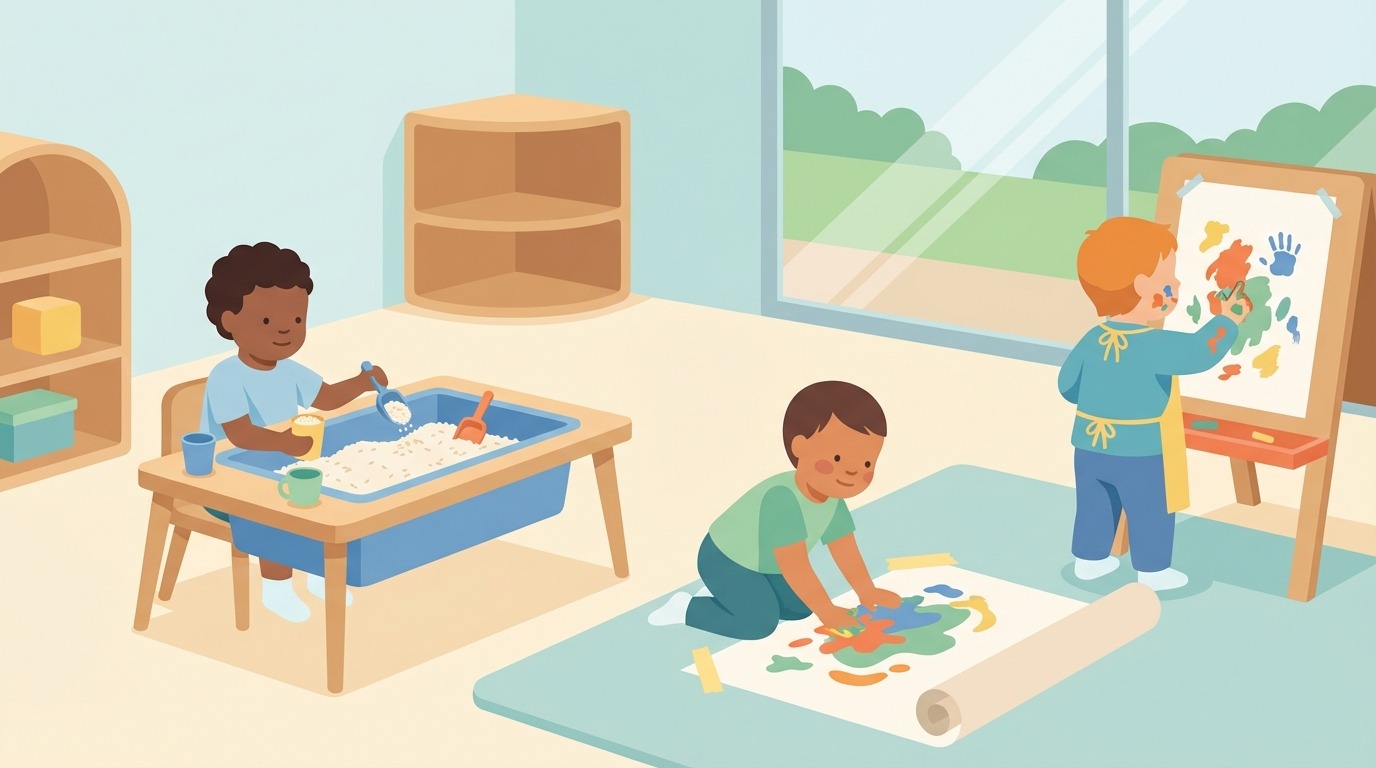
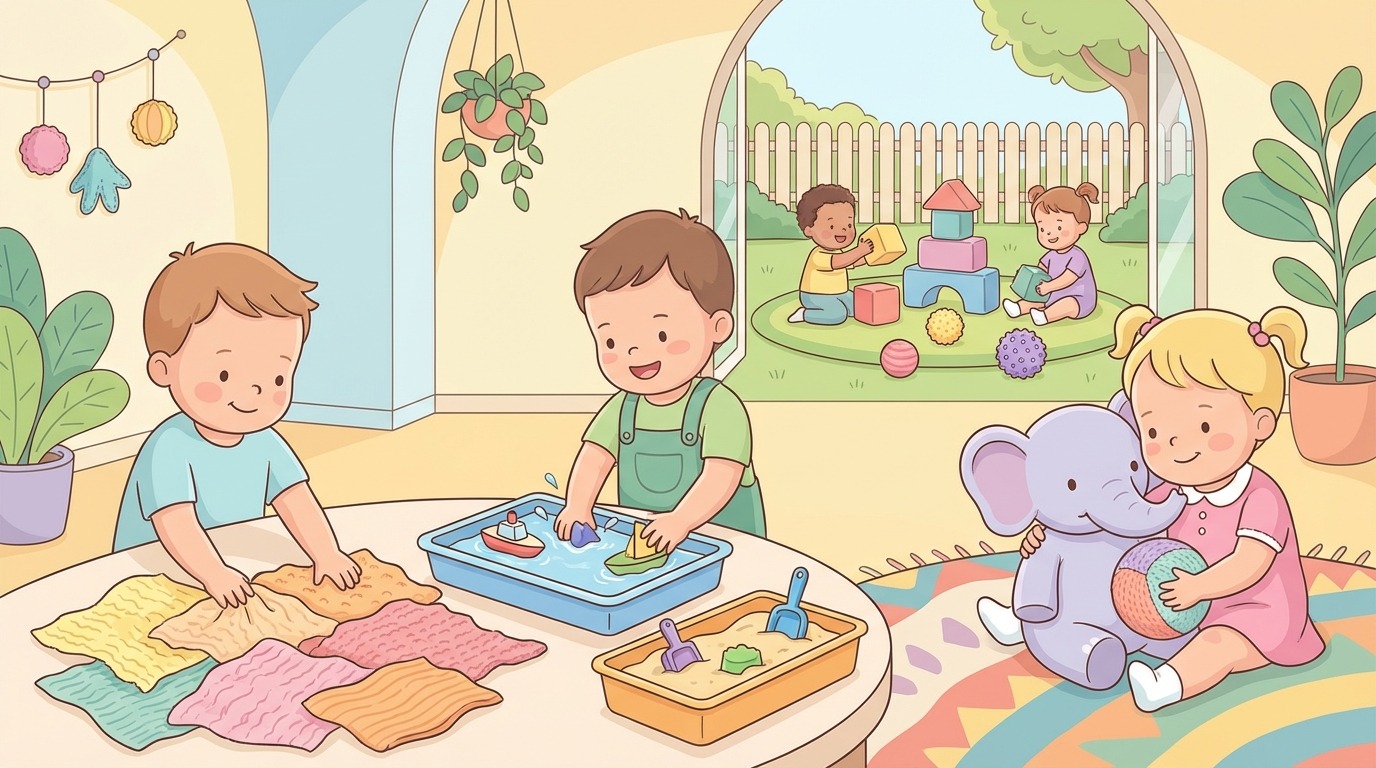
- 🧺 Colored rice bin: color rice, let it dry, hide large figurines. Goal: pinch, transfer, compare sounds. Variation: lentils or pasta.
- 🍞 Edible modeling dough: flour, salt, water, oil. Add vanilla or cinnamon. Aim: roll, flatten, cut with thick cookie cutters.
- 🧊 Hermetic sensory bags: gel, water beads, cotton. The child presses, follows the movement, names “soft, cold, slippery.”
- 🎨 Yogurt paint: fingers, palms, rollers. Practice large gestures, then spatial markers: above, below, circle.
- 🏖️ Homemade magic sand: 8 parts flour to 1 part oil. Imprints, molds, sand flowing between fingers: a soothing classic.
Noé, very energetic, starts with sand to ground himself. After ten minutes, his precision increases: he fills a small cup without spilling. This mastery growth is quickly measurable: fewer extraneous gestures, more concentration. For a motivating visual start, here is a useful research:
You can complement this tactile block with 3-minute sequences where the adult verbalizes each gesture. Words reinforce the action and help transfer the skill to other contexts (pouring water, tidying cubes). A step-by-step example with a 17-month-old child illustrates these progressions well: activity path at 17 months. Strong idea: manipulate often, briefly, with a clear instruction, and finish with a small visible success.
Sounds, smells and light: expanding sensory development without overstimulation
Hearing and rhythm: listen, imitate, create
Sound bottles compare materials: rice, beads, jingle bells. They are ranked from softest to loudest. Then come tambourine, xylophone, maracas, sometimes homemade. Gestural nursery rhymes link sound and movement; memory strengthens and attention improves. To inspire a short startup, this video research works very well:
Practical tip: alternate 30 seconds of silence and 30 seconds of sound. The child perceives the contrast and learns to self-regulate, key to calm group listening.
Soothing olfaction: scents that reassure
Small jars of gentle spices (vanilla, cinnamon), fresh herbs (mint, basil) or ground coffee awaken a often overlooked sense. Present one jar at a time, name the scent, then associate an image: orange, flower, cake. Fabrics soaked in chamomile tea support quiet times; Lila calms faster before nap. Caution remains: test each scent on a fabric corner, observe reaction, discard any discomfort.
Vision and curiosity: contrasts, glitter and bubbles
Black/white panels attract infants’ gaze. Later, glitter bottles play on slowness, conducive to refocusing. Colored mobiles above an awakening space guide ocular tracking. Finally, bubbles engage eye-hand coordination: Noé points, anticipates, tries to catch. For variety, project shadows with a lamp and simple shapes: big, small, near, far.
To continue at home, a selection of simple objects will do: wooden spoon, sponge, soft fabric, soft brush. This homemade sensory basket creates lovely discoveries without extra purchases. Key message: light doses, clear signals, guaranteed wonder.
Sealing the deal: routines, ages and family bonds around preschool activities
Regularity installs competence. A weekly routine reassures and clarifies expectations: sensory bin Monday, instruments Tuesday, nursery rhymes Wednesday, scents Thursday, bubbles Friday. Duration stays short (10–15 minutes) and an opening ritual is maintained: show the material, remind the rule, breathe together. A touch of co-education strengthens impact: a parent watches the children’s video of the week and replicates the activity on the weekend.
Adapting to development avoids overload:
- 👶 0–6 months: visual contrasts, soft sounds, airy textures, natural scents.
- 🍼 6–12 months: simple manipulation bins, edible materials, nursery rhymes with gestures.
- 🚼 12–24 months: associations, sensory creations, guided free explorations.
To support dads’ participation, kindness counts; these illuminating markers can help: signs of attentive paternal involvement. In the kitchen, a observation tower promotes “doing together”: pour semolina, wipe the table, smell basil. Progress is quickly visible. Tick three simple markers: more precise gestures, longer attention span, faster return to calm. For trend and equipment enthusiasts, this 2026 play mat comparison helps choose a reliable support. Common thread: ritualize, involve, observe… and celebrate every little victory.
“A toddler exploring with their senses builds, gesture after gesture, the world they will inhabit tomorrow.”
{“@context”:”https://schema.org”,”@type”:”FAQPage”,”mainEntity”:[{“@type”:”Question”,”name”:”How long should a sensory session last?”,”acceptedAnswer”:{“@type”:”Answer”,”text”:”10 to 15 minutes is enough for toddlers. Short and regular sessions are better than one long tiring block. Stop on a small success to encourage coming back.”}},{“@type”:”Question”,”name”:”What materials should be prioritized for safety?”,”acceptedAnswer”:{“@type”:”Answer”,”text”:”Non-toxic, washable materials that are large enough to prevent ingestion risks: rice, pasta, flour, water, soft fabrics, well-sealed bottles. Check allergies and supervise continuously.”}},{“@type”:”Question”,”name”:”Should one always start with a children’s video?”,”acceptedAnswer”:{“@type”:”Answer”,”text”:”Not necessarily, but a short video demonstration clarifies intention and reassures. The essential part is to quickly follow up with real exploration to anchor playful learning.”}},{“@type”:”Question”,”name”:”How to avoid overstimulation?”,”acceptedAnswer”:{“@type”:”Answer”,”text”:”Focus on a single dominant sense per session, lower sound levels, limit the number of objects, and incorporate moments of silence. Observing the child remains the best guide.”}},{“@type”:”Question”,”name”:”What are low-budget activities at home?”,”acceptedAnswer”:{“@type”:”Answer”,”text”:”Rice bin, edible modeling dough, glitter bottles, texture basket. Many simple ideas are detailed here: creative activities at home.”}}]}How long should a sensory session last?
10 to 15 minutes is enough for toddlers. Short and regular sessions are better than one long tiring block. Stop on a small success to encourage coming back.
What materials should be prioritized for safety?
Non-toxic, washable materials that are large enough to prevent ingestion risks: rice, pasta, flour, water, soft fabrics, well-sealed bottles. Check allergies and supervise continuously.
Should one always start with a children’s video?
Not necessarily, but a short video demonstration clarifies intention and reassures. The essential part is to quickly follow up with real exploration to anchor playful learning.
How to avoid overstimulation?
Focus on a single dominant sense per session, lower sound levels, limit the number of objects, and incorporate moments of silence. Observing the child remains the best guide.
What are low-budget activities at home?
Rice bin, edible modeling dough, glitter bottles, texture basket. Many simple ideas are detailed here: creative activities at home.