Pregnancy Nutrition: Nutrition during pregnancy: answers to your questions.
| Short on time? Here is the essentials ⏱️ |
|---|
| 🥗 Top priority: eat a balanced diet and meet nutritional needs by varying food groups. |
| 🥛 Pregnancy hydration: aim for 1.5 to 2 L of water/day, more in case of heat or activity. |
| 🧮 Energy +280 to +300 kcal/day from the 2nd trimester onwards to support fetal development. |
| 🍣 Foods to avoid: alcohol 0, raw fish/shellfish, unpasteurized cheese, uncooked deli meats. |
| 💊 Pregnancy vitamins and targeted dietary supplements (B9, D, iron) if needed, according to medical follow-up. |
| 🧼 Strict hygiene: handwashing, fruits/vegetables, separate cutting boards, refrigerator at 4 °C. |
| 🧭 Want to go fast? A typical plate at each meal: 1/2 vegetables, 1/4 whole grains, 1/4 protein + a dairy product. |
Between reassuring myths and persistent fears, pregnancy nutrition triggers many practical questions. Needs increase, certainly, but they do not require a complicated diet. In reality, a simple foundation is enough when cooking is varied, regular, and attentive to hygiene. Adjustments become useful when deficiencies appear, nausea occurs, or festivities disrupt habits. Thus, numerical benchmarks, plate examples, and reminders about foods to avoid help illuminate every choice, day to day.
To navigate confidently, this guide gathers concrete nutritional advice, solutions for mishaps, and answers to delicate situations. A future mom like Lucie, 28 years old, will find reference points to plan her meals, manage fatigue, then adapt portions according to the trimesters. Above all, she will be able to connect each action on the plate to the central stakes: nourishing fetal development while preserving her energy. Head for clarity, without losing the joy of eating.
Pregnancy nutrition and nutritional needs: benchmarks that secure fetal development
Pregnancy requires a clear strategy: cover nutritional needs without overloading the body. From the second trimester, energy must increase slightly, around +280 to +300 kcal/day. This increase accompanies baby growth, placenta formation, amniotic fluid, and blood volume increase. However, this margin is gained more through quality than empty quantity.
Easy-to-apply daily portion benchmarks
A simple framework reassures and avoids snacking. Practically, aim each day for: 150 to 200 g of meat-fish-eggs, 250 to 300 g of starchy foods, about 150 g of bread, 200 to 300 g of vegetables, 3 fruits, 4 to 6 dairy products according to your calcium intake, and about 50 g of quality fats. These benchmarks remain adaptable based on appetite and different activities.
Lucie uses a visual plate: half a plate of colorful vegetables, a quarter of whole grains, a quarter of proteins, plus a dairy product. This compass helps her eat a balanced diet even on busy days. And when fatigue slows her down, she finishes her meal with a handful of nuts for energy.
Pregnancy hydration: a simple act, major effects
Pregnancy hydration supports circulation, limits cramps, and aids digestion. Count 1.5 to 2 liters of water per day. In hot weather or during a walking session, increase slightly. Moreover, a graduated bottle on the desk helps track the goal without thinking. Sugar-free infusions provide a pleasant alternative, especially in the evening.
Weight, digestive well-being and comfort
Weight gain should be built progressively. It reflects the placenta, amniotic fluid, and useful reserves. Trying to block it would create a risk. If reflux or heartburn occur, split the plate and avoid late meals. Useful tips are detailed here: heartburn during pregnancy. You gain comfort without sacrificing essential nutrients.
Practical list to cover the essentials daily
- 🥦 Varied seasonal vegetables for fiber and micronutrients.
- 🍓 3 fruits/day for vitamins and pleasure.
- 🐟 Fish 2x/week, including 1 fatty, for omega-3.
- 🥚 Hard-boiled or soft but well-cooked eggs for safety.
- 🥣 Whole grains for lasting energy.
- 🧀 Dairy products for calcium and protein.
- 🥜 Unsalted nuts for good fats.
This foundation holds because it remains simple and repeatable. It guides without binding and adjusts to tastes. Ultimately, regularity nourishes serenity.
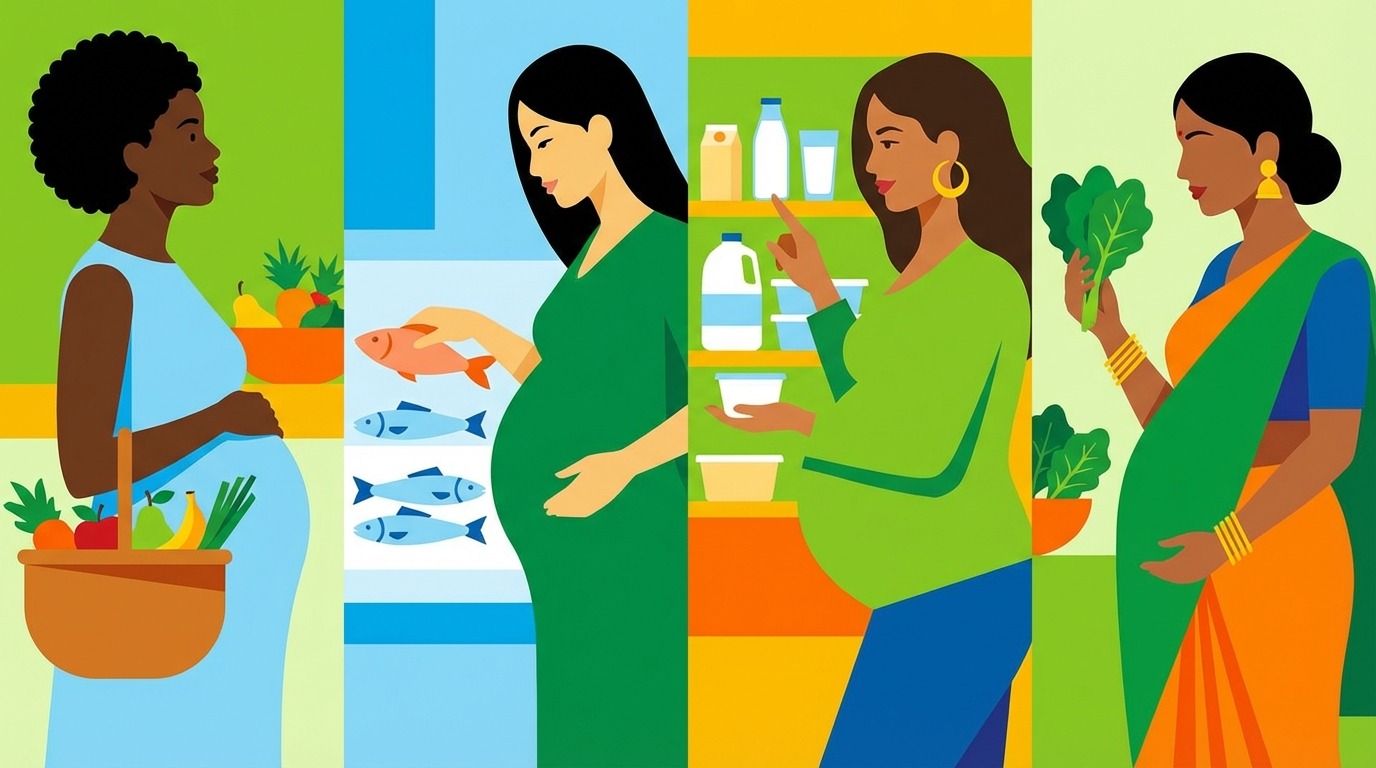
Foods to avoid, food hygiene, and risk management without panicking
We protect the baby by targeting a few clear risks, without giving up table pleasure. Alcohol remains forbidden: it crosses the placenta and can damage the fetus’s brain. “Light” drinks do not offer a free pass. For example, a shandy contains alcohol; it is better to avoid it and favor alternatives without alcohol.
Foods to absolutely avoid or to master well
Avoid raw fish/shellfish, uncooked sushi, oysters, as well as unpasteurized cheeses and uncooked deli meats. A clear page answers doubts about raw food: raw fish during pregnancy. Also, limit liver and preparations very rich in vitamin A. Regarding caffeine, keep under 200 mg/day (about two espressos), and replace if needed with decaffeinated alternatives.
Surimi during pregnancy often raises questions. You can consume it if the cold chain is respected and the expiration date is not exceeded. However, it does not replace real fish, rich in omega-3 and iodine. Finally, during festive periods, anticipate: this practical guide helps navigate buffets: managing parties when pregnant.
Kitchen hygiene: gestures worth their weight in gold
Wash hands, fruits, and vegetables, and separate raw and cooked cutting boards. Set the refrigerator to 4 °C, then respect conservation times. Cook meat, eggs, and fish thoroughly. Then, discard doubtful leftovers without hesitation. These simple gestures reduce the risk of listeriosis and toxoplasmosis.
Lucie established a ritual: upon grocery reception, she first stores fragile products, then does a weekly fridge sorting. Thus, she controls the cold chain. This discipline protects the whole family and only takes a few minutes.
Specific cases and overall vigilance
The body can also send dermatological signals. In case of unexplained rash, do not remain uncertain: consult and inform your care team. For more information, here is a useful point: pityriasis rosea during pregnancy. You save time and limit false leads.
You are not seeking perfection, you are seeking coherence. By consolidating a few reflexes, you reduce anxiety and better enjoy meals. It is a true lever of well-being.
Pregnancy vitamins and dietary supplements: when they are necessary, when they are discussed
Pregnancy vitamins reassure, but they do not replace the plate. The base remains variety. Dietary supplements gain interest when a specific need appears. In France, caregivers often recommend vitamin B9 during the peri-conceptional period, then sometimes vitamin D in the dark season, or iron if a deficiency is confirmed.
Folate, iron, vitamin D: the three common pillars
Folate (vitamin B9) promotes neural tube closure. It is found in green vegetables, legumes, and certain fruits. However, the diet does not always cover needs at the very beginning. A supplement from the pregnancy project stage provides additional security. Then, iron becomes crucial when reserves drop. It is found in red meat, legumes, and green vegetables. Vitamin D supports immunity and bone formation, especially in winter.
Lucie followed her diet well, but persistent fatigue prompted a check-up. Her doctor confirmed low ferritin. A short supplement was enough, paired with more lentils and citrus fruits. In a few weeks, energy returned, proof that the adjustment was right.
Other cases: iodine, B12, choline, omega-3
Depending on dietary patterns, iodine can be reinforced via iodized salt and cooked fish. Vegan people must secure vitamin B12 with an additional intake. Choline, present in eggs, supports brain development. As for omega-3 (DHA), they contribute to visual and cognitive development; one then relies on cooked fatty fish, or on a targeted supplement if needed.
Signs warranting a discussion with the care team
- 🩸 Unusual fatigue, shortness of breath, brittle nails: clues for iron.
- 🌥️ Winter, low sun exposure: watch vitamin D.
- 🥬 Restricted diet or exclusions: attention B12, iodine, DHA.
- 🤢 Prolonged nausea with insufficient intake: temporary solutions to consider.
For daily organization, some resources and accessories simplify life, especially after birth: feeding and organization solutions. This type of equipment does not replace medical advice, but supports routine and frees up time. Ultimately, a useful supplement always relies on a coherent food strategy.
Practical nutritional advice: adjusting meals trimester by trimester without stress
The first trimester rhymes with capricious appetite. Nausea sometimes requires snacks. Split the day, favor cold textures if smells bother you, then add ginger infusion. Thus, you nourish without forcing. A rusk before getting up sometimes helps tame the morning.
Second trimester: energy rises, the plate fills out
The second trimester often brings a respite. Take advantage to fill the plate with regular proteins, varied vegetables, and whole grains. Needs increase slightly; you can add a dairy product or a portion of whole cereals according to hunger. In parallel, keep gentle activity for the back.
If postures strain, these exercises against back pain provide real relief. They improve posture and breathing, which also supports digestion. Nutrition gains effectiveness when the body moves gently. This synergy is priceless.
Third trimester: digestive comfort and sleep
As the baby grows, the stomach is compressed. Split meals further, avoid heavy dinners, and limit very spicy dishes if you are sensitive. This adaptation reduces reflux and improves sleep. Also, you can resort to nourishing but light snacks, like yogurt and fruits.
Parties or dinners outdoors require a strategy. This guide proposes concrete tips to stay calm in front of buffets: managing parties during pregnancy. You can eat varied, while respecting safety rules. Anticipation calms social pressure, and joy remains present.
Lucie plans her week on Sunday: a vegetable-rich soup, a lentil dish, brown rice, hard-boiled eggs cooked in advance. She thus assembles complete meals in 10 minutes. She adds a sugar-free compote, and her snack gains softness and balance.
Myths, realities, and answers to sensitive questions about pregnancy nutrition
Several beliefs complicate the lives of expectant mothers. No, “you have to eat for two” is not true. It is rather “eat better for two.” You adjust quality, not double volume. No, sugar does not alone “cause” gestational diabetes; it is a multifactorial condition. On the other hand, a stable diet helps regulate blood sugar.
Getting out of the all-or-nothing traps
Sometimes one thinks a slip ruins everything. That is not true. You secure health by coherence day after day. A party meal does not prevent progress. You can compensate with a lighter lunch and plenty of water. This logic avoids discouragement and maintains the pleasure of cooking.
Another misconception: “surimi replaces fish.” Again, nuance: read this resource to choose knowledgeably: surimi and pregnancy. Your compass remains nutritional density. You invest in every bite that nourishes fetal development.
Sensitive questions one does not always dare to ask
“Can I eat raw in a restaurant?” Doubts remain, so ask for thorough cooking and favor hot dishes. “Does non-alcoholic shandy exist?” Yes, but read the label. And as a reminder, classic shandy contains alcohol: information on shandy. Finally, “do I have to take every supplement?” No, only if your follow-up indicates it.
You will progress more serenely by keeping a solid routine, while allowing flexibility. Consistency wins over rigidity. Deep down, it is simple choices, repeated with intention, that create a well-nourished pregnancy.
“Each plate prepares a story: nourishing today means offering a beautiful boost to tomorrow.” ✨
{“@context”:”https://schema.org”,”@type”:”FAQPage”,”mainEntity”:[{“@type”:”Question”,”name”:”How much water should I drink during pregnancy?”,”acceptedAnswer”:{“@type”:”Answer”,”text”:”Aim for 1.5 to 2 liters of water per day. Increase in case of heat, mild exercise, or dry air. Pregnancy hydration supports circulation, reduces cramps, and facilitates digestion.”}},{“@type”:”Question”,”name”:”Which foods must be absolutely avoided?”,”acceptedAnswer”:{“@type”:”Answer”,”text”:”Alcohol (0 tolerance), raw fish and shellfish, unpasteurized cheeses, uncooked deli meats. Regarding caffeine, stay under 200 mg/day. Wash, cook, and respect the cold chain.”}},{“@type”:”Question”,”name”:”Should I take dietary supplements?”,”acceptedAnswer”:{“@type”:”Answer”,”text”:”Only if your care team indicates. The most common ones: folates (B9), vitamin D, iron. A varied plate remains the base; supplements fill a targeted need.”}},{“@type”:”Question”,”name”:”How to manage meals outside or at parties?”,”acceptedAnswer”:{“@type”:”Answer”,”text”:”Choose dishes cooked thoroughly, avoid raw product buffets, favor water, and prepare a safe snack. This practical guide helps plan: managing parties when pregnant.”}},{“@type”:”Question”,”name”:”Who to consult in case of doubt or symptoms?”,”acceptedAnswer”:{“@type”:”Answer”,”text”:”Contact your midwife or doctor. In case of skin rash, learn more here: pityriasis rosea during pregnancy. Reactivity removes unnecessary risks.”}}]}How much water should I drink during pregnancy?
Aim for 1.5 to 2 liters of water per day. Increase in case of heat, mild exercise, or dry air. Pregnancy hydration supports circulation, reduces cramps, and facilitates digestion.
Which foods must be absolutely avoided?
Alcohol (0 tolerance), raw fish and shellfish, unpasteurized cheeses, uncooked deli meats. Regarding caffeine, stay under 200 mg/day. Wash, cook, and respect the cold chain.
Should I take dietary supplements?
Only if your care team indicates. The most common ones: folates (B9), vitamin D, iron. A varied plate remains the base; supplements fill a targeted need.
How to manage meals outside or at parties?
Choose dishes cooked thoroughly, avoid raw product buffets, favor water, and prepare a safe snack. This practical guide helps plan: managing parties when pregnant.
Who to consult in case of doubt or symptoms?
Contact your midwife or doctor. In case of skin rash, learn more here: pityriasis rosea during pregnancy. Reactivity removes unnecessary risks.