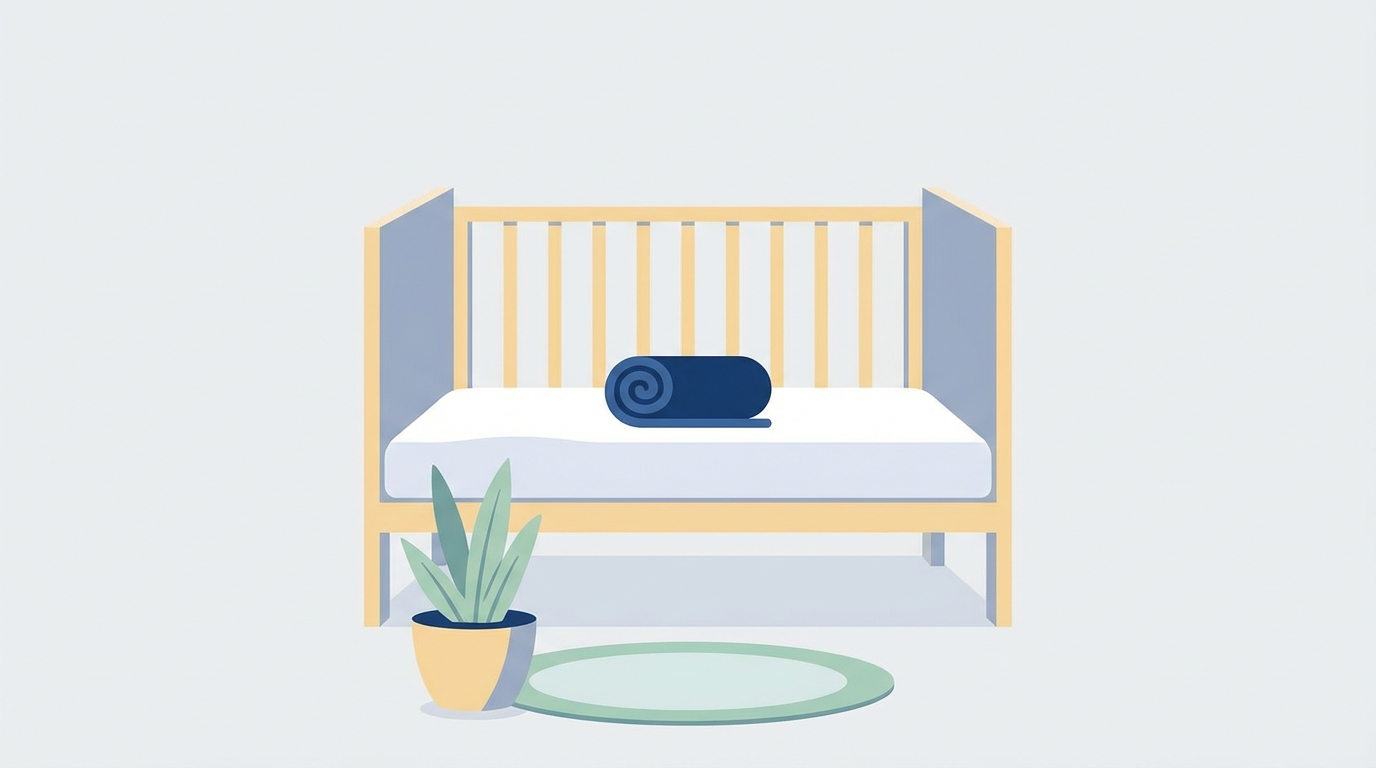
Baby Crib Bumpers: Baby crib bumpers should be banned
| Short on time? Here’s the essentials ⏱️ |
|---|
| Bed bumpers and braided rails increase the risks of suffocation, trapping, and strangulation 😨 |
| Pediatricians recommend a bare baby crib: firm mattress, fitted sheet, nothing else ✅ |
| Since 2022, padded bumpers have been banned in the United States; foreign authorities share this view ⚖️ |
| “Mesh” or “breathable” versions are not validated by the AAP and remain risky 🧵 |
| Favor Accident prevention: sleep sack, positioning, targeted rail covers, soothing routine 🛡️ |
The debate continues: should baby crib bumpers, so cute and well marketed as “protectors,” be banned? Recent data is clear-cut. Baby Safety experts highlight a correlation with preventable deaths during sleep, as well as a cluster of serious, often silent risks. The perspective has changed because crib standards have evolved and Baby Bedding has standardized toward simplicity. A crib free of objects has become the golden rule.
This detailed overview is based on pediatric recommendations, Safety Standards, and feedback from childcare teams. It addresses common objections: “my child bangs against it,” “the slats are hard,” “decor matters.” However, the expected benefits are illusory, while the dangers are supported by evidence. The goal is clear: prioritize active and proportionate Child Protection without doubtful accessories, and offer concrete, validated, and easy-to-implement solutions at home.
Banned Baby Crib Bumpers: evidence, standards, and pediatric alerts
Bed rails were designed at a time when bars were spaced too widely. Since then, standards mandate reduced spacing, eliminating the main risk of limb entrapment. Nevertheless, padded bumpers continued to be sold. This commercial inertia must not overshadow the scientific message.
Pediatric publications have described cases of asphyxiation, strangulation, and entanglement. An analysis published in the Journal of Pediatrics highlighted deaths directly attributed to bumpers, with a tripling of reported cases between 2006 and 2012. These events often occur silently during sleep, when everything seems peaceful.
In 2022, the American Safe Sleep for Babies law and the CPSC classified padded bumpers among prohibited products. Health authorities in Canada and the UK also discourage their use. Scientific societies reiterate the same principles: no soft objects in the crib.
Products once useful, now outdated by standards
With a maximum spacing of about 5.8 cm between slats, a compliant Baby crib already limits trapping. Bumpers no longer meet a real need. Conversely, they introduce risks of airway blockage. When an infant presses their face against a soft surface, they can “re-inhale” oxygen-depleted air.
Braided bumpers, very trendy, give a false impression of softness. They remain bulky and unstable. A moving baby can stick to or wrap around them. The danger is not always seen or heard.
Data, vigilance, and reality on the ground
Neonatology and childcare units remind us of an operational truth: Accident prevention relies on simplicity. The more minimal the sleep environment, the lower the risk. Statistics on Infant mortality linked to non-compliant bedding support this choice.
Parents want to protect. This is legitimate. However, the chosen tool must be secure, not just reassuring. Bed bumpers do not provide proven benefits against minor bumps. On the contrary, they increase major risks. The balance clearly tips in favor of a bare crib, with evidence.
Risks of suffocation and other dangers: why these accessories must be banned
Infants do not have sufficient mobility to free themselves from a soft surface. A thick bed bumper can obstruct breathing. This is the most serious risk. It acts through direct suffocation, but also through re-inhalation of oxygen-depleted air, as pediatric researchers have explained.
Ribbon ties create another dreaded scenario: strangulation. As soon as the baby moves more, entanglement becomes possible. There is no justification for adding strings within reach of an infant.
Heat also builds up behind a bumper. Overheating is a known factor in SIDS. A well-ventilated and minimalist environment limits this parameter. It is simple and effective.
What seems “soft” is not necessarily safe
“Breathable” mesh versions compress under facial pressure. They retain ties. They can serve as a stepping tool when the child sits up. The risk of a fall by climbing exists from 6 to 9 months. A perimeter cushion then becomes a platform.
Impacts against bars may seem alarming. Yet they are most often minor. The skull bones of very young children are surprisingly resistant to small knocks. A tear is not equivalent to vital danger. Risk hierarchy should guide choices.
- 🛑 Silent suffocation: face against soft surface = maximum alert.
- 🎀 Ties = strangulation danger, especially once rolling starts.
- 🌡️ Local overheating, a SIDS factor.
- 🧗 Stepping effect: fall risk when child sits up.
- 🧠 Minor knocks: temporary discomfort, rarely traumatic.
To soothe a startled awakening, gentle methods exist. Sensory routines, rocking, and techniques to calm crying help a lot. Calm and repetitive music also promotes sleep. Inspiration can be taken from songs babies love to structure a soothing atmosphere.
Safety standards and legal framework in 2025: what health authorities say
The shared message is clear: a sleep space that is empty, flat, and firm. A well-fitted sheet. No soft object. This triptych summarizes the modern approach to Baby Safety. It applies to bassinets, cribs, and barred beds.
In the United States, the CPSC enforces the law banning padded bumpers. In Canada, protective borders are discouraged. In the United Kingdom, the NHS encourages banning all soft objects. This international convergence strengthens the credibility of the recommendations.
Manufacturing standards for beds mandate limited spacing between slats. The mattress must fill the space without gaps. These requirements prevent entrapment and reduce the need for accessories. The solution is structural, not cosmetic.
Synthetic overview of official positions
| Authority 🌍 | Position ⚖️ | Key points 🧭 |
|---|---|---|
| AAP (United States) | Bed bumpers discouraged | Bare crib, no soft objects, fitted sheet |
| CPSC (United States) | Padded products banned | Classified risk of suffocation and strangulation |
| Health Canada | Use discouraged | Emphasizes Accident prevention through simplicity |
| NHS (United Kingdom) | Crib without objects | Reduction of Infant mortality by minimalist bedding |
For parents, these guidelines serve as a compass. They integrate into real life through soothing routines. For example, bedtime can be prepared with familiar sounds and repetitive gestures. The resource on music for toddlers helps build this ritual.
False promises: “breathable” mesh, braided bumpers, and other commercial variants
Mesh liners try to solve the problem of air around the face. However, they retain ties and deform under pressure. A face pressed against a compressible net remains threatened. The marketing argument “breathable” does not equate to clinical validation.
Braided bumpers are often very thick. They can trap a leg. They can also become a step to climb over the railing. The danger changes with age, but it does not disappear.
Priority therefore goes to simple alternatives. A sleep sack limits sudden movements and prevents loose blankets. Targeted rail covers, made of silicone or firm fabric, can be used on specific areas. This protects without creating a perimeter cushion.
Validated alternatives and soothing tips
- 🛌 Well-fitted sleep sack, adapted to the season.
- 🧩 Individual rail covers on contact zones, not around the whole crib.
- 📍 Position baby in the center at bedtime; discreetly adjust if needed.
- 🎶 Sleep ritual: lullaby, cuddly toy at a distance from the face, and soft sound styles (see soothing musical ideas).
- 🫶 Validated soothing methods, such as these tips to calm an infant.
Separation phases can increase night wakings. A gradual preparation, as explained in these golden rules for daycare, softens the transition. This approach complements sleep hygiene and avoids seeking answers in risky accessories.
By combining routine, minimalist space, and adherence to Safety Standards, Child Protection advances without gadgets. And the environment remains beautiful thanks to wall decor, safely secured mobiles, and soft lighting, rather than cushions in the crib.
Daily accident prevention: simple protocol for uncompromising baby safety
A fictional couple, Léa and Malik, have just installed a compliant crib in their child’s room. They hesitate to add accessories. Finally, they choose a five-step strategy. The result: more peaceful nights, without added risks.
Concrete action plan, step by step
- Crib inspection 🧐: check slat spacing, stability, and mattress fit. No gaps, no splits.
- Sleep dress code 👶: sleep sack of the right size, no loose covers. Baby Bedding remains minimalist.
- Positioning 📐: lay down baby in the center; discreetly return if baby moves toward the railing.
- Sound soothing 🎵: gentle playlist from adapted songs, low and constant volume.
- Cry management 🤝: validated techniques such as this guide to soothing cries, consistent with the biological clock.
When the child bumps, Léa and Malik target the area. They place a firm cover on some bars, without surrounding the whole crib. They keep the space ventilated. And they strengthen the bedtime ritual to limit sudden nighttime movements.
Over weeks, the child sleeps better. Wakings decrease. Accident prevention remains maximal, as no soft object is in the crib. If daycare begins, they anticipate separation with these practical cues. Sleep benefits positively.
Finally, they remember a cardinal rule: if a product promises an unmeasured “comfort” but adds failure points, it must be banned. Baby Safety is non-negotiable. It rests on simple, consistent, and reproducible principles.
To complement, they keep useful resources bookmarked. They return to ideas to soothe an infant during teething phases. They adapt music with this selection of gentle titles depending on age. This care consistency is better than all accessories.
“A bare crib saves lives; a decorated crib reassures adults. Choose life.”
{“@context”:”https://schema.org”,”@type”:”FAQPage”,”mainEntity”:[{“@type”:”Question”,”name”:”Do impacts against the bars justify a bed bumper?”,”acceptedAnswer”:{“@type”:”Answer”,”text”:”No. Impacts are generally minor. Bed bumpers add major risks of suffocation, strangulation, and overheating. Better a sleep sack and, if needed, targeted and firm rail covers, without enclosing the whole crib.”}},{“@type”:”Question”,”name”:”Are “mesh” or breathable models safe?”,”acceptedAnswer”:{“@type”:”Answer”,”text”:”They are not validated by the AAP. The mesh compresses, has ties, and can serve as a step. The risk changes with age but persists. The safest sleep environment remains minimalist.”}},{“@type”:”Question”,”name”:”What to do if my baby cries from bumping?”,”acceptedAnswer”:{“@type”:”Answer”,”text”:”Reassure with a stable routine: rocking, soft voice, lullabies. Use soothing techniques and adjust positioning at bedtime. Prevention is through simplicity, not perimeter cushions.”}},{“@type”:”Question”,”name”:”From what age can accessories be reintroduced in the crib?”,”acceptedAnswer”:{“@type”:”Answer”,”text”:”Current recommendations encourage leaving the crib bare throughout infancy. Pillows, duvets, and plush toys remain discouraged. Vigilance must prevail, as mobility increases the risks of falling and entanglement.”}},{“@type”:”Question”,”name”:”How to reconcile decor and safety?”,”acceptedAnswer”:{“@type”:”Answer”,”text”:”Decorate the wall, lighting, and space outside the crib. Prefer fixed elements out of reach. The visual appeal of the room must never translate into soft objects in the sleep area.”}}]}Do impacts against the bars justify a bed bumper?
No. Impacts are generally minor. Bed bumpers add major risks of suffocation, strangulation, and overheating. Better a sleep sack and, if needed, targeted and firm rail covers, without enclosing the whole crib.
Are “mesh” or breathable models safe?
They are not validated by the AAP. The mesh compresses, has ties, and can serve as a step. The risk changes with age but persists. The safest sleep environment remains minimalist.
What to do if my baby cries from bumping?
Reassure with a stable routine: rocking, soft voice, lullabies. Use soothing techniques and adjust positioning at bedtime. Prevention is through simplicity, not perimeter cushions.
From what age can accessories be reintroduced in the crib?
Current recommendations encourage leaving the crib bare throughout infancy. Pillows, duvets, and plush toys remain discouraged. Vigilance must prevail, as mobility increases the risks of falling and entanglement.
How to reconcile decor and safety?
Decorate the wall, lighting, and space outside the crib. Prefer fixed elements out of reach. The visual appeal of the room must never translate into soft objects in the sleep area.