
Chaminou Certificate: Chaminou Certificate to encourage good habits.
The Chaminou Certificate stands as a simple and powerful lever for the valorization to anchor good habits in children, from kindergarten to early middle school. Designed to make daily efforts visible, it combines encouragement, concrete rituals, and small rewards. At school as well as at home, the challenge is twofold: to nurture self-esteem and guide behavior with a clear, joyful, and coherent positive education. Thus, each progress becomes a told, displayed, and shared victory, which boosts children’s motivation without unnecessary pressure.
In a context where educational teams and families seek practical and quickly deployable tools, this certificate integrates into easy-to-follow responsibility routines. For example, a four-week cycle structures the learning of key gestures: politeness, hygiene, organization, social autonomy. To avoid a gimmick effect, the device relies on solid benchmarks: measurable objectives, frequent feedback, and immediate recognition of efforts. Result: a culture of progress is installed, based on mutual aid and pride, which extends beyond the classroom, into family life and extracurricular activities.
| Short on time? Here’s the essentials ⏱️ |
|---|
| 🌟 The Chaminou Certificate makes efforts visible and establishes long-lasting good habits. |
| 🐾 Focus first on encouragement and valorization rather than on punishment. |
| 🎯 A short protocol (4 weeks) creates concrete rituals of reward and monitoring. |
| 🧠 Children’s motivation increases when each gesture has a clear and achievable goal. |
| 🤝 Responsibility is built through autonomy, roles, and regular feedback. |
Chaminou Certificate and positive education: principles, the science of encouragement, and healthy habits
The Chaminou Certificate is based on a simple rule: what is celebrated is repeated. Consequently, early and frequent encouragement installs social and health automatisms. We think of gestures of politeness, hand hygiene, backpack ergonomics, or tidying the room. When the child sees their efforts recognized by a symbolic reward, they link the action to immediate pleasure and are ready to try again.
Programs on “How to promote healthy habits at school” emphasize the importance of a global approach. Thus, balanced diet, physical activity, and sufficient rest are targeted, as well as affective and social benchmarks. This framework nourishes children’s motivation because objectives are concrete and achievable daily. In class, a clear sheet and a weekly ritual avoid distraction and maintain momentum.
Why encouragement goes beyond punishment
Studies in learning psychology show that stable positive reinforcement creates circuits of success. The child perceives their progress, which fuels perseverance. Conversely, punishment isolates the error and erodes boldness. Yet, progressing in behavior requires testing, failing, and trying again. At the heart of the Chaminou Certificate, the instant valorization of a precise gesture (“thank you,” “I put away,” “I wash my hands”) installs the virtuous loop.
To amplify this effect, descriptive feedback helps a lot: “You waited your turn to speak, well done!” This sentence describes the action and indicates the norm, which reinforces personal responsibility. Moreover, linking the gesture to a social benefit (“Your peers were able to express themselves”) increases meaning and cooperation.
Which habits to target right now
Beyond rules of politeness, three families of actions can be targeted: hygiene and health, material organization, social relations. For example, “I brush my teeth morning and evening,” “I prepare my bag the night before,” or “I greet guests” are clear micro-objectives. They align with recognized educational resources to encourage healthy dietary, hygienic, and ergonomic habits. The key is to limit the number of items and measure progress each week.
For parents wishing to go further on the link between social codes and self-esteem, the article “social development” sheds light on the key stages of early socialization. It can be complemented with approaches on emotions or imagination, useful when the child builds themselves in the mirror of adults’ gaze.
- 🎖️ Series “I say hello / please / thank you”: politeness and respect.
- 🧼 Series “I wash my hands / I brush my teeth”: hygiene and health.
- 🎒 Series “I prepare my bag / I tidy my things”: organization and responsibility.
- 🤝 Series “I wait my turn / I congratulate a peer”: cooperation and social behavior.
To sustain this momentum, the page dedicated to self-esteem shows how a ritualized certificate can strengthen confidence. It integrates into daily life with concrete examples and ready-to-use sheets: a Chaminou protocol for self-esteem. Also to read, a structured insight on children’s social development to link each objective to a precise psychosocial skill.
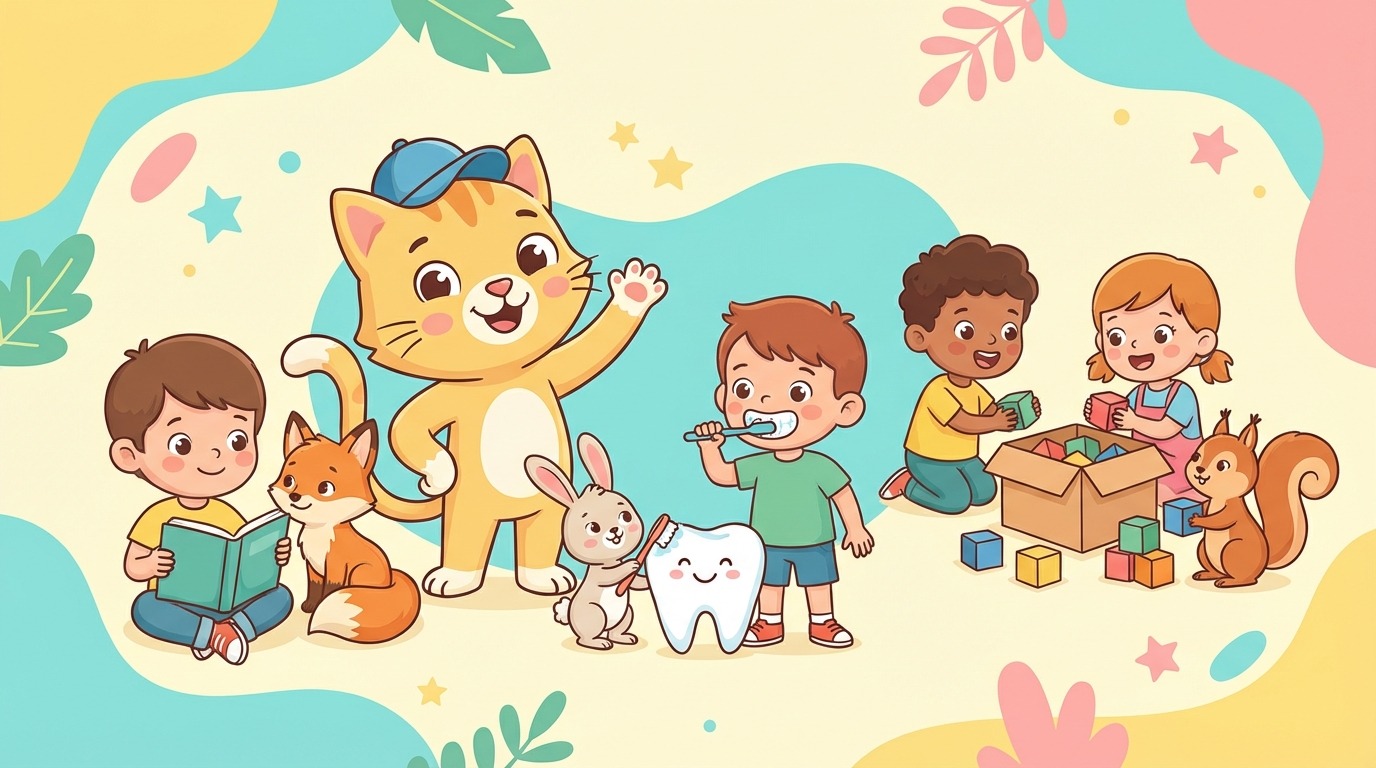
Implementing a 4-week Chaminou protocol: rituals, feedback, and visible progression
A short, intensive and joyful cycle works very well. First, set one theme per week: politeness, hygiene, organization, mutual aid. Then, limit to three objectives per theme to keep the energy. With each observed success, stick a stamp, add a sticker, or trigger a mini symbolic reward. Thus, children’s motivation remains high without overloading the routine.
Week 1 (“I greet and listen”): the child practices saying hello, thanking, and waiting their turn to speak. Week 2 (“I take care of myself”): hand washing at the right times, tooth brushing, handkerchief and trash can. Week 3 (“I get organized”): backpack maintenance, tidying the workspace, checking the agenda. Week 4 (“I support others”): lending a pencil, congratulating a peer, offering help at home. Each evening, tick and valorize.
Concrete indicators and the role of adults
Monitoring gains efficiency with observable criteria: “greet guests without reminder,” “bag ready the night before,” “tidy up in less than 5 minutes.” Adults model the posture: smile, gaze, calm voice. Fathers play a precious role in the regularity of rituals and transmission of implicit rules. An interesting insight highlights how their presence transforms the quality of the bond and sense of security: the place of fathers from the child’s arrival.
To keep the learning pleasant, the review moment is ritualized: three minutes after dinner or just before the bedtime story. The effort is named, the benefit explained, and the Chaminou Certificate of the day or week awarded. This regular valorization installs personal responsibility: the child knows what they aim for and why.
Mini-case: a CE1 class in a mixed neighborhood
In a class of 25 students, the team chose 12 objectives over 4 weeks. Result: fewer interruptions, better backpack preparation, more peer compliments. Students co-created challenges, which reinforced children’s motivation. Families received a simple guide with example phrases for encouragement and ideas for symbolic reward (drawing, story choice, mini badge).
To refine managing overflow moments, adults worked on emotional regulation. They drew on concrete tools from this useful article: managing a child’s emotions. In a few weeks, parents’ feedback confirmed smoother routines and calmer evenings.
At the end of the cycle, children present their certificates and tell a success story. This rite of passage installs a positive and lasting memory. It shows that progress is both personal and collective.
Self-esteem and responsibility: from daily valorization to social autonomy
Self-esteem is nourished by mastery experiences and recognition. When a child accumulates small victories, the “I can” becomes obvious. Thanks to the Chaminou Certificate, valorization is immediate and precise: one does not praise “the good student,” but “the child who waited their turn then thanked.” This granularity strengthens learning and protects against excessive comparison.
On the social level, encouragement and reward rituals deploy a culture of mutual aid. In practice, children are invited to spot a quality to valorize in a peer each week. This trains empathy and attention. The effects are visible on collective behavior: more listening, less teasing, more cooperation.
Linking imagination, emotions, and social codes
Between ages 3 and 8, imagination channels meaning, hence the importance of symbols like Chaminou and friends. A fictional companion makes the goal playful and reassuring. To understand these psychic games, this decryption helps normalize and tame these figures: the imaginary friend in children. In parallel, practicing naming what one feels prevents outbursts and supports cooperation.
In the same logic, the article dedicated to self-esteem offers a step-by-step framework to anchor recognition in stable benchmarks: Chaminou certificate and self-esteem. These resources can be combined with a class routine or a family “bravo” chart to sustain momentum throughout the term.
When responsibility becomes a role
Responsibility is better experienced when it takes the form of a clear mission: timekeeper, sheet distributor, compliment reporter. Each role has a visible indicator (timer, checklist, bravo notebook). Thus, meaning becomes concrete and the child learns to keep a commitment. At the end of the week, the Chaminou Certificate crowns the mission, and the child tells what they learned.
In middle school, this mechanism already prepares civic integration: respecting a framework, helping a peer, asking for help. For teenagers exploring autonomy, valorizing activities outside class complement the device well: clubs, solidarity projects, or supervised mini-businesses. Some avenues exist to responsibly engage even young people without formal paths: involving teens without diplomas through useful, supervised and adapted activities.
Ultimately, the “effort → recognition → new challenge” loop installs active trust, engine of sustainable engagement.
Concrete tools: table of good manners, role plays and ready-to-download resources
A well-designed visual tool energizes progression. The table of good manners lists 3 to 5 objectives per week, with color coding and a “I am proud of” space. It serves as support for valorization, not a fault counter. To keep enthusiasm, entertaining and short challenges are noted, and icons vary. Each checked box triggers a word of encouragement and sometimes a mini symbolic reward.
Role plays allow experiencing the expected behavior in a secure space. One simulates a visit from guests, a loan of equipment, or a dispute to resolve. Then, there is a debrief: what happened? What helped? What will we try tomorrow? This approach accelerates social learning because it gives clear cues to replay in real life.
Daily rituals to cement habits
To support children’s motivation, small predictable routines are anchored: checking the bag at the same hour, saying thank you before leaving the table, preparing the next day’s clothes. A discreet visual reminder often suffices. In case of forgetfulness, the rule is reformulated and strengthened at the next success. Failure does not break the effort: it reorients the gesture. This posture of positive education protects the relationship and maintains cooperation.
Need structured and reliable inspiration? Families and educational teams highly appreciate ready-to-use documents, easy to download and adapt. Summary sheets, monitoring grids, and printable certificates save valuable time. They can be supplemented with content on self-esteem, emotion management, and social development to build a coherent kit.
- ✅ Weekly table “3 objectives” 🗓️
- ✅ Ready-to-use encouragement words 💬
- ✅ Role play scenarios 🎭
- ✅ Ideas for non-material reward 🌈
- ✅ “Evening and morning routines” sheets ⏰
To cross approaches, these complementary resources help broaden the framework and adjust the tone according to ages: strengthen self-esteem with Chaminou, better manage emotions, and support social development. A solid base facilitates growing autonomy throughout the year.
Ethical framework, safety and continuity: recognizing without monitoring, guiding without controlling
Valorizing does not imply filming everything or controlling everything. The Chaminou Certificate aims for visible and shared rituals, not surveillance. At home, certain legal questions about video remind to prioritize the safety of property and persons, not spying on responsible adults. Informing and obtaining consent protects the educational relationship and strengthens trust.
The material framework also matters. A calm, well-ventilated, and decluttered environment reduces fatigue and friction. When the air is healthier, children breathe better and concentrate more, which supports good habits. Furthermore, a floor space for play, child-height tidy areas, and simple visual cues limit conflicts and wandering.
Avoid unnecessary pressure, preserve the pleasure of learning
Reward must remain symbolic: a kind word, a sticker, the choice of a game. When it becomes competitive or material, the risk is to shift attention to performance. Yet, the central objective remains sustainable learning and the joy of progressing. To achieve this, modest goals are maintained, “off” days accepted, and comebacks celebrated.
Within educational teams, a positive education charter clarifies adults’ roles: model, guide, and recognize. Fathers, mothers, teachers, and facilitators benefit from sharing common rituals and harmonizing words of encouragement. This coherence strengthens responsibility and reduces contradictory messages that hinder the expected behavior.
Finally, continuity over time ensures the solidity of automatisms. After a 4-week cycle, new objectives are relaunched or those struggling to settle are revisited. Children enjoy collecting, hence the success of certificate series on varied themes. The pleasure of completing a set feeds consistency and keeps enthusiasm alive.
To deepen the relational dimension and better understand the impact of early experiences on the rest of the path, a detour through in-depth articles can open useful perspectives: the role of fathers from birth and progressive engagement paths such as responsibilizing young people without diplomas. These angles complement the Chaminou device by situating rituals in a broader educational ecology.
At bottom, valorizing without monitoring means protecting the desire to learn and the pride to act.
{“@context”:”https://schema.org”,”@type”:”FAQPage”,”mainEntity”:[{“@type”:”Question”,”name”:”Comment du00e9marrer un Certificat Chaminou sans alourdir la routineu2009?”,”acceptedAnswer”:{“@type”:”Answer”,”text”:”Choisissez un seul thu00e8me pour une premiu00e8re semaine (politesse ou hygiu00e8ne) et limitez-vous u00e0 trois objectifs observables. Chaque soir, consacrez trois minutes u00e0 nommer lu2019effort, expliquer le bu00e9nu00e9fice, puis coller un autocollant. Cette micro-ritualisation installe la dynamique sans fatigue inutile.”}},{“@type”:”Question”,”name”:”Faut-il ru00e9compenser u00e0 chaque foisu2009?”,”acceptedAnswer”:{“@type”:”Answer”,”text”:”La ru00e9compense doit rester symbolique et intermittenteu2009: un mot pru00e9cis, un sourire, le choix du2019une activitu00e9. Visez surtout la reconnaissance immu00e9diate de lu2019effort. Les badges ou certificats clu00f4turent la semaine, pas chaque geste, afin de pru00e9server la motivation intrinsu00e8que.”}},{“@type”:”Question”,”name”:”Que faire si lu2019enfant ru00e9gresse ou oublie souventu2009?”,”acceptedAnswer”:{“@type”:”Answer”,”text”:”On reformule calmement lu2019objectif, on montre le geste attendu et on renforce du00e8s la prochaine ru00e9ussite. Lu2019u00e9chec sert de repu00e8re, pas de jugement. Maintenez des objectifs modestes sur un temps court, puis remontez le niveau quand la routine redevient fluide.”}},{“@type”:”Question”,”name”:”Comment impliquer les fru00e8res et su0153urs sans cru00e9er de rivalitu00e9u2009?”,”acceptedAnswer”:{“@type”:”Answer”,”text”:”Attribuez des objectifs diffu00e9renciu00e9s, adaptu00e9s u00e0 lu2019u00e2ge. Organisez des moments de compliments croisu00e9su2009: chacun repu00e8re un progru00e8s chez lu2019autre. Le certificat final valorise le parcours de chaque enfant, pas un classement entre eux.”}},{“@type”:”Question”,”name”:”Peut-on utiliser Chaminou en classe entiu00e8reu2009?”,”acceptedAnswer”:{“@type”:”Answer”,”text”:”Oui, en cru00e9ant un tableau collectif de 3 objectifs communs et des micro-ru00f4les (gardien du temps, reporter des bravos). Les points du2019encouragement se donnent en public pour modu00e9liser, puis des certificats thu00e9matiques clu00f4turent chaque semaine.”}}]}How to start a Chaminou Certificate without overloading the routine ?
Choose a single theme for the first week (politeness or hygiene) and limit yourself to three observable objectives. Each evening, spend three minutes naming the effort, explaining the benefit, then sticking a sticker. This micro-ritualization installs the dynamic without unnecessary fatigue.
Should rewards be given each time ?
Rewards must remain symbolic and intermittent : a precise word, a smile, the choice of an activity. Aim especially for immediate recognition of the effort. Badges or certificates conclude the week, not each gesture, to preserve intrinsic motivation.
What to do if the child regresses or often forgets ?
Calmly reformulate the objective, show the expected gesture, and reinforce at the next success. Failure serves as a landmark, not a judgment. Maintain modest goals over a short time, then raise the level when the routine becomes smooth again.
How to involve siblings without creating rivalry ?
Assign differentiated objectives, adapted to age. Organize moments of cross compliments : each spots progress in the other. The final certificate values each child’s journey, not a ranking between them.
Can Chaminou be used in the whole class ?
Yes, by creating a collective table of 3 common objectives and micro-roles (timekeeper, bravo reporter). Encouragement points are given publicly to model, then thematic certificates conclude each week.
“When encouragement becomes a ritual, responsibility becomes a habit, and each child discovers they can grow as a hero of everyday life.” 💫