Managing Emotions: Parent Sheet: How to Manage Your Child’s Emotions.
| Short on time? Here’s the essentials ⚡ |
|---|
| Name before educating: recognizing the child’s emotion calms the brain and opens communication 🧠💬 |
| 3 levers: breathing, movement, keywords. Use them in under 90 seconds ⏱️ |
| Ritualize: a quiet corner, an emotions wheel, and a behavior pact 🛟 |
| Prevent rather than react: sleep, snack, routine, free play. The basics of development 🌱 |
| Speak need: behind every anger, a need for security, respect, or attention ❤️ |
| Useful shortcut: “I see you are angry. We breathe, then look for a solution.” ✅ |
Children experience an intense emotional whirlwind, yet they do not yet have the internal tools to turn it into a strength. Because emotion management is learned, parents benefit from establishing concrete, simple, and repeatable reflexes. Thus, listening, clear communication, and a reassuring framework quickly prove effective.
In many households, a guiding thread helps: a quiet corner, a common language, and brief but regular rituals. For example, Lina, 6 years old, often explodes after school. Yet, when an adult names her emotion, suggests breathing, and offers a choice, her regulation becomes faster. This guide offers precise landmarks, real-life examples, and advice applicable from today.
Understanding emotion management in children: basics and landmarks
Supporting a child involves knowing the stages of their development. Indeed, the maturation of the brain’s frontal areas continues through adolescence. So, impulsivity is not a tantrum, it’s a stage. This reality changes the educational posture.
From birth, the child imitates. Then, they recognize expressions. Around 3 years, they start naming emotions. Then, around 5 to 6 years, they learn to regulate with help. For a clear overview, explore these landmarks on children’s social development. This sheds light on each step and guides expectations.
Age-based landmarks to better guide reactions
Before 3 years, the child mainly communicates through their body. So, they scream, hit, or collapse. However, they can learn sensory routines. A comfort toy, a lullaby, deep pressure are proposed. These gestures soothe the nervous system.
Between 3 and 5 years, language explodes. Thus, the emotions wheel becomes a key tool. The child is invited to point to the emotion felt. This is often easier than naming it. Then, the emotion is linked to a need, like a cuddle or a break.
Around 5 years, symbolic play reinforces regulation. At this age, a dedicated guide like this file on development around 5 years helps adjust expectations. So, we reason in skills, not pure obedience.
Observe the body and enrich emotional vocabulary
The body speaks before words. Clenched hands, furrowed brows, short breathing signal an overflow. In these moments, the adult serves as a mirror. They name. They offer a step aside. This ritual becomes a soothing shortcut.
A common vocabulary facilitates communication. For example, the family chooses eight basic emotions: joy, anger, fear, sadness, surprise, disgust, anticipation, and attraction. Then, a simple poster is created. Everyone points to their state at the table.
This work benefits from relying on concrete materials, like printable cards or a visual wheel. The child feels understood. The family atmosphere relaxes. Ultimately, the adult invests less energy in crisis, and more in connection.
In summary, better understanding the stages helps to prevent. This knowledge changes expectations, reassures, and gives clear direction.
Active listening and soothing communication: welcoming and naming emotions
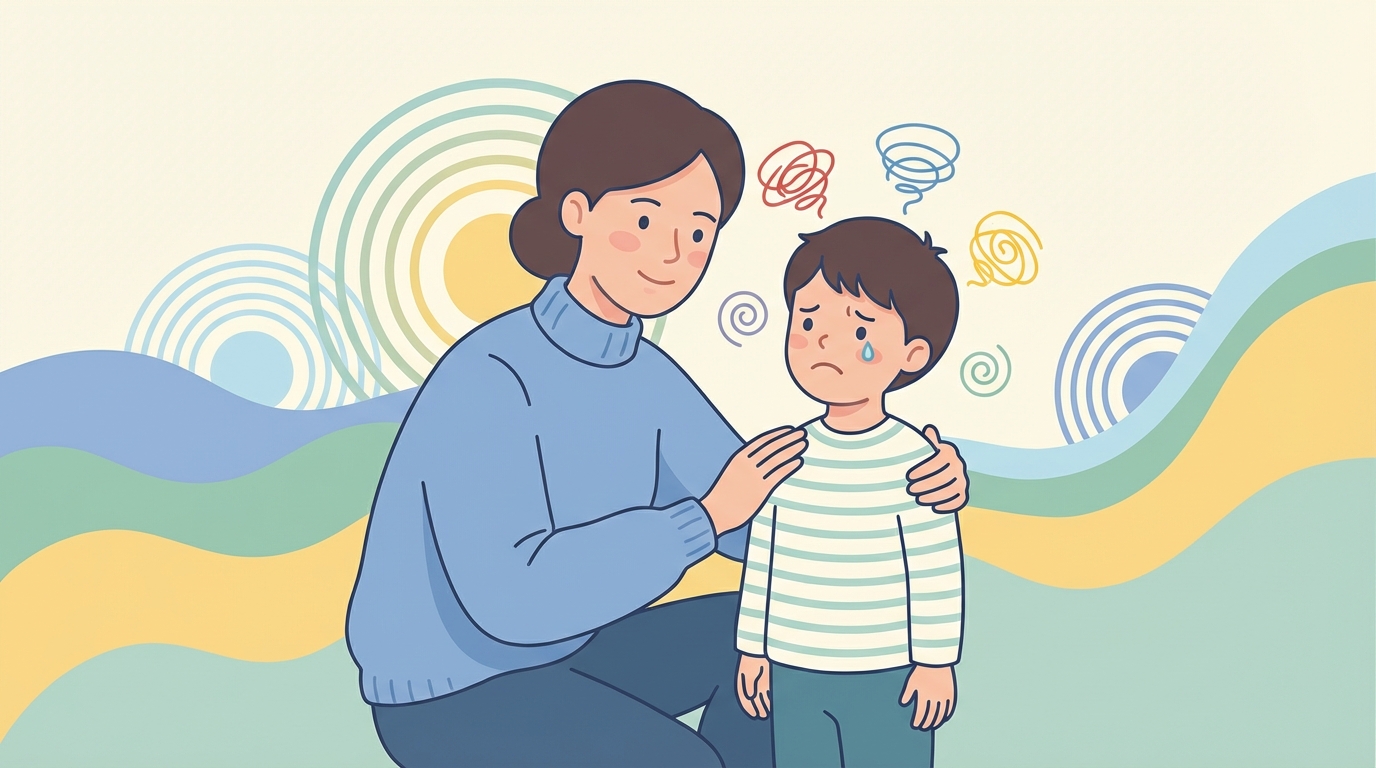
A child self-regulates when they feel heard. First, the adult validates their experience. Then, they set the framework. This sequence reduces crisis duration and strengthens trust.
Here is a simple and powerful golden thread. We observe, we name, we breathe, then we offer a choice. This protocol establishes safety. It protects the relationship and behavior follows.
Validation first, framing next
Validating does not mean giving in. In reality, validation informs the brain that the danger has passed. Then, the child can cooperate. The rule comes after, without harshness but without ambiguity.
Example with Lina. “You are angry because the game is stopping. We breathe together. Then, you tidy up with me or put on calm music.” Thus, the child keeps a degree of choice. This reduces opposition.
To position the adult in a coherent approach, it is useful to understand the evolution of reception in early childhood. This analysis sheds light on current practices and their benefits, such as here: evolutions in early childhood reception. These landmarks nurture the right tone and listening.
Ready-to-use scripts for busy parents
- 🧩 “I see clenched fists. We shake hands, then talk.”
- 🌬️ “Inhale 4, hold 2, exhale 6. Then we choose a solution.”
- 🛑 “Yes to your emotion, no to hitting. You can hit the cushion.”
- 🎯 “Tell me what you need: to be reassured, respected, or comforted?”
- 🤝 “We don’t agree, and we remain a team. We look for an option.”
These phrases avoid judgments. They give control back to the child. Moreover, they protect the adult-child relationship.
To support these gestures, discover concrete landmarks on social development. You will find strong links between emotions, cooperation, and life rules.
The previous video complements these scripts. It shows posture, tone, and gestures. Thus, the adult gains in stability and clarity.
In conclusion of this section, welcoming then framing is a winning duo. This logic lowers tension and increases adherence.
Transforming anger, fear, and sadness: techniques and regulating games
Strong emotions require short, repeated actions. First we calm down, then we talk, finally we solve. This sequence protects the bond and structures the mind.
An “anger thermometer” helps to locate oneself. Green, yellow, red. The child learns to recognize escalation. Then, they choose a technique suited to the level.
Short and effective techniques to suggest
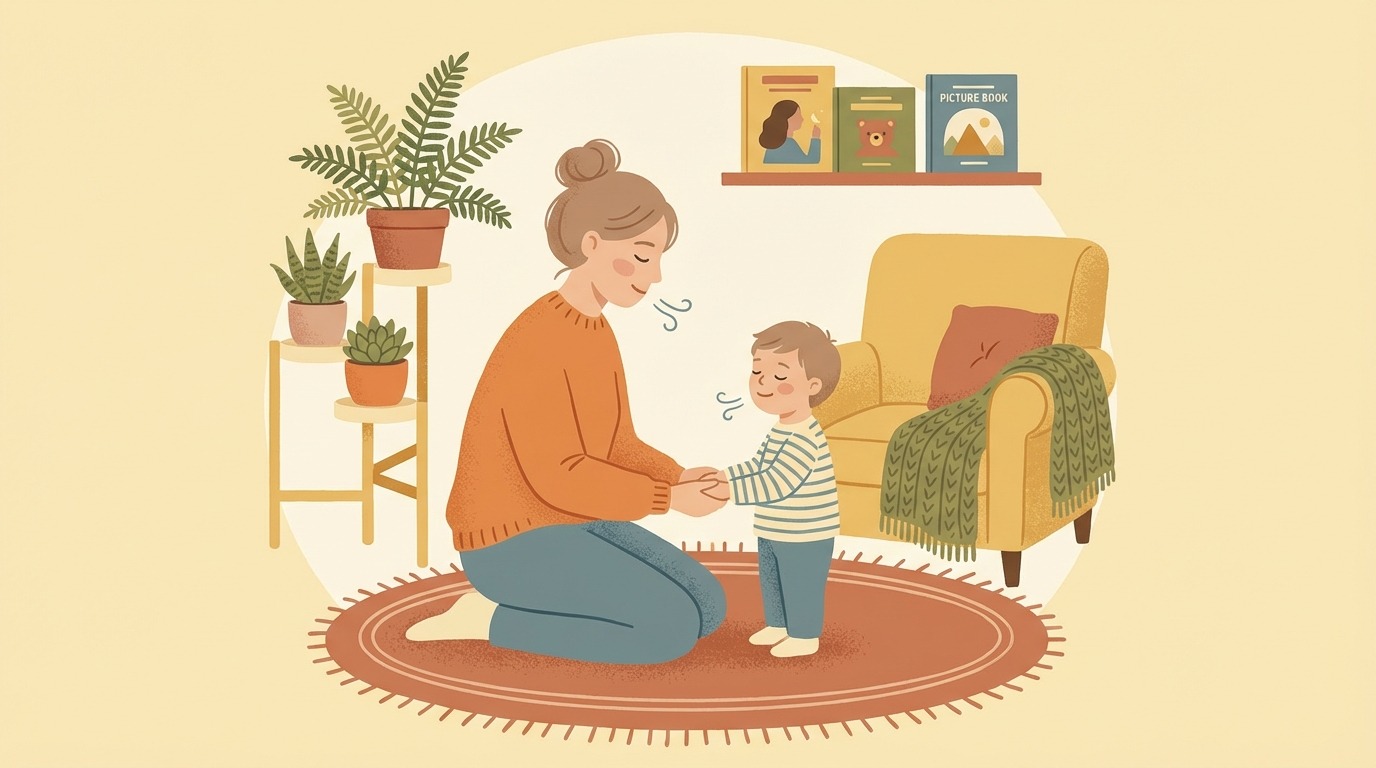
Breathing 4-2-6. Inhale through the nose for 4 counts, hold 2, exhale 6. Then place hands on the belly. The body calms, and the mind clears.
The “butterfly” technique works well. Cross arms, gently tap shoulders. In 30 seconds, the emotional level decreases. Dialogue can then happen.
The options box reassures. Cards are slipped inside: drinking, drawing, stretching, asking for a cuddle. Then, the child draws. Decision-making becomes easier.
Movement and play as antidotes
Movement releases tension. Frog jumps, short runs, ball throwing. These actions discharge energy. Then, the child is more available.
To vary supports, consider family activities combining body and bond. Accessible ideas are found here: family activities. Cooperative play nurtures regulation and shared pleasure.
Creativity helps to put words. Draw the storm then the sun, create a “calm bubble,” model a fear. Concrete ideas are listed on creative activities at home. These mediations turn emotion into expression.
Self-esteem cushions crises. A recognition ritual, attention to effort, a symbolic certificate strengthen confidence. A playful inspiration is offered here: boost self-esteem with a certificate. These gestures stabilize emotion management over time.
Finally, conflicts resolve better with a clear sequence: calm down, say what you feel, propose two solutions, choose the fairest. This roadmap guides both adult and child.
The message to remember is simple. We regulate through the body, we put words, then we act. This triptych turns crisis into learning.
Framework, routines, and co-education: building a regulating environment
The best plan is the one that prevents. To achieve this, install short routines. Create a quiet corner. Clarify rules and options.
A designed environment favors autonomy. Consequently, the child feels competent and self-regulates better. This lever changes the family atmosphere.
Arrange a quiet corner and visual tools
The quiet corner must be attractive, never punitive. Place a rug, a plush toy, an emotions wheel, an hourglass. Then, practice when everything is fine. Thus, the child goes more willingly in case of storm.
Autonomy is cultivated through small gestures. A lookout tower, a toy kitchen, or a child’s workbench encourage the “I can”. Concrete examples of fun tools are presented here: supporting autonomy. When the child feels capable, their behavior gains stability.
Visible and positive rules also help. Write what is expected. “Speak softly” rather than “Don’t shout”. The brain follows a positive statement better.
Coherent co-education with close ones
Coherence reassures the child. So, share the rules with grandparents, nanny, or babysitter. Provide scripts and options. Everyone speaks the same language.
For occasional care, prepare a simple framework and basic strategies. This practical guide can help frame the mission: become a babysitter. The clearer the sheet, the smoother the regulation.
In care structures, co-construction with professionals matters. Practices have evolved and better integrate the emotional dimension. A useful overview is here: current reception practices. These references support effective collaboration.
This type of resource shows the space, posture, and micro-gestures. Then it becomes easier to reproduce the framework at home. The results show within days.
Remember: preventing means ritualizing without rigidity. The framework reassures, the relationship animates, and daily life breathes.
Growing with emotions: strengthening emotional intelligence daily
Emotional skills strengthen like a sport. Regularity is needed. Play is needed. Visible proof of progress is needed.
Every day, practice three minutes of empathy. Ask: “What did you feel today?” Follow with: “What would you have liked?” This routine creates a common language.
Small rituals, big effects
A mood weather journal, a “need of the day” card, a smile challenge. These rituals set landmarks. Also, they value effort more than results.
To feed these moments, artistic expression is an ally. Sing, paint, craft. Concrete and fun ideas abound on creative activities for home. The child transforms emotion into art.
Outdoor play completes the arsenal. Walk, climb, laugh. This social fuel strengthens regulation. Get inspired by simple mobile ideas via these active family activities.
Track progress and adjust course
To last over time, measure the journey. A very simple chart suffices. Tick off rituals done and celebrate attempts. The brain loves proof.
Here are concrete indicators to observe. They speak for themselves and motivate the family.
- 📉 Crisis duration decreasing week after week
- 📈 Number of times the child asks for a break
- 🧭 Ability to name an emotion without help
- 🧩 Spontaneous use of a tool (breathing, quiet corner)
- 🤗 Repairs after conflict (“Sorry, I’ll try again”)
To further strengthen social interactions, rely on validated landmarks of social development. Thus, daily life becomes a coherent training ground.
The key angle is confirmed. We train, we repeat, we celebrate. Emotional intelligence flourishes day after day.
Quick resources to print and display
A home kit may include an emotions wheel, an anger thermometer, and a “calm down, talk, solve” sheet. These tools structure the transition from emotion to action. Then, the whole family gains serenity.
Combine this kit with cooperative games, movement times, and stories that discuss feelings. The result quickly shows on behavior. Ultimately, every day offers a chance to learn.
{“@context”:”https://schema.org”,”@type”:”FAQPage”,”mainEntity”:[{“@type”:”Question”,”name”:”How long does it take to see a change?”,”acceptedAnswer”:{“@type”:”Answer”,”text”:”With a quiet corner, validation scripts, and a breathing routine, first improvements often appear in two to three weeks. Regularity counts more than duration.”}},{“@type”:”Question”,”name”:”What to do when the child refuses to breathe?”,”acceptedAnswer”:{“@type”:”Answer”,”text”:”First propose a brief and playful movement (frog jumps, wall push-ups). Then return to breathing with an hourglass. The body opens the door to calm.”}},{“@type”:”Question”,”name”:”How to differentiate tantrum from emotional overflow?”,”acceptedAnswer”:{“@type”:”Answer”,”text”:”An overflow involves strong bodily signs and inability to reason. Validate, help calm down, then give a framed choice. A tantrum often yields when the framework stays clear and benevolent.”}},{“@type”:”Question”,”name”:”What tools to display at home?”,”acceptedAnswer”:{“@type”:”Answer”,”text”:”An emotions wheel, an anger thermometer, a positive rules poster, and a “calm options” card. Add a little victories chart to track progress.”}},{“@type”:”Question”,”name”:”How to involve a nanny or babysitter?”,”acceptedAnswer”:{“@type”:”Answer”,”text”:”Give a simple sheet with your scripts, positive rules, and calm-down protocol. A shared framework, as presented in babysitter guides, reinforces coherence.”}}]}How long does it take to see a change?
With a quiet corner, validation scripts, and a breathing routine, first improvements often appear in two to three weeks. Regularity counts more than duration.
What to do when the child refuses to breathe?
First propose a brief and playful movement (frog jumps, wall push-ups). Then return to breathing with an hourglass. The body opens the door to calm.
How to differentiate tantrum from emotional overflow?
An overflow involves strong bodily signs and inability to reason. Validate, help calm down, then give a framed choice. A tantrum often yields when the framework stays clear and benevolent.
What tools to display at home?
An emotions wheel, an anger thermometer, a positive rules poster, and a “calm options” card. Add a little victories chart to track progress.
How to involve a nanny or babysitter?
Give a simple sheet with your scripts, positive rules, and calm-down protocol. A shared framework, as presented in babysitter guides, reinforces coherence.
“Emotions are not tamed, they are met, understood, and help us grow.”