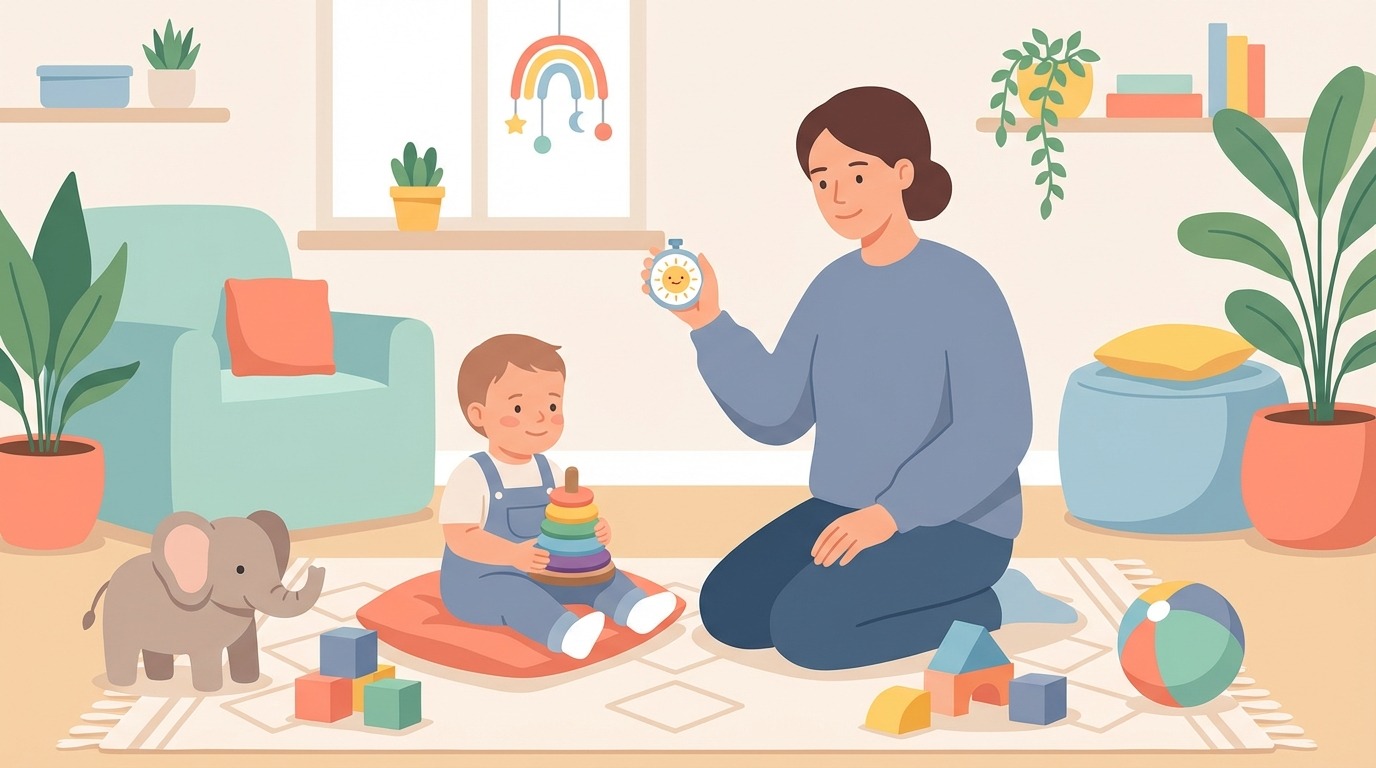
Making a Child Wait: Learning to Make a Child Aged 1 to 3 Wait.
| Short on time? Here’s the essentials ⏱️ |
|---|
| 🧠 Patience in children is built between 12 and 36 months through repeated and ritualized micro-waits. |
| 🗣️ Naming the emotion then describing the child’s waiting in clear steps reduces crying and frustration. |
| ⏳ Using an hourglass, a visual timer, or a nursery rhyme turns waiting time into play. |
| 🤝 Co-regulation through voice, gaze, and touch helps to soothe the child quickly. |
| 📈 Assess weekly progress to adjust educational techniques without labeling the child. |
From the first year, every small wait feels like a mountain to the youngest. Yet, with visual cues, simple words, and reassuring gestures, developing patience becomes a tangible adventure. This guide details real scenarios, proven tips, and sensory tools that help make a 1 to 3 year-old child wait without crying or tension.
Families juggle daily life: putting on shoes, preparing meals, organizing outings. So, how to turn waiting time into a patience learning opportunity? By relying on play, predictability, and emotion management, everything becomes smoother. Short rituals, constant messages, and a calm atmosphere form a solid foundation. This text offers a clear, progressive, and warm method tailored for real life.
Development of patience in children aged 1 to 3: basics, signals, and concrete levers
The ability to wait is built in stages. Around 12 months, attention is brief, impulse is strong, and the adult becomes a regulator. Between 18 and 24 months, the child tests limits and begins to tolerate very short delays. Around 3 years, they better follow instructions if they are visual and regular. This progression serves as a compass.
Neurodevelopmental bases and windows of opportunity
The prefrontal cortex, which helps inhibit and plan, matures slowly. Thus, small repeated waits stimulate this network. For example, putting down the spoon, counting to five, and saying “then we drink” trains the brain to sequence. Patience learning here rhymes with pleasant repetition, not harsh constraint.
Signals to observe to adjust the child’s wait
Each child sends clues: avoiding gaze, restless body, tense voice. These markers announce the limit. Conversely, a steady gaze, regular breathing, and composed posture validate the next step. Observing these signals avoids exceeding tolerance and protects the relationship.
Ritualizing waiting: micro-rhythms that soothe
Rituals make the invisible visible. A short song while putting on shoes, an hourglass during teeth brushing, or a “now / after” image structure the action. The brain likes predictability, and patience in children grows when the sequence is clear.
- 🎵 20-second nursery rhyme for handwashing
- ⏳ 1-minute hourglass for “waiting my turn”
- 🖼️ “First / then” cards on the fridge
- 🤗 Hug-breathing before going out
Useful case: Lina, 2 years old, cries when told “wait”. By replacing the command with “look, the sand is falling, then we open the door,” the crying stops within a week. This shift comes from giving meaning to the delay, more acceptable because visible. In short, the ritual puts the child on the solution’s side.
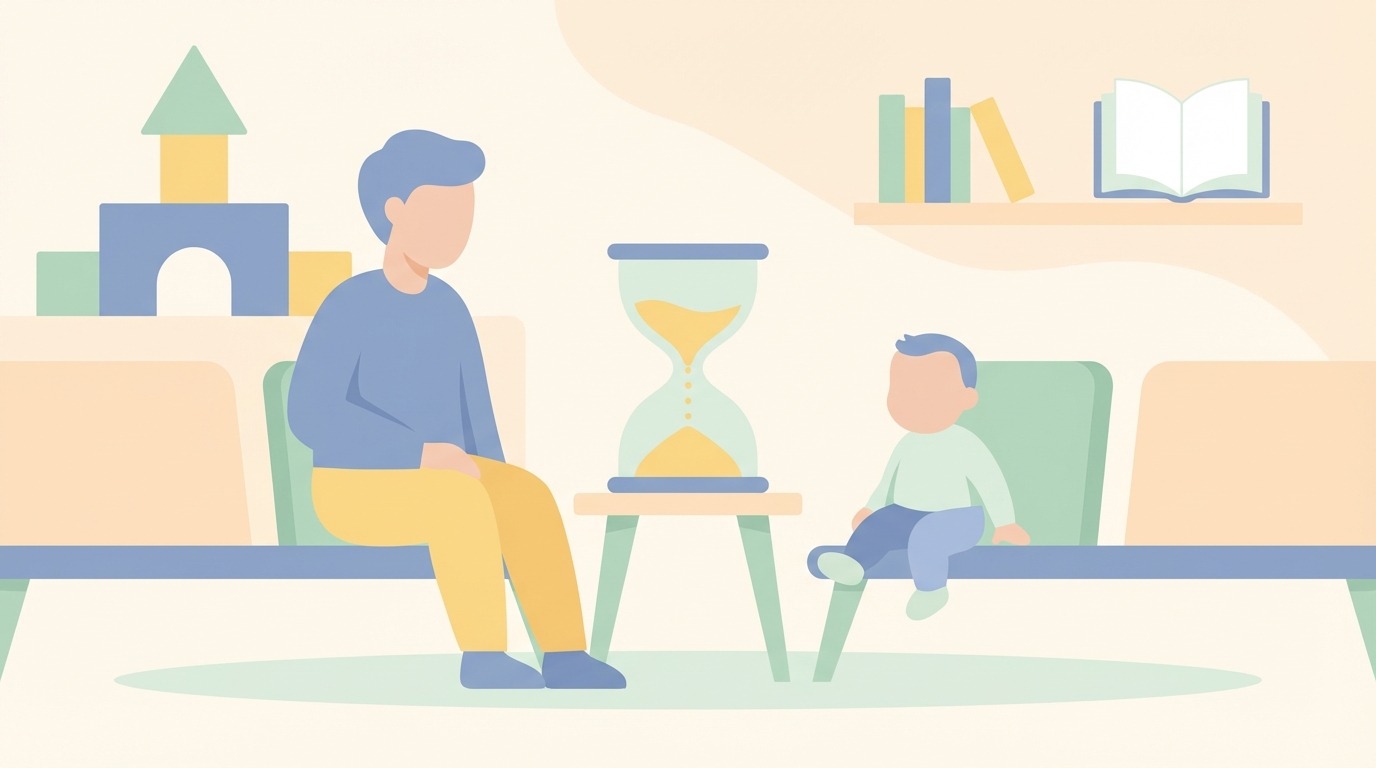
Educational techniques to make children wait without crying or conflict
A range of simple tools allows making the child wait without power struggles. The idea is not to impose, but to channel energy and then redirect it. Thus, play becomes a reliable and motivating educational ally daily.
Intelligent distraction and bridge activities
When waiting starts, offering a short task captures attention: “find the blue sock,” “put away three blocks,” “find the cat on the book.” These micro-tasks occupy the mind and subjectively shorten the delay. They also nurture self-control skills.
Board games that stimulate creativity provide natural waiting situations: waiting one’s turn, respecting a rule, anticipating. Suitable from 2 years old, they introduce “joyful waiting” which strengthens frustration tolerance, the cornerstone of effective educational techniques.
Waiting language: speak briefly, positively, and sequentially
The young brain processes short messages better. Saying “first shoes, then park” helps more than “wait a bit.” Using concrete time markers, like “when the song ends,” makes the goal achievable. Guided choice also calms: “do you prefer the green or red hourglass?”
Visual timers, hourglasses, and weather tokens
Colored disk timers make waiting time tangible. The child sees the red decrease, so the end is near. “Weather” tokens (sun for good waiting, cloud for difficult moments) allow talking without judging. Effort is valued, not perfection.
To visualize these tools in action, targeted video searches help move from theory to practice.
Field example: Noé, 3 years old, bumps others on the slide. By introducing “one descent each, then change places” and a 30-second visual disk, tension decreases. Children then rely on the common rule and the adult model. Thus, social order restores without cries.
Emotion management: co-regulation and strategies to soothe the child during waiting
The heart of child waiting lies in emotion management. When the storm rises, co-regulation prevails. Soft voice, confident gaze, stable posture, and touch secure. The adult lends their calm, the child borrows this resource until balance is regained.
Three steps to soothe the child in sensitive situations
Step 1: validate. “You’re angry, it’s hard to wait.” Step 2: contain. “I hold you close, we breathe.” Step 3: guide. “Look at the drawing, when the arrow moves forward, we go.” This triptych transforms raw emotion into channeled energy. It prepares constructive next steps.
Fixed labels undermine self-esteem. Better to avoid behavior labels and describe the moment: “today was hard, tomorrow we try again.” The child then feels capable of learning, rather than stuck in a role.
Movement, fresh air, and sensory hygiene
Movement regulates emotions. Before a waiting period, a short motor sequence helps: jump like a frog, push the wall, blow bubbles. Outside, space releases tensions. Organizing a time to play outside safely promotes better tolerance during the following calm sequences.
- 🌬️ Imaginary candle blowing to lower intensity
- 🧸 Hand massage with neutral cream to ground
- 👣 Barefoot parcours on a mat for sensory reset
- 🎯 “Find and seek” game to refocus
Practical case: Milàn, 20 months, hits when turning off the TV. An extinction ritual in three steps (nursery rhyme, TV off, hug by the window) reduces anger. The shift from alert state to regulated state happens faster. Result: the family regains a calm evening.
Finally, think “prevention.” Anticipating hunger, thirst, and tiredness avoids many escalations. A bag with water, soft snack, small book, and comfort toy becomes a discreet ally. This hygiene reduces emotional pressure and strengthens the success of previous tools.
Effective waiting routines at home and outside
Patience grows best in short, stable routines. Each environment offers its codes. Adapting supports avoids fights and strengthens confidence. The key: prepare, announce, then celebrate the effort made.
Meals, baths, bedtimes: winning micro-scenarios
Before meals: mission “put three spoons on the table,” then a one-minute hourglass. At bath time: waterproof picture book to explore while water runs. At bedtime: soft light, short book, breathing “flower scent, candle breath.” These scripts standardize patience learning daily.
Awakening moments with sensory toys support self-regulation. Textures, soft sounds, and simple manipulations occupy the mind without agitating it. This buffer zone better prepares for a delay than a bright screen, often exciting.
Outings, waiting rooms, and trips: logistical armor
In a waiting room, place a “story mat”: three successive images to point at. In transport, play “find red” with the environment. At the park, set a clear rule: “when the timer rings, we say goodbye to the slide.” This regular frame secures.
Safety remains a priority during outdoor waits. Early awareness protects the youngest. For example, learning to keep a respectful distance from dogs. Concrete advice helps prevent dog bites during outings or visits. A simple rule: “we look, we ask, we pet gently” under supervision.
To visualize the setup of an outing ritual, relying on video demonstrations eases adoption.
Final key: close the loop with positive feedback. “You waited for the beep, well done,” followed by a high-five. The brain associates waiting with success, not punishment. Thus, the routine becomes a daily springboard.
Measuring progress and adjusting educational techniques with kindness
Assessing without judging guides efforts. Rather than noting “well-behaved / not well-behaved,” better to track micro-skills. For example: “wait 15 seconds at the sink,” “respect turn-taking in the game.” This granularity avoids comparisons and values the path.
Realistic milestones between 12 and 36 months
12-18 months: tolerate a short delay with physical help. 18-24 months: wait a turn with visual guidance. 24-36 months: follow a small sequence with announced transitions. Each milestone remains flexible, as pace varies. The goal: progressive autonomy, without unnecessary pressure.
Simple and motivating tracking tools
A weekly chart with three lines is enough. Clear objective, observation, adjustment. Example: “Brushing hourglass – OK twice – move to 90 seconds.” Adding a sun sticker when effort is visible stimulates perseverance. Describe the action, not the personality.
Feedback must remain specific and brief. Saying “you waited until the sound, it was hard, and you did it” nurtures self-esteem. Avoiding comparisons between siblings limits rivalry. If a strategy wears out, change the angle: vary the nursery rhyme, move the hourglass, or offer an “assistant” role.
During sensitive periods (moving, arrival of a baby), reducing temporary demands protects progress. Secure the base, then slowly raise the bar. This flexibility maintains cooperation and preserves the relationship. Underlying all, the adult’s consistency remains the strongest guide.
Useful reminder: describing facts rather than sticking labels reinforces learning. To explore this approach, a clarifying article details how to avoid behavior labels daily. This lexical framework supports effort, even when waiting derails.
Ultimately, progress is seen in the quality of transitions. Fewer crises, quicker calming, and shared pride. With this compass, each day becomes a short training session for social life.
How long can a 2-year-old child reasonably wait?
Between 15 and 60 seconds with a clear support (hourglass, nursery rhyme). This delay increases if the child knows what to do during the wait and feels secure. The goal is repetition, not record duration.
What to do if the child cries despite the hourglass?
Validate the emotion, bring the body closer, breathe together, then shorten the time. Start again with a brief success, celebrate, and stretch again later. No need to insist if the storm is too strong.
Do screens help to make children wait?
They capture attention but do not build patience. Prefer active and sensory supports (book, blocks, picture book). Reserve screens for chosen and short moments to avoid overstimulation.
Should we reward with sweets?
Better to use social and symbolic reinforcers: specific congratulations, stickers, “helper” role. Sweets create external dependency and confuse dietary messages.
How to act in public when waiting derails?
Get on their level, speak softly, offer a simple task, then step out for a few minutes if necessary. Preventing shame protects both child and adult, and allows a quicker return to calm.
“Patience is sown in seconds and harvested through trust.” ✨