Anemia Child: Anemia in children: symptoms and treatment.
| Short on time? Here’s the essential ⚡ |
|---|
| ✅ Child anemia = decrease in red blood cells or hemoglobin ➝ reduced oxygenation of tissues. |
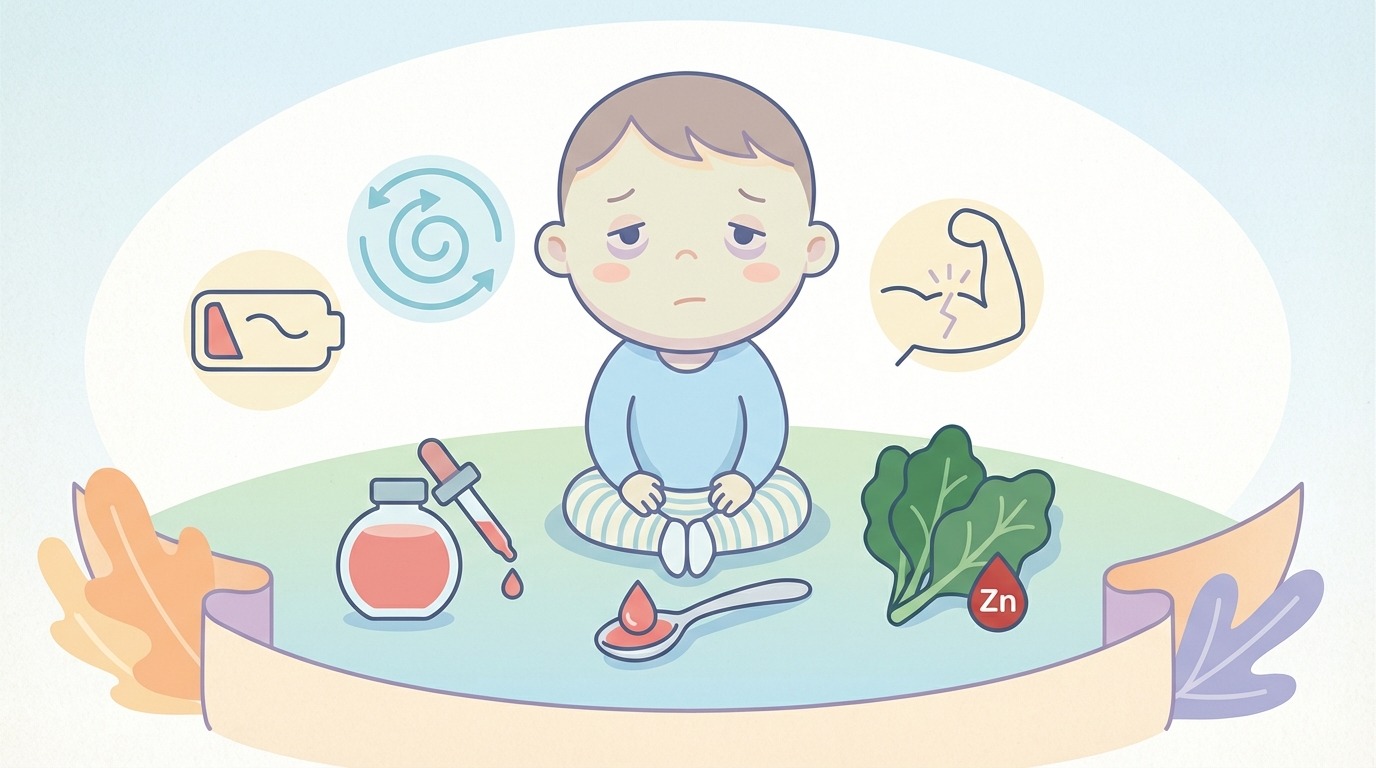
| 🔎 Key landmarks of anemia symptoms: pallor, child fatigue, irritability, shortness of breath, palpitations. |
| 🥦 Main cause #1: iron deficiency. Other causes: blood loss, hereditary diseases, B9/B12 deficiencies. |
| 🧪 Anemia diagnosis by blood test (Hb, ferritin, MCV, reticulocytes). Norms according to age. |
| 🍽️ First lever: child nutrition rich in iron + vitamin C. Avoid too much cow’s milk. |
| 💊 Anemia treatment often oral. Sometimes IV iron, transfusion, or specialized care. |
| 🚨 Emergencies: shortness of breath at rest, extreme pallor, tachycardia, dizziness, fainting. |
| 🌍 WHO reminds that about 40% of 6–59 months are affected. Prevention remains crucial. |
Silent oxygen deprivation tires the muscles, blurs attention, and hinders growth. When child anemia sets in, daily tasks become heavier, without spectacular signs at first. Yet, concrete clues exist. Between unusual pallor, a tendency to “zone out” in class, and rapid shortness of breath, the anemia symptoms draw a coherent story. This file details what happens in the blood, how to recognize the signals, and above all, how to act methodically and with kindness.
In 2026, prevention is advancing thanks to better eating habits and earlier detection in toddlers. However, iron deficiency remains the most frequent cause. Because understanding leads to better care, each section offers practical landmarks, concrete examples, and health education tools. The goal is simple yet ambitious: secure the care, from detection to anemia treatment, including child nutrition adapted daily.
Child anemia: understanding red blood cells, hemoglobin, and major causes
Blood is an oxygen delivery network. The red blood cells are its vehicles, and hemoglobin their fuel. When one or the other is lacking, transport slows down. Tissues then have less oxygen, and energy drops. In children, this mechanism is crucial because the brain and muscles grow fast. Child anemia slows this dynamic, sometimes quietly.
Why oxygen conditions growth
Neurons learn better when oxygenation is optimal. This is also true for the heart, bones, and immunity. Thus, prolonged anemia can cause developmental delays. It may also affect attention or working memory. Most often, everything improves after correcting the deficit. Hence the importance of early action and aiming for balance.
At the global scale, WHO data remind us of the magnitude of the issue. About 40% of children aged 6 to 59 months are concerned. This figure remains high, although prevention is progressing. It varies depending on access to diversified food, healthcare, and supplementation when needed.
The main cause groups in children
Four mechanisms dominate. First, iron deficiency, resulting from insufficient intake, increased needs, or reduced absorption. Next, decreased production of red blood cells by the marrow, sometimes linked to other deficiencies (B9, B12). Third, increased destruction of red blood cells (hemolysis), as in sickle cell disease. Finally, blood loss, visible or hidden, for example digestive.
In infants, too early introduction of cow’s milk reduces iron intake. Conversely, infant formula without added iron also exposes risk. Selective eaters or heavy milk consumers sometimes eat fewer iron-rich foods. As a result, the deficit sets in within a few months if nothing changes.
Focus on sickle cell disease, thalassemias, and perinatal context
Sickle cell disease deforms red blood cells. Their sickle shape hinders passage through small vessels. It promotes pain and hemolysis. Thalassemias disrupt hemoglobin synthesis. Depending on the form, anemia ranges from mild to severe. These diseases require specialized care, often in pediatric hematology.
Pregnancy context also influences risk. Prenatal monitoring detects possible blood incompatibilities. To understand scheduled tests, this clearly written guide can help: blood test schedule during pregnancy. Some maternal antibodies called irregular agglutinins can threaten newborn red blood cells. For deeper insight, see this practical and up-to-date file: irregular agglutinins.
In countries where Rh prevention is less accessible, feto-maternal incompatibilities sometimes cause neonatal anemia. These situations justify increased vigilance and targeted screening. The goal remains the same everywhere: protect the child by anticipating risks.
In sum, understanding mechanisms helps choose the right action, without wasting time or energy.
Anemia symptoms in children: warning signs, severity, and risk situations
Anemia symptoms vary by age, speed of onset, and cause. Slow anemia may seem “silent.” Yet, small changes accumulate. The environment often notices unusual child fatigue, decreased endurance, or more frequent naps. At school, some drop out or become more irritable.
Subtle but telling signs
Pallor is observed on the skin, lips, and conjunctiva. The child may get cold faster than usual. They climb stairs while breathing more heavily. Recovery after exercise is longer. Headaches occur late in the day. Sometimes, nails break or appetite decreases. In iron deficiency, craving for ice or chalk sometimes exists (pica).
- 🩸 Skin and conjunctival pallor
- 💤 Persistent child fatigue, need for naps
- 😮💨 Faster shortness of breath during effort
- ❤️ Palpitations after a short run
- 😠 Irritability, decreased concentration in class
- 🍽️ Reduced appetite, food selectivity
These signs are not “alarmist” taken alone. Together, however, they justify medical advice and a blood test. Better to assess early, because correction is often simple when intervening quickly.
When should one worry more?
Certain presentations require speeding up. Shortness of breath at rest, continuous tachycardia, dizziness, or fainting call for emergency care. Very dark urine, jaundice, or localized bone pain suggest hemolysis or blood disease. In infants, difficulty nursing, unusual drowsiness, or slow weight gain should alert.
Context also matters. A sporty adolescent who suddenly increases training consumes more oxygen. A young girl with heavy periods loses more iron monthly. A child who drinks a lot of cow’s milk sometimes eats less “useful” iron. The combination of these factors makes child anemia more likely.
The case of Léa, 6 years old
Léa no longer finishes her playground rounds and asks to sit down. Her teacher notices new pallor. Her parents report headaches late in the day and irritability at dinner. Clinical exam finds pale conjunctival color. Blood test shows hemoglobin below age norms, low MCV, and low ferritin. Diagnosis: iron deficiency. After dietary adjustment and oral iron, energy returns in three weeks. School success follows.
Early detection saves time on recovery and limits school and social consequences.
Pediatric anemia diagnosis: useful tests, interpretations, and common pitfalls
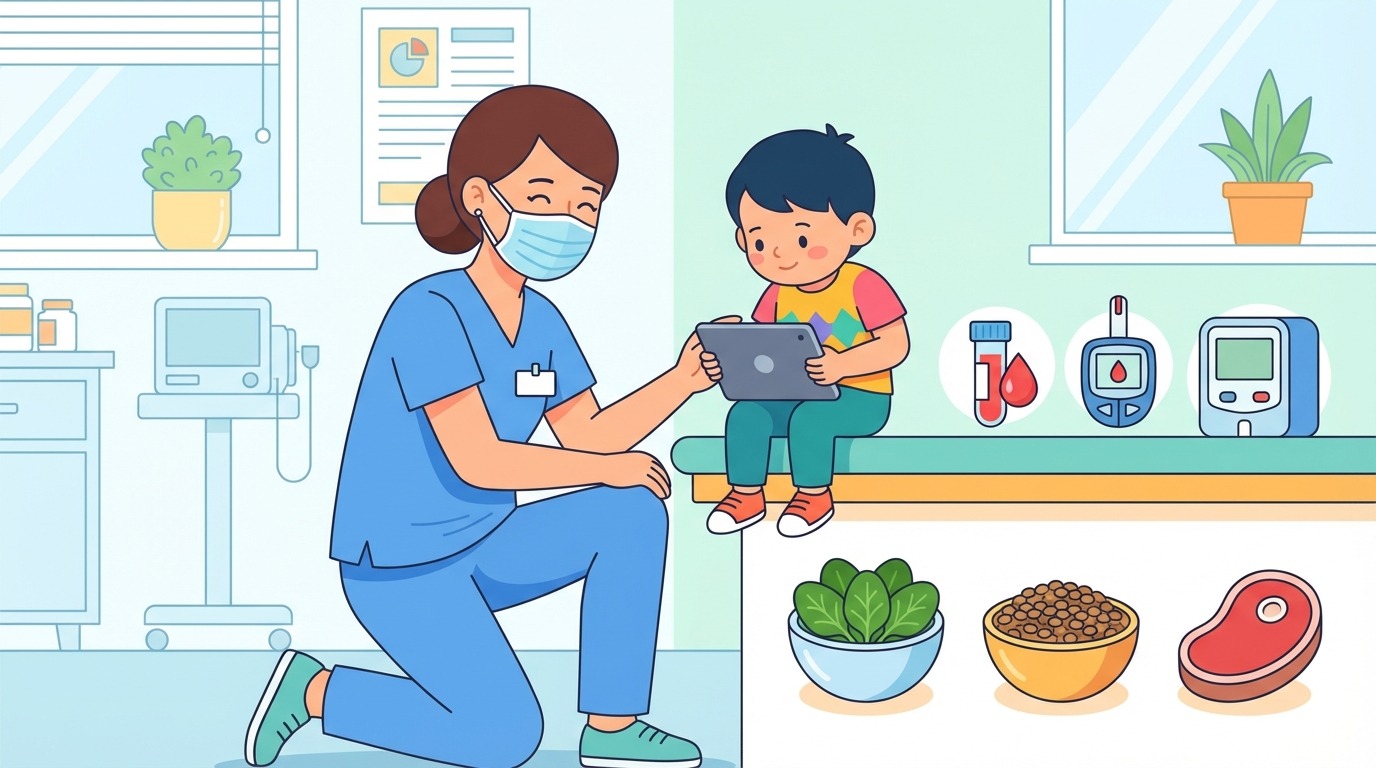
Anemia diagnosis relies on a blood test, interpreted with the child’s age. Start with hemoglobin. Then come mean corpuscular volume (MCV), mean corpuscular hemoglobin concentration (MCHC), ferritin, serum iron, and total iron-binding capacity (TIBC). Reticulocytes evaluate marrow response. CRP or ESR tests help nuance ferritin in case of inflammation.
First-line assessment
In toddlers, growth, appetite, and dietary context are also checked. The medical history explores blood loss: frequent nosebleeds, heavy periods, digestive pain, black stools. Sometimes parasitic screening is required in endemic areas. In some cases, hemoglobin electrophoresis screens for sickle cell disease or thalassemias.
Low ferritin generally confirms iron deficiency. Normal ferritin does not exclude deficiency in an inflammatory context. Elevated CRP can “mask” the decrease. Then the entire set of parameters and clinical picture must be analyzed.
Microcytosis, macrocytosis, normocytosis: orienting oneself
Microcytosis (low MCV) primarily suggests iron deficiency. It may also point to a thalassemia trait. Macrocytosis (high MCV) indicates folate or B12 deficiency. Normocytosis occurs in hemolysis, acute losses, or some chronic diseases. Orientation therefore stems from a body of evidence, not an isolated figure.
| 🔬 Test | 📌 What it indicates |
|---|---|
| Hemoglobin (Hb) 😊 | Confirms anemia according to age |
| MCV/MCHC 📏 | Micro, macro, or normocytosis ➝ etiological orientation |
| Ferritin 🧲 | Iron stores (beware of inflammation) |
| Reticulocytes 🧪 | Real-time marrow production |
| CRP/ESR 🌡️ | Associated inflammatory context |
| Electrophoresis 🧬 | Sickle cell/thalassemia screening |
Perinatal context can guide screening. Rh incompatibilities or presence of maternal antibodies expose some newborns. To better understand these risks, this clarifying point helps orient: pregnancy risk and Rh factor. Professionals rely on this information to anticipate and secure the neonatal period.
Finally, diet offers clues. High cow’s milk consumption combined with little meat or legumes draws a risk profile. To adjust menus without stress, here is a very clear and actionable guide: iron and child nutrition. The doctor crosses these elements with blood results to conclude and propose a strategy.
Well-conducted assessment shortens the path to recovery and avoids unnecessary tests.
Anemia treatment in children: from dietary rebalancing to iron supplementation
Anemia treatment depends on cause, age, and severity. When iron deficiency is confirmed, two levers complement each other: replenish iron stores and correct eating habits. Oral iron remains the most common solution. It is prescribed by a professional, for sufficient duration to restore stores, not just increase hemoglobin.
Supplementing iron methodically
Iron is taken away from milk, tea, and cocoa, which inhibit absorption. Vitamin C helps, with freshly squeezed orange juice for example. Digestive side effects sometimes occur. Then timing, galenic form, or dose fractionation can be adjusted. Never start supplementation without medical advice, especially in toddlers.
In some children, intravenous iron is discussed. This is the case if oral iron is poorly tolerated, ineffective, or if anemia is severe with rapid need. Transfusion remains rare and reserved for particular situations or certain hereditary diseases. The decision is made by a team, with clear information given to the family.
Child nutrition: strengthening the foundation
Plates are allies. The best sources of heme iron are red meat, blood pudding, liver, and fish. Non-heme iron is found in lentils, chickpeas, beans, tofu, spinach, almonds, and fortified cereals. It is combined with vitamin C-rich foods to boost absorption.
- 🥩 Red meat 1–2 times per week (depending on age)
- 🐟 Fatty or lean fish, alternating
- 🥣 Iron-fortified cereals at breakfast
- 🥦 Green vegetables + 🍊 citrus for vitamin C
- 🥛 Limited cow’s milk after 1 year (no more than 2 glasses/day)
- 🫘 Legumes 2–3 times/week, adapted textures
For breastfed children, early but gradual diversification toward iron-rich foods prevents dropouts. Iron-fortified infant formulas help non-breastfed children. On the parenting side, this guide can support balanced lifestyle around meals: nutrition during breastfeeding.
The key is to progress step by step: a simple meal plan, well-followed supplementation, and scheduled monitoring. That’s how batteries truly recharge.
Preventing anemia in children: concrete strategies, sample menus, and supportive environments
Prevention avoids catching up. In infants, no cow’s milk before 12 months. Choose iron-fortified infant formula if the child is not breastfed. Between 4 and 6 months, some breastfed babies benefit from iron supplementation, decided case-by-case by the pediatrician. Then diversification introduces fortified cereals and pureed lean meats.
Limit milk, open the plate
After 1 year, cow’s milk should remain reasonable. Two glasses suffice. Beyond that, the child settles down and eats fewer iron-rich foods. Smart snacks are proposed: whole grain bread spread with sesame puree, bell pepper sticks, or plain yogurt with ground almonds depending on age.
Daily, a typical menu helps a lot. Breakfast: fortified cereals + kiwi. Lunch: lentils with tomato and roasted carrots. Snack: orange and cheese square. Dinner: spinach omelet and potatoes. The goal is not perfection but regularity. Balance builds over a week.
Sports, school, and lifestyle rhythms
Sport oxygenates muscles and stimulates appetite. It remains beneficial, even during correction of mild anemia, with adaptation. Sleep must be sufficient. Regular schedules stabilize mood and energy. At school, a note to the teacher allows temporary adjustment of effort in PE and monitoring of fatigue.
For adolescent girls, menstrual flow is asked about. Heavy bleeding justifies medical advice. Sometimes local or hormonal treatment reduces losses and protects iron stores. The message is simple: shame has no place. We can talk, measure, and act.
In some regions, parasitosis screening is part of prevention. Targeted deworming can improve iron absorption, but it is decided according to the physician’s known context. Traveling tips: safe drinking water, hand hygiene, and safe food reduce digestive risks.
Ultimately, prevention is a sum of simple habits. It is maintained by smart shopping, colorful recipes, and active listening to the child’s needs.
What are the first signs of anemia in children?
Subtle signals include pallor, unusual fatigue, faster shortness of breath, irritability, and headaches. A combination of small signs, especially if persistent, justifies a blood test.
Cow’s milk and iron deficiency: how to balance?
After 12 months, limit cow’s milk to two glasses per day. Offer varied meals including meats, legumes, and fortified cereals, combined with a source of vitamin C to better absorb iron.
How long does oral iron treatment last?
The duration depends on severity and reserves. Generally, it continues a few months after hemoglobin normalization to restore ferritin. The precise scheme is decided with the doctor.
When to consult emergency?
If the child is short of breath at rest, has continuous palpitations, dizziness, extreme pallor, jaundice, or very dark urine, they must be seen quickly, even in emergency.
Should supplementation be started without prior blood test?
No. Medical advice is mandatory. Targeted supplementation is based on analyses to be effective and avoid inappropriate intake.
“A well-oxygenated child is an awakening mind and a moving heart.”