Choosing Shoes Sandals: How to choose shoes and sandals for children (0-12 months).
| Short on time? Here is the essentials ✨ |
|---|
| Favor very soft, lightweight 0-12 month shoes with a wide forefoot and a well-held heel 🧸 |
| Measure baby shoe size every 4 to 6 weeks; leave 8 to 12 mm margin 👣 |
| Choose baby shoe materials that breathe: thin leather, mesh, cotton; avoid rigid plastics 🌿 |
| At home: bare feet or non-slip slippers; outside: soft baby shoes or child sandals with protected toe ☀️ |
| Check fit: no red marks, free toes, adjustable closure; check after each nap ✅ |
The first months shape the foot’s identity. A wise choice of baby shoes and child sandals guides growth, protects the skin, and encourages exploration. Parents seek clear direction amid conflicting advice. Yet, simple guidelines are enough: a foot that breathes, moves freely, and feels stable in diverse environments. Comfort is not a luxury; it builds motor confidence, step by step.
Many families, like Léa and Mathieu with their little Noé, wonder when to choose baby shoes and how to balance flexibility and support. Indoors, freedom prevails. Outdoors, child foot protection becomes the red thread. Between soft leather, lightweight mesh and precise closures, technique meets tenderness. This balance plays out in details: a well-placed seam, a wide toe box, a flexible sole. The goal remains constant: accompany discoveries without hindering momentum.
0-12 month foot development and baby foot comfort: basics for choosing shoes
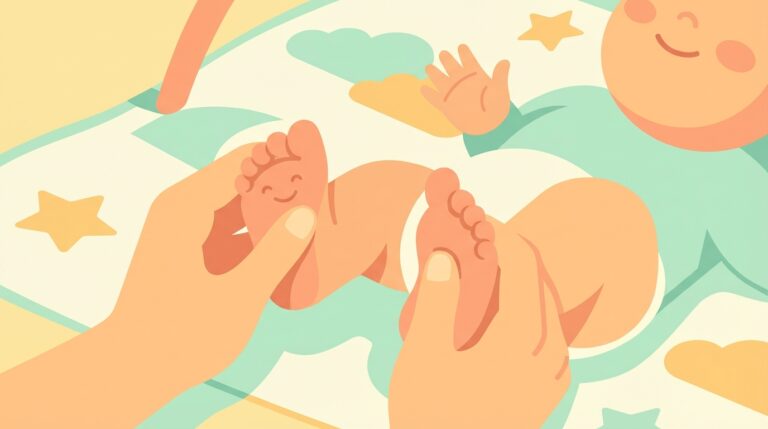
An infant’s foot is not a miniature version of an adult foot. The bones are mostly cartilaginous, and adipose tissues cushion every step. This structure requires flexibility. Thus, baby foot comfort is achieved by letting the sole interact with the ground. The brain then refines balance, tone, and proprioception. Too much rigidity cuts off these signals and slows progress.
Toe mobility remains crucial. They spread, sometimes grip the carpet, and seek stable supports. To support this ballet, the forefoot must stay free. A too-narrow baby shoe pinches the phalanges and distorts early walking. Conversely, a wide toe box respects the natural fan shape. Result: effective push-off and calm support.
Age benchmarks: from cradling to standing support
From 0 to 3 months, the foot mostly unfolds on the ground during spontaneous movements. Accessories are limited to soft slippers. Between 3 and 6 months, rolling initiates new pressure points. The foot more often contacts varied surfaces. From 6 to 9 months, crawling and creeping energize the developing arch. Then come the first standing supports between 9 and 12 months. This progression argues for very flexible 0-12 month shoes.
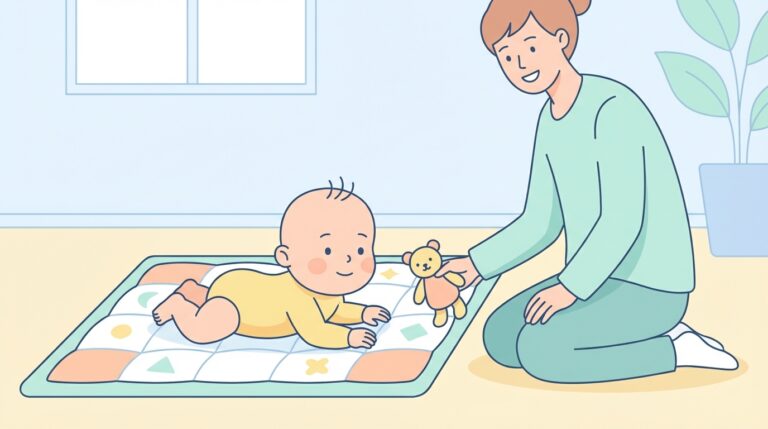
Léa and Mathieu noticed Noé sliding on the tile in a bodysuit. They added non-slip socks, then a soft leather slipper to explore the hallway. This micro-adaptation improved his stability. Above all, it didn’t hamper his desire to pull himself up against the sofa. A margin of 8 to 12 mm at the front prevented toe bumping during joyful tiny jumps.
Barefoot, yes; outside, smart protection
The bare foot gains through sensory information. At home, it remains the best teacher. However, child foot protection is necessary outside. Stones, hot asphalt, or rough wood require a sole. The secret? Choose breathable materials and easy flexion. A sole that bends by hand at the metatarsal level meets real needs. No forced arching or bulky reinforcements.
The heel must be embraced, not squeezed. A moderate shell stabilizes without locking in. A hard counter hinders ankle mobility and causes premature fatigue. On grass, sand, or parquet, varying terrain keeps the foot curious. Since each surface tells a story, multiply the chapters. In sum, development guides choice: freedom inside, flexible safety outside.
Final insight: when the foot learns, the tool must disappear; the shoe accompanies, it does not lead.
Technical criteria: baby shoe size, baby shoe materials and flexibility of child sandals
Precision starts with measurement. To know the baby shoe size, place the foot against a wall, heel touching, then mark the tip of the longest toe. Measure the distance and add 8 to 12 mm. This margin protects the roll of the step and the natural swelling at the end of the day. Repeat every 4 to 6 weeks: the foot grows fast.
Baby shoe materials weigh heavily on daily comfort. Thin leather breathes, softens, and avoids hot spots. Technical meshes wick moisture. Cotton caresses the skin and limits friction. Conversely, rigid plastics trap heat, encourage maceration, and cause redness. A too-hard counter often signals refusal to put on.
Measurable flexibility and adjustable support
Testing flexibility is simple: pinch the front of the sole with two fingers. It must bend sharply under the metatarsals. Slightly twist the shoe along the axis: a slight torsion is desirable. However, the middle should not sag. The whole protects without blocking movement. Regarding support, prefer adjustable closures. A wide velcro or elastic lacing stabilizes without tightening.
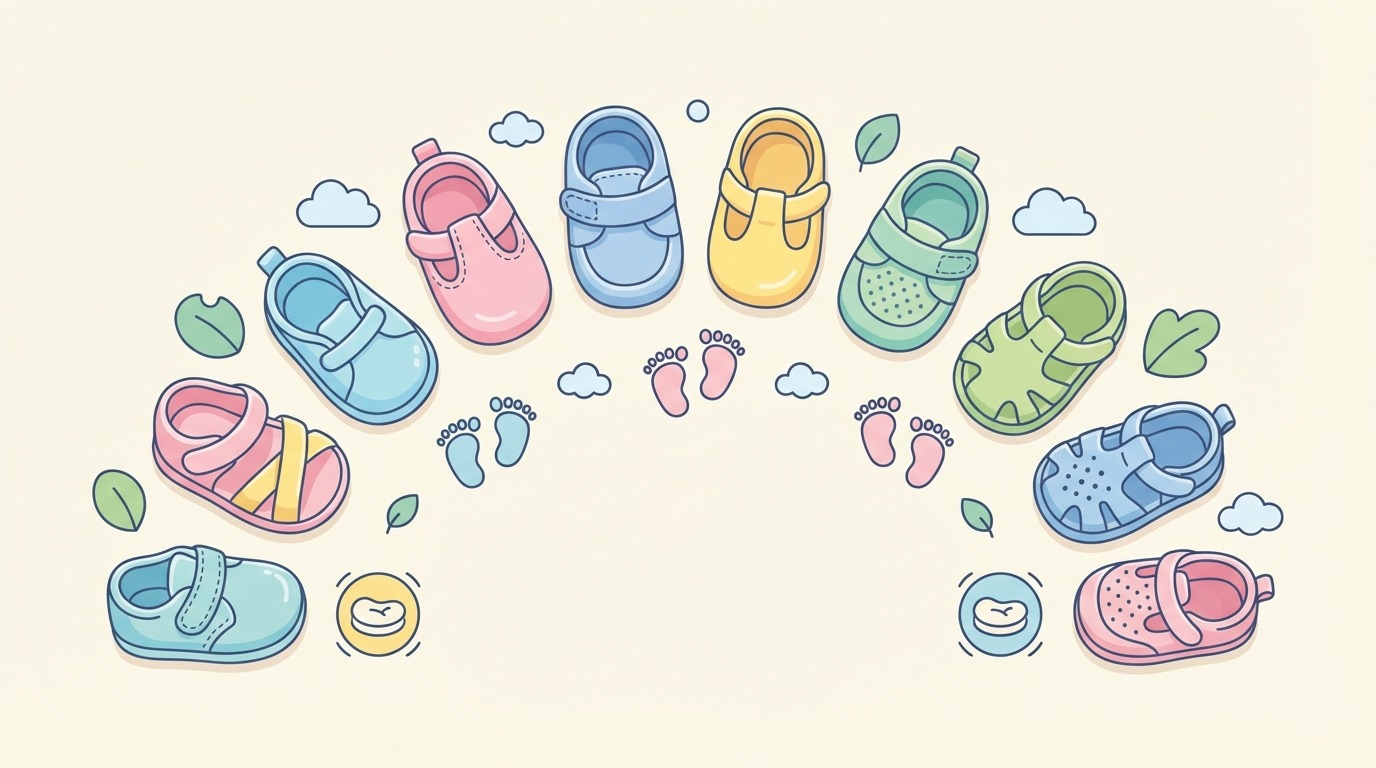
Child sandals for summer benefit from a protected toe. A strap reinforces child foot protection against shocks. The heel must stay secure, especially on uneven terrain. Soft baby sandals stand out for a thin sole, breathable leather or mesh, and soft edges. Avoid protruding seams that rub the arch.
Warning signs and checklist
Several signs reveal poor fit: persistent red marks, pale or clenched toes, repeated cries when putting on shoes, shoes slipping at the heel. The cause often lies in inappropriate size or poorly breathable material. It is better to correct quickly. Adjustment soothes the skin and rekindles the desire to explore.
- 👟 Wide, rounded toe box: freedom of the phalanges
- 🧵 Fine internal seams: zero targeted friction
- 🌬️ Breathable vamp: dry and calm skin
- 🪶 Overall lightness: reduced fatigue
- 🔁 Adjustable closure: precise hold, easy to adjust
Nothing beats a demonstration to visualize the measurement method.
Remember this: the perfect fit feels calm both at rest and in action. If it follows the play rhythm, the choice is good.
Baby shoes, soft baby sandals or first-step shoes: choice by season and use
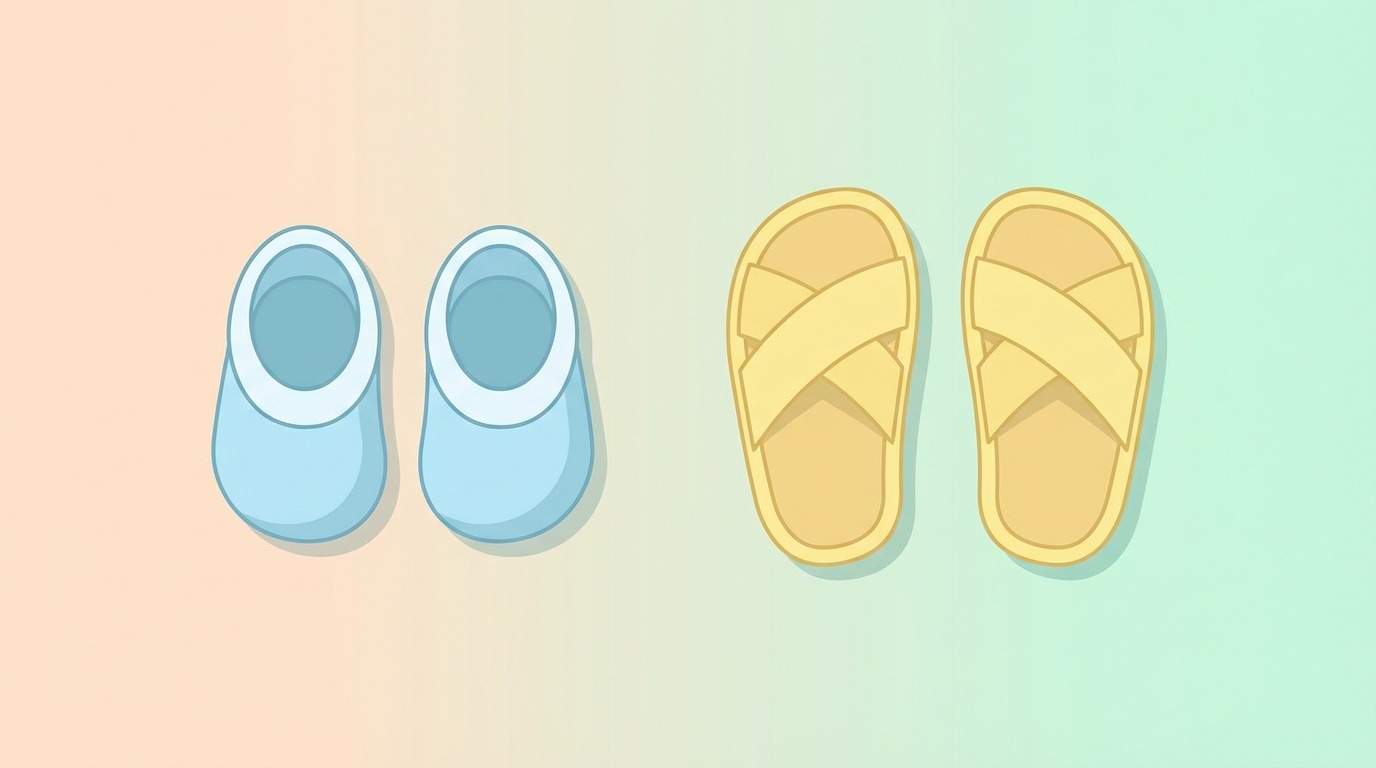
The context dictates the gear. In a temperate indoors, barefoot remains the reference. Otherwise, a soft leather slipper or non-slip sock suffices. For outdoors, ask the key question: what terrain and what weather? On hot asphalt, the sole must insulate heat. On grass, a thin, flexible rubber sole with good grip supports curiosity without heaviness.
In spring and summer, soft baby sandals win. Choose a model with soft straps, with protective toe if the child still crawls. The collar should remain soft to spare the ankle. In autumn, a closed baby shoe in suede leather, breathable, proves versatile. In dry winter, favor a light and warm lining without excess thickness that restricts toes.
When to talk about first-step shoes
The term first-step shoes appears as soon as the child stands and moves with support, even if uncertain. The goal is not to “accelerate” walking, but to offer a tool faithful to the movement. A low upper frees the ankle. The sole bends clearly. The heel stays held thanks to a soft counter. Width must accommodate a chubby foot without constraint.
Some babies alternate sidewalk and grass on park outings. A closed, lightweight shoe with protected toe will serve daily. For the beach, a ventilated sandal that dries quickly will keep skin healthy. Each scene demands its ally. Yet one rule remains: the more motor skills develop, the more the shoe must disappear into sensation.
Example of a journey and useful video
Noé, 10 months old, stands and walks along the coffee table. At home, barefoot or slippers. In front of the building, a pair of 0-12 month shoes with thin sole accompanies him. At the playground, child sandals with closed toe protect his curious toes. Each choice adjusts to the moment, not a fixed label.
Practical conclusion: the weather, ground and motor stage form the trio that guides choice, never a passing fashion.
Common mistakes to avoid and simple solutions for child foot protection
First mistake: believing the foot must be “tightly held.” Excessive tightening cuts circulation and cramps walking. The solution is to adjust minimally effective, then check after a few minutes of activity. If the skin marks, loosen slightly. Well-measured support is seen in stability without rigidity.
Second mistake: reusing overly worn pairs. A hollowed sole poorly guides the next foot and alters support. For 0-12 month shoes, wear occurs quickly, as material is thin. Better to limit passing shoes between children when the sole bears the previous imprint. Child foot protection also comes through neutral equipment.
Materials and climate: a couple to care for
Third mistake: neglecting heat. Poorly breathable materials create trapped humidity. Redness, then fungal infections, can follow. Reverse the trend with airy baby shoe materials: non-plasticized leather, mesh, cotton. Adding a thin natural fiber sock limits sweating. Air drying pairs away from direct heat sources prolongs flexibility.
Fourth mistake: underestimating width. A chubby foot requires a generous shape. Otherwise, the longest toe bumps. The snowball effect comes quickly: clenched toes, refusal to put on, loss of desire to move. The answer lies in patient fitting. Pressing the front with the thumb: space must remain. Watch the child bite their tongue while pulling up: if nothing bothers, the size is good.
Concrete scenario and corrections
At the market, Emma, 11 months old, wears rigid child sandals “that keep her upright.” She often stumbles on cobblestones. In the evening, her toes glow red with worry. Her parents switch to a soft baby sandal with closed toe, thin sole and wide velcro. Result: smoother gait, disappearing marks, and a decided step on uneven tiles. A simple revision of the flexibility-width duo changed the dynamic.
Fifth mistake: believing the standard is universal. A wide, Greek, or Egyptian foot will not react the same to the same shape. Looking at the foot’s inner curve inside the shoe, standing, offers the truest insight. The tool must mold without pressing. In short, prevention is better than compensation: regular checks avoid most discomforts.
Key idea: protection is not confinement; protection is enabling daring.
Buying and care guide: fitting method, pair rotation and durability
A good purchase starts before the store. Measure both feet, note the larger size, and plan the margin. Spot models with wide toes, thin flexible soles, and adjustable closures. In the fitting room, let the child squat, stand up, and hold onto a chair. Watch the heel: it must not “click.” Look at the big toe: it must not whiten against the front.
Fitting time must remain brief but active. A few steps, gentle twisting of the shoe by hand, and a flexibility test suffice. Reading the baby shoe materials label avoids bad surprises. Prefer certified leather or breathable mesh. Avoid plasticized linings in summer. Feeling inside for a hard seam with your finger can save delicate skin.
Rotation, hygiene and minor repairs
Rotation extends the life of pairs. Alternate day A and day B to allow material to dry. Brush the sole to remove sand, improving flexion fidelity. For leather, neutral cream maintains softness. For mesh, hand wash and flat drying preserve shape. Always remove the insole when possible to speed drying.
In the field, carry a light kit: wipes, small brush, spare socks. Dust-filled velcro loses strength. Clean it with a toothpick or brush to restore efficiency. A bent buckle quickly gets replaced by a cobbler. Thus, child foot protection does not stop at checkout; it is cultivated daily.
Purchase calendar and key reminders
From 0 to 6 months, soft slippers and bare feet rule. Between 6 and 9 months, plan a very flexible outdoor pair for the park. At 9-12 months, a light and roomy first-step shoe, or soft baby sandals in summer, make the pair. Check baby shoe size each month. Mark a control date on the fridge to avoid forgetfulness. And, when in doubt, prefer freedom over constraint.
Action summary: a clear method, breathable materials, and regular observation forge happy steps.
What margin should be left in front of the toes for 0-12 month shoes?
Count 8 to 12 mm in front of the longest toe. This margin accompanies the roll of the step and the micro-volume variations throughout the day.
Are child sandals suitable before independent walking?
Yes, provided they are very soft, breathable, and preferably with a protected toe if the child still crawls. The heel must stay well secured without tightening.
Can baby shoes be recovered from an older sibling?
Only if the sole is not marked by the older sibling’s footprint, the interior is intact, and the shape fits the younger child’s foot. Otherwise, support will be biased.
Is barefoot better or shod indoors?
Barefoot stimulates proprioception and motor skills. Failing that, non-slip socks or soft slippers suffice. Reserve shoes for outside.
Which baby shoe materials should be favored in summer?
Thin non-plasticized leather, airy mesh, soft cotton. Avoid rigid plastics and waterproof linings that promote maceration.
“Free feet today, confident steps tomorrow.”