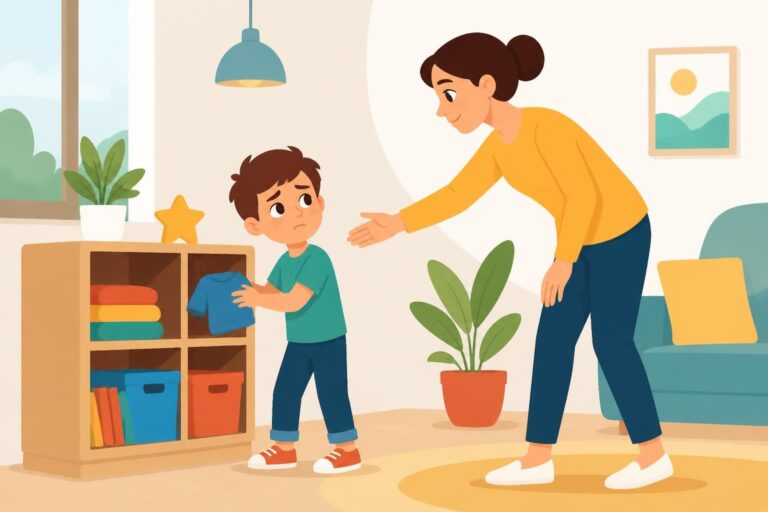
Refusal to Go to School: Managing refusal to go to school in 5-8 year olds.
Between 5 and 8 years old, refusal to go to school often surprises and sometimes disarms. Mornings become tense, stomachs knot, and tears replace packed school bags. This behavior reflects neither tantrum nor laziness. It often reveals school anxiety rooted in very concrete fears: separation, judgment, noise, unpredictability, learning difficulties, or peer tensions. Families seek reliable landmarks, while the school expects a quick return to class. Between urgency and gentleness, a balance is essential.
Good news: managing school refusal relies on proven levers. Calm child-parent communication, gradual exposures, kind framing, and strong alliances with teachers change the game. Specialists encourage an active approach to avoid school delay, while respecting the child’s pace. In the post-pandemic era, in 2026, educational teams better identify these signals and cooperate more with care providers. The goal is not to force but to secure. Guided by concrete strategies, this path transforms the fear of school step by step into confidence.
| Short on time? Here is the essential ✨ |
|---|
| Refusal to go to school is not a tantrum: it signals anxiety, often related to separation, social judgment, learning difficulties, or bullying. 🧩 |
| Act quickly but gently: predictable routine, daily micro-goals, positive reinforcement, and gradual exposure to the school context. ⏱️ |
| Talk and listen: establish a child-parent communication ritual to name fears and validate emotions. 🗣️ |
| Team around the child: family–teacher–care coordination, possible psychological support (CBT), follow-up in 2–3 weeks. 🤝 |
| Prevent school delay: continuity of learning at home without overload, and regular returns to class, even brief. 📚 |
Refusal to go to school in 5-8 year olds: understanding school anxiety to act better
Between 5 and 8 years old, the social brain develops rapidly. The classroom becomes an intense theater where separation, rules, expectations, and comparison play out. Refusal to go to school appears when the child perceives these challenges as uncontrollable. This school anxiety may manifest as stomach aches, crying at the gate, requests to go to the nurse’s office, or anxious hyper-conformity. The more we understand the mechanism, the more precise the intervention can be.
Anxious school refusal differs from simply “playing truant.” The child remains interested in learning and friends, but anxiety blocks the act of going to school. Clinicians compare it to childhood anxiety disorders, especially separation anxiety. This condition is not a trend. Since the health crisis, several educational teams have observed increased attention to these difficulties, facilitating quick referral to appropriate solutions.
Warning signs to spot early
Certain signals call for kind vigilance. Recurrent difficulties on Mondays, tears at the moment of separation, nighttime awakenings before school starts, or fixed ideas about bad grades are common. Other signs appear as body tensions, panic attacks, or frequent visits to the office. Repetition becomes symptomatic. Without dramatizing, these elements should be noted to build a step-by-step response.
Among children 5-8 years old, typical fears often crystallize around separation and judgment. Anxiety may also stem from an undetected learning disorder (dyslexia, dyscalculia) or fragile attention. In these cases, school becomes a place of anticipated failure. Early screening limits the risk of school delay and restores meaning to daily efforts. The aim remains to lighten emotional load, not to force.
RSA, “school phobia,” and fear of school: clarifying words to help better
In practice, the terms “anxious school refusal” and “school phobia” are often used interchangeably. The important thing is not the label, but the avoidance mechanism. The more the child avoids school, the more anxiety increases. This is the classic trap. Conversely, gradual returns to class, even short, retrain the brain that the feared danger does not occur. This principle of guided exposure underpins many effective care approaches.
A telling example: Lina, 6 years old, cries every morning since the start of school. She loves stories and classmates, yet begs to stay home. A stable separation ritual, the known welcome of a warm AESH, and entering class through a valued project (reader of the day) reduced anxiety in ten days. The key message: secure first, demand later. This compass guides all that follows.
Managing school refusal daily: parental support and soothing routines
The home is the launch ramp for the day. Effective school refusal management starts with stable landmarks: get up at a steady time, plan the outfit, lighten the bag, and prepare a predictable goodbye. This framework calms the young child’s alarm system. Short rituals gain power if they include a controlled choice: favorite pen, reassuring badge, or transition rhyme. The brain likes what it can predict.
In the morning, naming the emotion lowers tension: “Your stomach tightens because you are scared, that’s normal. We breathe together, then we go.” In the evening, avoid minute-by-minute investigations. Better an open question: “What was the easiest moment? And the toughest?” This child-parent communication supports self-regulation. Meanwhile, a micro-goals chart reinforces progress and school motivation without material overkill.
- 🎯 Set one goal per day: “Enter class without crying” or “Stay until recess.”
- 🧘 Breathe three times together before leaving, hands on the stomach.
- 🗓️ Prepare a visual weekly schedule with reassuring icons.
- 🤝 Inform the teacher of a discreet signal to request a break.
- 🌟 Celebrate effort, not results: sticker, hug, shared activity.
When anxiety mainly comes from separation, targeted parental resources make a difference. Useful landmarks are found in this guide on separation anxiety in children. To smooth entry and transitions, these practical tips for preschool offer concrete steps. Children gain stability when adults coordinate around a simple, shared plan.
Sometimes fear comes from excessive performance demands. The child anticipates mistakes as a catastrophe. We then rebalance evaluation by weighting attempts, not just grades. To deepen this point, explore these paths on performance anxiety in children. We protect the drive to learn by valuing effort and boldness.
Bedtime routines also support the day. A simple dinner, a story, then soft light prepare restorative sleep. Screen-free evenings 60 minutes before bedtime reduce excitability. A rested child better regulates emotions and faces class more calmly. In case of frequent bodily complaints, first validate the sensation, then redirect to the planned action to limit avoidance without denying the pain.
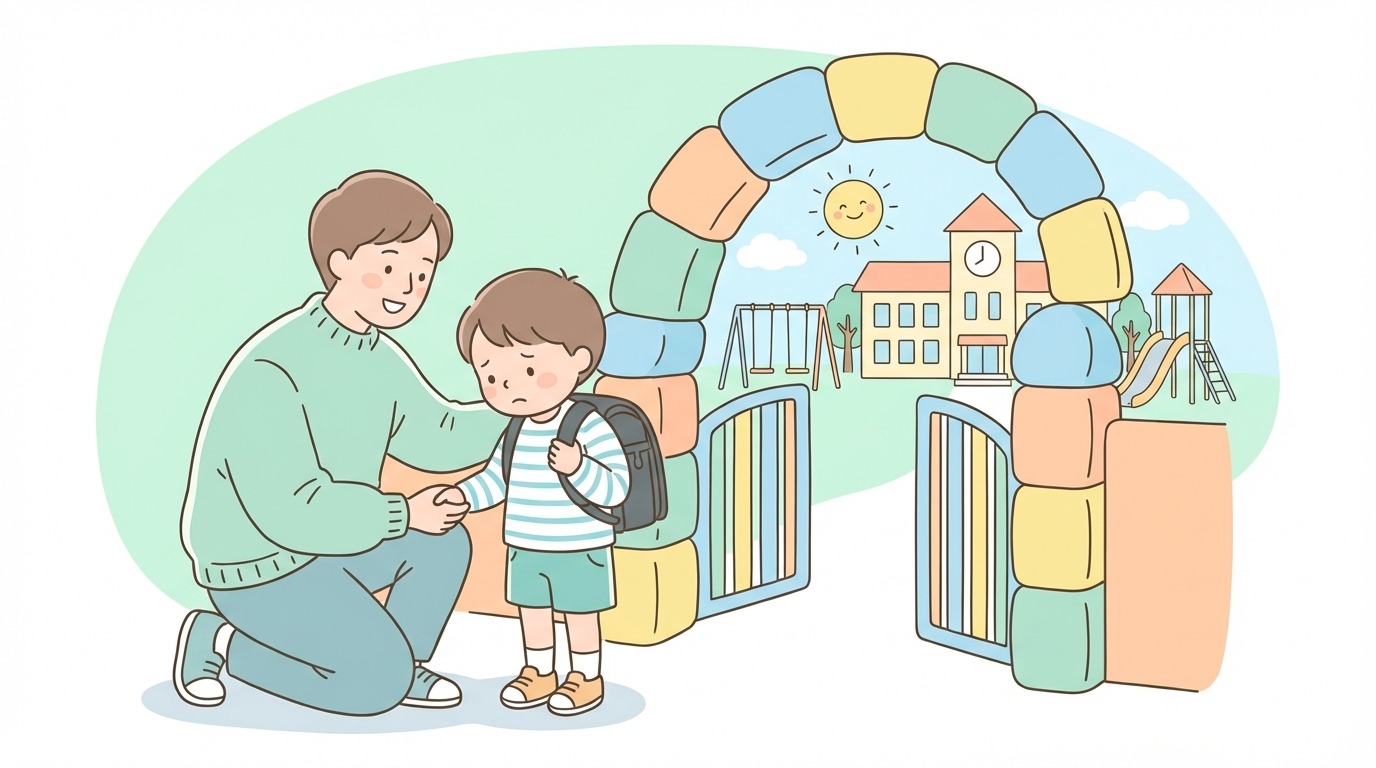
Psychological support and alliance with the school: from detection to effective intervention
When tears and anxiety persist, psychological support marks the path. Cognitive-behavioral therapies (CBT) are among the most documented approaches. They teach the child to tame catastrophic thoughts, feel their body calm, and expose themselves step by step to the school context. Parents find practical tools to maintain micro-victories over time.
It remains crucial to keep an active link with the school. A short meeting with the teacher and, if possible, the school life referent sets landmarks: who welcomes the child? What arrival routine? What temporary withdrawal space? This shared plan reduces emotional load from the gate. A simple, co-written liaison notebook reassures everyone and tracks progress week by week.
Graduated exposure: how to dose without rushing
Start small, move steadily. First goal: stay 15 minutes in class, then 30, until recess. Associate each step with a pride ritual, not necessarily material: recount victory at dinner, choose the music for the trip, or put a star on the schedule. This protocol avoids the “all or nothing” trap, a major source of failure and discouragement.
Medically, specialized advice is necessary if avoidance lasts more than a few weeks or if intense crises hinder schooling. Professionals assess possible causes: social anxiety, OCD, panic disorder, ADHD, or “dys” difficulties. Depending on the case, they propose therapy, and rarely temporary medication. The goal remains to support the child so they return to class equipped, not weakened.
Field illustration: Noam, 7 years old, has been refusing school since All Saints’ Day. A psychologist identifies marked social anxiety. Action plan: scripted greetings on arrival, secure buddy in class, and role-playing to practice raising the hand. In four weeks, Noam stays the whole morning. The keystone: a fluid family–school–care alliance, nurtured by clear, measurable goals.
Preventing fear of school: lifestyle, emotional language, and school motivation
Prevention starts far from morning tears. A child who sleeps well, eats regularly, and moves every day has a larger regulation reservoir. A simple breakfast rich in proteins and fiber stabilizes energy; these ideas of healthy meals for children inspire sustainable routines. At the slightest social fever (noise, transitions), this base protects from emotional escalation.
Emotional language is also cultivated. You can use an emotion wheel, illustrated cards, or a color chart. The child learns to say “I’m afraid of making mistakes in front of others” rather than “My stomach hurts.” Naming already reduces. If needed, rely on tips to handle repeated complaints without trapping into avoidance: this guide on effective responses to complaints offers useful paths.
Igniting the desire to learn
School motivation of children 5-8 years old feeds on exploration, play, and concrete projects. Reading the park sign, counting the steps, writing a card to a loved one: school goes beyond walls. At home, turning homework into a short quest (find three words with “ou,” spot two triangles in the living room) reconnects the child with the joy of learning. Small successes yesterday prepare tomorrow’s challenges.
Another subtle lever: ritualizing preparation for the next day. Display the outfit ready, put the favorite book in the backpack, and check the transition comfort item if allowed at school. Gentle transitions reduce friction. If a cold appears, avoid wandering medication by reading reliable landmarks like these tips on cold and cough in children. A cared-for body reassures a worried mind.
Finally, anticipate sensitive moments (Monday, after holidays) in advance. Two days before, restore usual bedtime schedule, visualize the day with the child, and restart with an activity they like at school. Prevention does not erase all obstacles but avoids emotional fire outbreaks. A predictable environment lowers alertness.
Limiting school delay without reinforcing avoidance: educational bridges and gradual returns
When absence settles in, the challenge is to preserve learning without cementing avoidance. We create “bridges” rather than elsewhere. A teacher sends targeted, realistic activities linked to the class. The child hands in a small assignment weekly and receives positive feedback. This continuity protects self-esteem and prepares the ground for the return to in-person classes.
The return is organized by steps, with visible criteria: two 30-minute entries, then three mornings, then a full day. Each step is associated with a resource adult. The buddy system with a chosen peer reduces isolation and restarts social skills. Structured breaks (reading corner, a few minutes of breathing) prevent emotional outbursts and reassure those around.
Digital tools help but don’t replace. Short video exchanges with the class maintain social link. However, keep the compass: the goal remains the classroom, not long-term homeschooling. CNED or shared education becomes a temporary safety net only if anxiety level makes any presence impossible. Each week, re-evaluate to avoid freezing the stopgap solution.
Measuring progress strengthens motivation. Three indicators are tracked: duration of presence in class, number of avoided avoidances neutralized, and degree of tension felt by the child (scale 0 to 10). These measures guide adjustment of steps. They also allow celebrating what works. Attention to visible progress opens the door to lasting success.
Last point: think collective. Training the class to welcome, without stigmatizing, promotes inclusion. A simple sentence suffices: “Everyone goes at their own pace, we help each other.” Peers then become allies, not judges. When the school cultivates this culture of care, the fear of school recedes and the joy of learning takes root again.
“The less we avoid, the more we learn; the more we secure, the more we dare.”
How to distinguish anxious school refusal from “playing truant” ?
The anxious child avoids school but remains interested in learning and friends. They show genuine distress, do not necessarily try to hide absences, and exhibit physical or emotional signs (crying, stomach aches). “Playing truant” usually accompanies school disinterest, hidden absences, and alternative activities during class hours.
Should a child be forced to return to class ?
Pure coercion often worsens anxiety. Better a graduated and planned exposure: short but regular presences, familiar welcome, anticipated breaks, and positive reinforcement. The goal is a quick but safe return to avoid the establishment of school delay.
When to consult a professional ?
If avoidance lasts more than a few weeks, if panic attacks occur, or if dark thoughts appear, a consultation is necessary. CBT and coordination with the school provide strong results. In rare cases, temporary medication may support therapy.
How to talk about fears without reinforcing them ?
Validate the emotion (“You’re scared, it’s normal”) then propose a concrete action (breathing, walking together towards the class). Avoid long speeches and favor short, repeated rituals that provide predictability.
What mistakes to avoid at home ?
Negotiating endlessly in the morning, multiplying explanations, constantly changing strategies, and giving big gifts to get attendance. Favor stable rules, micro-goals, and celebrations of effort to support motivation over time.