Back to preschool: practical advice to support your child
| In Brief ✅ |
|---|
| 🗺️ Anticipate the start of school with visits, books, and games to get familiar with school. |
| ⏰ Establish a morning and evening routine two weeks before D-day. |
| 🧼 Foster autonomy (toilets, dressing, hand washing, meals) with kindness. |
| 🤝 Enhance social skills (sharing, taking turns, language) through play. |
| 🎒 Prepare a simple and identified bag, with spare clothes, water bottle, and allowed comfort toy. |
| 💬 Co-build fluid communication with the teacher and the ATSEM. |
| 🧠 Soothe separation emotions through short and consistent rituals. |
| 🩺 Ensure health (sleep, vaccines, allergies, hygiene) and inform the school. |
| 👶 Adapt support for special cases (prematurity, disability, bilingualism). |
The start of kindergarten opens an adventure full of discoveries, first friendships, and new rules. However, this stage can stir up strong emotions, both for the child and the parent. To approach it calmly, progressive preparation helps create reassuring landmarks. From school visits to separation rituals, each detail strengthens confidence and reduces anxiety. Teachers and ATSEM then become allies, just like the routines that structure the day. Properly supported, this transition turns into a springboard for autonomy and development.
Starting today, a few simple gestures lay the foundation for a peaceful daily life. Speaking positively about school, setting regular schedules, and encouraging autonomy are powerful levers. Playful tools and children’s books also provide concrete entry points. Families who take time to explain, show, and repeat often notice a smoother adaptation. The child then feels recognized in their needs, heard in their fears, and valued in their progress. This is the whole challenge of this foundational period.
Starting Kindergarten: Preparing the Child with Concrete Landmarks
The first landmarks are built at home. Clear and positive speech transforms school into a place of discovery, not a source of anxiety. It is useful to describe simple scenes: saying hello, putting away one’s coat, listening to a story, going to play in the yard. Thanks to concrete words, the child anticipates and gains confidence. This approach acts like a lighthouse in the fog of newness.
To nourish this projection, families rely on accessible supports. Children’s books about starting school and emotions open dialogue. Role-playing with Fisher-Price 🧸 figurines also allows reenacting the classroom. A playful resource complements this system: the “On the Way to Kindergarten” game helps the child visualize their day and formulate questions. Gradually, the unknown becomes familiar.
Talking about Emotions and Providing Reassurance with Examples
Naming emotions structures the inside. Saying “it’s normal to be a little scared” de-dramatizes. Then, offering a concrete solution reassures: a short separation ritual, a bracelet to touch thinking of the parent, an allowed comfort toy. Lina’s story, 3 years old, illustrates this path well. She cried at the thought of leaving home. After two weeks of repeating the “kiss-hug-wink,” her tears gave way to an encouraging smile. Children cling to rituals like beacons.
Visiting the School and Anticipating the Route
A visit greatly reduces stress. Showing the classroom, yard, toilets, coat rack opens the door to questions. Schools often offer dedicated times at the end of August. Photos taken on site then serve as support at home. Finally, testing the route and timing the schedule removes the anxiety of rushed mornings. These are details, yet the effect on serenity is major.
Simple Routines for Security
Installing a evening routine and a morning routine eases the transition. Bath, story, cuddle, fixed bedtime form a solid base. In the morning, a stable sequence avoids yelling: wake up, breakfast, toilet, dressing, departure. Pictograms or magnets on the fridge make the child an actor. As a complement, a structured guide like these practical tips for preparing for school offers a reliable framework to families.
To punctuate preparation, a small “well-being kit” can make a difference. A pouch with tissues, Mustela mini hand cream 🧴, Avent leak-proof bottle 🧃, and name tags helps the child feel ready. The underlying goal remains simple: strengthen predictability, reduce pressure, and open the appetite for discovery.
- 📚 Read one picture book per evening about school and emotions.
- 🧭 Walk the route twice, at the actual arrival time.
- 💬 Repeat a short and steady separation phrase.
- 🧃 Prepare an Avent bottle and test it at home.
- 🧴 Slip in a Mustela mini hand cream if allowed.
At the end of this phase, the child has mental images of the school and a reassuring scenario; it’s the best springboard.
Autonomy and Routines: Keys to a Smooth Adaptation in Nursery
Autonomy is cultivated upstream through small daily challenges. Dressing oneself with elastic clothes, closing a snap jacket, putting on velcro shoes: these actions build self-esteem. In class, they also free up time for learning. Each skill acquired before school reduces the emotional load on D-day.
Toilets, Hand Washing, and Calm Hygiene
Going to the toilet alone is a key step. At home, a step stool and reducer ease the position. Then handwashing is ritualized: wet, soap, scrub, rinse, dry. Children love timing with a nursery rhyme. A gentle hand cream like Mustela limits discomfort in winter. Meanwhile, naming the adult to ask for help unblocks many barriers.
Meals, Canteen, and Allergies
Eating autonomously is learned little by little. Holding a small fork, picking up pieces, wiping the mouth, clearing the cup. A leak-proof Avent or Dodie bottle proves practical. In case of allergy, a meeting with the administration can anticipate a PAI. Families check published menus and introduce similar textures at home. This continuity avoids categorical refusals at the table.
Separation Rituals and Allowed Comfort Toy
Short rituals work best. A repeated “kiss-shoulder, hug-10, wink” every morning anchors security. A small transitional object, when allowed, also soothes anxiety peaks. To adjust these practices, an article designed for the first separation can help: separating from your child for the first time offers landmarks transferable to school. With consistency, separation becomes a passage, not a tear.
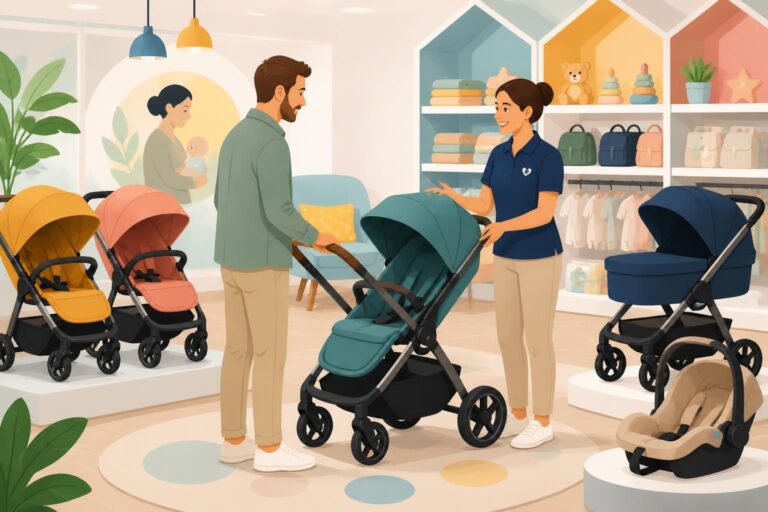
Gear doesn’t do everything, but it supports. An easy-to-put-on jacket from Vertbaudet, flexible pants from Petit Bateau, a practical hat from Natalys, simple velcro shoes, and that’s it. Families who move around with a Baby Stroller benefit from testing the route, including sidewalks and parking. Logistical comfort eases mental load, even in rain.
- 👟 Prefer velcro over laces for autonomy.
- 🧻 Learn to ask for help without shame.
- 🥄 Practice holding utensils with easy meals.
- 🧸 Choose a simple, easily washable comfort toy.
- 🕒 Set fixed schedules one to two weeks before.
When autonomy progresses through small daily successes, the classroom becomes a mastered playground.
Social Skills and Language: Fostering Early Connections at School
Socialization does not magically appear on the first day. It is woven through games, dialogues, and role-play. Children learn quickly when rules are embodied in a story. Taking turns, sharing bins, waiting for the end of a nursery rhyme: so many micro-situations to rehearse at home. Thus, the group is less frightening and more attractive.
Symbolic Games and Sharing
Symbolic games mobilize language and emotions. A “mini-class” is set up with a teacher stuffed animal and Fisher-Price student figurines 🎲. Attendance, recess, “who wants to tell?” are simulated. Then, comments follow. “When Leo speaks, Zoe waits her turn.” This narration puts words on expected behavior. By replaying, the child internalizes social codes without pressure.
Dialogue with the Teaching Team
The school-family relationship is a bridge. Presenting the child’s habits, interests, and possible fears smooths reception. Reading information in the communication notebook and responding quickly shows the child that adults cooperate. In case of questions about the group, relying on data provides perspective. A useful overview is here: statistical landmarks on early childhood. Knowing the framework helps to relax.
Managing Strong Emotions
Crying at the start of the year is common. A simple sensory cue, like breathing together three times, quickly soothes. One can also create a “calm” card to slip into the pocket. It reminds of a trick learned at home. Samir, father of twins, adopted the “top 3”: breathe, shake hands, smile. In a week, separations went from ten minutes to two. The body becomes an ally.
Over weeks, the child discovers friendship and cooperation. A key word to remember: value every small progress, even if subtle; this is how the desire to try again is born.
Family Organization: Checklists, Gear, and Health for a Smooth Start
Organization lightens the mental load and reassures the child. A simple, light school bag, and comfortable clothing suffice. It is best to avoid fragile gadgets. Clothes marked with the name limit losses. School teams save precious time when everything is identified.
The School Bag, Simple and Efficient
A small soft backpack or shoulder bag is more than enough. It holds a complete change of clothes, a Avent or Dodie water bottle, a cup, and the comfort toy if allowed. A notebook or communication diary is added depending on schools. For the route, a well-handled Baby Stroller and a waterproof coat come in handy on rainy days. Families using a Bébé Confort car seat also check the smoothness of the home-school passage.
Clothing, Weather, and Comfort
Loose cuts facilitate autonomy. Elastic pants from Petit Bateau, a light down jacket from Vertbaudet, a soft hat from Natalys, and velcro sneakers cover the essentials. Iron-on labels avoid mix-ups. In cold seasons, a lip and hand cream like Mustela limits chapping. Comfort also reduces morning irritability.
Health, Sleep, and Minor Ailments
Good sleep remains the foundation. Bedtime is progressively moved earlier about two weeks before school starts. Staying informed avoids worries about common health issues. For example, the contagiousness of “hand-foot-and-mouth disease” is often misunderstood; this clear guide answers doubts: information on hand-foot-and-mouth disease. Finally, checking vaccinations and preparing a kit simplifies recovery after minor falls.
- 🧵 Mark every garment and accessory.
- 🧃 Test the bottle to avoid leaks in class.
- 🧦 Pack a complete change in a waterproof bag.
- 🧼 Add a mini box of tissues and hand gel if allowed.
- 📝 Slip a reassuring note on the first day.
To preserve memories, an album like The Birth Book can be extended to “the first year of kindergarten” with photos, drawings, and anecdotes. This ritual makes progress visible and nurtures pride.
Finally, some families choose quiet games for the end of the day. A puzzle, an audio story, a lukewarm bath. Avoiding screens late improves falling asleep. This invisible adjustment sometimes changes the whole vibe of the next day.
A pragmatic organization lowers pressure and makes room for the joy of learning.
Special Cases and Practical Questions from Parents in 2026
Each child progresses at their own pace. Some have a unique health path, others grow up between two languages, others still navigate between two households. The key remains to adapt without overprotecting. Kindergarten is designed to be inclusive and cooperative. Families then find their place in an educational alliance with the team.
Premature Children and Specific Follow-Up
For children born preterm, preparation takes into account fatigue, feeding, or sensory sensitivity. A preliminary meeting with the teacher and, if necessary, the administration clarifies accommodations. Useful landmarks can be found here: supporting a premature child entering kindergarten. A progressive adaptation plan, with half-days at the start, can secure the transition. The essential goal is to aim for autonomy, in realistic steps.
Budget, Aid, and Aftercare Options
Additional expenses (after-school care, meals, clothes) can weigh. Schemes lighten the cost, especially for supplementary care. An updated guide describes procedures: immediate tax credit advance for childcare. Anticipating these logistical aspects avoids tensions at professional resumption. A clear strategy makes daily life more stable for the child.
Separated Parents, Multilingualism, Disability
When parents live apart, shared communication with the school smooths transmissions. A travelling life book and regular exchanges limit misunderstandings. For bilingualism, the family language is valued and support for learning French is provided. Many children thus develop strong linguistic agility. In the presence of a disability or neurodevelopmental disorder, the district team advises and can propose support. Goals remain clear: safety, well-being, and measurable progress.
Equipment can also adapt. A zipped jacket rather than buttoned, noise-cancelling headphones for recess according to profiles, a “calm” corner at home. Visual aids, such as a pictorial schedule, help a lot. Families traveling with a Baby Stroller or a Bébé Confort system ensure journeys without excessive noise and light. Any soothing improves the quality of reception.
Finally, placing a symbolic “red thread” brings coherence. A family photo in the backpack, a discreet good luck charm, or a “weekly victories” page in the album. These markers remind the child that they are not alone. School then becomes a stage where they can grow, open up, and tell their story.
When to Start Preparing for Kindergarten?
Two to three weeks are enough to establish sleep and morning routines. Start earlier for autonomy skills (toilets, dressing) to create a solid foundation without pressure. The important thing is regularity, not quantity.
What to Do If the Child Cries at Separation?
Remain brief, consistent, and warm. A short ritual reassures more than a long goodbye. Provide a transitional object if allowed by the school. Inform the teacher of the chosen ritual to ensure coherence; tears often reduce within a few days.
What Essentials to Put in the School Bag?
A complete change of clothes, tissues, an Avent or Dodie water bottle, the comfort toy if allowed, and the communication notebook. Mark each item with the child’s name. Avoid personal toys to limit conflicts and loss.
How to Speak Positively About School Without Lying?
Describe concrete and balanced scenes. Highlight games, stories, and friends, while explaining that rules exist. Remind the child that an adult will come to pick them up every day to build trust.
Which Books and Resources to Use to Prepare My Child?
Picture books about starting school and emotions, symbolic games with Fisher-Price figurines, and online resources like the On the Way to Kindergarten game. Creating a small home library motivates the child to imagine the experience.