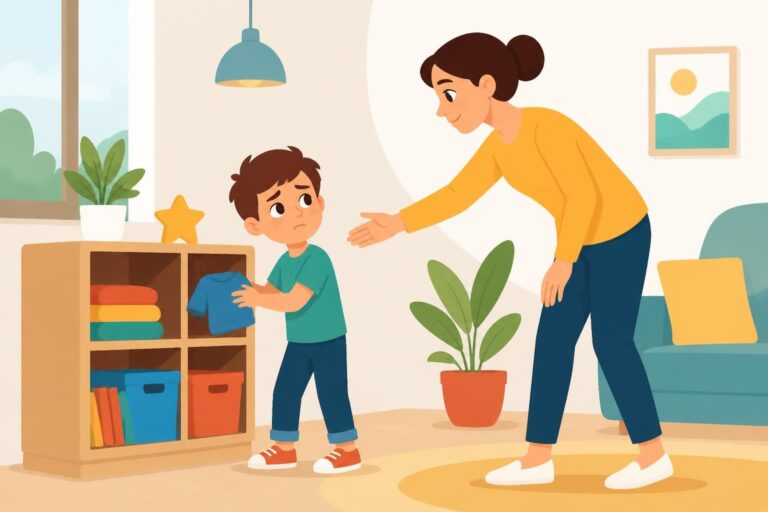
Baby acting: the innovative childcare method serving child development
| In Brief |
|---|
| 🎯 The baby acting places play at the heart of childcare to stimulate motor skills, language, social, and cognition. |
| 🧠 Data from the Elfe cohort link quality formal childcare to more favorable developments. |
| 🤝 Parental support, secure attachment, and co-education remain decisive. |
| ♿ Inclusive structures and adapted schedules reduce access disparities but require close monitoring. |
| 🛠️ Concrete tools exist: arrangements, rituals, observations, and partnerships with families. |
Baby acting establishes itself as an innovative childcare model, attentive to the needs of toddlers and the expectations of families. Here, play is not just a recreational activity. It becomes a lever for global development, anchored in a secure, rhythmic environment rich in interactions. Some structures are already experimenting with this approach, including in extended-hours nurseries, MAMs, and itinerant schemes responding to the diversity of family situations. The observed results are encouraging, provided constant quality, solid team training, and sincere co-education with parents are ensured.
This framework aligns with recent scientific advances on the impact of childcare modes. It takes into account access inequalities and daily challenges. The ambition is simple but demanding: to offer each child a reception experience that nourishes curiosity, secures attachment, and opens perspectives of autonomy. Everyday brands and materials, from the Baby Stroller to Fisher-Price toys, then become supports, never ends in themselves. The issue remains human, relational, and educational. Because a child who plays, explores, and feels understood develops with confidence and joy.
Baby acting, a childcare mode focused on the child’s development
Baby acting offers a framework in which the child becomes the actor of their discoveries. Play is organized as a demanding and joyful educational tool. The professionals set reassuring markers, then leave space for exploration. This balance between emotional security and freedom to act supports curiosity and perseverance. Activities are adjusted to each child’s rhythm, without overstimulation.
Practically, a day is structured around short meaningful moments. Treasure baskets encourage handling. Everyday objects, from brands like Bébé Confort or Dodie, serve symbolic scenarios. Rituals soothe transitions. And, above all, verbal interactions accompany every gesture. This fine attention nourishes language and self-esteem.
Guided free play and transversal skills
Guided free play is neither laissez-faire nor a classic directed activity. The adult observes, kindly comments, then offers a simple invitation. For example, a mat with Fisher-Price blocks is alongside Petit Bateau fabrics. The child chooses, compares, tries. They then practice fine motor skills, inhibitory control, and shared attention. Gradually, they enrich their exploration strategies.
Internal assessments show visible progress. Children appropriate the vocabulary of emotions. They cooperate better in small groups. They also tolerate frustration more easily. These advances rely on a golden rule: name, validate, propose. Professionals keep a warm and available look, without overloading with instructions.
Secure attachment and co-regulation
Secure attachment remains the foundation of the approach. Separations are prepared with familiar objects, like a Mustela swaddle or a Vertbaudet bonnet. Reunions are experienced as ritualized time. Thus, the child integrates that adults are reliable and sensitive to their signals. They calm faster and dare to explore more.
Emotional co-regulation accompanies the day’s strong moments. Before a meal, a breathing exercise calms the class. After a conflict, a shadow game restores security. These micro-rituals structure the experience and prevent outbursts. They promote concentration, essential for learning.
In several pilot structures, such as the fictional nursery Les Petites Pousses, families report lasting effects. Children return home with ideas for simple games and replay routines. This continuity strengthens the educational alliance. It also avoids the gap between what is experienced at the center and at home.
Underneath, baby acting recalls a modern truth: the child learns better when they feel seen, heard, and able to act. This principle will guide what follows.
Does the childcare mode influence the child’s development? Data, nuances, and markers 2026
Recent research sheds light on the debate about the effect of childcare modes. In France, the Elfe cohort linked care before age 3 to development at 3 and a half years. Parents answered the Child Development Inventory (IDE), converted into a developmental quotient. This indicator identifies possible delays, considering the exact age at measurement.
After socio-demographic adjustments, a clear result emerges. Children cared for in group settings or by a childminder show fewer risks of delay than those cared for exclusively by their parents. However, no clear difference appears with an informal mode such as grandparents. This nuances received ideas and highlights the question of quality.
A second analysis focused on behaviors at 5 and a half years using the SDQ. It distinguishes internalized disorders (emotions, peer relations) and externalized ones (conduct, hyperactivity). Comparisons do not show significant differences for internalized disorders among all children combined. However, certain configurations indicate more externalized disorders in informal modes or with a childminder.
Group care is associated with less internalization for girls and middle-class families. But it shows a higher risk of externalization for these same profiles. As for the childminder, they are linked to less internalization in middle class, but more externalization in disadvantaged households. This cluster of results calls for contextualized vigilance.
What should be retained for action
- ✅ Quality formal modes = fewer delays measured by the IDE 🧩
- ✅ Behavioral effects variable according to SDQ profiles 👀
- ⚠️ Quality and training of adults = major determinants 🎓
- 🤝 Co-education and regular observations = targeted prevention 🔎
- 🌍 Expanded access without close support = possible increased inequalities 📊
International literature of 2026 points to the same horizon. Nurseries obtain good results when they offer a stable, stimulating, and well-equipped environment. Pedagogical quality, more than the type of care, makes the difference. This is where baby acting becomes an asset, as it structures observation, adjustment, and sensitive response.
In practice, teams can rely on short and frequent grids. They monitor imitation games, motor skills, and emotion management. They cross-reference these markers with family feedback. Thus, prevention is set up early, without stigmatizing.
Ultimately, data never replaces relationships. It guides them. Baby acting embodies this marriage of science, clinic, and everyday life. This bridge opens the very concrete next section.
Implementing baby acting at home and in childcare: routines, spaces, and tools
Action starts with space. A soft corner with firm mats, a sturdy low table, and open shelves at child height often suffice. An unbreakable mirror encourages self-awareness. A Baby Stroller parked in a corner becomes symbolic play. Clothes from Vertbaudet or Petit Bateau support autonomous dressing.
Regarding objects, less is better but carefully chosen. Dodie rattles, Avent or Nuk bottles support care and feeding rituals. For comfort, an appropriate bottle warmer facilitates continuity of food markers. A useful guide details the Philips Avent bottle warmer. Coherent rituals remain a real support for toddlers.
Daily rituals and play invitations
A simple routine frames the day. Individualized welcome. Short sensory play invitation. Snack. Garden outing. Story of the day. Invitations benefit from relying on current interests. When Noah gets excited about wheels, boxes and cars join the mat. This thread maintains engagement.
At home, a Montessori observation tower opens many possibilities. The child pours, cuts a soft banana, or rinses a cup. These actions nurture autonomy. They consolidate self-image as capable. They also make family life smoother.
Coordination with families and childcare ecosystem
To find the right formula, a clear overview helps. This childcare modes guide presents options, their strengths and limits. Some families favor nurseries. Others prefer the flexibility of home childcare. In the latter case, baby acting remains possible, with a dedicated exploration corner and an exchange notebook.
When a childminder accompanies the child, time sharing becomes key. Paths exist to adjust schedules and projects, including in childminder complements. This coordination avoids rhythm breaks. It supports inner security.
Ultra-practical observation grid
| 📝 Key Indicator to Observe |
|---|
| 🎨 Enters play alone then seeks adult if needed (autonomy) |
| 🗣️ Points, babbles, names and responds to solicitations (language) |
| 🧩 Perseveres in face of a simple challenge (self-regulation) |
| 👫 Tolerates presence of others and waits their turn (socialization) |
| 🏃 Climbs, pushes, pours safely (motor skills) |
Teams note these markers weekly, without burden. They then share two observed strengths and one support tip with the family. This approach values the child. It guides concrete adjustments. Thus, baby acting is nourished by living dialogue.
Finally, practical resources facilitate material choices. A 2025 comparison of Nuk bottles can assist teams. An album like The Book of Birth reinforces arrival rituals of a little brother. At Natalys or Bébé Confort, robust items support daily autonomy. The tool remains at the service of the bond, never the opposite.
This operational framework prepares another essential question: inclusion and access for all.
Supporting innovative and inclusive childcare: schedules, mobility, and specific needs
Family realities call for varied responses. Off-hours nurseries secure children of parents working nights or early mornings. Itinerant structures bring care closer to rural areas. MAMs welcome small groups with a common project. In these frameworks, baby acting facilitates fine adjustment to each child.
Territorial policies advance. In Île-de-France and elsewhere, calls for projects support initiatives combining care, training, and parenting. The goal is clear: professionalize, open more places, and respond to disability situations. This movement benefits 0-4 year olds, sometimes up to 6 years.
Reduce inequalities without creating bounce-back effects
Studies show a major impact of early care time, positive or negative. A quality childcare mode can reduce gaps by offering varied games, a stimulating framework, and sensitive adults. But access alone is not enough. Without specific support, health inequalities may persist or increase.
Three levers deserve continuous attention. First, dedicated programs for the most disadvantaged families. Second, understanding parental reluctance toward formal modes. Third, regular evaluation of impact, shared with teams and families. Baby acting offers simple and useful observation markers here.
Inclusion of children with special needs
The approach values fine adjustments. A child with a disability benefits from a predictable environment, brief instructions, and reference objects. Non-overloaded visuals soothe. Dual play slots support targeted learning. Moreover, the structure collaborates with the medico-social network. It anticipates transitions and secures key passages.
Parents also appreciate the attention given to care. Gentle toiletry products like Mustela reassure. Clear organization of changes with identified baskets limits errors. An access ramp invites siblings to enter together. And for outings, a sturdy double stroller from Bébé Confort guarantees safety.
Overall, innovation makes sense when it remains accessible, understandable, and measurable. Baby acting combines these three dimensions. The challenge remains to choose one’s structure and build a true educational alliance.
Choosing a baby acting structure and cooperating with professionals: criteria, questions, and tools
The choice is clarified with simple and concrete criteria. Is the morning reception calm? Do children have free access to shelves? Do adults name emotions? Does the educational project mention play, observation, and co-education? These signals sketch lived quality, more than a well-written brochure.
A successful visit route relies on open questions. How does the team manage separation tears? What are the transition routines? What observation records are shared with families? These points reflect the depth of baby acting. They also speak of team culture: humble, precise, and child-centered.
Observation checklist for a visit
- 👋 Individualized welcome and warm look at the door
- 🧸 Accessible toys, varied and safe materials (Fisher-Price, fabrics, books)
- 📚 Presence of a reading corner, with albums and The Book of Birth
- 🗓️ Visible rituals: song, story, weather of the day
- 🧠 Observation records displayed or shared notebook
- 🍼 Continuity of care: Avent bottle warmer, adapted changing corners
- 🚶 Regular outings, storage at child height
- 🧺 Simple and comfortable laundry (Petit Bateau, Vertbaudet)
- 🛒 Robust equipment (strollers Bébé Confort) and clear maintenance
During the adaptation period, short objectives are set. Reduce separation time, increase autonomous exploration, stabilize sleep. Each week, a quick point with the family aligns practices. This micro-coordination produces visible effects, extending to home.
At home, the nanny can draw on the same principles. A stable play corner. A treasure basket. Short but frequent outings. To deepen these options, this guide on nannies and home childcare clarifies key points. It reminds that quality of interaction outweighs quantity of toys.
When small tensions arise, returning to observation helps. What does the child show? Tired? Hungry? Need for shared attention? A series of micro-gestures, like offering a pouring activity or singing a familiar tune, restores security. Thus, baby acting remains a simple and reliable compass.
Finally, thinking about the connection with practical life avoids friction. Families juggle bags, security blankets, and sometimes rain. A thoughtful entrance, coat racks at height, and a Baby Stroller stored in the right place, streamline everyone. These are small details, but they change the day.
How does baby acting differ from a Montessori-type pedagogy?
Baby acting shares respect for rhythm, prepared environment, and autonomy. However, it mainly focuses on the quality of the adult-child relationship, continuous observation, and fine adjustment of play invitations. It is less about a set of tools than a pedagogical posture anchored in emotional co-regulation and co-education with families.
From what age can one benefit from baby acting?
From the first months, with short and sensory times. Before walking, the focus is on emotional security, gentle handling, and predictable routines. Around 2-3 years, invitations expand: symbolic play, cooperation in small groups, first simple rules. The approach then adapts to the singular needs of each child.
What materials are useful without falling into accumulation?
A few basics suffice: mats, treasure baskets, building toys, figurines, books, and an imitation corner. Brands like Fisher-Price for blocks, Dodie, Avent, or Nuk for bottles, and basics textiles Petit Bateau or Vertbaudet, do the job. The essential remains the quality of interaction and rituals.
Is baby acting suitable for home childcare?
Yes. A dedicated space, stable routines, an observation notebook, and regular communication with the family suffice. The nanny offers short play invitations, adjusts the environment, and relies on signs of the child’s engagement. This organization offers the flexibility of home with a solid pedagogical framework.
How to track progress without overloading the team?
Opt for brief observations, shared weekly: two strengths and one lead. Use a small grid (autonomy, language, regulation, social, and motor skills). A monthly review resumes trends. These records feed dialogue with parents and guide adjustments, without unnecessary paperwork.