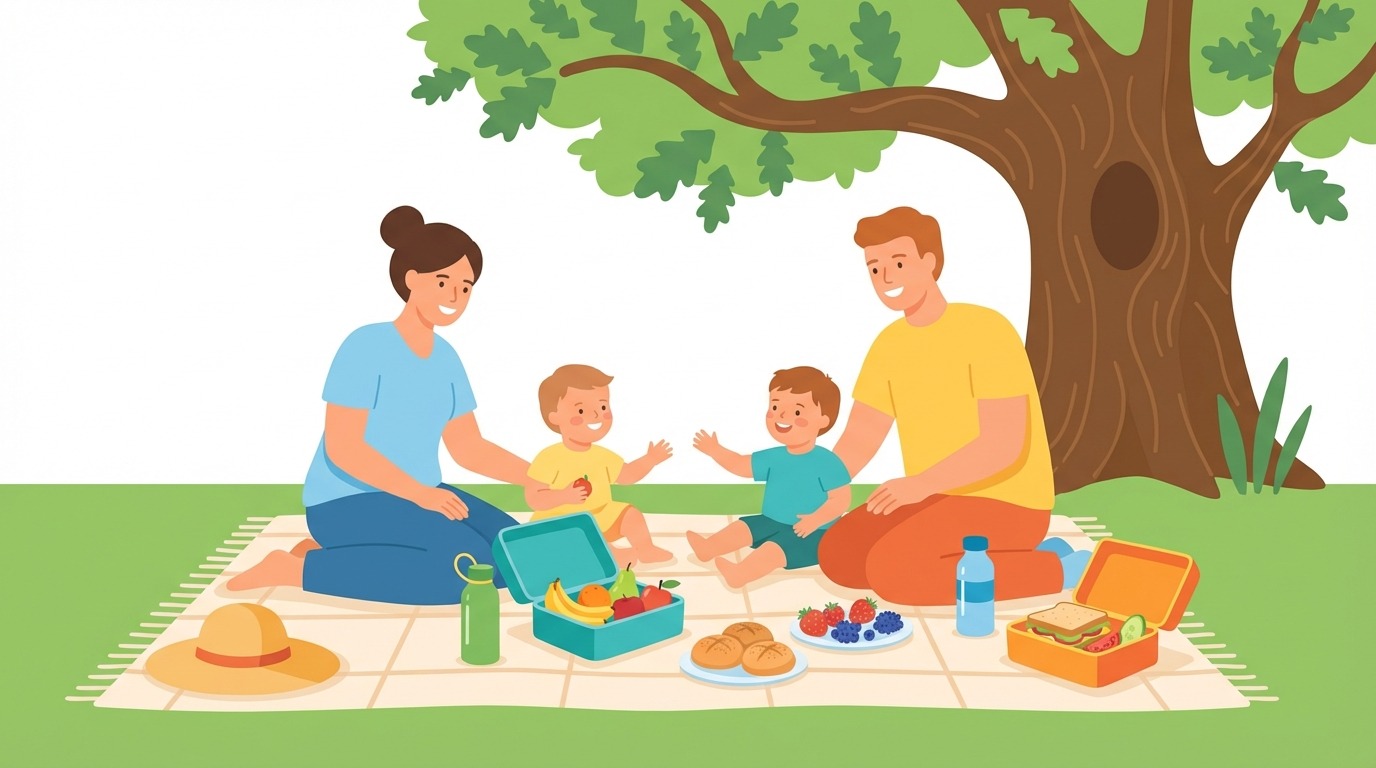
Successful Picnic: Family Food: a successful picnic (1-3 years).
| Short on time? Here’s the essentials ⏱️ |
|---|
| Shaded, flat and secure spot 🌳: close to toilets, water point, area without immediate dangers. |
| Balanced meal 🍽️: 1 protein + 1 starch + 2 vegetables/fruits + 1 dairy product, baby portions for 1-3 years old adapted. |
| Child hydration 💧: water in an insulated bottle, offer every 15-20 minutes in hot weather. |
| Suitable food 🧡: soft textures, secure pieces, zero small round uncut foods. |
| No logistics hassle 🎒: cooler + ice packs, airtight lunch boxes, trash bags. |
| Healthy snacks 🥑: ripe fruits, omelette muffins, hummus, steamed sticks. |
| Sun & insects ☀️🦟: hat, SPF 50 cream, fabric spray, first aid kit. |
Picnics are gaining popularity in family life, and for good reason: they combine freedom, simple family food, and the joys of outdoor activities. With a baby aged 1-3 years, however, the exercise requires smart choices. The ideal formula pairs an easy-to-eat balanced meal, suitable food for early childhood, regular child hydration, and flawless logistics.
This guide offers an operational method, fed by field experience with toddlers. On the agenda: safe meal preparation, ideas for healthy snacks and portable recipes, equipment check-list, and gentle games to channel energy. The result is a smooth and joyful moment, designed for little ones’ pace and adults’ peace of mind.
Baby picnic 1-3 years: stress-free organization and clever logistics
A smooth picnic starts long before departure. Ideally, the spot is shaded, flat, and near a water point. This makes setup simple and supervision direct. For toddlers, avoiding steep banks, steep slopes, and windy exposed areas reduces tension and risks.
The chosen day depends on the weather. Anticipating temperature and wind determines children’s comfort. In practice, planning to leave after a nap or meeting early in the morning limits fatigue and encourages appetite. Also, checking stroller accessibility and toilet availability avoids tiring back-and-forth trips.
The check-list that saves the outing
Careful organization frees the mind. An insulated bag or cooler with ice packs guarantees the cold chain. Airtight containers (a Gobi lunch box, for example) prevent leaks and keep textures intact. Additionally, a thick blanket, a cover, and a few cushions ensure a comforting dining spot.
- 🧊 Cooler + ice packs: sensitive foods well kept cold.
- 🥤 Reusable bottles: fresh water dedicated to kids.
- 🍱 Airtight boxes: child portions and shared dishes kept separate.
- 🧴 SPF 50 sunscreen, hats, sunglasses: essential sun barrier.
- 🧻 Recycled tissues like Popee + trash bags: hygiene and easy sorting.
- 🎒 First aid kit: bandages, antiseptic, tick remover.
- 🧸 Quiet games: board books, bubbles, mini balls.
Food safety starts in the kitchen. Cooling preparations completely before placing them in the cooler is crucial. Also, reserving a drink zone limits repeated openings on the food side. Washing fruits and vegetables beforehand prevents risky handling on the grass.
One organizational tip works very well: bags by key moments. A small “arrival” bag holds blanket, sunscreen, and bottles; a “meal” bag contains all culinary necessities; a final “play and nap” bag gathers comforter, spare hat, and book. This segmentation helps adults quickly find what they need.
Finally, a golden rule for the group: announce a simple schedule in advance. Snack, explore, lunch, free play, return. This clear rhythm soothes toddlers and frames adults’ vigilance. Result: fewer cries, more laughter.
Outdoor family feeding: a balanced meal for early childhood
For a baby 1-3 years old, priority is given to texture safety, measured doses, and variety. Outdoors, a balanced meal is easily composed: a soft starch, a tender protein, two portions of vegetables, and a dairy product. This way, energy holds up, satiety sets in, and taste broadens.
Prevention of choking guides choices. Cut round foods (cherry tomatoes, grapes) into quarters, grate carrot and apple, and favor soft pieces to limit risks. Also, avoiding whole peanuts, hard candies and large cheese cubes remains essential for toddlers.
Building the perfect portable plate
Balance is achieved with simple bases. For starches, fine tabbouleh, fluffy rice or small shell pasta work very well. For protein, crumbled hard-boiled egg, tender chicken dices, smooth hummus or cooked soft lentils fit. For vegetables, an easy crudités duo and cooled steamed vegetables ensure freshness and fibers.
- 🍗 Tender proteins: hard-boiled egg, poached chicken, hummus, lentils.
- 🍚 Soft starches: fine semolina, rice, mini pasta.
- 🥕 Soft vegetables: steamed sticks (zucchini, carrot), seeded cucumber.
- 🍓 Ripe fruits: banana, peach, mango slices, quartered strawberries.
- 🥛 Dairy: plain yogurt, mildly salted fresh cheese.
Practicality boosts appetite. Protein-rich “omelette muffins” can be eaten without cutlery and freeze very well; ideas to adapt include peas, grated zucchini or diced ham. For a step-by-step, consult this tasty and adaptable omelette muffins recipe.
Need a fresh complete dish? A lentil base with cucumber, tomatoes, and feta makes a winning pair: iron, fibers, crunch, softness. To vary, the Greek lentil salad checks all the picnic boxes: easy transport, taste, satiety.
Sauces elevate flavors. A whipped yogurt with lemon and chives lightens, while a homemade fruit “ketchup” limits added sugars. Why not try a mild fruit ketchup for dipping steamed vegetables and meatballs?
For child hydration, water remains king. Offering often, in small amounts, better matches toddlers’ rhythm. Insulated bottles maintain freshness without ice cubes that dilute taste. Cold-infused strawberry slices add a playful note without too much sweetness.
As a golden thread, think “color + softness + safety.” A vibrant, tender plate cut to the right size transforms the meal into a calm and joyful discovery.
Meal preparation and picnic recipes: practical ideas and suitable food
Meal preparation is key to success on site. Cooking the day before and cooling fully in the fridge avoids lukewarm zones favorable to bacteria. Then, packing in small portions allows taking out only what will be eaten, which limits waste and maintains food safety.
For babies on classic diversification, cold purees work well if the texture is smooth and served in a small spout bottle. Tomato-watermelon-basil, zucchini-mint, or carrot-apricot offer a mild sweet-savory. While an apple-strawberry compote without pieces finishes the meal lightly.
“All-terrain” menu for 1-3 years
A winning trio: omelette muffin, soft starch salad, and steamed sticks. Practically, a box holds 2 muffins, 3 spoons of fine herb semolina, and 4-5 tender zucchini-carrot sticks. Plus, some mango or very ripe pear slices complete the fruity note.
For children on baby-led weaning (BLW), handling guides shapes. Savory cakes in sticks, avocado quarters rolled in fine breadcrumbs, and grilled polenta fingers are easy to grasp. Of course, watch sizes: width of an adult finger, length about a palm.
- 🥪 Soft wraps: hummus, grated carrot, shredded chicken.
- 🧆 Soft falafels: finely blended chickpeas, baked.
- 🍙 Soft onigiri: rice balls stuffed with crumbled tuna and fresh cheese.
- 🥔 Thick tortilla: cooked potato, egg, zucchini, cut into bars.
- 🧀 “Safe” skewers: cubes of soft cheese + cucumber quarters (no picks for 1-3 years).
Sweet treats should be light. A lightly sweetened yogurt cake, baked in mini portions, travels better and crumbles less. Homemade date-oat-coconut bars satiate without energy slumps. Also, presenting fruits with skin boats (nectarine quarters, half banana) limits sticky fingers.
Cold logistics is optimized. Place sensitive foods at the bottom of the cooler and drinks on top to avoid repeatedly opening the cold zone. And slip in a small probe or use colored blocks “still solid gel” to reassure about temperature. The goal is simple: keep dishes below 4 °C until serving.
For supply, saving time helps everyone. Grocery delivery platforms ease buying ripe fruits and additive-free plain yogurts. If the schedule is tight, using a service like online grocery shopping ensures freshness and product availability.
The best recipe remains the one the child recognizes and likes. Assemble little, cut well, and serve in a familiar container to increase chances of a peaceful meal. Ultimately, simplicity and consistency beat culinary excess.
Child hydration, safety and comfort: sun, insects and naps
Water remains the drink of choice. When on the move, offer frequently, without waiting for thirst, to protect from heat stroke and headaches. A well-identified bottle per child prevents exchanges and reassures shy ones. And a discreet phone reminder every 20 minutes recalls this vital reflex.
Sun protection is managed in successive layers. Wide-brim cap, category 3 sunglasses sized right, mineral SPF 50 cream on exposed areas, and especially real shade thanks to a parasol or tree. Also, light but covering clothing protects better than shorts and tank tops.
Preventing bumps and irritations
Insects often appear during calm meals. A fabric spray, light-colored clothes, and checking the grassy spot before settling reduce attraction. If a sting occurs, knowing soothing gestures changes everything. This practical guide on how to soothe a sting helps react quickly and properly.
For minor falls, a kit with compresses, bandages, and saline secures the outing. For bumps, an instant cold pack in the cooler doubles the use. Lastly, keeping the comforter and a small light blanket acts as an emotional buffer after a scare.
The biological rhythm remains non-negotiable. Scheduling the picnic during an awake window is preferable. After the meal, a shaded “cocoon” corner with cushion and board book allows a micro-nap. In fact, a short story often helps switch to calm.
In sum, anticipating physiological needs — water, shade, rest — keeps mood light and memories bright.
Outdoor activities and toddlers’ rhythms: games, exploration, learning
After the bite comes the movement: outdoor activities nurture motor skills and autonomy. An improvised sensory trail with leaves, soft pine cones, and smooth pebbles creates a mini adventure. Also, blowing bubbles stimulates visual tracking and triggers contagious laughter.
Play structures attention and develops language. Running after a soft ball, pulling an empty small cart, carrying cushions from point A to B: everything counts. Benefits are numerous, documented, and accessible in this resource on the benefits of play. The idea is not performance, but active discovery.
Special mini play program for 1-3 years
A flexible schedule helps regulation. First, 10 minutes’ exploratory walk to “read” the environment. Then, 15 minutes of very short guided activities: empty bucket relay, ball throwing-rolling, rhythm hand dance. Next, 20 minutes of free play under watchful eye. Finally, a two-voice story to lower the volume.
- 🫧 Giant soap bubbles: pursuit and hand-eye coordination.
- 📚 Quiet reading: why not a gentle story like “Family to me” before the nap.
- 🎨 Water painting on pebbles: no stains, 100% reusable.
- 🏗️ Pouring games: clean sand, raw semolina in closed bins.
- 🌼 Themed walk: park colors, comforter hide-and-seek.
For seasonal ideas, this guide of spring family activities provides inspiration to apply at the park. And if you need to renew equipment cheaply, recycling boxes, bamboo spoons and measuring cups turns everyday life into a workshop.
Beyond play, picnics teach concrete ecology. Picking up trash, observing an insect without crushing it, bringing back uneaten water to water plants at home: these rituals build lasting habits. Children imitate, so adults model simple yet powerful gestures.
Finally, a nod to families in transition. During a move, keeping a stable nature appointment supports toddlers’ time reference. Some useful tips are gathered here to support a move with a 1-3 year old. A blanket, a story, a bottle: it’s already a portable home.
In short, a clear playful framework, movement, and a reading break form an ideal outdoor learning ecosystem.
What quantities to offer for 1-3 years old during a picnic?
Aim for mini-portions: 2-3 spoons of starch, 2 spoons of vegetables, 2-3 spoons of tender protein, 2-3 slices of fruit and 1 dairy product. Observe real hunger and adjust.
How to keep food cold until the meal?
Cool completely in the refrigerator, use at least 2 ice packs, place sensitive foods at the bottom of the cooler, open rarely, and take out portions at the last moment.
What drinks to favor for child hydration?
Still water in an insulated bottle. Offer every 15-20 minutes in small sips. Avoid sodas, syrups and undiluted juices, especially in full sun.
What easy and safe recipes for baby 1-3 years?
Soft omelette muffins, steamed vegetable sticks, sticky rice shaped into balls, smooth compotes, plain yogurt. Always cut into safe sizes.
What risks to watch for outdoors?
Heat and sun, insects, dehydration, choking hazards, minor falls. Anticipate: shade, cream, bottles, adapted cutting, first aid kit, terrain check.
“A successful picnic is a table set in the grass where every smile bites into freedom.”